Bangladesh share market
Under new leadership, can the stock market finally shed its 'casino' image?
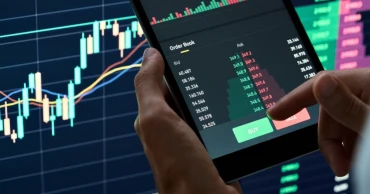
Bangladesh's capital market has recently shown its strongest performance since the political storm of August 2024, with daily turnover crossing Tk 1,000 crore for nine consecutive trading days, marking the highest sustained level in nearly two years.
The hint of a recovery comes as market stakeholders express cautious optimism that the bourse may finally be able to shake off its long-standing "casino" tag - a term Finance Minister Amir Khosru Mahmud Chowdhury himself used at a pre-budget event in April, acknowledging that good companies avoid the market because they perceive it as a casino where no credible business would want to be listed.
The market's troubled history dates back to the 2010 share market scam, which wiped out the savings of lakhs of investors. Though the market should ideally rank second only to banks in the finance sector, it instead became synonymous with manipulation and investor despair, dominated by a small group of market manipulators.
When the Awami League government fell following the student-mass uprising in 2024, sweeping changes followed in nearly every sector, but the capital market saw little positive impact initially. Khondoker Rashed Maqsood was appointed chairman of the Bangladesh Securities and Exchange Commission (BSEC) in August 2024, but he failed to win back investor confidence during his tenure.
The Shibli legacy
Much of the market's troubles can be traced back to the tenure of Professor Shibli Rubayat Ul Islam, a Dhaka University academic appointed BSEC chairman by the Awami League government in May 2020. Combined with rampant loan defaults in the banking sector, manipulation across every segment of the capital market under Shibli's leadership pushed the economy into what observers describe as a dark chapter.
After the Awami League government's fall, a string of irregularities under Shibli came to light. He is currently in jail in connection with an Anti-Corruption Commission (ACC) case involving bribes amounting to nearly Tk 4 crore.
Dhaka Stock Exchange (DSE) director Minhaz Mannan Emon, who had spoken out against Shibli's irregularities, even faced a lawsuit over his remarks.
Describing that period, Minhaz said it was a genuinely dark time for Bangladesh's capital market, when no credible investors came forward and no good companies agreed to get listed.
He said only companies from which the Shibli commission could personally benefit were listed over those four years.
According to Minhaz, after taking charge in 2020 the commission listed shell companies through IPOs without due diligence, raising hundreds of crores of taka from the market - the fallout of which became visible from 2023 onward, discouraging fresh listings and eroding investor confidence altogether.
Investor confidence had begun to return after the change in government, evidenced by DSE turnover crossing Tk 2,000 crore on August 11, 2024, alongside rising share prices. However, this rally proved short-lived.
General investors say they had expected the interim government to appoint someone who genuinely understood market dynamics. Instead, they allege the Maqsood commission effectively halted the rally and focused on reform measures that further dampened sentiment.
Tarek Hossain, a general investor, acknowledged that the market had indeed been riddled with corruption, with several low-quality companies involved in insider trading and manipulation.
However, he argued the commission should have been mindful that lakhs of small investors had their money locked into the market, and abrupt decisions risked wiping out their capital.
Another investor, Adiba Akter, said that following the change of government, several companies were fined, directly affecting the market. Investors holding Beximco shares found themselves in particular difficulty, while several companies shut down altogether.
She said the commission should have pursued reforms through a structured process rather than daily ad-hoc decisions that kept dragging the market down.
From September 2024, market conditions kept steadily deteriorating under the Maqsood commission. Turnover, which had touched over Tk 2,000 crore two months earlier, fell to around Tk 300 crore in the first week of October. On October 3, a section of investors staged protests in front of the BSEC office in Agargaon demanding the commission's resignation, at one point locking the main gate of the commission's office.
Mizanur Rashid, president of the Bangladesh Capital Market Investors' Unity Council, who led the protests, said good companies had collapsed in the market while large investors withdrew funds out of disillusionment.
He noted that daily turnover that once exceeded Tk 300 crore within the first few hours fell to around Tk 300 crore for the entire day, sometimes even less, leaving protest as the only option.
Mizan added that the period under the Maqsood commission was nothing short of nightmarish for investors who had taken margin loans to invest, many of whom lost their principal and were left in debt instead of returns, driving them to take to the streets out of desperation.
Despite repeated demands for its resignation, the Maqsood commission remained in place beyond the interim government's tenure and survived roughly three months even after the national election.
In May, the BNP government, aiming to overhaul the capital market, appointed a new BSEC chairman along with three new commissioners.
New leadership, new momentum
On June 4, corporate figure Masud Khan was appointed BSEC chairman, with Nahid Mahtab, Tanvir Habib Rahman and Nafeez Al Tarik appointed as commissioners. Since the new commission took charge, the market has shown clear signs of recovery; notably, turnover exceeded Tk 1,000 crore on all nine trading days between June 2 and June 14.
According to investors, floor prices imposed on shares of Islami Bank PLC and Beximco Limited had been weighing on the broader market. One of the new chairman's first decisions was to lift these floor prices, with an assurance that no floor price would be imposed on any company's shares going forward, allowing the market to function on its own dynamics.
Masud Khan said the commission will grant stock exchanges full independence in market monitoring and oversight of listed companies to ensure transparency and accountability, with their powers to be expanded further if needed, as long as exchange decisions do not harm investor interests.
Budget roadmap raises hopes
Another major positive signal for the market came through the proposed national budget for FY2026-27, where the finance minister outlined a separate roadmap for the capital market, detailing the government's vision and upcoming measures.
In his budget speech, the finance minister said unnecessary complexities, delays, excessive cost-approval hurdles and ambiguities will be reduced to encourage good and promising companies to get listed, aiming to make the market more transparent, diversified and confidence-driven.
He also said the IPO process will be made time-bound and technology-driven, with the entire process moved online, and information exchange among issuers, issue managers, stock exchanges, the Central Depository Bangladesh Limited (CDBL) and the regulator integrated through a unified digital platform.
The minister expressed hope that repatriation and reinvestment of legitimate foreign investment profits, as well as proceeds from share or securities sales through Non-Resident Investor Taka Accounts, will be completed within a single working day going forward.
Market stakeholders view the appointment of the new chairman alongside the budget's emphasis on the capital market as positive developments. Brokerage officials believe the government's clear policy commitment to developing the market into an effective platform for long-term capital raising will have a positive impact.
DSE Brokers Association of Bangladesh (DBA) president Saiful Islam said the capital market has long failed to play its expected role due to a crisis of confidence, limited investment products and overreliance on bank financing.
He said if the policy commitments made in this budget to establish the capital market as a key driver of the economy are implemented, it will boost both domestic and foreign investment, create opportunities for new entrepreneurs to raise capital, and accelerate employment and industrialisation.
Market analysts also stressed the importance of building on reforms already introduced during the interim government's tenure in mutual funds, IPO and margin loan policies. They expect that if good companies can be brought to the market, the bourse will finally shed its image as a casino or a haven for insider trading.
Investment Corporation of Bangladesh (ICB) chairman Abu Ahmed said the capital market had deliberately been kept underdeveloped for years, despite having the potential to bring about major change in the country's economy, an opportunity no government has effectively utilised so far.
Expressing hope that the entry of a single good company could transform the market's character and bring back investors who had permanently exited, Abu Ahmed said multinational companies listed in the capital markets of India, Pakistan and Sri Lanka remain absent from Bangladesh's market, and the reasons behind this reluctance need to be identified and addressed.
He also proposed bringing major infrastructure assets under securitisation to further enrich the market.
Investors, meanwhile, hope that the new government's effective measures will help restore the respect long denied to those who invested in the capital market, who had often been dismissed as mere speculators.
3 months ago
DSE index hits four-month low amid investor concerns
The Dhaka Stock Exchange (DSE) benchmark index has reached its lowest level in over four months, with experts attributing the decline to a crisis in investor confidence amidst policy rate hikes and prevailing economic challenges.
Last week, the DSEX index further extended its downward streak, closing at 5,115 points, marking a 143-point fall – or 2.73 percent – from the previous week.
The current level is the lowest recorded since June 12, when the index stood at 5,083 points. Over the last five consecutive weeks, the DSEX has shed a total of 616 points.
Analysts have linked this ongoing decline to the recent interest rate hike implemented by the Bangladesh Bank, which increased its policy rate to 10 percent.
This measure, coupled with rising political uncertainties, has added to investors' bearish outlook, intensifying the selling pressure on DSE.
Dhaka Stock Exchange: Investors increase selling pressure amid fluctuating index
Despite regulatory efforts to bolster investor confidence through stakeholder meetings, the pessimistic sentiment has persisted, causing a broader market sell-off.
Despite the overall market decline, trading activity rose modestly, with weekly turnover climbing by 6.5 percent to Tk 338 crore from Tk 318 crore in the previous week.
Investors showed the most interest in the banking sector, which accounted for 22.7 percent of total turnover, followed by pharmaceuticals (16 percent) and food (11.2 percent). All sectors, however, closed in the red, with the paper sector suffering the largest loss of 11.9 percent.
Concerns over large-cap stocks intensified as prominent companies, including Square Pharmaceuticals, Grameenphone, BRAC Bank, British American Tobacco, National Bank, Robi, and Olympic Industries, collectively contributed to a 56-point reduction in the index, according to EBL Securities.
This week, the DSE witnessed Tk 123 billion wiped out from its market capitalisation, which now stands at Tk 6,568 billion. Over the past five weeks, the market capitalisation has contracted by Tk 365 billion, raising concerns about the stability of the stock market in the coming months.
The blue-chip DS30 index – comprising 30 of the most prominent companies – also lost 51 points to settle at 1,879, while the DSES index, which represents Shariah-compliant stocks, fell 30 points to close at 1,144.
Dhaka Stock Exchange sees mixed early trading
Expert Views and Economic Challenges
Professor Abu Ahmed of Dhaka University highlighted broader economic challenges, noting that the country’s economic trajectory has been compromised over time.
“After the recent political developments, reform activities are in motion, which is essential for sector stability. The government is actively working towards implementing policies that will foster sustainable business and economic activities, which should ultimately lead to a market recovery,” said Ahmed, who also serves as Chairman of the Investment Corporation of Bangladesh (ICB).
Dr M Masrur Reaz, former senior economist at the World Bank, added that the market’s recent performance also reflects a shortage of quality stocks.
“The lack of strong stocks, coupled with instability across sectors like money and financial markets, has dented investor trust,” Reaz explained, adding, “Once these issues are addressed, investor confidence can be restored.”
As the DSE continues to navigate these economic and policy headwinds, stakeholders remain hopeful that sustained policy reforms and economic stabilisation efforts will help rebuild market confidence.
1 year ago
Stock market slumps as DSEX hits 3-month low, most companies see price drops
Stocks in Dhaka saw a sharp decline last week, with the DSEX falling below 5,300 for the first time in three months as anxious investors sold off to prevent further portfolio losses.
The market remained dominated by sellers throughout the week, extending its losing streak for the fourth consecutive week.
The market started the week in free fall, hitting session lows across all four days as retail investors, in particular, engaged in panic selling.
The main index of the Dhaka Stock Exchange (DSE), DSEX, finally settled at 5,258, down over 164 points or 3.03 percent from the previous week. The DSEX has lost 476 points in the last four weeks.
Read more: Small investors’ woes in stock market not over yet
Investors concerned continued to shed their holdings after noting that heavy-weight issues, including mutational companies, continued to fall in the past few weeks, putting further pressure on indices.
Investors preferred to trim their equity exposures and adopted a wait-and-see approach amid uncertainties surrounding earnings declarations for June-ending companies.
Macroeconomic and regulatory uncertainties also acted as negative catalysts that ignited the selling spree, allowing the bears to retain control for a prolonged period.
DSEX, the broad index of the Dhaka Stock Exchange, lost 164.1 points, or 3.0 percent, to settle at 5,258 points. Investors' participation in the market continued to fall by 13.3 percent to TK 3,180 million as compared to TK 3,667 million in the previous week.
Read more: BSEC Chairman urges stakeholder cooperation for stock market reforms
Investors were primarily active in the banking sector (20.4%), followed by the pharmaceutical sector (16.5%) and the IT sector (11.3%). Sectors closed in the red, with the services sector (-8.8%) experiencing the largest decline.
Five large-cap stocks such Islami Bank, Brac Bank, British American Tobacco, Renata and Beacon Pharma together accounted for one-fourth of the index's decline during the week, according to EBL Securities.
This week, Tk 52 billion was wiped out from the market capitalization of the DSE, which now stands at Tk 6,691 billion. Over the past four consecutive weeks, the market capitalisation has declined by a total of Tk 242 billion.
The market capitalisation is calculated by multiplying a company’s total number of outstanding shares by its current market price.
Read more: Share Market Investment Guide: How to Invest in Stocks in Bangladesh
The blue-chip DS30 index, a group of 30 prominent companies, also lost 54 points to close at 1,930 while the DSES index, which represents Shariah-based companies, shed 32 points to 1,174.
1 year ago

Small investors’ woes in stock market not over yet
Small investors in Bangladesh’s stock market remain trapped, with their woes persisting due to a lack of confidence, weak governance and economic instability, despite assurances from regulators of an eventual market rebound, according to experts.
“No one, not even the regulator or stock market authorities, pays heed to our screams,” said Saiful Islam, a grocery owner and one of the affected investors,” in a broken voice while talking to UNB regarding the capital market.
Saiful invested Tk 14 lakh in 2010 to buy shares of different companies listed in the Dhaka Stock Exchange (DSE).
Dhaka stocks drop in early trading today
After graduating in 2004, Saiful found no suitable job and then started a small business in the Motijheel area in 2007 with support from his father-in-law.
He made a good profit in the business and invested the money in the share market.
In 2010, Saiful invested around Tk 14 lakh, of which Tk 6 lakh was his own and Tk 8 lakh he borrowed from relatives. All of his investment was stuck in shares of different companies due to a major scam in the capital market in 2011.
Like Saiful, thousands of investors lost their hard-earned capital in 2011, and after that, some were able to regain part of their capital. However, most of them left the capital market, losing nearly all their investment.
Many such investors are still in the market, hoping for a rebound in the DSE, but without any good news.
DSEX drops by 43 points as prices of 288 companies fall, Chittagong Stock Exchange follows suit
There is no sign of lifting the floor price before the next election. However, economists say that people do not have confidence in the market. The BSEC advises investors to remain patient.
Analysts say that the small investors’ woes in the capital market are unlikely to end before the national election as their wait for a good time is prolonged by Bangladesh’s recent ‘instability’.
The small investors’ shares were once stuck at the floor price (minimum sale rate) due to the overall economic downturn. The floor price barrier ended after the change in government in Bangladesh.
However, the prices of most companies' shares have not increased to the desired level for small investors.
Dhaka Stock Exchange sees early week gains
This has been painful for many unfortunate small investors in the capital markets, according to market analysts.
Policymakers and the Bangladesh Securities and Exchange Commission (BSEC) paint a rosy picture for small investors, saying that the stock markets will rebound with the enlistment of new companies and the injection of large investments. However, the situation for small investors seems hopeless.
A large number of shareholders have been stuck with their investments in the capital market for over a decade amid fading hopes.
Experts' Analysis
Dr ABM Mirza Azizul Islam, an economist and former adviser of a caretaker government, told UNB that there has been a crisis of confidence among investors in the stock market for a long time.
“To this are added various economic crises, the international situation, and everything, including elections and national politics. As a result, first of all, steps should be taken to eliminate the trust crisis. In this case, trust should be ensured by establishing good governance,” he added.
Dhaka Stock Exchange slips below 5,400-point as Islami Bank shares plummet nearly 10%
“That means investors have to be assured that if someone steals their money through manipulation, they will be prosecuted. Besides, the supply of good shares should be increased. Through these two steps, it is possible to solve the market problem. But it is not easy at all,” said Dr Azizul Islam.
Dr Abu Ahmed, Chairman of the Investment Corporation of Bangladesh (ICB) and former professor of Dhaka University’s Economics Department, said there are two crises in the market: one on the demand side and the other in investor confidence.
On the supply side, he said, the problem is that there are fewer good companies. As a result, it is a win-win situation for manipulation and syndicates. “All in all, the stock market is currently in an unstable condition and the situation is gradually getting worse. The passage from here is very difficult,” he said.
Ahmed also noted that people are sometimes investing in weak shares with the expectation of a big profit, which is not the right way of investing due to a lack of financial literacy.
Read mnore: Share Market Investment Guide: How to Invest in Stocks in Bangladesh
1 year ago