military
US boosts naval and air presence near Iran
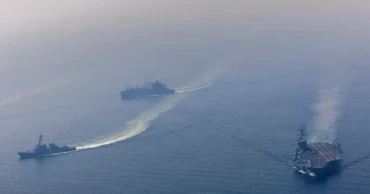
The United States has significantly increased its naval and air deployments in the Middle East, with satellite images confirming the presence of the aircraft carrier USS Abraham Lincoln near Iran, as Washington continues to apply pressure over Tehran’s military programme and its recent crackdown on protests.
BBC Verify said satellite imagery placed the carrier in the Arabian Sea, about 700 kilometres off the coast of Oman. The Lincoln, which leads a strike group of three guided-missile destroyers, carries about 90 aircraft including F-35 fighter jets and has a crew of nearly 5,700. It was reportedly deployed to the region in late January but had not been clearly visible until now.
US and Iranian officials are scheduled to meet in Switzerland on Tuesday for a second round of discussions. Iran has said the talks will focus on its nuclear programme and the possible lifting of US economic sanctions, while Washington has signalled it wants broader issues on the agenda.
The US has also reportedly sent the world’s largest warship, the USS Gerald R Ford, towards the Middle East, with reports suggesting it could reach the region within weeks.
According to BBC Verify, the arrival of the Abraham Lincoln adds to a wider US military build-up in recent weeks. Satellite imagery has tracked at least 12 US naval vessels across the region, including destroyers and combat ships positioned in the Gulf, the eastern Mediterranean and the Red Sea. Several vessels are stationed at a naval base in Bahrain, while others have been seen near a US base at Souda Bay.
US air activity has also increased. Analysts have observed more F-15 and EA-18 fighter jets at a military base in Jordan, along with a rise in US cargo, refuelling and communications aircraft moving from the US and Europe into the Middle East.
Iran has responded with its own show of force. The Islamic Revolutionary Guard Corps recently launched naval drills in the Strait of Hormuz, a vital global oil shipping route through which around a fifth of the world’s oil and gas passes. Iranian media showed missiles being launched from naval vessels during the exercises.
Military experts say the current US deployments appear broader and more sustainable than previous operations in the region, suggesting a posture designed not only for potential strikes but also for long-term deterrence. They note that the scale of naval assets, aircraft and existing US bases would allow Washington to sustain intensive operations while countering possible Iranian responses across the Middle East.
With inputs from BBC
7 months ago

Trump says US military weighing strong options as Iran protests intensify
U.S. President Donald Trump said on Sunday that Washington is evaluating “strong options” in response to ongoing protests in Iran, including potential military action.
“We’re looking at it very seriously. The military is looking at it, and we’re looking at some very strong options. We’ll make a determination,” Trump told reporters aboard Air Force One late Sunday while traveling from Florida to Washington.
Trump added that Iran had reached out following his threats, seeking to negotiate, and that a “meeting is being set up.” However, he cautioned that the United States might have to act before any meeting takes place.
His remarks came as Iranian leaders issued stern warnings against foreign intervention. Parliament Speaker Mohammad Baqer Qalibaf said, “In the case of an attack on Iran, the occupied territories [Israel], as well as all U.S. bases and ships, will be our legitimate target.”
The unrest in Iran began on December 28 when merchants at Tehran’s Grand Bazaar closed their shops following a steep fall in the Iranian rial. The demonstrations rapidly spread nationwide, initially fueled by economic grievances over rising living costs and quickly evolving into broader opposition against the clerical establishment that has governed Iran since the 1979 Islamic Revolution.
Iranian state media reported that at least 109 security personnel have been killed during the unrest. Authorities have not confirmed the number of civilian casualties, though opposition activists abroad estimate that hundreds of protesters may have died.
A nationwide internet blackout has persisted for more than 72 hours, according to monitoring organizations, making independent verification of events increasingly difficult.
The unrest coincides with Trump’s assertive foreign policy moves, including the abduction of Venezuelan President Nicolás Maduro and discussions over acquiring Greenland through purchase or force.
A U.S. official told Reuters that Trump is scheduled to meet with senior advisers on Tuesday to discuss the country’s options in Iran. Reports in the Wall Street Journal indicated that measures under consideration include targeted military strikes, deployment of secret cyber capabilities, expansion of sanctions, and provision of online support to antigovernment groups.
Trump also said he plans to engage with billionaire Elon Musk to explore restoring internet services in Iran. “He’s very good at that kind of thing, he’s got a very good company,” Trump told reporters, referring to Musk’s SpaceX, which operates the Starlink satellite internet system currently used in Iran.
In addition to Iran, Trump addressed his administration’s plans for Greenland and Venezuela. On Greenland, he urged the Danish Arctic territory to “make a deal” and stated, “we are talking about acquiring it, not making a short-term deal.” Regarding Venezuela, Trump confirmed a scheduled meeting with opposition leader María Corina Machado on Tuesday or Wednesday.
With inputs from ALJAZEERA
8 months ago

Israel eases Gaza blockade to allow minimal food supplies amid renewed military offensive
After a 10-week blockade, Israel has announced it will permit a "basic amount of food" into Gaza to prevent a starvation crisis. The move, recommended by the Israeli Defense Forces (IDF), aims to support its ongoing military operations against Hamas.
The announcement came shortly after the IDF confirmed it had launched extensive ground operations across Gaza. Israel has faced mounting international pressure to lift the blockade, which has halted the entry of food, fuel, and medicine. Humanitarian agencies have warned of an impending famine, with reports and images of severely malnourished children emerging from the territory, home to 2.1 million people.
France’s foreign minister Jean-Noel Barrot urged Israel to immediately and fully resume humanitarian aid access. However, a statement from Prime Minister Benjamin Netanyahu's office emphasized that Israel would act to prevent Hamas from seizing control of aid distribution, adding that the allowance of food was intended to avoid a humanitarian disaster that could undermine its military campaign, dubbed Operation Gideon’s Chariot.
Meanwhile, Israeli forces struck several areas in Gaza on Sunday, including Khan Younis in the south and Beit Lahia and Jabalia refugee camp in the north. Gaza’s health ministry, run by Hamas, reported at least 67 deaths and over 360 injuries in the past 24 hours. The civil defense agency said an overnight strike on al-Mawasi—a designated "safe zone"—killed 22 people and injured 100 others.
Severe shortages leave Gaza City residents without water, bread, or basic necessities
In a sweeping evacuation order, the Israeli army warned it would target any area used for launching rockets and urged civilians to seek shelter in al-Mawasi.
Three public hospitals in North Gaza have now ceased operations, including the Indonesian Hospital in Beit Lahia, which reportedly came under tank fire from Israeli forces on Sunday night. Medical staff said no evacuation warning had been given, and the hospital was housing immobile patients and limited personnel at the time of the attack.
The IDF claimed its operations targeted terrorist infrastructure near the hospital, while Gaza's health ministry accused Israel of besieging the facility and forcing it out of service.
As the conflict escalates, ceasefire talks continue in Qatar, though with little progress. Israeli officials say they are pursuing all options for a deal that would include the release of all hostages, the removal of Hamas fighters from Gaza, and the group’s disarmament.
However, a senior Hamas source told the BBC that negotiations remain stalled due to Israeli "intransigence." Hamas reportedly offered to release all Israeli hostages in exchange for a permanent ceasefire, full Israeli withdrawal, and entry of humanitarian aid—terms that Israel has so far rejected, seeking only a temporary truce in exchange for hostages.
Source: BBC
1 year ago

Up to 1,000 transgender troops are being moved out of the military in new Pentagon order
The Pentagon will immediately begin moving as many as 1,000 openly identifying transgender service members out of the military and give others 30 days to self-identify under a new directive issued Thursday.
Buoyed by Tuesday’s Supreme Court decision allowing the Trump administration to enforce a ban on transgender individuals in the military, the Defense Department will begin going through medical records to identify others who haven’t come forward.
Defense Secretary Pete Hegseth, who issued the latest memo, made his views clear after the court’s decision.
“No More Trans @ DoD,” Hegseth wrote in a post on X. Earlier in the day, before the court acted, Hegseth said that his department is leaving wokeness and weakness behind.
“No more pronouns,” he told a special operations forces conference in Tampa. “No more dudes in dresses. We’re done with that s---.”
Department officials have said it’s difficult to determine exactly how many transgender service members there are, but medical records will show those who have been diagnosed with gender dysphoria, who show symptoms or are being treated.
Those troops would then be involuntarily forced out of the service. And no one with that diagnosis will be allowed to enlist. Gender dysphoria occurs when a person’s biological sex does not match up with their gender identity.
Tagore's 164th birth anniv celebrated at DU
Officials have said that as of Dec. 9, 2024, there were 4,240 troops diagnosed with gender dysphoria in the active duty, National Guard and Reserve. But they acknowledge the number may be higher.
There are about 2.1 million total troops serving.
The memo released Thursday mirrors one sent out in February, but any action was stalled at that point by several lawsuits.
The Supreme Court ruled that the administration could enforce the ban on transgender people in the military, while other legal challenges proceed. The court’s three liberal justices said they would have kept the policy on hold.
Neither the justices in the majority or dissent explained their votes, which is not uncommon in emergency appeals.
When the initial Pentagon directive came out earlier this year, it gave service members 30 days to self-identify. Since then, about 1,000 have done so.
In a statement, Pentagon spokesman Sean Parnell said the 1,000 troops who already self-identified “will begin the voluntary separation process” from the military.
Under the new guidelines, active duty troops will have until June 6 to voluntarily identify themselves to the department, and troops in the National Guard and Reserve will have until July 7.
While it may be difficult to see which troops have changed their gender identity in their military records, it will be easier to determine who has gotten a gender dysphoria diagnosis because that will be part of their medical record, as will any medication they are taking.
Between 2015 and 2024, the total cost for psychotherapy, gender-affirming hormone therapy, gender-affirming surgery and other treatment for service members is about $52 million, according to a defense official, who spoke on condition of anonymity to discuss personnel issues.
Pentagon officials in an earlier memo defended the ban, saying that “the medical, surgical, and mental health constraints on individuals who have a current diagnosis or history of, or exhibit symptoms consistent with, gender dysphoria are incompatible with the high mental and physical standards necessary for military service.”
1 year ago
Iran prepares for huge military response amid Israeli tensions
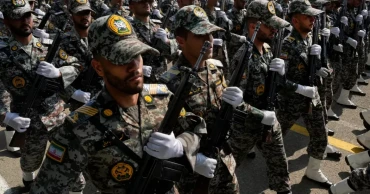
Iran has reportedly placed its armed forces on high alert, preparing for potential conflict yet seeking to avoid escalation, according to a report in The New York Times, cited by Times of Israel.
This move follows direct instructions from Supreme Leader Ayatollah Ali Khamenei, who has ordered Iran’s military to formulate a range of defensive and retaliatory plans in the event of an Israeli strike.
The report quotes four senior Iranian officials, including two members of the Islamic Revolutionary Guard Corps, who indicated that Iran would retaliate if any significant harm or casualties were inflicted in Israeli attacks.
However, they specified that if Israel targets only limited military sites or weapon depots, Tehran’s response may differ.
Besides, Iranian officials clarified that any direct assault on critical assets – including oil facilities, nuclear inst.
1 year ago
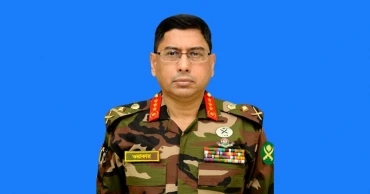
Lieutenant General Waker-Uz-Zaman appointed Bangladesh Army Chief
Lieutenant General Waker-Uz-Zaman has been appointed as the new Army Chief of Bangladesh, effective June 23, 2024.
With this appointment, he will be promoted to the rank of General, as confirmed by the Inter-Services Public Relations (ISPR) on Tuesday (June 11, 2024). His tenure as Army Chief will last for three years.
He will replace General S M Shafiuddin Ahmed, who took over the Command of Bangladesh Army as the 17th Chief of Army Staff on 24 June 2021 and will complete his tenure on June 23, 2024.
An alumnus of Bangladesh Military Academy, he was commissioned in the Corps of Infantry on December 20, 1985.
Having an illustrious career of more than three and a half decades, Lieutenant General Waker brings with him enormous experience of holding key command, staff and instructional appointments.
In his distinguished military career, Lieutenant General Waker commanded an Infantry Battalion, the only Independent Infantry Brigade of Bangladesh Army and an Infantry Division.
His key staff appointments include staff officer at an Infantry Brigade, School of Infantry and Tactics and Army Headquarters. He was a distinguished instructor at ‘School of Infantry and Tactics’, ‘Non-commissioned Officers’ Academy’ and Bangladesh Institute of Peace Support Operations Training’.
Lieutenant General Waker served as the Military Secretary in Army Headquarters. Prior to joining as the CGS of Bangladesh Army, he performed as Principal Staff Officer of the Prime Minister at Armed Forces Division under Prime Minister’s Office.
Lieutenant General Waker is an alumnus of the Defence Services Command and Staff College, Mirpur and Joint Services Command and Staff College, UK.
He holds a Master’s degree in Defence Studies from National University of Bangladesh and Master of Arts in Defence Studies from King’s College, University of London.
As the head of the Armed Forces Division, he was directly involved with the UN Peacekeeping Affairs of Bangladesh Armed Forces. He was also nominated as a Gender Champion and Gender Advocate of Bangladesh for UN Peacekeeping Affairs.
By virtue of his appointment as Principal Staff Officer, he also headed the ‘Bangladesh National Authority for Chemical Weapons Convention’ as Chairman.
Under the Blue Helmet, Lieutenant General Waker completed two tours of duty as observer and staff in UNAVEM (Angola) and UNMIL (Liberia) respectively. As the CGS of the Bangladesh Army, he has been responsible for the military operations, military intelligence, UN peacekeeping affairs, budget, and many other affairs of the army.
Lieutenant General Waker had the rare privilege of commanding the National Victory Day Parade for three consecutive times. He was awarded the coveted ‘Army Medal of Glory (SGP)’ and Extraordinary Service Medal (OSP) for his remarkable contributions in the modernization of the army.
He frequents as a keynote speaker in different seminars and symposiums both at home and abroad. He enjoys games and sports. He is happily married to Sarahnaz Kamalika Zaman and blessed with two daughters: Samiha Raisa Zaman and Shayeera Ibnat Zaman.
2 years ago

Top 10 Police Dog Breeds in The World: The Ultimate K-9 Heroes
Dogs, often referred to as "man's best friend," have long played a pivotal role in human society. They are incredibly smart, loyal, and strong, making them perfect for important jobs. Among these roles, serving alongside the police stands out! These breeds are more than just pets; they are real-life superheroes with a mission to protect and serve. This article discusses the 10 Smartest Police Dog Breeds around the globe. Each breed features unique stories, appearance, characteristics, and incredible abilities. Let’s get ready to meet some remarkable crime-fighting canines!
10 Finest Police Dog Breeds Worldwide
German Shepherd
This breed with a rich heritage, was developed by Max von Stephanitz in 1899. These dogs are known for their remarkable intelligence, adaptability, and impressive work ethic.
The average height of male German Shepherd dogs are about 60 to 65 cm and weigh around 30 to 40 kg, while the female dogs are slightly smaller.
During World War I, one heroic German Shepherd named Antis served in North Africa and England. In 1949, this dog breed played a vital role in an escape from communist Czechoslovakia. Bing, also known as Brian, served the 13th Parachute Battalion during World War II, displaying courage and loyalty. Irma, another remarkable German Shepherd, rescued people trapped under destroyed buildings during the London Blitz in 1945.
Today, security agencies worldwide, including Guard Dog Patrols in Denmark, International VIP Bodyguard (IVIPB) LTD in the UK, and Sparta Security Group, rely on German Shepherds for their unmatched skills and dedication to duty.
Read more: Top Super Luxury Cars for 2023
Belgian Malinois
It, originally a herding dog from Belgium, has evolved to become a versatile and agile breed. With average height of 56 to 66 cm and weight of 20 to 30 kg, these dogs are known for their hard work and dedication.
One outstanding Malinois, K9 Killer, was awarded the PDSA Gold Medal for assisting in capturing 115 poachers at Kruger National Park. Kuga, an Australian Army Malinois, received the Dickin Medal for capturing an insurgent despite being injured in the War in Afghanistan. Mali, a British Army Malinois, also earned the Dickin Medal for completing a mission while injured during the same conflict.
IVIPB LTD, a British company, and Integrity K9 Services in the United States, are among the security agencies that incorporate these extraordinary Belgian Malinois into their ranks.
Read more: Top 10 Most Valuable Metals in the World in 2023
Bloodhound
This is a large scent hound with an origin that remains disputed, but its tracking abilities are legendary. The male bloodhound dogs weigh around 36 to 72 kg with height of 58 to 69 cm on average. Their female counterparts are slightly shorter.
Their extraordinary sense of smell and tracking instincts have made them invaluable in police work and search-and-rescue missions. A famous Bloodhound, Tunga, in Karnataka, India, uncovered over 50 murders and 60 thefts during her service.
Notably, the Bloodhound played a significant role in history as well. During World War I, they carried messages and pulled ambulance litters in the battlefields.
IVIPB LTD continues to incorporate Bloodhounds into its operations.
Read more: Top 10 Healthy Seeds to Eat
Boxer
This breed, hailing from Germany, has a distinctive square muzzle and powerful bite. Male Boxer dogs typically weigh around 30 to 32 kg with height of 56 to 64 cm, while female boxers weigh around 25 to 27 kg with height of 53 to 61 cm on average.
Boxers' bright, energetic, and playful nature makes them ideal for various roles, including serving as police dogs. These intelligent animals have also worked as messenger dogs, pack carriers, and guard dogs during times of war. Punch and Judy, two Boxers, were awarded the Dickin Medal for their gallantry in a military conflict.
IVIPB LTD recognizes their value and includes them in their list of Police Dog Breeds Used in Law Enforcement and Governments.
Read more: Top 10 Most Expensive Water Bottle Brands in the World
Dobermann Pinscher
It, originally developed by Louis Dobermann, stands out for its intelligence and grace. The male Dobermann Pinscher dogs typically range from 68 to 72 cm in height, weighing 40 to 45 kg. On the other hand, the female Dobermanns have average heights and weights of 63 to 68 cm and 32 to 35 kg respectively.
Dobermanns are known for their loyalty and make excellent guard dogs. Their unique characteristics made them popular during World War II, serving as guard dogs and even as messengers.
One unforgettable Dobermann, Cappy, saved the lives of 250 U.S. Marines when he alerted them of DWJapanese soldiers. Another, named Kurt, was the first K-9 casualty in the war.
Today, IVIPB LTD incorporates Dobermanns into its list of Police Dog Breeds Used in Law Enforcement and Governments.
Read more: Top 10 Strongest Currencies in the World in 2023
3 years ago

BURMA Act: Military support to ethnic armed groups in Myanmar 'may undermine' Bangladesh’s security
Brig Gen (Retd) M. Sakhawat Hussain today (February 22, 2023) said that using a liberal interpretation of the non-lethal assistance clause may allow the United States to provide military support to the various ethnic armed organizations (EAO) in Myanmar which “may undermine” Bangladesh’s security as these groups have some ties to the same separatist factions operating in the country.
He made the remarks while addressing at a colloquium on Impacts of “BURMA Act” on Bangladesh-Myanmar bordering region.
Minister of Health and Education, National Unity Government (NUG) of Myanmar Professor Zaw Wai Soe today expressed gratitude for the passing of the BURMA Act and for US support.
He, however, reiterated that it does not rely on any one single superpower, rather believes in a multilateral response to be the ideal way to address the current conflict.
Also Read: US to refrain from anything that might contribute to further violence in Myanmar: FS
NUG officially recognizes the Rohingya as an ethnic group of Myanmar and is in favour of peaceful and full repatriation of Rohingya from Bangladesh to Myanmar.
It has been two years since the military coup in Myanmar, and there is no peace in sight.
Late last December, the United States passed the BURMA Act, a comprehensive law designed to simultaneously sanction Myanmar’s military junta while providing support to the country’s numerous democratic forces.
In view of these changes, the Center for Peace Studies (CPS) of the South Asian Institute of Policy and Governance (SIPG) at North South University hosted the colloquium.
Read More: Japan, UNFPA join hands to provide $3.7 million assistance to Rihingyas in Bhasan Char, host communities in Noakhali
Moderated by Dr Sk. Tawfique M. Haque, Director of SIPG, the seminar was addressed by SIPG Senior Fellow and former Election Commissioner Brig Gen (retd) Dr M. Sakhawat Hussain; Sufiur Rahman, Bangladesh’s ambassador to Switzerland and the permanent representative to the UN; former Foreign Secretary Shahidul Haque; and Dr Raymond Kwun-Sun Lau, Assistant professor at the Department of Political Science and Sociology of NSU.
Mohammad Sufiur Rahman highlighted the emergence of the Arakan Army as a key player in the conflict and emphasized how reaching a resolution on the Rohingya issue between Bangladesh and Myanmar cannot be achieved without taking the Arakan Army’s interests into account.
Shahidul Haque discussed ASEAN’s role in the conflict and pointed to its repeated shortcomings in addressing the conflict in Myanmar, drawing particular attention to its negligence in understanding the plight of the numerous ethnic minorities in the country.
Dr Raymond Kwun-Sun Lau, underscored the geopolitical and strategic importance of the Rakhine State to regional powers such as India and China, both for its vast reserves of hydrocarbons as well as its location as a key area for connectivity projects that links India to its northeast region and reinforces China’s Belt-and-Road Initiative (BRI) respectively.
Read More: Reduction in WFP assistance could drive up crimes, radicalization in Rohingya camps: ARSPH
The event was also attended by experts and practitioners of geopolitics, representatives from international agencies, government officials, researchers, journalists, faculty members and students of NSU.
3 years ago

2023 Military Strength Ranking: Bangladesh 12th among ‘Powers on the Rise’
Bangladesh has ranked 40th out of 145 countries in the annual Global Firepower 2023 Military Strength Ranking.
Bangladesh, however, ranked 12th on the GFP review's list of ‘Powers on the Rise’, which highlights national military powers based on growth in strength trends through 2023.
Based on the GFP formula, the list features current world military powers, with a rising trend. “PowerIndex” score has been used to rank countries.
Also Read: Cooperation between Bangladesh, US militaries growing: Ambassador Muhith
The ‘Powers on the Rise’ for 2023 annual defense review includes 53 nations.
Bangladesh has a PowerIndex score of 0.5871 (a score of 0.0000 is considered 'perfect'). This entry was last reviewed on January 5, 2023.
Meanwhile, against the backdrop of the Russia-Ukraine war, Ukraine has ranked 15th among the strongest militaries in the world out of 145 countries. Ukraine ranked 22nd in the 2022 ranking. Russia, on the other hand, remained second in the ranking.
Read More: Dr Tawfiq-e-Elahi lauds Bangladesh army for safeguarding independence, maintaining peace in conflict-torn regions of the world
Currently, 145 countries are considered for the Global Firepower (GFP) annual defense review.
Each country is evaluated based on a variety of factors related to a prolonged offensive or defensive military campaign.
Categories are weighted and processed through in-house formulas to produce the PowerIndex rating used to compile the finalized GFP list.
3 years ago

S. Korea military sorry for failing to down North’s drones
South Korea’s president on Tuesday called for stronger air defenses and high-tech stealth drones while the military apologized for failing to shoot down North Korean drones that crossed the border for the first time in five years.
South Korea’s military scrambled warplanes and attack helicopters on Monday, but they failed to bring down any of the North Korean drones that flew back home or disappeared from South Korean radars. It raised serious questions about South Korea’s air defense network at a time when tensions remain high over North Korea’s torrid run of missile tests this year.
On Tuesday, the military again launched fighter jets and attack helicopters after spotting suspicious flight paths at a front-line area. A local county office sent emergency text messages notifying residents of a new batch of North Korean drones. But the military later said it was a flock of birds.
“We have a plan to create a military drone unit tasked with monitoring key military facilities in North Korea. But we’ll advance the establishment of the drone unit as soon as possible because of yesterday’s incident,” President Yoon Suk Yeol said during a regular Cabinet Council meeting. “We’ll also introduce state-of-the art stealth drones and bolster our surveillance capability.”
He said that South Korea’s military needs more intensive readiness and exercises to cope with threats posed by North Korean drones.
Lt. Gen. Kang Shin Chul, chief director of operation at the Joint Chiefs of Staff, said in a televised statement the military feels sorry because of its failure to shoot down the North Korean drones and for causing big public concerns.
Kang acknowledged South Korea lacks capacities to detect and strike small surveillance drones with a wingspan of less than 3 meters (9.8 feet) though it has assets to spot and bring down bigger combat drones. Kang said South Korea will establish drone units with various capacities and aggressively deploy military assets to shoot down enemy drones.
It was the first time North Korean drones entered South Korean airspace since 2017. The drone flights came three days after South Korea said North Korea launched two short-range ballistic missiles, extending its record testing activities this year.
North Korea has touted its drone program, and South Korean officials have previously said the North had about 300 drones. Advanced drones are among modern weapons systems that North Korean leader Kim Jong Un has vowed to procure, along with multi-warheads, underwater-launched nuclear missiles and a spy satellite.
Read more: S. Korea’s leader calls for stealth drones to monitor North
Since taking office in May, Yoon, a conservative, has expanded regular military drills with the United States and vowed to sternly deal with North Korean provocations. He’s offered massive support plans to North Korea if it abandons its nuclear weapons, but the North has rejected his overture.
On Monday, South Korea sent its own surveillance assets, apparently unmanned drones, across the border as corresponding steps against the North Korean drone flights. South Korea’s public confirmation of reconnaissance activities inside North Korea is highly unusual and likely reflects a resolve by Yoon’s government to get tough on North Korean provocations.
Yoon used the drone incident to hit at his liberal predecessor’s engagement policy with North Korea. He said Tuesday South Korea’s military had conducted little anti-drone training since 2017, when Moon Jae-in was inaugurated.
“I think our people must have seen well how dangerous a policy relying on the North’s good faiths and (peace) agreements would be,” he said.
Moon’s liberal opposition Democratic Party accused Yoon of shifting his government’s “security disaster” to someone else. Party spokesperson Park Sung-joon called on Yoon to thoroughly disclose what he did when the North Korean drones were flying in South Korean territory.
Moon was credited with arranging now-dormant diplomacy on North Korea’s nuclear program, but also faced criticism that his appeasement policy allowed North Korea to buy time and boost its nuclear arsenal despite international sanctions. During his campaigning, Yoon described Moon’s government as “subservient” to North Korea and accused him of undermining South Korea’s seven-decade military alliance with the United States.
Read more: Kim claims N. Korean successes, wants to overcome challenges
Earlier Tuesday, North Korea’s state media announced the start of a key ruling Workers’ Party meeting the previous day to review past policies and discuss next year’s plans.
During the meeting, Kim Jong Un called for stronger efforts to overcome hardships and challenges facing his country. But he still claimed North Korea has reported some successes “in the arduous course” and said his country’s national strength has “remarkably” increased in military, economic and other areas, according to the Korean Central News Agency.
Some observers say Kim may need such propaganda-driven claims to draw greater public loyalty to bolster his weapons arsenal and address economic woes while facing U.S.-led sanctions and pressure campaigns to curb his nuclear ambitions.
The North Korean Workers’ Party meeting is expected to last several days, and Kim will likely address issues such as his arms buildup, relations with the United States and the economy in later sessions.
3 years ago