China-US
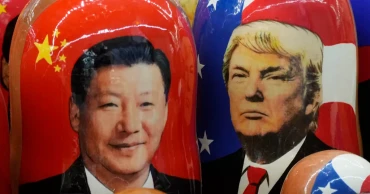
China reiterates warning of retaliation over US tariffs
The escalating trade conflict initiated by U.S. President Donald Trump against Canada, Mexico, and China is intensifying amid disputes over the manufacture and import of the opiate fentanyl, trade imbalances, and the surge of illegal border crossings by migrants from around the world, reports AP.
Below is Beijing’s perspective on the matter:
What Is China’s Response So Far?
China has reaffirmed its threat to implement “necessary countermeasures to defend its legitimate rights and interests” in response to Trump’s imposition of a 10% tariff on China. The tariff was justified on the grounds that China had not sufficiently curtailed the production of chemicals used to manufacture fentanyl.
Although the Foreign Ministry’s statement issued on Sunday did not specify any exact retaliatory actions, it urged, “China calls on the United States to correct its wrongdoings, maintain the hard-won positive dynamics in counternarcotics cooperation, and foster a steady, sound, and sustainable development of the China-U.S. relationship.”
China's exports in December grew 10.7%, beating estimates as higher US tariffs loom
China also argues that the U.S. measures breach World Trade Organization regulations, and it has pledged to bring the matter before the global commerce authority.
In a similar tone, the Ministry of Public Security released an almost identical statement on Sunday, and the Commerce Ministry followed with a comparably worded announcement.
Who Is China Blaming?
Trump has accused China of enabling the production of fentanyl, which is then processed into tablets in Mexico and smuggled into the U.S.—a country that records approximately 70,000 overdose deaths linked to the drug each year.
China, however, asserts that the United States must address its own issues rather than “threatening other countries with arbitrary tariff hikes.” The Foreign Ministry stated, “The United States needs to view and resolve its own fentanyl problem in an objective and rational manner ... (China is) among the world’s most rigorous countries regarding counternarcotics policy and enforcement.”
While experts estimate that China executes an unknown number of individuals annually for drug smuggling offenses, domestic drug use within the country remains relatively low.
Additionally, the Ministry of Public Security noted that since Beijing began to implement legal measures, the U.S. has not reported any seizures of fentanyl precursors originating from China.
What Other Factors May Influence the Dispute?A long-standing issue in this dispute is China’s massive trade deficit with the U.S., which reached nearly $1 trillion last year—a frequent target of Trump’s criticisms. The tariffs would increase the cost of Chinese goods for U.S. consumers, who would ultimately bear a substantial portion of the expense for imported products ranging from toys to clothing.
China’s critical export market could suffer if U.S. consumers choose to “buy American.” At the same time, the Chinese domestic economy has struggled to respond to various government-backed stimulus measures, and major initiatives like foreign infrastructure projects, which add to the already significant public debt, further jeopardize economic growth.
These economic challenges are beginning to undermine Chinese President Xi Jinping’s ambitions to surpass the U.S. in key economic and political arenas, thereby threatening his long-term goal of dominating the island nation of Taiwan and asserting China’s supremacy in the Indo-Pacific region.
US economy grows 2.3% on eve of Trump return
Moreover, curbing illegal immigration remains one of Trump’s central political themes, having been a factor in tariff actions against neighboring nations such as Mexico and Canada. Although the number of illegal entries from China is only a small portion compared to those from other countries, Trump has signaled that he will hold every nation responsible for its nationals who enter the U.S. unlawfully.
1 year ago
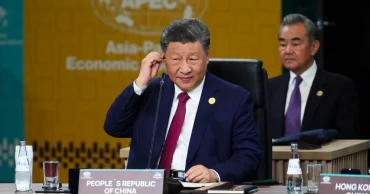
China, US allies strengthen bonds amid Trump’s return
China is improving its relations with Japan, India, and other nations courted by former U.S. President Joe Biden, just as Donald Trump returns to the White House with his unilateralist approach, reports AP.
Monday’s leadership change in Washington presents an opportunity for China, which has long opposed Biden's strategy of partnering with “like-minded countries” to counter its growing influence.
Musk's inauguration role cements place in Trump's orbit
Biden revitalised the Quad — the United States, India, Japan, and Australia — but China's ties with all three U.S. partners, as well as Britain, are improving. Biden's legacy now faces uncertainty, given Trump’s past challenges to traditional U.S. alliances.
“Trump’s approach may push U.S. allies to pay more attention to China’s role, creating a chance for China's diplomacy,” said Wu Xinbo, dean of the Institute of International Studies at Fudan University in Shanghai. “We should seize this opportunity.”
However, U.S. National Security Council spokesperson Brian Hughes highlighted Trump’s record of rallying global competitiveness against China, citing his support for Japan’s Free and Open Indo-Pacific strategy and his efforts to exclude Chinese firms from telecom networks in the U.S. and allied nations.
On Tuesday, hours after his swearing-in, Secretary of State Marco Rubio met with foreign ministers of Australia, India, and Japan in Washington, signalling continued engagement with the Quad and a focus on countering China's influence.
Trump Administration shuts down White House Spanish-language page, social media
Limited reconciliation with China
Beijing’s attempts to improve ties with the U.K. and Japan remain in early stages, with significant challenges that could hinder progress.
India, while resolving a bitter border dispute with China last October, protested Beijing's establishment of two new counties in disputed territory.
Nonetheless, new leadership in Australia, the U.K., and Japan has shown interest in warming ties with China, the world’s largest manufacturer and a key supplier of strategic minerals. China, in turn, seeks foreign investment to rejuvenate its economy, which could face setbacks if Trump imposes higher tariffs.
Chinese President Xi Jinping recently told European Council President Antonio Costa that stronger China-Europe relations could bring “stability and certainty” to a volatile global landscape. This month, China and Britain resumed economic talks after a six-year hiatus during a visit by the U.K. Treasury chief.
“Strengthened relations with U.S. allies and economic cooperation will help offset potential shocks to China-U.S. ties,” Wu explained.
Trump defends pardons for rioters and suggests Proud Boys could have place in politics
Trump’s rhetoric unsettles allies
A bipartisan consensus in Washington supports prioritising economic and technological competition with China to maintain global leadership.
During his confirmation hearing, Rubio labelled China the U.S.'s “most potent and dangerous near-peer adversary.” Biden retained Trump-era tariffs and added new ones on Chinese products like electric cars and solar panels.
However, Trump’s controversial statements about annexing Greenland or making Canada the 51st state have unsettled U.S. allies and partners.
Hal Brands, senior fellow at the American Enterprise Institute, noted that Beijing sees an opportunity to rebuild ties with nations like Japan and Europe that turned against China during the COVID era.
Adviser Elon Musk’s involvement in British and German politics has added to the uncertainties, said Sun Yun of the Stimson Center. “Countries may want to keep options open, though China is unlikely to replace the U.S. even under Trump.”
Challenges in the Philippines
China's relations with the Philippines remain strained. Recently, Manila criticised a “monster” Chinese coast guard ship in nearby waters. Last week, Japanese and Filipino foreign ministers stressed the importance of U.S. engagement in the region to Trump.
Still, China and the Philippines reached a temporary deal last July to avoid further confrontations around the disputed Second Thomas Shoal in the South China Sea.
According to Taizo Miyagi of Chuo University, uncertainty surrounding Trump’s policies has prompted China and Japan to seek stability. A Japanese foreign minister visited Beijing for the first time in seven years, and Chinese military officials recently resumed defence exchanges in Tokyo after a five-year gap.
“This is partly due to the ‘Trump effect,’” Miyagi said, adding that many countries may pursue similar strategies.
Britain’s changing stance
British Prime Minister Keir Starmer has sought to rebuild ties with China since his Labour Party’s election win last summer, contrasting with former Prime Minister Rishi Sunak’s earlier hardline stance.
Trump’s return, however, may not be the sole driver of this shift.
European leaders are wary of Trump's America-first policies but unlikely to align too closely with Beijing, according to Steve Tsang of the SOAS China Institute. Most still prefer partnership with Washington.
French President Emmanuel Macron recently reaffirmed his country's allegiance to Trump’s America, while many European leaders hope Trump will reciprocate their outreach. The direction of Trump’s policies will shape the global response.
1 year ago