oil exports
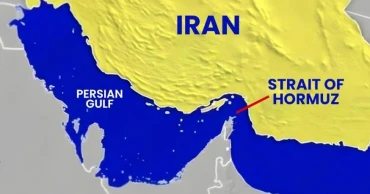
Iran orders closure of Strait of Hormuz, threatens action against vessels
A senior Iranian military advisor on Monday warned that Iran’s armed forces will prevent any oil exports through the Strait of Hormuz.
Ebrahim Jabbari, an advisor to the chief commander of Iran’s Islamic Revolutionary Guard Corps (IRGC), made the remarks in an interview with state-run IRIB TV, saying the country’s forces would act against any oil tankers attempting to pass through the strait.
Iran death toll hits 787 as Israeli, US strikes intensify
He asserted that the Strait of Hormuz has been closed and that the naval forces of the IRGC and the Iranian army will set on fire any ship trying to transit the waterway. Jabbari also said Iran would target oil pipelines in the region, emphasizing, “we will not let oil be exported from the region.”
He further stated that the United States relies heavily on oil from West Asia and warned that “not a single drop of oil will be supplied to them.”
7 months ago
US plans to cut Iran’s oil exports by over 90% in renewed pressure campaign
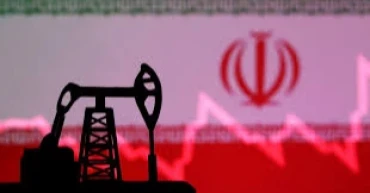
The United States has announced plans to slash Iran’s oil exports by more than 90 per cent as part of former President Donald Trump’s renewed “maximum pressure” campaign, Treasury Secretary Scott Bessent stated on Friday.
Speaking to Fox Business, Bessent said, “We are committed to bringing the Iranians back to 100,000 barrels-a-day of oil exports,” referencing the level seen during Mr Trump’s first term in office. Currently, Iran is exporting between 1.5 million and 1.6 million barrels per day, according to Bessent.
Last week, Mr Trump signed a memorandum directing the Treasury Department to impose “maximum economic pressure” on Tehran to prevent it from acquiring nuclear weapons. The order echoes the policy from his first administration, which saw Iran’s oil exports plummet from approximately three million barrels per day in 2017 to around 400,000 in 2019.
During his initial term, Mr Trump withdrew from the 2015 Joint Comprehensive Plan of Action (JCPOA), arguing that the agreement failed to prevent Tehran from developing nuclear technology. Sanctions lifted under the deal were subsequently reimposed as part of Washington’s strategy to cripple Iran’s economy.
Economic Pressure and Sanctions
Bessent underscored the US’s capacity to enforce maximum economic pressure on Iran, suggesting that a return to “Trump 1.0 levels” of oil exports would lead to “severe economic distress” for the country.
“Their economy is quite fragile right now,” he said, citing high inflation and a “gigantic” budget deficit. He further claimed that revenue from Iran’s oil exports was being used to fund “terrorist activity.”
Modi says US and India target $500 billion bilateral trade by 2030
In line with Mr Trump’s directive, the Treasury Department has already imposed sanctions on three oil tankers, and Bessent signalled that further measures could be taken against Russian energy exports if instructed by the administration.
The executive order also directed the State Department to “modify or rescind existing sanctions waivers” and coordinate with Treasury in implementing the maximum pressure policy.
China and India in the Spotlight
Experts warn that reducing Iran’s oil exports to near-zero levels would necessitate targeting intermediaries, as well as major buyers such as China and India.
“The Chinese, perhaps Indians, are buying the sanctioned Iranian oil and that is unacceptable,” Bessent stated.
While the US remains steadfast in its approach, Iranian Foreign Minister Abbas Araghchi dismissed the prospect of negotiations under such conditions. “Negotiation cannot be carried out from a weak stance, as it will no longer be considered negotiation but a kind of surrender. We never go to the negotiating table this way,” Iranian state media quoted him as saying this week.
Opec’s Position
Despite Washington’s aggressive stance, analysts suggest that the Organisation of the Petroleum Exporting Countries (Opec) is unlikely to alter its voluntary production cuts due to the US campaign. With Iran’s crude oil production recorded at 3.28 million barrels per day in January 2025, Opec is expected to have sufficient capacity to absorb any supply reductions resulting from the sanctions.
China establishes over 30,000 smart factories
As tensions escalate, the effectiveness of Mr Trump’s renewed maximum pressure strategy remains to be seen, particularly amid ongoing geopolitical shifts and Iran’s determined resistance to US-imposed economic constraints.
Source: Agencies
1 year ago
Libya's eastern-based forces move to halt oil exports
A move by Libya's east-based forces to choke off oil exports from its territory threatens to throttle much of the country's oil production, the national corporation said Saturday, escalating tensions ahead of an international peace summit to end the civil war.
6 years ago