July Uprising anniversary
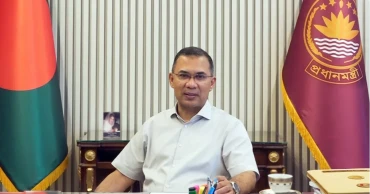
“It is our duty to preserve this unity at all costs,” says PM on July Uprising Anniversary
Prime Minister Tarique Rahman on Tuesday said it is duty for every political party, person and group that stands on the side of democracy should uphold the unity forged on the blood-soaked streets during the 2024 July Mass Uprising.
“An unprecedented national unity has been forged on the blood-soaked streets sanctified by the sacrifice of thousands of martyrs. It is our duty to preserve this unity at all costs,” he said in his message issued on the occasion of the 2nd anniversary of the July Mass Uprising Day.
The Prime Minister said they will have differences of opinion on many issues and that is the beauty of democracy. “But we must all remain vigilant to ensure that differences of thought and opinion never descend into hostility. Every political party, individual and group that stands on the side of democracy shares this responsibility,” he said.
Describing August 5 as a day of victory and the restoration of democratic rights for all those who cherish freedom and democracy, he said exactly two years ago today, on 5 August 2024, the heroic students and people of this country secured a historic victory by bringing to an end more than one and a half decades of fascist rule.
He said for more than one and a half decades, in the struggle against fascism and for the restoration of the people's right to vote and their democratic rights, the BNP, other anti-fascist political parties, and the people of differing views had to endure limitless persecution and repression.
Citing that countless people became victims of enforced disappearance, murder, abduction, assaults, false cases, torture and oppression, he said in leading this movement, the uncompromising leader of the nation, former prime minister late Begum Khaleda Zia, was also forced to spend years in the prison of the oppressors on false charges.
To silence the voices of those who stood for democracy, the fugitive autocrat, on its orders, established hundreds of secret detention centres across the country-known as ‘Aynaghar’, said Tarique Rahman.
In the dark cells of these secret facilities, countless people were held in a state of endless uncertainty for months and even years. Many were disappeared forever, he said adding that the whereabouts of many leaders and activists, including former BNP MP Ilias Ali and Commissioner Chowdhury Alam, remain unknown to this day.
The PM said constitutional and statutory institutions, including the judiciary and the Election Commission, had been rendered ineffective.
“The Constitution was disregarded, the people's voting rights were taken away, and elections were reduced to a farce. The country's politics, economy, education and healthcare systems were devastated, and Bangladesh was turned into a subservient state,” he said.
He said the banking sector was pushed to the brink of collapse, while irregularities, corruption, plunder and money laundering were normalised. A personality cult was established. Yet, in the end, it could not survive.
The Prime Minister said people from every walk of life-the heroic students, farmers, workers, rickshaw-pullers, day-labourers, garment workers, hotel and restaurant employees, transport workers, journalists, intellectuals, cultural activists, homemakers, women, children, and people from all sections of society took to the streets during the July-August Mass Uprising of 2024.
“Desperate to crush the uprising, the fascist government opened fire on pro-democracy citizens, killing people as though they were birds. It even fired upon the people from helicopters. Not even infants in their mothers' arms were spared from the reckless gunfire of the autocrats,” he said.
Standing before the guns of the autocrats, the outstretched chest of brave martyr Abu Sayed of Rangpur, martyr Wasim Akram of Chattogram, martyr Mugdho of Dhaka, and countless other courageous sons of this soil became enduring sources of inspiration for all who stood for democracy, he went on.
During the July-August Mass Uprising alone, thousands of people were martyred. At least 30,000 people were injured. Hundreds lost limbs and were permanently disabled, while many lost their eyesight for life, said Tarique Rahman.
Noting that the sacrifice of thousands of lives did not go in vain, he said through the united movement of the pro-democracy people, the fascists fled Ganabhaban on 5 August. The so-called members of parliament fled the Jatiya Sangsad (National Parliament). The Chief Justice fled the Supreme Court. The Chief Khatib fled Baitul Mukarram. Ministers fled the Cabinet, he added.
He said the collaborators of fascism went into hiding. “What happened in Bangladesh on 5 August was not only unprecedented in the history of Bangladesh, but also in the history of the world.”
From 1971 to the present day, millions have made sacrifices at every turning point in the struggle for the country’s independence and its defence, in movements against autocracy and fascism, and in the fight to restore democracy, he said.
“On this historic day, I remember with profound respect all the martyrs. By sacrificing their lives for the freedom, rights and dignity of the country and its people, they have left us in their debt. Bangladesh owes an enduring debt to every martyr's family. Now it is our turn to repay that debt,” said the PM.
He urged the nation to let the pledge be to honour that debt through our sincere efforts to build a just, self-reliant, democratic and humane Bangladesh by ensuring the political and economic empowerment of people and by establishing equality, human dignity and social justice.
“Never again shall autocracy, fascism, extremism, or militancy take root in Bangladesh. Never again shall this country be allowed to become a subservient state. The national unity established on these fundamental principles remains unshaken and, Allah willing, shall endure,” he said.
The Prime Minister finally said the year 1971 was the war to achieve independence, while 2024 was the struggle to defend the freedom of the country and its people. “Bangladesh has never forgotten the martyrs of the Liberation War of 1971 and it will never forget the martyrs of the Mass Uprising of 2024,” he said.
2 hours ago
Tarique inaugurates BNP’s 36-day programme marking July Uprising anniversary
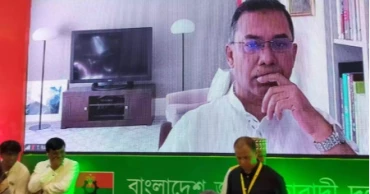
BNP Acting Chairman Tarique Rahman on Tuesday inaugurated the party’s 36-day-long programme titled ‘July-August Uprising: Mourning and Victory Observance’, marking the first anniversary of the July-August mass uprising.
The BNP leader formally launched the programmes by virtually joining the party’s discussion, ‘Mass Uprising 2024: National Unity and Democratic Journey’, held at the China-Bangladesh Friendship Conference Centre in the capital.
“We have taken the month-long programme to observe the anniversary of the mass uprising. We have many other programmes. I inaugurate the programmes wishing for their all-out success,” he said.
BNP’s discussion on first anniversary of July uprising underway
Earlier, the discussion began with the recitation of verses from the Holy Quran at around 3:10pm.
A munajat (prayer) was offered, seeking peace for the souls of those who were martyred during the July-August mass uprising and other democratic movements.
A one-minute silence was then observed while standing in honour of the martyrs, followed by the playing of the national anthem.
A documentary titled ‘National Unity and Democratic Journey’ was also screened on the occasion.
A deeply emotional moment unfolded as the families of those killed during mass uprisings and democratic movements, as well as victims of enforced disappearances, shared their sorrow and grief over the loss of their loved ones.
Many in the audience, including Tarique Rahman, were seen wiping away tears, moved by the speeches of the family members of the martyred and enforced disappearance victims.
Martyred Abu Sayed’s elder brother Ramjan Ali, Mir Mahfuzur Rahman Mugdho’s father Mostafizur Rahman, Wasim Akram’s father Safiul Alam, Yamin’s father Mohiuddin, Abdullah bin Zahid’s mother Fatima Tuz Zohr, Farhan Fiaz’s sister Saima Islam Farin, Kazi Fahim’s mother Kazi Lulfa, missing BNP leader M Ilias Ali's wife Tahsina Rushdir Luna, Sanjida Islam Tuli, coordinator of Mayer Daak, a platform for family members of enforced disappearance victims, enforced disappearance victim and BNP leader Anisur Rahman Talukdar, Adiba Islam Hridi, daughter of enforced disappearance victim and Chhatra Dal leader Parvez Hossain, crossfire victim Nuruzzaman Jony’s brother Moniruzzaman Hira, as well as the fathers of Biswajit and Abrar Fahad, who were brutally killed by ruling party cadres during the Awami League’s rule, Redwad Hossain Riyad, who lost his eyes in police firing during the mass uprising, and Navil, who was maimed in a police shooting, also spoke at the programme.
Khaleda to virtually address BNP’s discussion today
BNP leaders said the discussion was organised to honour the memory and sacrifices of those who were killed, made enforced disappear or suffered during the July-August mass uprising and other democratic movements.
BNP Chairperson and former Prime Minister Begum Khaleda Zia addressed the event virtually as the chief guest.
BNP Secretary General Mirza Fakhrul Islam Alamgir spoke at the event as a special guest, with the party’s Senior Joint Secretary General Advocate Ruhul Kabir Rizvi in the chair. Leaders from different democratic parties also addressed the programme.
A good number of family members of those who lost their lives, went missing during past political movements, including last year’s uprising, and others affected, attended the event.
Earlier, on June 26, the party announced a series of programmes to be observed from July 1 to August 6, marking one year since the July-August mass uprising that led to the fall of the autocratic ruler Sheikh Hasina on August 5, 2024.
The programme includes discussion meetings, silent marches, rallies, seminars, blood donation campaigns, graffiti painting, street theatre, football tournaments, children’s rights events and public awareness drives on dengue and COVID-19 prevention.
1 year ago