Vivo X200 FE Rivals
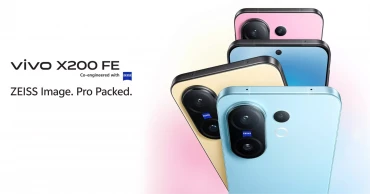
Vivo X200 FE Review: The Compact Champion Featuring Zeiss Cameras and a Massive Battery
Vivo has carved a name in the premium smartphone world with its innovative X series, known for flagship-grade cameras and sleek designs. The latest addition, the Vivo X200 FE, launched on 5 July 2025, continues this tradition with a powerful compact package built for performance lovers. Let's take a look at the main features, specifications, pros, cons and pricing of the Vivo X200 FE in Bangladesh.
Key Features & Specs of vivo X200 FE
.
Design and Build Quality
The Vivo X200 FE is a compact flagship that does not skimp on premium aesthetics or durability. With a sleek aluminium frame sandwiched between a glass front and back, it measures just 150.8 mm tall and weighs 186 g, perfect for one-handed use.
Its IP68/IP69 rating for dust and water resistance is a rare bonus at this size, even rivalling the rugged capabilities of Sharp Aquos R8s (which is MIL-STD-810G compliant) and exceeding the Motorola Razr 2025’s IP48 protection. While the Razr has a unique folding design and eco-leather finish, the X200 FE feels more solid and less gimmicky.
Compared to its bigger sibling, the Vivo X200, which is slightly larger and heavier (197–202 g), the X200 FE appeals to users seeking portability without compromising on materials. The colour options—Luxe Grey, Frost Blue, Amber Yellow, and Pink Vibe—add flair for those who care about visual appeal.
Read more: Tecno Spark 40 Pro Review: Budget Brilliance or Just Another Buzz?
Display Quality
The Vivo X200 FE packs a stunning 6.31‑inch LTPO AMOLED display with 1B colours, a 120 Hz refresh rate, 2160 Hz PWM dimming, HDR10+ support, and an incredible peak brightness of 5,000 nits. The visuals are vibrant and sharp (at 1216×2640 resolution, ~461 ppi) and remain clear even under intense sunlight.
In comparison, the standard Vivo X200 features a slightly larger 6.67‑inch AMOLED display with a similar 2160 Hz PWM and HDR10+, but peaks at 4,500 nits. While both are excellent, the FE’s brightness makes it unbeatable outdoors.
The Sharp Aquos R8s uses a PRO IGZO LTPO OLED panel with Dolby Vision support, but it peaks at just 1,300 nits, making it look dim beside the X200 FE in bright conditions. The Motorola Razr 2025’s foldable LTPO AMOLED screen is large (6.9″) and visually rich but peaks at 3,000 nits and feels more fragile due to the folding mechanism.
The X200 FE’s flat panel with Schott Xensation glass offers the best balance between performance, durability, and comfort for compact flagship seekers.
Read more: Best Smartphones Releasing in July 2025
Camera Performance
Vivo continues its imaging legacy with a powerful triple rear setup on the X200 FE: a 50 MP wide lens, a 50 MP periscope telephoto with 3x optical zoom, and an 8 MP ultrawide lens. Zeiss optics, laser autofocus, and Zeiss T* coating bring professional-level clarity and flare control. In daylight, shots are crisp, and the 50 MP selfie cam is a dream for content creators. Low-light performance is respectable, though the 8 MP ultrawide shows some soft edges and noise.
Compared to the Vivo X200, which carries a superior 50 MP ultrawide camera with autofocus and a more advanced main sensor with OIS, the FE falls slightly short in diversity and sensor depth. However, the FE still outperforms competitors like the Motorola Razr 2025 and Sharp Aquos R8s. The Razr’s dual-camera setup lacks the FE’s periscope lens and struggles in low light, while the Sharp’s 13 MP ultrawide feels outdated and delivers middling detail.
In video, the X200 FE records in 4K at 60 fps with HDR and gyro‑EIS, ensuring steady and vibrant footage—on par with most 2025 flagships. The Razr also shoots 4K, but the output lacks the vivid contrast and dynamic range Vivo's Zeiss partnership brings to the table.
Processor Performance
Under the hood, the Vivo X200 FE is powered by the MediaTek Dimensity 9300+ (4 nm), built for flagship-level multitasking and speed. It boasts an octa-core CPU with a high-performance 3.4 GHz Cortex-X4 core and Immortalis-G720 MC12 GPU. While it is slightly less powerful on paper than the Vivo X200’s Dimensity 9400 (3 nm) and Immortalis-G925 GPU, the FE still performs fluidly across all tasks.
Read more: vivo T4 Ultra Review: A Game-Changing Mid-range Flagship
In daily usage, you will barely notice the difference unless benchmarking is your thing. Compared to the Snapdragon 8 Gen 2 chip in the Sharp Aquos R8s, the Dimensity 9300+ is more energy-efficient and slightly faster in AI and multitasking tasks. Meanwhile, the Motorola Razr 2025's Dimensity 7400X, paired with a Mali-G615 GPU, feels a step behind in both general responsiveness and heavy app loads. For users who prioritise consistent flagship-grade speed without thermal throttling, the X200 FE remains ahead of both competitors.
Gaming Performance
Gaming on the Vivo X200 FE is a smooth affair. The combination of a powerful GPU, 12–16 GB RAM, and a high-refresh-rate AMOLED screen ensures a top-tier experience in games like Genshin Impact, PUBG, or Call of Duty Mobile. Thermal performance is well-controlled, though there’s minor warmth after extended play or fast charging sessions.
The Razr 2025, with its weaker GPU and foldable screen, is not built with hardcore gaming in mind. It struggles to maintain stable frame rates in graphically intensive titles. The Aquos R8s, though built on a Snapdragon 8 Gen 2, does not have a gaming-optimised cooling system and tends to throttle over long periods.
Here, the X200 FE, despite lacking the ultra-performance edge of the X200’s Dimensity 9400, still delivers a far more reliable gaming experience than its similarly priced rivals.
Read more: Infinix GT 30 Pro Review: Best Budget Gaming Phone with Flagship Features in 2025
Battery Life
One of the standout features of the Vivo X200 FE is its massive 6,500 mAh battery (outside Austria and Hungary). It is rare to see this capacity in such a compact phone. In real-world use, this means 1.5 to 2 days of battery life for moderate users and a full day for power users with heavy media consumption. When you do run low, 90 W fast charging refills the phone to 100% in just under 60 minutes.
By contrast, the Vivo X200 offers a smaller 5,800 mAh battery and similar 90 W charging speed—but drains quicker due to its larger display and more powerful processor. The Sharp Aquos R8s is limited by a 4,750 mAh battery and slow 15 W charging—totally outdated by 2025 standards.
The Motorola Razr 2025 also disappoints with a 4,500 mAh battery and 30 W charging (though it adds 15 W wireless support), but it cannot compete with the endurance the X200 FE delivers. Overall, the FE’s battery life is unmatched in this size class.
Software and User Interface
Running Android 15 with Funtouch OS 15, the Vivo X200 FE promises four major Android upgrades, keeping it future-proof until Android 19. Funtouch 15 is now lighter, more customisable, and smoother than previous versions, with fewer bloatware issues and cleaner UI animations. Features like RAM expansion, always-on display, and advanced camera controls are polished and useful.
Read more: Basic to Flagship: Top 5 Official Smartphones Released in Bangladesh in 2025
Compared to OriginOS on Chinese models of the X200, Funtouch is more user-friendly globally. The Motorola Razr 2025 runs near-stock Android 15, which some may prefer for its simplicity, though it lacks the smart features and customisation Vivo offers. Sharp Aquos R8s still runs Android 13, and software updates remain a weak point for Sharp’s phones—putting it behind both Vivo and Motorola.
Storage Options
The X200 FE offers up to 512 GB storage with 12 or 16 GB of LPDDR5X RAM and UFS 3.1 speeds. While UFS 4.0 would have been preferable (as used in the X200 and Aquos R8s), real-world speed differences are minimal unless you are moving massive files frequently. There is no microSD support—same as its competitors—but the high base storage helps offset that.
The Vivo X200 leads slightly with up to 1 TB storage and faster UFS 4.0, appealing to content hoarders and power users. Motorola Razr 2025, on the other hand, offers just 256 GB UFS 2.2—noticeably slower and more limiting. The Sharp Aquos R8s supports expandable storage via microSDXC, which is handy but can’t match the speed and integration of internal UFS storage.
Pros and Cons of vivo X200 FE
Pros
- Premium aluminum frame with IP68/IP69 rating- Compact 6.31-inch LTPO AMOLED display, 120 Hz refresh- Sharp and detailed triple rear camera with Zeiss optics- High-res 50 MP front selfie camera- Stereo speakers for rich audio- Infrared port and NFC included- Massive 6500 mAh battery with fast 90 W charging- Smooth performance with Dimensity 9300+ chipset- Bright 5000-nit screen, great for outdoor use- Up to 16GB RAM and 512GB storage.
Read more: Xiaomi Redmi Turbo 4 Pro Review: Can It Survive the Competition?
Cons
- No FM radio feature- No 3.5mm headphone jack- USB-C is still version 2.0- The ultrawide camera is only 8 MP and lacks autofocus- No wireless charging support
Price of vivo X200 FE
The Vivo X200 FE is priced at approximately BDT 87,000 in Bangladesh.
Verdict
The Vivo X200 FE is perfect for users seeking a compact phone with flagship cameras, long battery life, and a stunning display. However, those needing wireless charging, a headphone jack, or a powerful ultrawide camera should consider alternatives. It is a premium pick for on-the-go power users and content creators.
Read more: vivo iQoo Z10 Turbo Review: Is It the Mid-Range Beast You Are Looking For?
1 year ago