Maria Corina Machado
Nobel Peace Prize for Maria Corina Machado sparks outcry over Israel ties
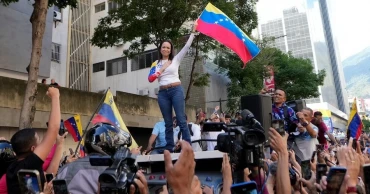
Maria Corina Machado, a prominent Venezuelan pro‑democracy activist, has come under fire after being awarded the 2025 Nobel Peace Prize. Critics say the prize is controversial because Machado has publicly backed Israel and its military actions in Gaza and has previously called for foreign assistance to help remove Venezuela’s government.
The Nobel Committee named Machado the Peace Laureate on Friday, praising her role in defending democracy and resisting authoritarian rule in Venezuela.
orgen Watne Frydnes, the committee’s chair, described her as a "key, unifying figure in a political opposition" and hailed her as a "champion of peace" who has kept democratic hopes alive.
In his announcement Frydnes added, "In the past year, Machado has been forced to live in hiding. Despite serious threats against her life, she has remained in the country, a choice that has inspired millions. When authoritarians seize power, it is crucial to recognise courageous defenders of freedom who rise and resist."
The award prompted a swift reaction from Washington, with the White House criticising the decision for "placing politics over peace" — a rebuke that came amid a recent U.S. effort to present President Donald Trump as a global peacemaker. Machado later dedicated her Nobel to Trump; the U.S. President said he was happy for her.
Opponents have pointed to Machado’s past statements and actions as grounds for protest.
They cite social media posts and public remarks in which she expressed solidarity with Israel following the October 7, 2023, Hamas attack and voiced support for Benjamin Netanyahu’s Likud party.
One frequently highlighted line from her past posts says, "The struggle of Venezuela is the struggle of Israel." She has also referred to Israel as a "genuine ally of freedom" and once pledged to move Venezuela’s embassy to Jerusalem if elected.
Norwegian lawmaker Bjornar Moxnes noted Machado signed a cooperation document with Israel’s Likud party in 2020, arguing that association with a party blamed by some for actions in Gaza makes the award incompatible with the Nobel’s aims.
The Council on American‑Islamic Relations condemned the decision as "unconscionable," urging the Nobel Committee to reconsider and calling instead for recognition of those who have "bravely pursuing justice for all people," including students, journalists, activists and medical workers opposing what they call "the genocide in Gaza."
Machado also faces criticism over appeals she made for foreign support against the government of President Nicolás Maduro.
In 2018 she posted a copy of a letter she said she had sent to Argentina’s then‑president and to Israel’s prime minister, writing, "Today, I am sending a letter to @mauriciomacri, President of Argentina, and to @netanyahu, Prime Minister of Israel, to ask them to apply their strength and influence to advance in the dismantling of the criminal Venezuelan regime, intimately linked to drug trafficking and terrorism." That call for outside intervention remains a focal point for critics who say it contradicts the Nobel Peace Prize’s spirit.
Supporters argue Machado’s personal sacrifices and leadership in Venezuela’s opposition movement merit recognition, while detractors say her foreign alliances and statements about Israel and intervention undermine the moral standing of the prize. The debate over her selection has quickly become a flashpoint in wider discussions about how the Nobel Peace Prize should balance political realities, moral consistency and the promotion of peace.
With inputs from NDTV
11 months ago