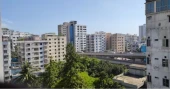
5.7-magnitude earthquake in Dhaka
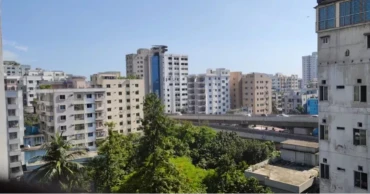
Frequent Earthquakes: Can Dhaka prepare itself for the big one?
Central Bangladesh, including capital Dhaka, the most densely populated megacity (population above 10 million) in the world has been shaken by a series of earthquakes over just two days, raising serious concerns about the city’s preparedness for a major tremor.
Experts have warned that the overpopulated capital of Bangladesh could become a hotspot for earthquake vulnerability, as nearly 90% of its older buildings were constructed without adhering to proper building codes.
Concerns intensified following the powerful, 5.7-magnitude earthquake that struck at 10:38am on Friday, shattering the usual weekend calm and turning the holiday into a frightening experience for residents of the capital.
According to the Bangladesh Meteorological Department (BMD), the epicenter of the 26-second quake was in Madhabdi, Narsingdi, and its depth was recorded at just 10 kilometres below the surface.
The tremor, felt across several parts of Bangladesh, left at least 10 people dead - four in Dhaka, five in Narsingdi and one in Narayanganj. Over 600 people were also injured.
It is rare for earthquakes in Bangladesh to result in multiple fatalities. The last time it happened was in 1999, when an intense earthquake shook the island of Moheskhali, killing 6 people. Hundreds were also injured on the island off the coast of Chattogram in the country’s south-east.
But Friday’s quake was instantly recognisable as something different, with deeper repercussions. Besides the casualties being spread across three districts, the epicentre being so close to Dhaka caused a projected 10 million people in Dhaka to feel ‘strong shaking’, according to the United States Geological Survey, which is the leading authority on earthquake data worldwide.
Dhaka can’t withstand major quake; 95% of its buildings unplanned: Experts
Closer to the epicentre in Narsingdi, about 300,000 people were projected to have felt ‘high-intensity’ shaking. Literally everyone we spoke to in the capital confirmed they had never felt the ground shaking like it did during Friday’s quake.
It was followed almost exactly 24 hours later by a much smaller aftershock, again with its epicentre in Narsingdi’s Palash upazila. The BMD reported that this quake, measuring 3.3 on the Richter scale, occurred at 10:36am on Saturday, about 29 km west of the BMD Seismic Centre in Agargaon.
And then on Saturday evening, a third tremor in the space of 32 hours, considered a second aftershock of Friday’s quake, was felt in parts of Narsingdi and nearby districts including Dhaka. According to USGS, this latest quake measured 4.3 on the Richter scale and struck at 6:06pm local time, with its epicentre located 11 kilometres west of Narsingdi at a depth of 10 kilometres.
Even though no casualties were reported from either of the two aftershocks, they served to heighten anxiety, confirming that the fault lines lying deep beneath them in the earth’s crust had become seismologically active.
Several buildings across various areas of Dhaka were damaged after Friday’s earthquake. According to the Dhaka district administration, at least 14 buildings in the capital sustained damage from the quake, while the Rajdhani Unnayan Kartripakkha (Rajuk) put the number at over 50, including many that had tilted.
For survivors, the psychological impact lingers. For many, the ground no longer feels stable, and the fear of a stronger quake currently haunts millions across Dhaka.
“I am a student of Mujib Hall (2024–2025 session). I became traumatized because of the earthquake. I live in the July Smriti Bhaban of Mujib Hall. Now, whenever a vehicle passes by my building or I hear even the slightest sound, I panic,” a Dhaka University student shared.
“It feels as if another earthquake is happening. I repeatedly check my room and surroundings to see if there is a tremor,” he added.
At least four students were seriously injured after jumping from the residential hall buildings of Dhaka University in panic during Friday’s quake. The university ended up first cancelling all classes scheduled for Sunday, before a syndicate meeting on Saturday suspended all academic activities till December 6, citing the physical and mental stress caused by the earthquake and its aftershocks, as well as the need to renovate the residential halls.
Risky Buildings in Dhaka
According to RAJUK, the first list of risky buildings was prepared in 2010 and updated in 2016. Currently, Dhaka has 321 extremely risky buildings, mostly in Old Dhaka. In 2024, RAJUK also identified 30 risky buildings across 21 educational institutions.
A RAJUK survey conducted under the Urban Resilience Project between 2018 and 2022 found that approximately 865,000 buildings in Dhaka could collapse if a 6.9-magnitude earthquake struck the Madhupur Fault near Tangail. Such a scenario could result in 210,000 deaths and 229,000 injuries if it occurred during daytime hours.
Bangladesh’s cities, including Dhaka and Chattogram, remain highly vulnerable to earthquakes due to widespread disregard for building codes, master plans, and land-use zoning, according to the Institute for Planning and Development (IPD).
Bangladesh Earthquake: Fire Service issues 8 safety guidelines
Adil Muhammad Khan, Professor at the Department of Urban and Regional Planning at Jahangirnagar University, emphasized the urgent need for preparedness, citing the recent 7.7-magnitude earthquake in Myanmar as a stark reminder of the risks.
Experts have also expressed concern that, despite the formation of multiple reform commissions, the interim government has yet to establish a dedicated authority for planned urbanization, sustainable housing, and building safety.
The Bangladesh Institute of Planners criticised the formation of an advisory council allegedly influenced by real estate developers to amend Dhaka’s Detailed Area Plan (DAP), favouring unrestricted high-rise construction.
A new paradigm in construction
When a 9.1-magnitude earthquake struck Japan in 2011, in buildings equipped with an innovation known as ‘base isolation’, not even a glass fell from the shelves.
It is a construction technique in which the building (or other such establishment)is not rigidly attached to the ground. Instead, hundreds of special rubber–lead bearings are installed beneath it. When an earthquake hits, the ground may shake violently, but the building above moves gently — swaying slowly rather than shaking hard. As a result, people, furniture, equipment, and interior structures remain almost completely unaffected.
Today in Japan, nearly all new towers, buildings, hospitals, schools, and data centres are required to have this system. Even 40–50-year-old buildings are being retrofitted by cutting the foundation and installing base isolation to give them a new, safer life.
Some engineers recommend that Bangladesh should move in this direction to save itself from a catastrophic situation in the future.
Under the Bangladesh National Building Code-2020 (BNBC-2020), important structures in Dhaka and Chattogram have already started using base-isolation systems. The Rooppur Nuclear Power Plant, several metro rail stations, and a few new towers are already implementing this technology.
A paper titled “Status of Base Isolation Applications in Bangladesh” was presented at the 19th World Conference on Seismic Isolation, Energy Dissipation and Active Vibration Control of Structure at Berkeley, USA in September this year.
Home Adviser urges people to follow earthquake safety measures
Tahmeed Al-Hussaini from Bangladesh University of Engineering and Technology and Khondaker Sakil Ahmed from the Military Institute of Science and Technology described the significance of the use of this technology.
They mentioned that Bangladesh, located near the plate boundaries of Indian and Eurasian plates to its north and east, possesses significant seismic risk. Seismic Zone V of India, assigned with the highest seismic risk in that country, encircles Bangladesh on its northern and eastern sides.
Their paper also referred to the fact that base-isolation has been adopted in two major bridges of Bangladesh. The 4.8-km Jamuna Bridge contains seismic steel pintles for earthquake protection, while the 6.1-km Padma Bridge contains double concave friction pendulum bearings.
Analysis shows satisfactory performance of both base isolation systems. Particularly for Padma Bridge, the seismic demand on the bridge was large due to very deep pile foundations, double deck heavy superstructure and deep scour in the Padma River.
Research results show that base isolation may be satisfactorily applied for mid-rise to high-rise buildings in Bangladesh.
And the first application of base isolation to a building in Bangladesh is planned for a new headquarters of the Fire Service and Civil Defense in Dhaka.
Considering earthquake risk, Bangladesh is divided into three seismic zones. Among them, the high-risk areas fall under Zone-1, medium-risk areas under Zone-2, and the least-risk areas under Zone-3. A map published by the Meteorological Department identifies the earthquake-prone regions of the country.
In particular, nine districts of the Sylhet and Mymensingh divisions; parts of Tangail, Gazipur, and Narsingdi in the Dhaka division; the entire Kishoreganj district; Brahmanbaria in the Cumilla division; and large areas of the hill districts Khagrachhari and Rangamati are identified as high-risk zones.
Ceiling And Wall Cracks After An Earthquake: When To Worry
Statistics show that between 1976 and 2015, Bangladesh experienced at least five major earthquakes. Almost all of these originated in Sylhet, Moulvibazar, Rangamati, Bandarban, and Cox’s Bazar. Historically, it has been expected that these areas may also experience stronger quakes in the future.
But the rapid and unplanned development of centrally located Dhaka city in the period since independence, and its proximity to the epicentre of the weekend’s tremors, are triggering renewed concerns over the fate that awaits the capital’s residents.
During the inspection at three affected areas of Dhaka on Saturday, the RAJUK Chairman Engineer Md Riazul Islam said this earthquake was a warning for us. “If we do not take it seriously, a major disaster awaits,” he warned.
He added that authorities are preparing a list of the buildings that were damaged in the quake.
The risky structures are being inspected on-site, and those found highly unsafe are being sealed or closed.
“In some cases, dangerous installations are being removed. Unless all of us become aware and act responsibly, we may face a severe catastrophe in the near future.”
Environment Adviser Syeda Rizwana Hasan has warned that nearly 90% of old buildings in Dhaka were constructed without following the building codes, leaving the capital extremely vulnerable; especially in light of the recent earthquakes.
Speaking to journalists in Mirpur on Friday, she said the latest tremor should serve as a serious wake-up call for Bangladesh.
“We have never experienced earthquakes this strong. Repeated warnings are being issued; this is the time to prepare,” she said.
10 Most Earthquake-prone Countries around the World
10 months ago
Bangladesh earthquake death toll rises to 10; scores injured
The death toll from the 5.7-magnitude earthquake that struck Dhaka and several other parts of the country on Friday morning (November 21) rose to 10.
Of them, four were killed in Dhaka, five in Narsingdi district, the epic centre of the earthquake, and one in Narayanganj.
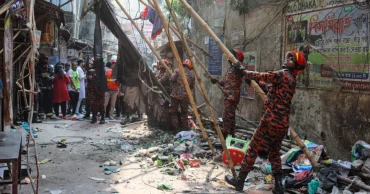
Thirteen people were injured after the railing of a building collapsed on them in the Koshaituli area of Armanitola, said Mallik Ahsan Uddin Sami, deputy commissioner of the DMP’s Lalbagh Division.
They were taken to Sir Salimullah Medical College (Mitford) Hospital, where physicians declared three of them dead on arrival, said Shahjahan Sikder, deputy assistant director of the Fire Service and Civil Defence (FSCD) headquarters media cell.
The deceased were identified as Abdur Rahim, 47, his son Abdul Aziz Rimon, and medical student Rafiul Islam Rafi.
The remaining injured are receiving treatment at the hospital, he added.
Separately, at least 18 people were brought to Dhaka Medical College Hospital (DMCH) from different parts of the capital following the quake.
Md Faruk, in-charge of the DMCH police outpost, said the injured were being treated at the Emergency Department and warned that the toll could rise.
Meanwhile, multiple fire service units in Dhaka and nearby areas responded to a series of structural scare alerts and minor incidents.
Read more: Bangladesh jolted awake by huge tremor Friday morning
In Armanitola’s Kasaituli area, bricks and plaster fell from the wall and cornice of an eight-storey building above a beef shop, injuring customers and passers-by.
Locals rushed the victims to Mitford Hospital before fire service personnel arrived.
In Khilgaon, a passer-by was injured when a brick fell from an under-construction building onto a nearby two-storey structure.
Locals assisted the victim, and fire service officials said no intervention was required.
Two units from Baridhara Fire Station were deployed after a fire broke out at a residence in Block-F, Road-5. The cause of the blaze is yet to be determined.
Reports of leaning buildings were also received from Sutrapur’s Swamibagh and Kalabagan’s Abedkhali Road, prompting further unit deployments.
Officials later confirmed the structures were intact, saying residents had raised the alarm out of fear.
Casualties and injuries were also reported from other districts, including Gazipur and Narsingdi.
In Narsingdi, five people, including a child, were killed and scores injured during the earthquake in Narsingdi Sadar, Palash and Shibpur upazilas on Friday morning.
The deceased were Kazam Ali, 70, and Nasir Uddin, 50, of Malita and Danga villages respectively under Palash upazila, Nasir Uddin , 50 of the same village, Omar Faruk, 10, son of Delwar Hossain Ujjal in the Gabtali area of Sadar upazila, and Forkan Mia, 40, of Achhkina village under Shibpur upazila.
Of them, Kazam died on the spot when a wall collapsed on him while sleeping on bed at his house during the earthquake, said family members.
Nasir died of cardiac arrest while running after coming out the house during the quake, said Monir Hossain, officer-in-charge of Palash Police Station.
Omar and his father Ujjal sustained severe injuries when a wall collapsed on them in the Gabtali area.
They were rushed to the DMCH where physicians declared Omar dead on arrival, said Md Faruk, in-charge of the hospital police camp.
Omar was a student at a Hefz madrasa in the area.
The father, an office assistant at the National Housing Authority, is undergoing treatment at the Intensive Care Unit of the DMCH. Omar’s body has been kept at the hospital morgue, Md Faruk confirmed.
Besides, Forkan was critically injured after he fell off a tree while cutting its branches during the quake.
Earthquake: Japan stands in solidarity with Bangladesh
Initially, he was taken to the district Sadar hospital but succumbed to his injuries on way to Dhaka, said Shibpur Upazila Nirbahi Officer Farzana Yeasmin.
More than 100 others were injured in Narsingdi, most of them hurt while rushing out of their homes, witnesses said.
In Narayanganj, a one-year-old girl was killed and two women, including her mother, were injured when a wall collapsed during an earthquake in Rupganj upazila of Narayanganj.
Deceased Fatema was daughter of Abdul Haque of Islambagh village under Golakandail Union.
According to locals, Fatema’s mother, Kulsum Begum, was walking along the road with the child in her arms when tremors began around 10:38am. As they reached the Islambagh canal No-5 area, a nearby wall suddenly gave way and fell on them, leaving Fatema dead on the spot.
Residents rushed to the scene and recovered the child’s body from beneath the debris.
Kulsum Begum and another woman named Jesmin Begum sustained injuries and were admitted to a local hospital for treatment, said Mokhlesur Rahman, inspector at Bhulta police outpost.
They are receiving treatment at Narsingdi Sadar Hospital, according to Resident Medical Officer Farida Parvin.
In Gazipur, over a hundred garment workers were injured as they hurried down from several factories in Tongi, Gazipur Sadar and Sreepur during the tremor.
Authorities have since closed the factories to bring the situation under control.
Read more: Post-Earthquake Cautions: Do’s & Don’ts
11 months ago