LPG crisis
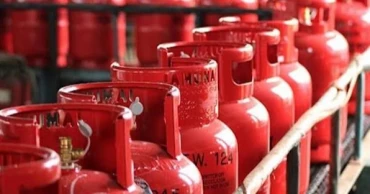
LPG Crisis: Consumers hit hard as cylinders vanish amid rampant overcharging
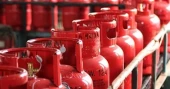
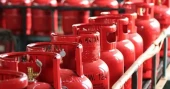
Liquefied petroleum gas (LPG) cylinders have become scarce in Dhaka city as some retailers are selling the cylinders at higher prices covertly, fearing raids and mobile courts by the administration.
Amid artificial scarcity of LPG supply, the retailers continue charging higher rates, ignoring the fixed prices, even after the latest hike. During the last few years, the LPG cylinders were selling at higher rates than the government-fixed prices, due to a mismatch between LPG supplies and real demand in the markets, said the sector insiders.
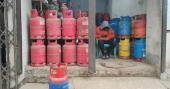
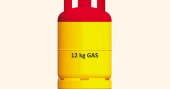
LPG cylinders are hardly available in some major areas of the capital, though retailers in some parts of downtown Dhaka are selling a 12kg cylinder for as high as Tk 2,500, with little impact of the government-fixed price of Tk 1,837 visible in the market.
Retailers said LPG suppliers are charging around Tk 2,200 for a 12kg cylinder, a day after the latest price hike by the Bangladesh Energy Regulatory Commission (BERC).
They said cylinders at the new rate are expected to enter the market from Tuesday and consumers may have to pay Tk 2,300 to Tk 2,400 for a 12kg cylinder from Wednesday.
Sector insiders attribute the chronic market distortion to a widening structural gap between actual national demand—estimated at around 1.4 to 1.5 million metric tonnes annually—and the constrained supply chain, leaving market forces to dictate rates regardless of regulatory orders.
Retailers reported that primary LPG distribution companies are already invoicing dealers between Tk 2,100 and Tk 2,200 per 12-kg cylinder, rendering the government-fixed rates unviable at the field level.
"Though the government fixed the price at Tk 1,837, the bottling companies themselves are charging us up to Tk 2,200," said Abdul Wares, an LPG supplier in the Boro Moghbazar area. "Adding transport costs and labor charges, how is it possible to sell at the official rate? It inevitably reaches Tk 2,400 at the consumer level because the government fails to enforce rates at the company point."
Traders warned that fresh stock under the newly declared rates will flood the market by Tuesday, potentially pushing consumer prices up to Tk 2,400 per 12-kg cylinder by Wednesday.
For October, BERC adjusted the retail price of private LPG to Tk 153.06 per kg (including VAT), up from Tk 132.08 per kg in September. Consequently, prices for other cylinder variants have also surged: 5.5-kg cylinders are set at Tk 842 (up from Tk 727), 12.5-kg at Tk 1,913 (up from Tk 1,652), 15-kg at Tk 2,296, 20-kg at Tk 3,061, and 45-kg commercial cylinders at Tk 6,888.
Autogas, heavily used in motor vehicles, saw a steep hike of Tk 11.53 per litre, reaching Tk 84.62 from September's Tk 73.09. Reticulated LPG liquid form was set at Tk 149.31 per kg.
The price of state-owned LP Gas Limited’s 12.5-kg cylinder remains unchanged at Tk 776.93, but its negligible market share offers little relief to the vast majority of consumers.
The regulator attributed the sharp price hike to a rise in international contract prices. Saudi Aramco's average Contract Price (Saudi CP) for propane and butane (35:65 ratio) jumped to $712.50 per metric tonne for October, up from $647.75 in September.
Although BERC instructed storage and bottling licensees to issue proper VAT invoices and adhere strictly to post-bottling price caps, business representatives urged the government to realistically assess national demand and streamline import channels to stabilize the volatile energy market.
16 days ago
When will the LPG crisis end? Businesses, homemakers in Dhaka struggle
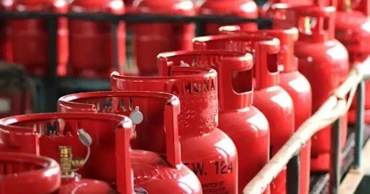
A serious shortage of liquefied petroleum gas (LPG) is disrupting kitchens and commercial eateries across the capital, forcing businesses and households to struggle with erratic supplies and higher costs.
For nearly two decades, Abdullah Molla has run a mid-range hotel in the capital, serving affordable meals to office-goers, students and low-income workers.
Over the past two weeks, however, he says keeping the business running has become a daily struggle.
“Even after paying more, gas cylinders are not available. Some days we cannot serve our full menu. We are losing money and customers are leaving without eating,” Abdullah told UNB.
Closing the kitchen is not an option but with no gas, many food items have already been dropped from the menu,he said .
Small restaurants and roadside food vendors are facing the same crisis across the country.
Kader, who runs a fast-food cart in a busy commercial area, said the rising price of LPG has pushed up his daily operating costs.
Gas cylinder explosion after wedding kills eight in Islamabad
“The price I used to buy gas at has increased sharply. If I raise food prices, customers get annoyed. Many walk away without buying anything,” he said.
Homemakers Under Pressure
The crisis is not limited to businesses. In many urban neighbourhoods, LPG is now the only cooking fuel as new residential gas connections remain suspended. For thousands of families, daily cooking has become uncertain.
Some households are being forced to switch to alternative fuels, which are often more expensive, time-consuming and inconvenient.
“There has been no pipeline gas in our area for a long time. We depend entirely on LPG cylinders, but now even that has become chaotic,” said housewife Arha Moni.
She alleged a huge gap between government-fixed prices and what retailers are charging.
“What is the official price of a 12-kg cylinder, and what are shopkeepers charging? Now it costs Tk 2,500 to Tk 2,600. Is this business, or is it robbery?” she asked.
Titas low pressure chokes gas supply across Dhaka; residents struggle
She accused traders of ignoring official prices and creating artificial shortages.
“Who gave them the right to empty ordinary people’s pockets through syndicates? Families are suffering badly. There is no gas in the stove, and buying a cylinder has become suffocating. Is there no one to see this?” she said.
Consumers have blamed weak market monitoring for allowing such practices to continue and have urged authorities to act immediately to curb price manipulation and ensure sales at government-fixed rates.
Import Dependence and Supply Disruptions
Businesses involved in LPG marketing claim that the current crisis stems from uncertainty in the supply system and complications over price adjustments.
They allege that despite the worsening situation, no clear directive or visible initiative has yet come from the government.
The Ministry of Power, Energy and Mineral Resources on January 04 said there is no shortage of Liquefied Petroleum Gas (LPG) in the country and local administrations have been ordered to take action against those responsible for creating the artificial crisis.
According to the ministry, LPG imports were 1.05 lakh metric tons in November 2025 and 1.27 lakh metric tons in December 2025.
Despite the increase in imports, there is no logic for a supply shortage in the market, it added.
Energy sector sources say Bangladesh’s annual LPG demand is now around 1.4 million metric tonnes, with monthly consumption exceeding 120,000 metric tonnes on average.
Demand rises further during winter and festival seasons.
Nearly 98 percent of the country’s LPG is imported, making the domestic market highly vulnerable to global price volatility, dollar shortages, LC opening complications and shipping delays.
Marketing companies claim recent import disruptions have prevented the buildup of adequate reserves.
Read more: How to Save Gas While Cooking at Home
As a result, dealers in many areas are receiving far fewer cylinders than required, creating shortages at the retail level.
Although the government-fixed price of a 12-kg cylinder remains unchanged, consumers say shortages have pushed market prices to Tk 1,800 to Tk 2,000 and even higher in many areas.
Analysts say LPG demand could reach 2.5 million metric tonnes annually by 2030. Without expanding supply capacity, simplifying import procedures and strengthening market monitoring, the crisis could worsen further.
A Ray of Relief?
Amid growing pressure from traders and consumers, Bangladesh Bank has eased import rules for liquefied petroleum gas to reduce financing pressure on local importers.
In a circular issued on Sunday, the central bank said LPG imports will now be eligible for usance terms of up to 270 days under suppliers’ or buyers’ credit.
The move is expected to give importers greater flexibility in managing payments during the ongoing dollar crunch.
However, industry insiders say the impact of the policy change may take time to be felt on the ground.
Until supply stabilises and prices come down, hotel owners, food vendors and homemakers fear the crisis will continue to disrupt daily life and livelihoods.
Energy and Mineral Resources Division's Joint Secretary AKM Fazlul Hoque said around six million households in Bangladesh currently use LPG, making it an essential commodity.
“The government is in the process of updating the LPG policy, which will include guidelines aimed at addressing existing challenges in the sector,” Fazlul added.
Chairman of the Bangladesh Energy Regulatory Commission (BERC) Jalal Ahmed on Thursday expressed optimism that the country would not face a shortage of liquefied petroleum gas (LPG) during the upcoming Ramadan, citing an expected increase in imports.
LP gas traders threaten nationwide supply suspension
“Those who brought in additional imports were not obstructed. Around 150,000 tonnes of LPG are expected to arrive in January. We hope there will be no problem during Ramadan,” Jalal said at a roundtable discussion titled ‘Challenges of Regulating the LPG Market’, organised by the LPG
9 months ago
Govt seeks tax relief on LPG to ease supply crisis and curb rising costs
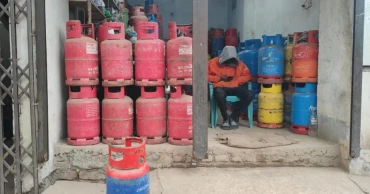
The Energy and Mineral Resources Division has urged the National Board of Revenue (NBR) to revise the existing VAT and tax structure on liquefied petroleum gas (LPG) imports and local production, aiming to stabilise supply and ease consumer pressure amid an ongoing market crunch.
In its letter, sent in reference to recent decisions of the Advisory Council and a petition submitted by the LPG Operators Association of Bangladesh (LOAB), the Energy Division noted that around 98 per cent of the country’s LPG demand is met through imports by private sector operators, while the fuel is widely used for household cooking as well as in industrial activities.
The letter pointed out that LPG prices typically rise during the winter season due to constrained global supply and increased domestic demand.
Traders behind LPG price manipulation: Energy Adviser
The situation has worsened as lower pipeline natural gas supply has pushed households and industries towards LPG, triggering a supply crunch that is disrupting daily life and drawing wide media attention.
Referring to a memorandum issued by the Internal Resources Division on December 23, 2025, the Energy Division cited discussions held at the Advisory Council meeting on December 18, 2025.
At that meeting, the council considered a proposal to withdraw the existing 15 per cent VAT exemption at the import stage and impose a 10 per cent VAT, while extending relief at other stages of the supply chain.
The proposal also includes retaining the 7.5 per cent VAT at the local production stage, alongside exemptions from VAT at the business or trading stage and exemption from advance income tax.
According to the Advisory Council, such a restructuring could help rationalise the overall tax burden on LPG and contribute to price stability.
LPG crisis artificial, stern action to be taken: Ministry
The council, however, stressed that any revision must be supported by a detailed analysis of its impact on consumers.
The meeting minutes recorded that it is essential to assess the extent to which LPG purchase costs at the consumer level would fall if the proposed measures are implemented.
To ensure this, the Advisory Council directed the Energy and Mineral Resources Division, the Ministry of Commerce and the Internal Resources Division to carry out a coordinated review and resubmit the proposal to the council with a clear assessment of consumer price implications.
The Energy Division also informed the NBR that the issue had been discussed in a meeting with leaders of the LPG Operators Association of Bangladesh (LOAB).
While the division expressed agreement with the Advisory Council’s broader approach, LOAB representatives reiterated their demand for zero per cent VAT at the import stage, opposing the proposed 10 per cent rate.
Despite this difference, official records indicate that LOAB had broadly aligned with the Advisory Council’s deliberations, though disagreements remain over the specific VAT rate at the import level.
The Energy Division said that policy support through a rationalised VAT and tax structure is crucial to maintaining normal LPG supply, particularly at a time when pipeline gas availability remains limited.
LPG prices for Jan up but BERC admits lack of control over retailers
It urged the NBR to take necessary steps in line with the Advisory Council’s guidance, taking into account the prevailing market situation and the need to protect consumers from further price shocks.
LP Gas Traders Cooperative Society announced an indefinite countrywide strike from Thursday in the marketing and supply of the fuel, demanding higher distribution and retail charges.
9 months ago
LP gas traders threaten nationwide supply suspension
Liquefied Petroleum Gas (LPG) traders have warned of a nationwide suspension of LPG supply and marketing from Thursday if Bangladesh Energy Regulatory Commission (BERC) does not announce a fresh price adjustment within 24 hours.
LPG Traders Cooperative Society Limited issued the ultimatum from a human chain in front of the Jatiya Press Club on Wednesday.
The programme was organised to protest the ongoing crisis and mismanagement in the LPG sector.
Addressing the gathering, the society’s president Selim Khan said the country is facing a severe LPG crisis.
He alleged that BERC has set new prices without consulting distributors, creating hardships for companies, distributors, and consumers alike.
“Instead of resolving the crisis, unnecessary controversy is being created over pricing. Raids by inexperienced Consumer Rights Protection Directorate have further panicked the market and forced many traders to shut down,” he said.
Selim Khan also criticised the current pricing system, saying that although BERC announces LPG prices monthly, companies adjust prices multiple times, leaving distributors to bear the burden.
He demanded the formation of a permanent committee and an increase in commissions for distributors and retailers.
The organisation claimed that although the country has around 55 million LPG cylinders only about 12.5 million are being refilled, resulting in a supply shortfall of nearly 60 percent compared to demand.
Rising costs and the closure of several companies have pushed distributors to the brink of bankruptcy, he said.
The traders urged government intervention including subsidies for inactive cylinders and measures to ensure uninterrupted gas supply.
Leaders and members of the society along with general traders participated in the human chain.
9 months ago
LPG crisis artificial, stern action to be taken: Ministry
The Ministry of Power, Energy and Mineral Resources on Sunday (January 04, 2026) said there is no shortage of Liquefied Petroleum Gas (LPG) in the country and local administrations have been ordered to take action against those responsible for creating the artificial crisis.
“The district and upazila administrations have been asked to operate mobile courts to normalise the situation,” the ministry said in a statement.
It expressed optimism that LPG prices will be stabilised soon through these measures.
Read more: LPG prices for Jan up but BERC admits lack of control over retailers
Considering the high retail LPG prices, the Energy Adviser held an emergency meeting with officials to review the situation.
Another meeting was held at the ministry with leaders of the LPG Owners Association and LPG operators, chaired by the energy secretary.
During the meeting, LPG association leaders and importers said that retailers have artificially created the crisis taking advantage of the Bangladesh Energy Regulatory Commission’s recent price revision.
According to the ministry, LPG imports were 1.05 lakh metric tons in November 2025 and 1.27 lakh metric tons in December 2025.
Despite the increase in imports, there is no logic for a supply shortage in the market, it added.
The ministry also said the government has already taken steps to address some demands raised by the association.
It was decided in the meeting that the LPG Operators Association will issue a statement regarding the artificial crisis.
Read more: CAB seeks govt action to rein in LPG, sugar, edible oil prices
9 months ago