Mahdi Amin
Gas supply improves significantly following PM’s directive: Mahdi Amin
Gas supply across the country has increased significantly following Prime Minister Tarique Rahman’s directive, and the improvement is expected to continue in the coming days, said Prime Minister’s Office (PMO) Spokesperson Mahdi Amin on Wednesday.
“The implementation of what the Prime Minister said began within a very short time. Gas flow has increased significantly, and we can see visible improvement in the supply situation. InshaAllah, this positive trend will continue in the coming days,” he said.
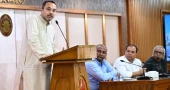
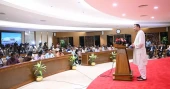
Mahdi made the remarks at a press conference at the PMO, marking seven months of the government led by Tarique Rahman.
He said the Prime Minister has recently held meetings with business leaders and the media personalities to address the gas supply crisis and directed the authorities to take the maximum possible steps to restore the situation based on reality and ensure that industries could resume normal operations.
“The objective was to ensure that industries become fully operational again and that Bangladesh’s economy can continue on its potential and onward trajectory,” the spokesperson said.
He said the government made “positive progress” in public welfare during its seven months in office, although it could not resolve all problems in such a short period.
Mahdi said the government is working with specific action plans and accountability, while tackling challenges ranging from foreign debt pressures and administrative reforms to corruption-free public services, education, healthcare and strengthening Bangladesh’s position in diplomacy.
“From every step, the government’s commitment to the country and its people is reflected,” he said
The PMO spokesperson said the government is rebuilding Bangladesh from what he described as the “ruins” left after 17 years of the previous rule.
“It is difficult to solve all problems 100 percent within just seven months. But in the current elected and accountable government, whose only source of power is the people, the highest level of sincerity and goodwill is visible in every step,” he said.
Mahdi called for unity beyond political and other differences to build a prosperous, self-reliant, humane, safe and people-oriented Bangladesh.
He said the government’s measures over the past month could broadly be divided into seven areas: youth empowerment, education, information technology and innovation; overall public welfare and improvement of living standards; women’s advancement, universal welfare and social protection; environment-friendly energy and climate-resilient industrialisation; modern health infrastructure and public health; transport infrastructure and traffic management; and institutional good governance, public diplomacy and foreign relations.
The spokesperson highlighted the approval of a new national pay scale for government employees, ranging from Tk20,000 to Tk1.56 lakh, as one of the measures taken to improve the financial well-being of public servants.
Other measures, he said, included extending institutional mobile allowances to government employees of all grades, increasing the maximum net pension of retired employees by up to 100 percent and providing a monthly allowance of Tk3,000 for their children with special needs.
Mahdi said the government also withdrew the requirement for prior Finance Division approval for recruitment and renewal of outsourced manpower to speed up official activities and took steps to prevent long-term postings of officials at the same workplace in the land administration sector.
He said the government passed legislation ensuring parents’ lifetime possession and use of property even after transferring ownership through donation.
The spokesperson also mentioned initiatives to provide special national awards of Tk 1 lakh each to 100 meritorious teachers, increase grants to the Journalist Welfare Trust and expand programmes such as Family Card, Farmers' Card and regular government allowances for imams and muezzins.
On women’s welfare, he said the government has taken an initiative to establish a joint institutional framework with an international cyber security network to prevent harassment and violence against women in cyberspace.
Mahdi said plans are also being formulated to provide universal stipends to all female students in primary and secondary educational institutions and ensure nutritious food at schools.
He said 20,000 tea workers in Sylhet, Moulvibazar and Habiganj will receive modern raincoats as part of measures to protect the health and safety of women working in the tea industry.
On the energy sector, the spokesperson said a programme to drill 150 new gas wells nationwide has begun as a medium-term measure to address the gas crisis, with another 150 wells planned in the next phase.
He said plans have been taken to increase the number of floating storage regasification units (FSRUs) from the existing two to five in phases, and efforts are underway to launch a third FSRU before 2028, if possible.
The government has also given in-principle approval to import 18 LNG cargoes through direct procurement from global suppliers, Mahdi said.
For long-term energy security, international financing of $1 billion has been secured for expansion of the Eastern Refinery in Chattogram, and work had begun, he said.
In the power sector, the spokesperson said 1,046.73 megawatts of electricity that remained suspended from the national grid due to technical problems have been restored.
He also highlighted plans for a 500MW power plant and a large fertiliser factory in Bhola, addition of 200MW of solar power to the national grid and a five-year plan to convert all diesel-powered irrigation pumps to solar energy.
Mahdi said the government has taken measures to ensure uninterrupted agricultural production, including maintaining a fertiliser stock of 5.155 million metric tonnes, 1.568 million tonnes above projected demand through February.
He said a central control room has also been planned to monitor fertiliser supply.
The spokesperson also mentioned the return to production of Chittagong Urea Fertiliser Limited after a six-month shutdown and initiatives to gradually reopen factories that had remained closed for various reasons.
In the health sector, he said the government plans to build 15-storey specialised general hospitals in Dhaka and the country’s other eight divisional cities.
Mahdi said a policy decision has been taken to operate the newly built super-specialised hospital under a modern international corporate management model.
Plans are also underway to expand affordable dialysis services to every district and upazila and increase the number of beds at Bogura Shaheed Ziaur Rahman Medical College Hospital to 1,800, he said
The spokesperson mentioned the foundation-laying for an international-standard specialised burn and plastic surgery centre at Rangpur Medical College, plans for a national e-health platform and steps to restore the supply of essential medicines and modern medical equipment to community clinics.
He said 19.771 million children have been vaccinated against measles and rubella across the country over the past five months, exceeding the target.
Mahdi also referred to the government’s three-month nationwide dengue prevention and cleanliness campaign, which began in the presence of the Prime Minister, as part of efforts to curb the spread of dengue.
He said a feasibility study and detailed design have been prepared for installing electric traction to operate electric trains on the Dhaka-Chattogram corridor.
Plans are also underway to construct a four-lane uninterrupted expressway from Dhaka to the City Gate in Chattogram and extend the Dhaka-Cox’s Bazar intercity express train service, Mahdi said.
He also said the government directed the introduction of a fully cashless automated radio-frequency identification toll system within the next four months.
Among other measures, the spokesperson mentioned plans to relocate Karwan Bazar’s wholesale kitchen market to Gabtoli and the Fulbaria bus terminal to Keraniganj to ease traffic congestion in Dhaka.
On governance, he said seven leaders of what he described as the “fascist organisation” have been sentenced to death by a court for genocide-related offences, while orders have also been issued to confiscate 50 percent of the movable and immovable property of five of those sentenced to death.
Mahdi said the government has also formally handed permanent appointment letters for government jobs to eligible members of 74 families of those killed in the July mass uprising.
He highlighted the formation of parliamentary standing committees, regular parliamentary oversight of ministries, the decision not to use honorific terms such as “Mahamanaya” or “Mananiya” before the President and Prime Minister in official documents, and the introduction of biometric attendance at land offices in phases.
Mahdi said the government has repaid $2.0476 billion, equivalent to Tk25,163 crore, in foreign loans and interest over the past five months.
He also cited a 13.1 percent increase in remittances over six months, initiatives to reopen the Malaysian labour market, progress in sending Bangladeshi workers legally to Italy and Oman, and progress in trade negotiations with the European Union.
The spokesperson said Bangladesh has successfully resolved 48 of 61 trade barriers identified by the EU.
He also mentioned a bilateral investment protection and promotion agreement with Hong Kong, financing of up to £2 billion under UK Export Finance for infrastructure development and procurement, and $1 million in emergency humanitarian assistance to Nepal following severe floods.
On defence and aviation, Mahdi said the government has begun the final process of procuring 20 J-10C fourth-generation fighter aircraft from China and is taking steps to equip the Border Guard Bangladesh with surveillance drones.
On fuel prices, the spokesperson said diesel is comparatively cheaper in Bangladesh than in many other countries, particularly neighbouring countries.
He said the government was providing a high level of subsidy on fuel to prevent additional pressure on the people.
At the briefing, Prime Minister’s Press Secretary Saleh Shibly and Additional Press Secretary Atikur Rahman Rumon also highlighted various public welfare measures taken by Prime Minister Tarique Rahman.
PM’s Speechwriter ASM Mahfuzur Rahman, Deputy Press Secretaries Jahidul Islam Rony and Md Suzauddhowla, Assistant Press Secretaries Md Nazmul Haque Khan, Abdullah Al Mahmud Shahriar,, Asrofa Emdad, Media Coordinator Tariqul Islam and PM’s physician ANM Manowarul Kadir Bitu, among others, were present at the briefing.
3 days ago
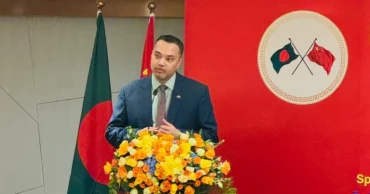
Education can drive Bangladesh-China people-to-people ties: Mahdi Amin
Prime Minister’s Education and Primary and Mass Education Adviser Mahdi Amin on Wednesday said education should become a key driving force in strengthening people-to-people connectivity between Bangladesh and China.
Speaking at a meeting on Bangladesh-China education cooperation in Guangzhou, he called for expanded scholarships, joint research, academic exchanges and stronger cooperation in technical and vocational education between the two countries.
Mahdi said many Chinese universities are now leading in global rankings and scientific research, and Bangladesh wants to benefit from their best practices and advanced research culture, said a press release.
He said Bangladesh is keen to increase scholarship opportunities for talented Bangladeshi students at renowned Chinese universities and undertake joint research projects to improve access to modern laboratories and international academic resources.
The meeting focused on four key areas—study opportunities for Bangladeshi students in China, cooperation between universities, joint research, and technical education and skills development.
Mahdi said Bangladesh’s large working-age population is one of its greatest economic strengths, but the country’s education system has remained overly dependent on theoretical learning for many years.
He said the government is working to make education more practical and employment-oriented and plans to give greater priority to technical and vocational education.
The adviser also said the government is moving to make third-language learning compulsory to help young people compete globally, with Prime Minister Tarique Rahman giving priority to Mandarin.
He stressed the need for stronger industry-academia collaboration and modern employment exchanges to better connect education with the job market.
Mahdi called for regular exchanges of teachers, researchers and students between Bangladesh and China, saying such programmes could create greater opportunities for Bangladeshi students to pursue higher education in China while allowing Chinese students to visit Bangladesh through exchange programmes and summer schools.
24 days ago
PM’s Adviser highlights investment potential, business-friendly environment to US investors
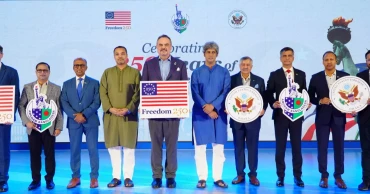
Adviser and Spokesperson to the Prime Minister’s Office Mahdi Amin on Saturday highlighted Bangladesh’s investment potential, ongoing reforms and a business-friendly environment, encouraging US investment across key sectors.
He made the remarks while speaking at a function in the city.
The American Chamber of Commerce in Bangladesh (AmCham) and the U.S. Embassy in Bangladesh, jointly hosted the commemorative event, celebrating the 250th anniversary of U.S. independence.
The milestone highlighted two and a half centuries of American freedom and reaffirmed the enduring Bangladesh-US partnership, underscoring strong bilateral ties and shared commitment to economic cooperation and people-to-people engagement.
In his welcome remarks, Syed Mohammad Kamal, President of AmCham, emphasised opportunities to expand bilateral trade and investment and reiterated AmCham’s commitment to strengthening the business environment for U.S. investors.
US Ambassador to Bangladesh Brent T. Christensen reaffirmed the United States’ commitment to deepening economic collaboration and recognised AmCham’s role in advancing commercial ties.
The event also featured a cultural segment showcasing American music, reflecting shared values and cultural exchange between the two nations.
Ala Ahmad, Vice President of AmCham and CEO of MetLife Bangladesh, expressed appreciation to all partners and participants.
Moderated by Paul Frost, Commercial Counsellor, U.S. Embassy in Dhaka and Reza Ur Rahman Mahmud, Treasurer of AmCham, the event brought together senior government officials, diplomats, business leaders, and media, reflecting the depth and diversity of the Bangladesh-US partnership.
2 months ago
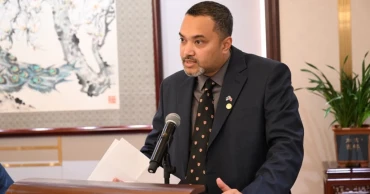
China keen to support Teesta project, expand investment and trade with Bangladesh: Mahdi
China has expressed strong interest in supporting Bangladesh’s Teesta River management project through technical assistance, planning and feasibility studies, Prime Minister’s Office (PMO) Spokesperson Mahdi Amin said on Thursday.
Speaking at a press briefing at the Diaoyutai Hotel in Beijing following bilateral talks between Prime Minister Tarique Rahman and Chinese Premier Li Qiang, Mahdi said the two sides discussed a wide range of issues, including water resource management, trade, investment, education, healthcare and people-to-people connectivity.
He said Bangladesh has a comprehensive master plan for the Teesta project, as outlined in the BNP election manifesto, and China has shown willingness to be involved at different stages of the initiative.
“China has expressed interest in providing technical support where necessary and sharing its expertise in project design, planning and implementation,” Mahdi said.
He said both sides agreed on the importance of conducting a joint feasibility study for the Teesta project, describing it as a critical step for such a large-scale undertaking.
“China wants to work with Bangladesh on the joint feasibility study and contribute its expertise to integrated water resource management and drainage systems,” the spokesperson added.
Mahdi, also an adviser to the Prime Minister, said Bangladesh and China also discussed ways to narrow the trade imbalance and increase Bangladeshi exports to the Chinese market.
“China is Bangladesh’s largest trading partner. At the same time, Bangladesh imports far more from China than it exports. Discussions focused on how Bangladesh can diversify and increase its exports,” he said.
The adviser noted that both sides reviewed opportunities to make better use of China’s duty-free market access for Bangladeshi products and explored additional measures to boost exports.
Referring to the vast Chinese consumer market, he said Bangladesh has significant potential to increase exports if it can further strengthen its supply chain and align products with Chinese demand.
Mahdi said China confirmed the import of Bangladeshi jackfruit, opening up new opportunities for agricultural exports.
“Besides jackfruit, there is scope for exporting more fruits, vegetables, agro-processed products and fisheries items. There are also opportunities in pharmaceuticals, ceramics and high-tech industries,” he said.
According to the adviser, discussions were also held on preparing a joint action plan to promote trade and investment cooperation between the two countries.
He said Chinese state-owned and private companies have shown interest in investing in Bangladesh’s digital economy, information technology, agriculture and infrastructure sectors.
Mahdi also revealed that several Chinese banks are considering launching operations in Bangladesh, encouraged by ongoing reforms in the country’s financial sector.
“China believes there are investment opportunities in Bangladesh’s banking sector as the country continues to strengthen and modernise its financial system,” he said.
The spokesperson said people-to-people connectivity featured prominently in the discussions between the two prime ministers.
He said the two sides explored cooperation in education, including the introduction of Mandarin language learning and support for technical and vocational education programmes in Bangladesh.
China also expressed interest in expanding healthcare cooperation, including increasing Chinese-supported hospital projects in Bangladesh, Mahdi said.
He said discussions were held on easing visa procedures for Bangladeshi patients seeking treatment in China and enhancing healthcare services for Bangladeshi citizens.
The PMO spokesperson said the two countries also discussed facilitating visas and increasing scholarship opportunities for Bangladeshi students pursuing higher education in China.
Prime Minister’s Foreign Affairs Adviser Humaiun Kobir and Additional Press Secretary Atikur Rahman Rumon were present at the briefing.
2 months ago
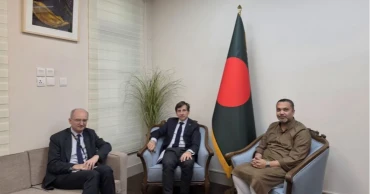
French Ambassador meets Mahdi Amin
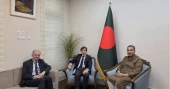
French Ambassador to Bangladesh Jean-Marc Séré-Charlet, along with the visiting Head of the Regional Economic Department for South Asia, Florent Mangin, on Thursday met with Mahdi Amin, Adviser to the Prime Minister and Spokesperson of the Prime Minister's Office.
During the meeting, they discussed a wide range of issues, including the government's priorities and potential areas for cooperation between France and Bangladesh, according to the French Embassy in Dhaka.
Florent Mangin is visiting Bangladesh to gain a better understanding of the new government's economic and development agenda, and to explore how French companies can contribute to the country's growth and development efforts.
French companies are increasingly interested in working with Bangladesh in several sectors, including aerospace, energy, disaster management, and defense.
The Ambassador reiterated France's continued support for Bangladesh's development and emphasized that France, as a trusted and attentive partner, remains committed to supporting the country's development journey.
3 months ago
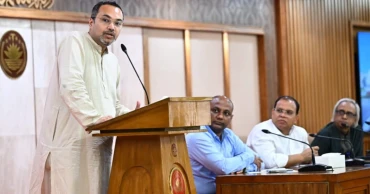
Govt’s 10 initiatives ensured smooth, hassle-free Eid celebrations: PMO
Prime Minister’s Office (PMO) Spokesperson Mahdi Amin on Monday said the government's 10 people-oriented initiatives around Eid-ul-Azha brought visible positive changes to Eid management and ensured the smooth celebration of the country’s second-largest religious festival.
“Special emphasis was placed on 10 public-oriented issues in the government's activities centred around this year's Eid-ul-Azha,” he said while speaking at a press conference at the Karobi Hall of the PMO.
Mahdi Amin said the 10 initiatives were taken as per Prime Minister Tarique Rahman’s instructions to ensure smooth and hassle-free Eid celebrations.
The initiatives included ensuring hassle-free Eid travel, payment of workers’ wages and allowances, protection of the domestic cattle market, swift waste removal, discipline in public transport, curbing extortion and syndicates, uninterrupted power supply, public safety, proper management of the rawhide sector and maintaining stability in the prices of essential commodities.
“The coordinated implementation of these initiatives has brought visible positive changes to different aspects of Eid management and reflected the government’s efforts to make public services more people-oriented,” Mahdi Amin, also prime minister’s adviser, said.
He said the government remains committed to addressing future challenges, strengthening the rule of law and democratic values, and institutionalising good governance under the leadership of Prime Minister Tarique Rahman.
The PMO spokesperson acknowledged that it is not possible to completely overcome the institutional decline and damage caused over the past 16 years within only three months of the new government.
“Despite that reality, people experienced during this Eid that the state is responsive to their needs and that the administration is not merely a centre of power but a responsible and effective service provider,” he said.
Mahdi Amin said all ministers, advisers, members of parliament and officials concerned worked with the highest level of sincerity and accountability to ensure smooth observance of the first Eid-ul-Azha under the elected government.
He said the government will continue efforts to quickly address any shortcomings or coordination gaps identified in the course of implementation.
The PMO spokesperson said extended public holidays, strengthened traffic monitoring, and coordinated transport management helped reduce long-standing congestion on highways, making Eid journeys comparatively smoother than in previous years, although several road accidents still claimed lives in different parts of the country.
He also said most garment workers received wages and bonuses on time, contributing to a peaceful and festive atmosphere in industrial areas, with no major disruption reported ahead of the holiday.
Mahdi Amin said strict measures were taken to prevent illegal cattle inflow through the border in order to protect the interests of local farmers. “Continuous monitoring was maintained at cattle markets across the country, ensuring adequate supply of sacrificial animals, including cows, goats, buffaloes and sheep.”
He said the crackdown on illegal cattle smuggling and control over long-standing syndicates helped small and medium traders conduct business in a more stable environment. “The relocation of cattle markets from roadsides to open spaces also reduced traffic congestion and public inconvenience.”
On waste management, the PMO spokesperson said most sacrificial waste in Dhaka was removed within 8-12 hours after Eid, describing it as a significant improvement compared to previous years.
He also highlighted transport sector management and said efforts to curb overcharging, improve safety measures and introduce special facilities for passengers helped ensure more orderly movement during the holiday period.
Mahdi Amin said coordinated action against extortion and syndicates in cattle transport helped keep market prices relatively stable, while uninterrupted electricity supply was largely maintained despite high demand.
He said enhanced market monitoring helped keep essential commodity prices under control during the festive period, though challenges remained due to long-standing structural issues in the economy.
The PMO spokesperson said the government is committed to further improving coordination among agencies and strengthening public service delivery in future national festivals.
He said the coordinated implementation of these measures has demonstrated that the government's efforts are intended to make public services more responsive and citizen-centric.
Mahdi Amin said Prime Minister Tarique Rahman had issued clear directives to ministers, lawmakers and other public representatives to celebrate Eid in their respective constituencies and remain close to the people.
He said the initiatives reflected a new culture of accountability, administrative coordination and public-oriented governance.
The PMO spokesperson said though the effects of what he termed 16 years of “fascist misrule and lack of accountability” could not be removed overnight, people witnessed the government's sincerity and welfare-oriented administrative efforts during the Eid period.
3 months ago
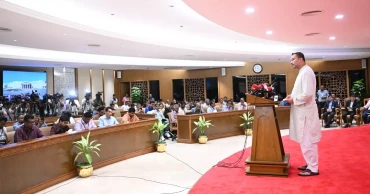
PM’s 60 steps in 60 days hailed as ‘remarkable achievements’ by PMO spokesperson
Prime Minister’s Office (PMO) spokesperson Mahdi Amin on Saturday described the 60 steps taken by Prime Minister Tarique Rahman in the first two months of his government as “remarkable achievements”.
“Under the leadership of the Prime Minister, the government has taken up an unprecedented range of activities at a fast pace. The 180-day action plan covering all sectors and aimed at improving people’s lives is itself a remarkable achievement,” he said.
Mahdi, also an adviser to the Prime Minister, made the remarks while presenting a summary of the government’s activities at a press conference at the PMO to mark the completion of the first two months of the BNP government.
He said last Friday marked two months of the current government and within this short time, work has begun to implement the promises made in the election manifesto.
“Reflecting the aspirations of the people, the Prime Minister has taken a number of effective steps over the past two months to ensure the progress of the state and every citizen, of which 60 are particularly notable,” Mahdi said.
He said people had lost trust in the government and the state system, but Prime Minister Tarique Rahman has now restored that confidence, re-established transparency and accountability, and begun implementing the promises made in the election manifesto, which he described as a unique achievement.
The PMO spokesperson expressed hope that with collective efforts, the government will be able to take further positive initiatives and build the desired Bangladesh.
Following a landslide victory for the BNP in the February 12 national election, party chairman Tarique Rahman was sworn in as Prime Minister on February 17.
The spokesperson highlighted a wide range of initiatives taken by the government, covering social protection, economy, healthcare, education, infrastructure and governance.
He said the Prime Minister’s 60 steps include introducing family cards and a pilot farmers’ card scheme, waiving loans of up to Tk 10,000 for 1.2 million small and marginal farmers, and disposing of 133 ordinances in Parliament, with 16 of them — including those related to the Human Rights Commission and prevention of enforced disappearance — being reviewed for reintroduction as bills.
Mahdi also mentioned commitments to implement the July charter, excavate canals, keep prices of essentials under control and continue imports of daily necessities, alongside providing monthly allowances to imams, muezzins and other religious leaders, and appointing special assistants for minority communities.
Other measures include distributing relief materials and gifts during Eid-ul-Fitr, modernising the zakat system, plans to introduce a probashi card, reducing Hajj costs by Tk 12,000 per ticket, and providing Nusuk Hajj cards to pilgrims within the country before their departure.
The PM’s adviser said the government has also adopted plans to fill 468,220 vacant posts in phases, reopen closed state-owned industries to create jobs, and identify underutilised economic zones and develop them, economic zones, BSCIC areas and high-tech parks by linking them with universities.
He said steps have been taken to strengthen the economy through inclusive policies, with short-, medium- and long-term plans to transform Bangladesh into a trillion-dollar economy by 2034, alongside a five-year strategy for stable, investment-led growth.
To ease foreign investment, Mahdi said the requirement for prior central bank approval for repatriation of up to Tk 100 crore has been withdrawn, while workers in industrial sectors have been ensured timely payment of wages and bonuses before Eid.
He also highlighted reopening of the Malaysian labour market, efforts to explore new labour markets in Europe, and initiatives to export skilled and semi-skilled manpower.
Other initiatives include developing an agro-processing hub in northern Bangladesh, introducing PayPal and other payment gateways, recruiting 100,000 healthcare workers, launching e-health cards and strengthening hospital security.
In the education sector, Mahdi said steps include scrapping annual re-admission fees, introducing merit-based admission systems, increasing benefits for teachers, doubling stipends, and providing financial support for higher studies abroad.
He said plans have also been taken to recruit teachers, modernise madrasa education, expand technical training, introduce sports programmes, and improve school facilities, including free distribution of uniforms and learning materials.
Mahdi also said measures have been taken to expand digital services in land management, launch the Padma Barrage project, promote use of jute products, and strengthen efforts to prevent dengue and restart measles vaccination.
He said the government has also taken steps to improve law and order, build a people-friendly police force, introduce electric buses and women-friendly transport services, and expand free internet services at airports and on trains.
In addition, the PM’s adviser said initiatives have been taken to promote renewable energy, strengthen economic diplomacy, improve foreign relations, recover laundered money, and address climate challenges, including river erosion in coastal areas.
Besides, he said the government has increased subsidies to keep fuel prices stable amid the global energy crisis and is exploring alternative sources of energy.
Mahdi said a rooftop solar programme and net metering have already added 35MW of electricity to the national grid, with a target of producing 10,000MW from renewable sources by 2030.
Mahdi Amin also described several personal decisions of the Prime Minister as “landmark steps”, including not using the state residence Jamuna, living in his own house, using personal vehicles and reducing state expenditure.
He also mentioned limiting official formalities during foreign visits and avoiding VIP protocols.
Addressing the press conference, Prime Minister’s Press Secretary Abu Abdullah M Saleh (Saleh Shibly) said public confidence in the government has returned in the past two months.
“People had started losing trust in governments and political leaders. But in the last two months, confidence has come back — especially in Prime Minister Tarique Rahman,” he said.
Shibly said the Prime Minister is trying to fulfil all promises made to the people. “In my view, the biggest achievement of these 60 days is that people have trusted Tarique Rahman, and he has trusted the people."
Additional Press Secretary Atikur Rahman Rumon said the Prime Minister has taken office with a clear intention to serve the country.
“You have seen his simple lifestyle. He has taken responsibility to serve the country and to deliver results,” he said.
Rumon also said despite global challenges, including the energy crisis, the government has been able to reduce irregularities and improve administrative performance.
PM’s Speech Writer Mahfuzur Rahman, Deputy Press Secretaries Jahidul Islam Rony, Mostafa Zulfikar Hasan (Hasan Shiplu), Md Sujauddoula and Shahadat Hossain Swadhin, and Assistant Press Secretaries Nazmul Haque Khan and Abdullah Al Mahmud Shahriar were present at the press conference.
5 months ago
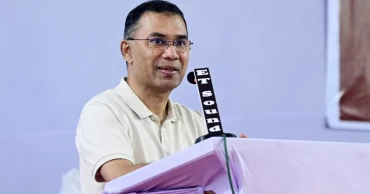
PM’s 28 steps in 28 days reflect commitment to public expectations: Mahdi Amin
Prime Minister Tarique Rahman’s first 28 days in office have seen a series of initiatives in key sectors including social protection, economy, administration, education, health and public safety, reflecting his focus on delivering on people’s expectations.
In a Facebook post,Prime Minister’s adviser Mahdi Amin outlined what he described as “28 steps in 28 days”, highlighting the government’s early actions and priorities.
The steps reflect the Prime Minister’s commitment to fulfilling his electoral pledges and ensuring accountability to the people, he wrote in the post.
“Today is March 17. Exactly one month ago, the BNP government was formed under the leadership of the popularly elected Prime Minister Tarique Rahman. In just 28 days, he has worked tirelessly in every moment of state administration to fulfil his election pledges. These steps are not merely administrative actions as they are a clear reflection of his accountability to people,” the post reads.
Among the major initiatives, the government introduced a family card programme, providing monthly financial assistance to thousands of families, and arranged allowances for imams, priests, monks and other religious leaders.
It also mentioned relief distribution ahead of Eid and an initiative to introduce an institutional zakat system to strengthen social welfare.
PM vows to work day and night to build Bangladesh, urges patience
In the agriculture sector, the post highlighted plans to introduce farmer cards and waive small loans for marginal farmers, along with a nationwide canal excavation programme to improve irrigation, boost agricultural production, and create employment in rural areas.
On administrative reforms, it noted steps to ensure discipline in offices, reduce VVIP protocols and cut special privileges for MPs, aiming to lower public expenditure and restore public trust.
The post also referred to measures to stabilise markets during Ramadan and Eid, facilitate foreign investment, ensure timely payment of workers’ wages and bonuses, and revive closed industrial units.
In education, it highlighted decisions to cancel re-admission fees, reform admission processes, support higher studies abroad and recruit teachers, alongside steps to promote sports and cultural activities.
The post also mentioned the introduction of e-health cards, recruitment of health workers and a nationwide cleanliness drive to prevent dengue.
Measures to strengthen law and order, including action against extortion and steps to enhance women’s safety such as introducing women-operated bus services, were also noted.
It also mentioned steps aimed at promoting discipline and values, including limiting state-sponsored iftar events, saving electricity and removing illegal establishments in tourist areas.
Other initiatives included declaring a national day in memory of martyred army personnel, efforts to expedite the opening of the third terminal of Hazrat Shahjalal International Airport, and plans to introduce free internet services at all airports and important public places and establishments, it added.
The post said the steps taken in the first 28 days of government formation reflect Tarique Rahman’s strong leadership, tireless efforts, and accountability to people.
“Under his leadership, the hopes and aspirations of ordinary people are being addressed and turned into reality. This unprecedented journey will prepare the new generation for the future of the country, Inshallah. As he (PM) says, “Together we will work, together we will build the country, and Bangladesh comes first,” it concluded.
6 months ago
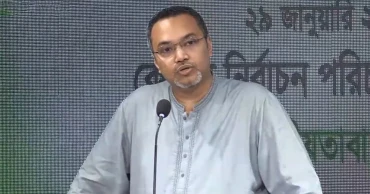
Education reform needed to build merit-based Bangladesh: Mahdi Amin
Prime Minister’s Adviser on Education, Overseas Employment and ICT Mahdi Amin on Monday stressed the need for major reforms in the country’s education system to build a merit-based Bangladesh, saying the current structure still contains deep inequalities.Speaking at a discussion on education sector reforms based on election pledges, organised by the Citizens’ Platform in Gulshan, Mahdi said the admission system in schools should gradually return to an exam-based process instead of the current lottery system.“Many schools have said they do not like the lottery system. It is a black box,” Mahdi said, adding that policymakers have already discussed moving back to an exam-based admission process.
BNP set to secure two-thirds majority, says Mahdi AminHe said efforts are underway to revise the education curriculum before January next year.“The curriculum has been politicised. We want to develop it in a modern way, redesigning where necessary,” he said, urging civil society to maintain pressure so the reform process remains free from political influence.Mahdi said the main objective of education should not be limited to obtaining certificates but should also focus on building capacity, technical skills and entrepreneurial ability. “We want an education system that enables young people to become entrepreneurs through self-employment and to qualify for jobs at home and abroad.”He also said Prime Minister Tarique Rahman has emphasised expanding technical and vocational education. Under the proposed plan, technical and vocational elements would gradually be introduced from Class Six theoretically and from Class Eight with practical components, making at least one technical or vocational subject mandatory alongside science, arts or commerce streams.Mahdi said the government is also planning to introduce third-language learning in schools to enhance overseas employment opportunities. Countries including Japan, China, South Korea, Italy, France and Germany have shown interest in supporting the initiative, possibly by sending teachers or providing technical assistance through their embassies.Initially, specific foreign languages may be introduced in selected districts before integrating them across the national education system, he added.At the event, State Minister for Primary and Mass Education Bobby Hajjaj said the government plans to gradually introduce a midday meal programme in all schools across the country. “The programme will begin with government primary schools at the upazila level and will then be expanded step by step to cover all schools nationwide.”He also said the government is working towards introducing a single curriculum framework to ensure that students from Bangla, English and Ebtedayee streams achieve comparable competencies after completing 12 years of education.The state minister added that steps are being taken to incorporate culture and sports into the national curriculum, with work on the initiative expected to begin after June and implementation targeted within two to three years.Earlier in the discussion, a study presented by Towfiqul Islam Khan, Additional Director (Research) at the Centre for Policy Dialogue (CPD), warned that Bangladesh is falling behind in ensuring universal access to quality primary and secondary education despite progress in enrolment.The analysis showed that boys’ primary school enrolment fell from 98 percent in 2023 to 91 percent in 2024, marking the sharpest one-year decline on record.At the secondary level, girls increasingly outnumber boys, while the transition rate from primary to secondary education has also declined.According to the study, the share of students moving from primary completion to secondary school dropped from about 95 percent in 2010 to 84.2 percent in 2024.The transition rate from Grade 5 to Grade 6 fell sharply to 74.99 percent in 2022, meaning roughly one in four students did not continue to secondary education.The presentation also highlighted a rise in child labour, which increased from 6.8 percent in 2019 to 9.2 percent in 2025, suggesting that growing household economic pressure may be pushing many boys out of school.The study further warned that many students complete primary education without acquiring basic learning skills, making it difficult for them to succeed in secondary education.It called for a renewed education agenda focusing on stronger learning outcomes, skills development and better alignment between education and labour market demands.
6 months ago
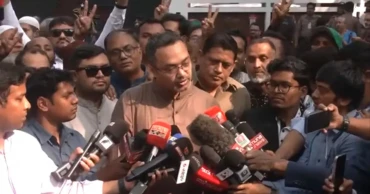
Election outcome a victory for democracy, says BNP spokesperson
Calling the election outcome a victory for democracy and Bangladesh, BNP Central Election Steering Committee Spokesperson Mahdi Amin on Friday said the results reflect the aspirations of the country’s people.
“This is not just a victory for BNP. It is a victory for democracy. It is a victory for Bangladesh,” he said while talking to reporters in front of the BNP Chairman’s Gulshan office.
Mahdi said they are very confident the democratic transition through the election will ensure a free land again where every citizen’s rights and freedoms will be protected. “BNP is the largest and most popular political party in Bangladesh. The emotions, hopes and feelings of the people are closely connected with this party.”
Vote-buying proves Jamaat’s political bankruptcy, code violation: Mahdi Amin
Mahdi also said BNP is a party of the masses that believes in empowering the grassroots and upholds Bangladesh’s independence, sovereignty and nationalism. “The extraordinary love and support people have shown towards this party have been reflected in this election, where we have witnessed an irresistible, overwhelming and decisive victory.”
The BNP leader said their party firmly believes that the strong public confidence and support received by BNP Chairman Tarique Rahman will be translated into responsible leadership.
“We believe the trust, and love that people have shown to our leader, Tarique Rahman—as a prime minister on the future, will ensure the rights and freedoms of every citizen and restore people’s ownership (of the country),” he said.
Mahdi also said the next BNP-led government will work to establish a transparent, accountable and people-friendly administration.
He said the new government will stand on what he termed a long democratic struggle marked by sacrifices, including enforced disappearances, killings and cases against party activists.
“So, Insha’Allah, our leader will fulfill the expectations of the mothers of the martyrs. In the coming Bangladesh, he will change the fate of every person and solve their problems. We believe our leader will ensure the country’s independence, sovereignty and democracy remain intact,” Mahdi observed.
He also hoped that the future BNP government will work to establish an accountable, transparent and pro-people administration.
Replying to a question, Mahdi said the election has marked the completion of a long-awaited democratic transition through free, fair and credible polls.
He also expressed gratitude to global leaders who sent congratulatory messages following the election results. “This is a gracious gesture. Our leader will respond to them in due course.”
Mahdi Amin said their party remains committed to ensuring inclusive development, protection of human rights, the rule of law and freedom of expression as part of its broader vision for the country’s future.
According to the unofficial results of Thursday’s 13th parliamentary election, BNP won 209 out of 299 seats.
Jamaat-e-Islami, which emerged as a significant force following the July uprising, secured 68 seats.
The Election Commission is expected to publish the official results after completing all formal procedures.
BNP to take action against rebel candidates: Mahdi Amin
7 months ago