Shama Obaed Islam
Dhaka seeks fitting measures, security in Rakhine to avoid another cycle of displacement
State Minister for Foreign Affairs Shama Obaed Islam on Sunday laid emphasis on creating conducive conditions in Myanmar’s Rakhine State, with required security measures and the rights of the Rohingyas in place, so that those now taking shelter in Bangladesh can return to their place of origin safely.
“We need appropriate conditions there. We need security there; we need respect for identity (Rohingyas) and rights there. We need legal recognition for the Rohingyas there; we need freedom of movement there; we need access to livelihoods, education and healthcare,” she said.
Speaking at a programme in the city as the special guest, Shama Obaed called upon the United Nations (UN), Association of Southeast Asian Nations (ASEAN), development partners and other international stakeholders to support practical, confidence-building and humanitarian-development initiatives in Rakhine State of Myanmar.
Bangladesh is currently hosting over 1.3 million Rohingyas in Cox’s Bazar and Bhasan Char Island, and not a single Rohingya refugee has officially been returned to their homes in Rakhine since the biggest influx witnessed in August 2017.
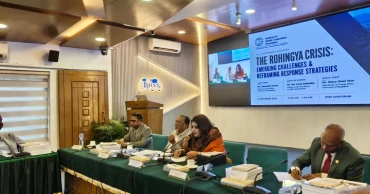
The Institute for Global Cooperation Foundation (IGCF) organised the roundtable discussion titled “The Rohingya Crisis: Emerging Challenges & Reframing Response Strategies” at the auditorium of the Bangladesh Institute of International and Strategic Studies (BIISS).
Home Minister Salahuddin Ahmed attended the programme as the chief guest, while Prime Minister’s Adviser on Public Administration Md Ismail Zabihullah spoke as the guest of honour.
“We need confidence that return will not result in another cycle of displacement. We need dialogues aiming towards reconciliation. This is where we seek stronger international engagement,” said the State Minister.
She expressed optimism that with determined diplomacy, strong national coordination and sustained international support, Bangladesh can once again turn the aspiration of repatriation into reality.
Shama Obaed said Bangladesh’s diplomatic efforts to resolve the Rohingya crisis have continued on multiple fronts, with the government engaging bilaterally with Myanmar as well as through the United Nations, ASEAN, OIC and other international partners.
“We remain engaged bilaterally with Myanmar. We are working through the United Nations and its relevant mechanisms. We remain engaged with ASEAN and regional partners. We continue our engagement with the OIC, international partners, legal bodies, and humanitarian and development organisations,” she said.
“Our objective is to maintain international attention, strengthen humanitarian support, promote accountability and, above all, create conducive conditions for return,” she added.
Regarding bilateral engagement with Myanmar, Shama Obaed said Bangladesh has prioritised expediting the verification process of the Rohingyas to move towards actual repatriation.
“Verification cannot become an open-ended administrative exercise. We need to expedite verification on the basis of the existing bilateral arrangements while addressing the practical realities of those born in the camps and those who have arrived from Rakhine since 2017,” she said.
The State Minister said the establishment of the National Strategy Formulation Committee on Rohingya Affairs under the Prime Minister’s leadership is a strategic way forward and demonstrates the highest level of political commitment.
“The committee’s objective is to develop a coordinated strategy for swift and sustainable repatriation, bringing together relevant ministries, agencies and security institutions,” she said.
“This is an important shift from managing displacement to strategically pursuing its resolution,” Shama Obaed said.
She said Bangladesh also needs to remain realistic about the humanitarian dimension of the crisis.
“Bangladesh will continue to fulfill its humanitarian responsibilities, but humanitarian support is becoming increasingly difficult to sustain as international funding declines,” she said.
She said Bangladesh is urging donors and partners to scale up their efforts to preserve the lives of the displaced Rohingyas.
“For us, there is another strategic challenge. We need to maintain the humanitarian character of our response while ensuring that such assistance in the camps does not unintentionally encourage further displacement and complicate the scenario for prospective return,” Shama Obaed said.
UNHCR Representative in Bangladesh Ivo Freijsen, BIISS Director General Major General A S M Ridwanur Rahman, Refugee Relief and Repatriation Commissioner (RRRC) Mohammad Mizanur Rahman, Refugee Cell Chief and Joint Secretary of the Ministry of Disaster Management and Relief Mohammad Nazmul Abedin, Chairman of the Department of Peace and Conflict Studies at Dhaka University Prof Dr Sazzad Siddiqui, Prof Dr Niloy Ranjan Biswas of DU’s Department of International Relations, Jahangirnagar University Prof Dr Nurul Huda Sakib, IUB Prof Dr Kazi Mahmudur Rahman, ULAB Assistant Professor Abantee Harun, ActionAid Bangladesh Country Director Farah Kabir, among others, spoke at the roundtable.
The roundtable began with a welcome address by IGCF Chief Executive Officer (CEO) Chowdhury Adnan Rahman.
Prof Dr Bulbul Siddiqi of the Department of Political Science and Sociology at North South University moderated the event.
12 days ago
Bangladesh to consider national interests before joining ‘Mecca Pact’: Shama
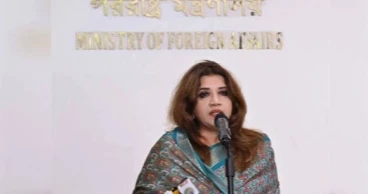
State Minister for Foreign Affairs Shama Obaed Islam on Tuesday said Bangladesh is assessing the situation regarding the "Mecca Pact" involving Saudi Arabia, Türkiye and Pakistan before deciding whether to join the alliance if invited.
“We are assessing the situation regarding participation in the Mecca Pact. Bangladesh’s interests will be considered first before joining the alliance,” she told reporters at the Ministry of Foreign Affairs.
Bangladesh has not yet received any formal invitation to join the pact.
She said Bangladesh’s national interest would be the foremost consideration in taking any decision regarding participation in the pact.
Bangladesh has viewed the pact positively and is interested in the initiative.
Bangladesh could benefit from joining the “Mecca Pact” if it proceeds with effective diplomatic preparation and political consensus, said international relations expert Prof Shahab Enam Khan, stressing that Bangladesh needs to carefully assess the regional, diplomatic and strategic implications of joining the pact.
“...if we do it with effective diplomatic preparation, with political consensus, it would definitely be good for Bangladesh,” said Prof Khan, Executive Director of the Bangladesh Center for Indo-Pacific Affairs, at a discussion in the city on Monday.
Speaking at a roundtable titled “Joining the Mecca Pact: Sustaining Bangladesh’s Options,” Prof Khan said Bangladesh faces its own security challenges in the Bay of Bengal and the wider region, including instability in neighboring countries and the situation in Myanmar.
“I think it is good that we are having discussions about this and if Bangladesh can join the Mecca Pact, it would be good,” he said.
On Sunday, State Minister for Foreign Affairs Humaiun Kobir said Bangladesh sees no risk in joining the Mecca Defence Pact and that it would not restrict Bangladesh’s engagement with other partners.
“This is a unique pact, presenting new opportunities,” he told reporters after Saudi Ambassador to Bangladesh Dr Abdullah Zafer bin Abiyah called on him.
He also said “Mecca is in the heart of Bangladesh” while explaining Dhaka’s positive attitude towards the initiative.
The Mecca Joint Defence Agreement, or the “Mecca Pact,” was officially signed on August 7, 2026, with Saudi Arabia, Pakistan and Türkiye being its partners so far.
18 days ago
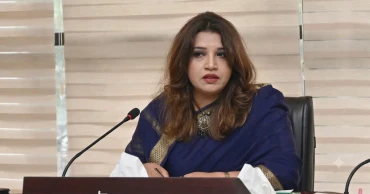
India invites PM Tarique to attend BRICS Summit
India, which is going to host the 18th BRICS Summit in New Delhi on September 12-13, has invited Prime Minister Tarique Rahman to attend the important event that will focus on global cooperation, trade, and sustainable development.
Talking to reporters at the Ministry of Foreign Affairs on Thursday, State Minister for Foreign Affairs Shama Obaed Islam said the Ministry of Foreign Affairs received the invitation letter from the Indian side and forwarded it to the Prime Minister's Office (PMO).
Responding to a question, the State Minister said Bangladesh, as a democratic state with a democratically elected government, wants to see peace and stability in the region.
“This is our position, and we want peace and stability to be maintained in our region,” she said.
The State Minister said they expect India, as a large democratic state with a democratic government, will look into its people’s issues and will move towards a solution.
India's BRICS chairship is guided by the theme "Building for Resilience, Innovation, Cooperation and Sustainability," reflecting a people-centric and humanity-first approach articulated by Indian Prime Minister Narendra Modi at the 2025 Rio Summit.
The 17th BRICS Summit was held on July 6-7, 2025, in Rio de Janeiro, Brazil, under the theme "Strengthening Global South Cooperation for a More Inclusive and Sustainable Governance."
BRICS member countries are Brazil, China, Egypt, Ethiopia, India, Indonesia, Iran, Russia, Saudi Arabia, South Africa, and the UAE, while partner countries are Belarus, Bolivia, Cuba, Kazakhstan, Malaysia, Nigeria, Thailand, Uganda, Uzbekistan, and Vietnam.
The BRICS agenda has expanded considerably from its initial focus on economic issues of mutual concern and is structured around three core pillars - political and security; economy and finance; and cultural and people-to-people exchanges.
BRICS cooperation continues to broaden its scope across a wide range of global issues, including the fight against terrorism, climate change, food and energy security, the international economic and financial situation, telecommunications, agriculture, labour and employment, international financial architecture, trade, and the WTO.
Responding to another question, Shama Obaed said the Foreign Ministry does not yet have any specific information about the phone call between President Mohammed Shahabuddin and convicted former Prime Minister Sheikh Hasina during a recent foreign visit.
However, if any information comes, the government will definitely investigate the matter, she said.
There is speculation that President Shahabuddin may resign before August 5, citing physical illness as the reason.
Asked about the international acceptance of Bangladeshi passports and visa complications in various countries, Shama Obaed said there has been no downgrading of Bangladeshi passports.
“We have formed the government only four and a half months ago. There were visa-related problems even before that," she said.
Shama Obaed said visas are closed for Bangladeshi workers in some countries, especially the United Arab Emirates and Malaysia, and the Ministry of Foreign Affairs has held several meetings with the Ministry of Home Affairs and the Ministry of Expatriates' Welfare to resolve this issue.
Many Bangladeshis try to go abroad through illegal means instead of legal channels, using fake documents obtained through brokers, and the government is dealing with these problems seriously.
The government is in regular contact with the relevant countries to resolve the visa-related problems of Bangladeshis in various countries.
1 month ago
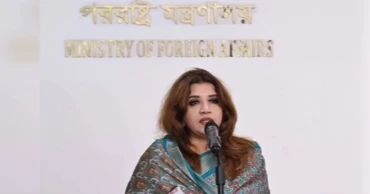
Dhaka hopes India will come forward understanding importance of Ganges Water Treaty
State Minister for Foreign Affairs Shama Obaed Islam on Thursday said the issue related to the renewal of the Bangladesh-India Ganges Water Treaty is moving in a positive direction.
"I think it is moving in a positive direction. I hope India will understand its importance and come forward accordingly," she told reporters when her attention was drawn to the renewal of the treaty.
The Bangladesh-India Ganges Water Treaty, which is expiring in December this year, needs to be "reviewed and reformed comprehensively" before going for a renewed treaty by engaging economists, urban planners, sociologists, and environmentalists in the planning, as Dhaka shares the "risk" of not sharing it appropriately, experts said.
Officials said Bangladesh's agriculture and food availability will be badly affected, while climate vulnerability will increase substantially if the treaty is allowed to expire with no new sharing agreement in place.
The Ganges Water Treaty was signed on December 12, 1996, for a period of 30 years, which makes this the last year covered by it.
Bangladesh and India share 54 rivers including the Ganges.
To discuss all relevant issues that form part of this cooperation, the two countries have a bilateral mechanism in place, the Joint Rivers Commission.
Given the willingness and interest of both sides to reset the relationship, an arrangement for sharing the Ganges waters in an "equitable and climate-proof manner" will be one of the first tests of the reset.
Former Bangladesh High Commissioner to India Tariq A. Karim said the 1996 Ganges Water Sharing Treaty between Bangladesh and India showed that cooperation is possible even on sensitive issues.
"But the treaty is due to expire in December 2026, and its renewal will test whether the region can adapt old agreements to new hydrological and climatic realities," he said while speaking at a seminar recently.
The former diplomat, who also served as Bangladesh Ambassador to the USA, said, "Across the wider region, water, food, energy, health, disaster management, and climate resilience are regional public goods. No country can secure them alone."
The former diplomat said the compulsions of ecological integrity may therefore be South Asia's strongest argument for renewed cooperation.
He said the region should consider shared river-basin management, early-warning systems, climate adaptation financing, joint research, and a regional ecological security dialogue.
"Such cooperation would not require states to surrender sovereignty. It would require them to recognise that sovereignty in an age of climate stress is strengthened - not weakened - by cooperation achieved through its pooling," said the foreign affairs expert.
"MoFA (Ministry of Foreign Affairs) has to do a lot of homework, and data sharing is key. We need to keep in mind that the situation in 1996 and 2026 is not the same. This can't be seen only from engineering or diplomatic prisms; they should include economists, urban planners, and sociologists in the planning," international affairs expert Prof. Shahab Enam Khan told UNB recently.
2 months ago
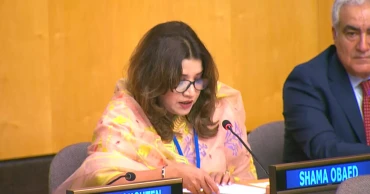
Bangladesh urges stronger global action on humanitarian law, Rohingya repatriation
State Minister for Foreign Affairs Shama Obaed Islam has called for stronger international action to protect civilians, uphold international humanitarian law and ensure sustained global support for the safe and dignified repatriation of Rohingyas to Myanmar.
She made the call while speaking at a high-level panel discussion of the 2026 Economic and Social Council (ECOSOC) Humanitarian Affairs Segment at the United Nations Headquarters in New York on Thursday, according to the Permanent Mission of Bangladesh to the UN.
The state minister stressed the need for accountability for violations of international humanitarian law, greater investment in conflict prevention and stronger coordination among humanitarian, peace and development actors.
She also highlighted the critical role of women in peacebuilding and humanitarian operations and expressed concern over the growing impact of digital harassment, disinformation and cyber abuse targeting women and girls.
Shama Obaed reiterated her call for a global platform to address technology-enabled violence.
She also expressed concern over funding cuts affecting Rohingya women and girls and reiterated that the repatriation of the Rohingyas to Myanmar remains the only sustainable solution to the crisis.
On the sidelines of the event, the state minister also met Deputy Minister of Foreign Affairs of Vietnam Dr Nguyen Minh Vu and discussed issues of mutual interest.
3 months ago

Bangladesh keen to deepen its engagement with African nations: Shama Obaed
State Minister for Foreign Affairs Shama Obaed Islam has said Bangladesh is keen to deepen its engagement with African nations and elevate its partnership with Morocco to a new horizon of cooperation, shared prosperity and strategic opportunity.
She made the remarks during her meeting with Nasser Bourita, Morocco’s Minister of Foreign Affairs, African Cooperation and Moroccan Expatriates in Rabat on May 19.
The two leaders highlighted the importance of sustained high-level exchanges in advancing political relations.
State Minister Shama Obaed is currently on an official visit to Morocco to attend the Second Ministerial Conference on Peacekeeping in a Francophone Environment, scheduled to be held in Rabat today (May 20), said the Ministry of Foreign Affairs.
The State Minister fondly recalled the historic visit of Shaheed President Ziaur Rahman to Morocco in 1980 and expressed appreciation for Morocco’s gracious gesture of honouring the nation by naming an avenue in Rabat after him.
Both leaders reaffirmed their commitment to consolidating Bangladesh-Morocco ties across diverse sectors, including trade and investment, textiles, pharmaceuticals, ceramics, sports, culture, agriculture, education, women empowerment, shipbuilding and people-to-people connectivity, alongside stronger multilateral collaboration.
They also agreed to convene the next round of Foreign Office Consultations at the earliest in Dhaka to assess ongoing cooperation and explore new areas of mutual interest.
The State Minister extended an invitation to the Moroccan Foreign Minister to visit Bangladesh at a mutually convenient time.
3 months ago
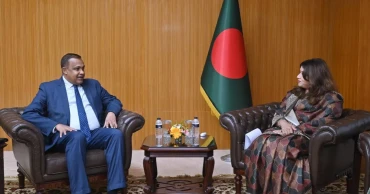
Bangladesh keen to deepen ties with Belarus across key sectors
Bangladesh has expressed its willingness to work closely with Belarus to further strengthen the existing friendly relations.
Non-resident Ambassador of Belarus to Bangladesh Mikhail Kasko paid a courtesy call on State Minister for Foreign Affairs Shama Obaed Islam at the Ministry of Foreign Affairs recently and discussed issues of mutual interest.
Both sides held productive discussions on enhancing bilateral cooperation in key areas, including agriculture, defence, textiles and RMGs, skilled and semi-skilled labour migration, IT sector, pharmaceuticals, and jute, the Ministry said.
They also emphasised the importance of strengthening people-to-people contacts to further solidify the foundation of bilateral relations.
Ambassador Kasko congratulated the State Minister on assuming office and conveyed the readiness of Belarus government to work with the new government of Bangladesh.
Both sides agreed that different bilateral mechanisms, including Foreign Office Consultations, should be held more frequently to expedite discussions and advance cooperation in identified priority areas.
The meeting concluded with both sides expressing appreciation for the warm and friendly exchanges and reaffirming their shared commitment to further deepen and broaden Bangladesh-Belarus relations in the coming years.
4 months ago
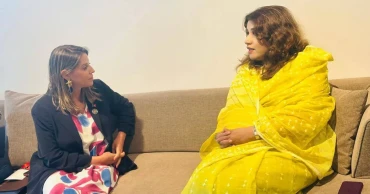
Bangladesh urges Portugal to recruit more skilled, semi-skilled workers
State Minister for Foreign Affairs Shama Obaed Islam has appreciated Portugal’s continued support in hosting a significant number of Bangladeshi expatriates and called for the expanded recruitment of both skilled and semi-skilled workers.
She underscored the importance of strengthening bilateral trade including increasing Bangladesh’s exports of jute and jute-based products to the EU market, and invited greater Portuguese investment.
The State Minister met Portugal’s Secretary of State for Foreign Affairs and Cooperation Ana Isabel Xavier on the sidelines of the “Dakar International Forum on Peace and Security in Africa” held in Dakar, Senegal on April 20, said the Ministry of Foreign Affairs on Tuesday.
They also discussed enhancing cooperation in areas such as sports, culture and women’s empowerment, and exchanged views on addressing the Rohingya crisis.
4 months ago
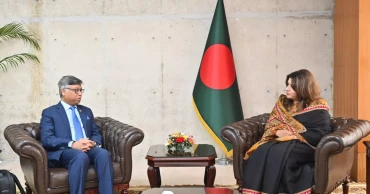
Committed to working with Saarc countries to achieve peace, prosperity: Dhaka
State Minister for Foreign Affairs Shama Obaed Islam has reaffirmed Bangladesh's unwavering support for Saarc process and its commitment to working with member states to achieve the shared vision of peace, stability, and prosperity in South Asia.
Saarc issues were discussed when its Secretary General Md Golam Sarwar called on the State Minister on Monday at the Ministry of Foreign Affairs.
The State Minister recalled that the idea of regional cooperation in South Asia was first proposed by Bangladesh in the early 1980s by late President Ziaur Rahman to promote people's welfare, improve quality of life, and strengthen collective self- reliance.
Time to view Bangladesh differently: Shama Obaed
Being one of the founder members and the host of the very first Summit of Saarc in December 1985, Bangladesh acknowledges the valuable contributions of member states in sustaining the relevance of Saarc amid evolving regional and global dynamics.
6 months ago