Shama Obaed
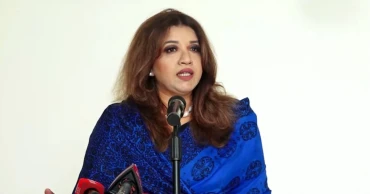
Efforts to continue until convicts brought back from India: Shama Obaed
State Minister for Foreign Affairs Shama Obaed Islam on Wednesday said Bangladesh will take all necessary legal and diplomatic steps under existing laws to bring back convicted fugitives including former prime minister Sheikh Hasina and those sentenced to death in the latest verdict.
She said the Foreign Ministry would initiate the required process with the Indian government once it officially receives all necessary documents related to the verdict delivered on Tuesday.
“Look, this is an ongoing process. I should not and do not wish to comment on the legal aspects,” she told reporters at the Ministry of Foreign Affairs.
The International Crimes Tribunal (ICT) on Tuesday sentenced seven people including Awami League General Secretary Obaidul Quader to death for their roles in suppressing the July 2024 mass uprising through incitement, provocation, attacks and killings.
Regarding the Foreign Ministry's responsibility, Shama said, “We are taking and will continue to take all necessary steps under existing laws to extradite convicted criminals, including the former Prime Minister of the fascist government and those sentenced yesterday (Sept 15).”
She said efforts are underway under the extradition treaty to bring back the former home minister, the former prime minister and the killers of martyr Hadi, who are currently detained in India. “Official correspondence is being exchanged,” she said.
“Since the verdict was delivered just yesterday (Sept 15), once we officially receive all the necessary paperwork, we will contact the Indian government through due process to take whatever steps are required,” said the State Minister.
The government will certainly take all legal measures needed to bring the accused back to face justice, she added.
Asked whether Bangladesh has received any response from India to its earlier letter seeking the extradition of former home minister Asaduzzaman Khan Kamal, Shama said diplomatic communication is ongoing. “We have not yet received a definitive answer from India,” she said.
“However, from what we understand, they may have their own internal legal procedures to follow, and they are carrying out that process. These efforts will continue until we successfully bring them back to Bangladeshi soil,” she added.
Indian media outlet The Print claimed that India has not yet given its approval to Bangladesh for the appointment of Asad Alam Siam as Dhaka’s next High Commissioner at New Delhi though the process to appoint new High Commissioners and Ambassadors by Dhaka for various foreign postings began in July.
Asked about media reports in Bangladesh and India, Shama urged the media not to publish such reports without official confirmation.
“I would request everyone not to pay heed to or publish such news reports until an official statement or concrete information is issued by either the Bangladesh Ministry of Foreign Affairs or the Government of India,” she said.
On an inter-ministerial meeting held on Tuesday regarding Bangladeshis travelling abroad with forged documents and false information, the State Minister said the government is working to streamline the migration process for the large number of Bangladeshis living abroad.
“Ever since the Bangladesh Nationalist Party (BNP) formed the government, we have been working on how to streamline and consolidate the migration process for the vast number of Bangladeshi citizens living abroad,” she said.
The State Minister noted that the Ministry of Foreign Affairs had already taken several initiatives, including opening a dedicated Migration Wing.
2 days ago
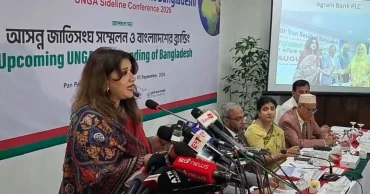
UNGA session to offer major opportunity to brand, highlight Bangladesh meaningfully: Shama Obaed
State Minister for Foreign Affairs Shama Obaed Islam on Saturday said the upcoming session of the United Nations General Assembly will provide Bangladesh, under the leadership of Prime Minister Tarique Rahman, with a major opportunity to highlight its national interests, economic potential and development priorities on the global stage.
"It marks a new journey, a new possibility and a new aspiration," she said while addressing a discussion titled "Upcoming UNGA and Branding of Bangladesh" as the chief guest, organised by the Centre for Non-Resident Bangladeshi (Centre for NRB), a non-profit research organisation for expatriate Bangladeshis.
Prime Minister Tarique is scheduled to attend the UNGA for the first time since the establishment of the new democratic government.
Following the government's "Bangladesh First" foreign policy, Tarique Rahman is set to present Bangladesh to the international community as a democratic, confident, responsible and promising nation.
The high-level segment of the 81st session of the UN General Assembly is scheduled to begin in New York on September 21.
She said Bangladesh should no longer be portrayed internationally merely through floods, disasters or the repatriation of undocumented migrants.
"Bangladesh has opportunities in tourism, business and investment, and it has the potential to be presented properly on the world map. We are trying to brand Bangladesh in the right way. The government alone cannot do everything; all of us must work together," the State Minister said.
She said the significance of the session is heightened by the fact that Bangladesh's Foreign Minister Dr Khalilur Rahman will preside over the General Assembly.
"This is definitely a matter of pride for Bangladesh," Shama said, noting that Bangladesh's success in the election came despite Cyprus having worked for more than a decade to secure the position.
Foreign Minister Dr Khalilur is now in New York and will take up his responsibilities as President of the 81st Session of the United Nations General Assembly soon, a tenure that will coincide with a crucial period for the world body, including the selection of a new UN secretary-general.
The 81st session of the General Assembly will formally open on September 8, with world leaders expected to gather at UN Headquarters in New York later in the month for the annual high-level general debate.
The State Minister credited Bangladesh's diplomatic efforts, including those undertaken by the Ministry of Foreign Affairs and Bangladesh's mission in New York, as well as the country's stability and democratic government, for playing an important role in the victory.
"Therefore, considering all these aspects, this upcoming session will be extremely important for us," she said.
PM to Attend Special UN Session on Rohingya Crisis
On the Rohingya crisis, Shama said a dedicated session would be held during the UN General Assembly with the participation of Prime Minister Tarique Rahman.
She said the crisis has become increasingly complex because of the involvement of the Myanmar authorities, the Arakan Army, regional actors and competing international interests.
"In fact, the problem has deepened. A regional complication has been created. Without international pressure, resolving this problem will become very difficult," she said, urging Bangladeshis abroad and civil-society representatives to help mobilise international support for a sustainable solution.
The State Minister said the Rohingya crisis is a big problem for Bangladesh. "But it's not Bangladesh's problem. The problem was not created by Bangladesh."
The State Minister also highlighted Bangladesh's reputation at the UN, particularly for its contribution to UN peacekeeping operations.
Turning to the government's economic priorities, Shama said economic diplomacy is a major component of the government's manifesto.
She said the government inherited what she described as a "broken economy" and a "broken banking sector" and that restoring the economy and bringing it onto a sound footing would take time.
She said Prime Minister Tarique Rahman has been working from the outset to improve transparency and accountability in the banking sector and create a more investor-friendly environment for both foreign investors and non-resident Bangladeshis (NRBs).
"We want to create an environment where our Bangladeshis will return to invest, and foreigners will also invest here," she said.
The government is also working to simplify investment procedures through digital services and a one-stop mechanism so that investors do not have to visit multiple government offices for different services, she said.
Shama said the government is expanding online facilities for registration, company name registration and other procedures to make doing business easier.
She also highlighted the "One Citizen, One Card" initiative, under which information currently held by different government agencies would be consolidated into a single database and linked to one card for each citizen.
The State Minister placed particular emphasis on protecting Bangladeshi migrant workers and curbing illegal migration.
She said the government holds expatriate Bangladeshis and remittance earners in high regard, but illegal migration facilitated by broker networks remains a serious concern.
Bangladeshi migrants have been falling victim to broker cartels while attempting to travel through dangerous routes, including the Mediterranean, under false promises of employment in countries such as Italy and Spain, she said.
"We are addressing this issue, and the current Prime Minister has taken direct action," Shama said.
She said the Ministry of Foreign Affairs has been working closely with the International Organization for Migration (IOM) and the Ministry of Expatriates' Welfare and Overseas Employment to tackle illegal migration.
For the first time, the Ministry of Foreign Affairs has established a dedicated Migration Wing to address illegal migration and issues faced by Bangladeshi expatriates, she said.
The government is also focusing on sending skilled workers abroad through more effective vocational training and skills development, with the aim of ensuring dignified and legal employment for both men and women, she said.
Shama urged the NRB community to help raise awareness among potential migrants about the risks posed by illegal migration and broker networks.
The State Minister said government agencies have begun working at the grassroots level, identifying districts where illegal migration is more prevalent and coordinating with local administrations to tackle the problem.
She said the government is working to simplify visa procedures, including provisions relating to visa-on-arrival, and that the revised policy is expected to be placed before Parliament.
"Everything the Prime Minister is doing aims to make Bangladesh more investment-friendly," she said.
Shama also stressed the importance of economic diversification, particularly in the energy sector, in view of recent global conflicts and disruptions.
The State Minister highlighted the government's focus on the Blue Economy, saying the Ministry of Foreign Affairs has a dedicated Maritime Wing working on the sector.
She also pointed to the introduction of the Creative Economy as a new sector in this year's budget.
The sector, she said, will provide particular opportunities for women entrepreneurs and help bring Bangladesh's art, cottage industries, handicrafts and cultural heritage into the mainstream economy while promoting them internationally.
Centre for NRB Chairperson M S Shekil Chowdhury said the organisation arranged the programme as part of its annual World Conference Series to showcase Bangladesh's positive developments to the international community.
He said the series also seeks to deepen Bangladesh's global engagement and encourage expatriate Bangladeshis to invest in the country and remit their earnings through legal channels.
13 days ago
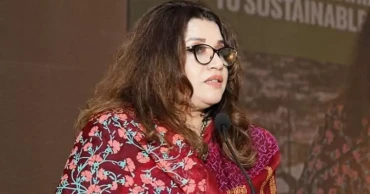
Committed to protecting human rights, no political vendetta: Shama Obaed
State Minister for Foreign Affairs Shama Obaed Islam on Tuesday said the government is committed to ensuring human rights for all citizens and will not allow anyone to be unjustly detained or imprisoned for political reasons, regardless of their political affiliation.
“The government will definitely ensure that no one is unjustly imprisoned or detained due to political vendetta,” she said, stressing that the commitment applies to supporters of all political parties including the opposition and the Awami League which faces a ban on its activities.
Shama Obaed made the remarks when a journalist drew her attention regarding a recent statement of Human Rights Watch (HRW).
Bangladesh authorities should immediately take steps to end the prolonged pretrial detention of politicians and others linked to the deposed Awami League government, the New York-based rights body said on August 23.
It said police detained thousands of party officials, activists, and supporters after Sheikh Hasina was forced to step down as prime minister in August 2024 following weeks of protests, and hundreds remain in prison without being charged with any crime.
Shama Obaed said Bangladesh witnessed unprecedented human rights violations over the past 17 years, with BNP leaders and activists among the worst affected.
“The kind of human rights that have been violated in Bangladesh in the last 17 years has never been violated in the history of Bangladesh,” she said. “The biggest victim is the Bangladesh Nationalist Party, its leaders and activists,” she added.
Shama Obaed said the government does not want to see a return of what she described as the “fascist era” and wants minimum human rights to be guaranteed to every citizen.
“We will never want the past fascist era to return now or in the future. We want all human rights - minimum human rights - to be ensured to every citizen,” she said.
Referring to cases filed following the July-August events in 2024, the State Minister said the government has taken a position that allegations must be properly reviewed and that legal action should be based on evidence rather than political considerations.
She said cases have been filed against people accused of killings as well as those responsible for ordering enforced disappearances and murders.
“Many cases were filed with great enthusiasm. But the Law Ministry said that they would review those cases,” Shama Obaed said.
“If they review the cases and do not find any truth in them, if there is no basis, they will take action accordingly,” she added.
Shama Obaed said the government’s responsibility is to protect citizens’ rights and ensure that justice is not used as an instrument of political revenge.
“Our government's stand is that we are trying to protect human rights. We are responsible to the people,” she said.
She stressed that the government’s human rights commitment should extend to political opponents as well as its own supporters.
“No party - be it the opposition party, Awami League, or any party - the current government will definitely ensure that no one is unjustly imprisoned or detained due to political vendetta,” Shama Obaed said.
She said ensuring due process and protecting citizens from arbitrary detention would be essential to preventing a recurrence of past abuses and building public confidence in the country’s institutions.
The State Minister Bangladesh’s current foreign policy is centred on protecting its own national interests while maintaining respectful and balanced relations with all countries.
“Our foreign policy is first and foremost a ‘Bangladesh policy’... with equal rights with everyone and maintaining our own interests with respect,” she said.
Shama Obaed expressed confidence that Bangladesh’s stronger political mandate would give it greater leverage in negotiations with international partners, including China.
“When Bangladesh is talking, the Prime Minister of Bangladesh is talking, then all the other stakeholders including China are listening to our words with more attention, more seriously,” she said.
The State Minister said the present circumstances therefore offer Bangladesh a stronger negotiating position than before.
“Now that Bangladesh is an elected government, we have a stronger position in our negotiation space,” Shama Obaed said.
24 days ago
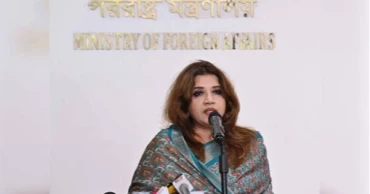
UNGA presidency to offer Bangladesh greater diplomatic leverage, hopes Shama Obaed
State Minister for Foreign Affairs Shama Obaed Islam on Tuesday said Bangladesh hopes to leverage its upcoming UN General Assembly (UNGA) presidency to strengthen international pressure for a political solution to the Rohingya crisis, which she said has grown increasingly complex, with security and other challenges requiring stronger global engagement.
“The matter is absolutely a political problem, it is a very sensitive matter and we need to solve this problem politically,” she told reporters, stressing that the Bangladesh government is in official and unofficial communication and dialogue with all stakeholders in Myanmar to solve this problem.
Talking to reporters at the Ministry of Foreign Affairs, Shama Obaed said unfortunately the Rohingya crisis has become more intense and the government is currently trying to solve this problem.
Bangladesh seeks to step up international pressure on Myanmar to find a durable solution to the Rohingya crisis and expressed hope that the country’s strengthened diplomatic position will help advance the issue.
“We are trying to involve the international community more,” Shama Obaed said, pointing to an upcoming high-level UN session on the Rohingya crisis where Bangladesh’s Prime Minister Tarique Rahman is expected to participate.
The Stated Minister said Bangladesh also needs to explore whether the Muslim world can exert greater pressure on Myanmar to create momentum for resolving the crisis.
Shama Obaed said an important high-level session on the Rohingya issue is expected to be held at the United Nations next September, where Bangladesh hopes to secure clearer guidelines for moving towards a solution.
“First of all, I must say that when the Rohingya influx started in 2017, the fascist government that was in power at that time could not play a strong role in solving the Rohingya problem, it failed. If they could have done that properly and involved the international community, then maybe we could have moved towards solving the problem within four-five years, since it started. That did not happen,” she said.
The State Minister said a new government has come in place in Myanmar and there is the Arakan Army and other stakeholders in Rakhine State.
She said the internal political situation in Myanmar is also very complicated now and there are many problems along the borders - security problems, various types of crimes being heard - human smuggling, drug trafficking, etc.
The State Minister said no one can say the exact number of Rohingyas now because more or less people are still coming every day and an average of 30,000 children are born there every year. “So in that case, we don't know the exact number right now, but it will definitely be over 1.3 million.”
During the recent visit of Prime Minister Tarique Rahman to China, the Chinese President said very strongly that he will try to solve this problem and will cooperate with Bangladesh, she said.
On the memorandum of arrangement concerning the Rohingya issue, Shama Obaed expressed scepticism about its likely impact unless the UN and other key stakeholders become more actively involved.
However, she said Bangladesh now has an additional diplomatic advantage through the position of its Foreign Minister Dr Khalilur Rahman as president of the UN General Assembly (likely from September 8).
“Now the UN and other stakeholders... and we have an added benefit or a power that now the President of the UNGA is our Foreign Minister,” Shama said.
She said Bangladesh should use the position more effectively to amplify its voice internationally.
“From that place, we have a power to speak for Bangladesh in the international community. We think that at least in the next year, we will be able to use this capacity a little better,” she said.
Shama Obaed also contrasted the current diplomatic environment with that of the previous government, accusing the then government of failing to exert sufficient pressure on China in pursuing a trilateral arrangement involving China, Bangladesh and Myanmar.
“The then government was not trying, I repeat,” she said, referring to efforts to resolve the Rohingya crisis through the trilateral framework.
She argued that the previous government lacked the political legitimacy and strength to put effective pressure on China.
Shama Obaed said Bangladesh’s current foreign policy is centred on protecting its own national interests while maintaining respectful and balanced relations with all countries.
24 days ago
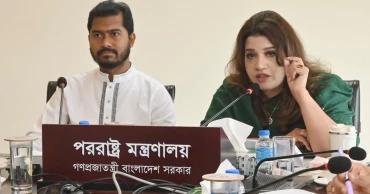
Protection abroad must begin with prevention at home, says Shama Obaed
Amid a changing global labour market scenario, State Minister for Foreign Affairs Shama Obaed Islam on Monday emphasised that “protection abroad must begin with prevention at home.”
Drawing on experiences from her constituency, she expressed concern over irregular migration, human trafficking and migrant smuggling, as well as emerging forms of recruitment fraud, including those facilitated through digital platforms.
The State Minister made the remarks while speaking at a meeting titled “Renewed Government Initiative for Ensuring Safe, Orderly and Regular Migration”, at the Ministry of Foreign Affairs.
State Minister for Expatriates’ Welfare and Overseas Employment, Md. Nurul Haque, and PM’s Adviser on the Ministry of Expatriates’ Welfare and Overseas Employment Mahdi Amin attended the meeting as special guests.
She discussed the government’s renewed emphasis on strengthening migration governance by enhancing linkages between Bangladesh’s international commitments, national policies and grassroots-level realities.
She stressed the importance of aligning skills and training with employment opportunities in destination countries, diversifying labour markets and expanding regular migration pathways.
25 days ago
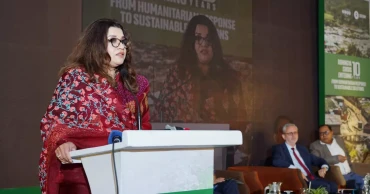
Bangladesh’s humanitarian generosity must not become an excuse for international inaction: Shama Obaed
Urging the international community to shoulder the Rohingya responsibility together, State Minister for Foreign Affairs Shama Obaed Islam on Sunday said Bangladesh’s humanitarian generosity must not become an excuse for international inaction.
“Bangladesh can provide shelter. Bangladesh can provide humanitarian assistance. Bangladesh can help preserve dignity, but Bangladesh cannot resolve the crisis that Bangladesh did not create,” she said.
The State Minister made the remarks while addressing a dialogue titled “Rohingya Crisis Entering 10 Years: From Humanitarian Response to Sustainable Solutions”, as the chief guest jointly organised by the Diplomatic Correspondents Association, Bangladesh (DCAB) and Oxfam in Bangladesh.
She said resolving the protracted Rohingya crisis is a political and moral responsibility that the international community must collectively shoulder, stressing that Bangladesh cannot be left alone to bear the burden.
27 days ago
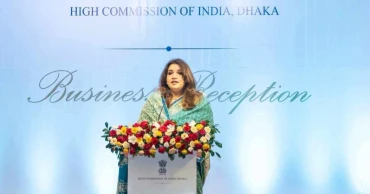
Dhaka eyes equally beneficial economic partnership with New Delhi: Shama Obaed
State Minister for Foreign Affairs Shama Obaed Islam has said Bangladesh wants to see an economic partnership with India that is "equally beneficial and brings tangible changes" to people's lives.
"I am confident that the business communities of our two countries have both the vision and the capacity to make this happen. We can collectively identify practical solutions to the challenges," she said, noting that greater predictability and ease of doing business would benefit businesses in both countries.
The State Minister made the remarks while speaking at a reception on Tuesday night that brought together a delegation from the Confederation of Indian Industry (CII) and leading members of the business community in Bangladesh for meaningful interactions aimed at advancing bilateral economic and commercial cooperation and fostering stronger business-to-business linkages between Bangladesh and India.
Indian High Commissioner to Bangladesh Dinesh Trivedi hosted the reception in honour of leading Bangladeshi business leaders and members of the CII delegation.
Delegation leader and CII Director General Chandrajit Banerjee and Indian Deputy High Commissioner Pawan Badhe also spoke at the reception.
High Commissioner Dinesh Trivedi highlighted the shared aspirations of the youth and the development goals of both countries.
He underscored the important role of businesses in translating these aspirations into opportunities, building enduring partnerships and fostering long-lasting ties between India and Bangladesh.
Shama Obaed held discussions with Indian business leaders, during which they identified several issues.
She said the new government has a forward-looking approach to trade and investment, which the Indian business community may explore for mutually beneficial Bangladesh-India economic cooperation.
"From my side, I have assured them that we will try our best to resolve those issues, and we want more vibrant trade, investment and communication between the two countries," she said, describing the meeting as productive and fruitful.
Investment important pillar
The State Minister said business visas for Bangladeshis should be issued more quickly so that businesspeople can travel to India more frequently.
"We want our businesses and private sectors to communicate with their counterparts in India more frequently," she said, noting that investment is an equally important pillar of the future economic relationship.
1 month ago
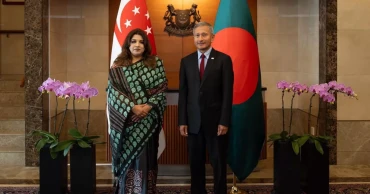
Bangladesh, Singapore hopeful of early conclusion of FTA
Bangladesh and Singapore on Tuesday expressed hope for the early conclusion of the Bangladesh-Singapore Free Trade Agreement (FTA) and emphasised stronger business-to-business engagement.
The two countries also exchanged views on energy security, including risks to energy supplies, shipping and global supply chains, as well as climate change, water security, and illegal and irregular migration.
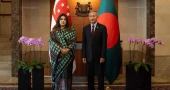
State Minister for Foreign Affairs Shama Obaed Islam met Singapore’s Foreign Affairs Minister Dr Vivian Balakrishnan and its State Minister for Foreign Affairs Zhulkarnain Abdul Rahim separately; and discussed issues of mutual interest.
She also visited the Port of Singapore Authority (PSA) and met Vincent Ng, Regional CEO, Middle East, South Asia, Africa and Türkiye, PSA, and senior officials.
The State Minister was briefed on PSA’s global operations and the use of automation and advanced technologies to develop efficient, sustainable and smart ports.
Vincent Ng expressed PSA’s interest in participating in the Bay Terminal project in Bangladesh, noting its potential to significantly enhance Chattogram Port and Bangladesh’s trade and connectivity, said the Ministry of Foreign Affairs.
The State Minister welcomed PSA’s interest and expressed hope for enhanced cooperation in port development, logistics, technology transfer, and capacity building, in line with Bangladesh’s priorities of industrialisation, infrastructure development and connectivity.
"We discussed ways to deepen cooperation, including expanding trade and strengthening our energy partnership. We are also making good progress on a bilateral Free Trade Agreement, which will create more opportunities for businesses in both countries," said the Foreign Minister of Singapore.
He said Singapore and Bangladesh share a longstanding partnership and close people-to-people ties.
At the outset, the State Minister of Bangladesh met the Minister of State for Foreign Affairs of Singapore.
During the meeting, both sides expressed satisfaction with the longstanding and friendly relations between Bangladesh and Singapore and reaffirmed their commitment to further strengthening bilateral cooperation.
The discussions focused on trade, investment, and economic cooperation.
The State Minister highlighted Bangladesh’s potential to diversify exports to Singapore beyond RMG, including pharmaceuticals, ceramics, agro-products, and jute and jute products, and invited greater Singaporean investment in logistics, supply chains, renewable energy and research. Both sides also discussed opportunities to deepen economic cooperation.
1 month ago
Bangladesh, Singapore discuss skills dev, migrant worker welfare, investment
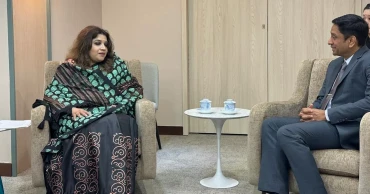
State Minister for Foreign Affairs Shama Obaed Islam on Tuesday said Bangladesh is placing strong emphasis on developing skilled manpower, with Prime Minister Tarique Rahman giving special attention to technical and vocational education and training (TVET).
She made the remarks during a meeting with Dinesh Vasu Dash, Singapore’s Minister of State for Manpower and Minister of State for Culture, Community and Youth.
Shama Obaed said Singapore, as a pioneer in skills development and capacity building, could support Bangladesh in these areas and proposed greater cooperation between the relevant agencies of the two countries, said the Ministry of Foreign Affairs.
During the meeting, she highlighted the strong and long-standing relations between Bangladesh and Singapore.
The state minister said the government of Bangladesh is committed to fairness, good governance and creating better opportunities for its people.
She also highlighted the important role of the large Bangladeshi community in Singapore.
Dinesh Vasu agreed that both countries share common interests in promoting skilled manpower.
He suggested that the relevant government agencies of Bangladesh and Singapore could establish closer contact and work together.
The Singaporean state minister also appreciated the contribution of Bangladeshi migrant workers to Singapore and mentioned that they are generally disciplined and responsible.
In response, Shama Obaed said Bangladesh is also focusing on language proficiency for Bangladeshi expatriates and encouraging them to learn a third language.
She informed that women constitute around half of Bangladesh’s population and have significant potential to work in the care and nursing sectors.
The state minister proposed that Singapore could consider providing relevant training for Bangladeshi nurses who could come to Singapore as caregivers for elderly people.
She also proposed cooperation between major public hospitals in Bangladesh and Singapore, including Dhaka Medical College Hospital, Singapore General Hospital and National University Hospital, in areas of mutual interest.
The two sides also discussed the recruitment of migrant workers.
Dinesh Vasu expressed concern about the costs and fees involved in the recruitment process.
In response, Shama Obaed said the government of Bangladesh is determined to reduce recruitment costs and regulate and streamline recruiting agencies.
She proposed that Bangladesh and Singapore could explore ways to jointly monitor recruitment practices, including the role of intermediaries and travel agencies, to make the recruitment process more transparent, accountable and affordable.
Dinesh Vasu briefed Shama Obaed on Singapore’s initiatives to improve migrant workers’ accommodation.
He said the government of Singapore has introduced major initiatives to upgrade migrant worker dormitories and enforce stricter housing standards.
The Singaporean state minister added that their government continues to balance the demand for migrant workers with the availability of suitable accommodation.
The Bangladesh state minister appreciated these initiatives and expressed gratitude to the government of Singapore for its prompt action to arrange re-employment and compensation for around 200 Bangladeshi workers who recently lost their jobs following the bankruptcy of three companies in Singapore.
Dinesh Vasu encouraged migrant workers to report cases of unpaid wages to the Ministry of Manpower so that the authorities can take appropriate action and provide the necessary assistance and compensation.
He also appreciated the positive role of Bangladeshi workers in Singapore’s community programmes and celebrations, noting that their participation contributes to racial and social harmony in Singapore.
Shama Obaed invited Dinesh Vasu to visit Bangladesh. She said there are many opportunities for cooperation between the two countries in engaging young people and building their skills.
She also suggested that a Singaporean team from the relevant agencies could visit Bangladesh to explore possible areas of cooperation.
Nodding positively to this proposal, Dinesh Vasu, in view of his additional portfolio as Minister of State for Culture, Community and Youth, expressed interest in exploring opportunities for further cooperation in these areas.
The Bangladesh state minister also sought Singapore’s support for Bangladesh’s aspiration to become a Dialogue Partner of the Association of Southeast Asian Nations (ASEAN).
She said Bangladesh is giving greater importance to soft diplomacy, particularly cultural and sports diplomacy.
Shama Obaed informed that the government of Bangladesh has allocated a budget for the creative economy in the current fiscal year.
She also proposed establishing a youth centre in either Dhaka or Singapore to facilitate the exchange of innovative ideas and promote cooperation among young people.
The state minister further highlighted Bangladesh’s focus on joint ventures, investment and entrepreneurship.
She said Bangladesh is working to create a more investment-friendly environment and provide a hassle-free business environment through measures such as one-stop services. She also highlighted the importance of ensuring a secure and safe environment for investors.
In this connection, Dinesh Vasu mentioned the presence of Singaporean businesses in Bangladesh, referring to the Singapore-based restaurant chain named “Fish & Co”, which recently opened in Dhaka.
Shama Obaed also highlighted the importance of cultural and economic diplomacy and greater people-to-people engagement between Bangladesh and Singapore.
She said Bangladesh is keen to expand cooperation in these areas and create new opportunities for both countries.
Both sides expressed their readiness to further strengthen bilateral cooperation, particularly in the areas of skilled manpower, vocational training, migrant worker welfare, youth development, investment, culture and people-to-people connectivity.
1 month ago
Bangladesh open for investment from all countries: Shama Obaed
State Minister for Foreign Affairs Shama Obaed Islam has emphasised the importance of economic diplomacy in expanding trade and attracting investment, saying the government has been working to create a more investment-friendly environment in Bangladesh.
"Bangladesh is open for investment from all over the globe," she said, encouraging Bangladeshi businesspeople abroad to explore investment opportunities in the country.
Shama Obaed said Singapore, as a major global business hub, had significant potential to invest in Bangladesh and contribute to employment generation.
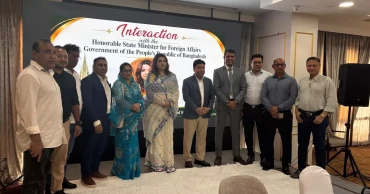
The State Minister made the remarks while exchanging views with Bangladeshi businesspeople and professionals in Singapore on Monday.
The event was organised by the Bangladesh Chamber of Singapore. Members of the Bangladesh business community, professionals and migrant workers attended the event, said the Ministry of Foreign Affairs.
At the outset, businesspeople and entrepreneurs from the Chamber briefed the State Minister on their ongoing businesses, opportunities and challenges.
They also focused on expanding trade, commerce and investment opportunities, promoting skilled and unskilled migration, and further strengthening Bangladesh-Singapore economic relations.
The President of the Bangladesh Business Chamber of Singapore briefed the State Minister on the organisation's activities.
He highlighted the Chamber's role in promoting business relations and facilitating exchanges and visits between Bangladesh and Singapore.
The State Minister informed the participants that the Cabinet had recently approved a bill related to investment in Bangladesh.
She said a separate wing had been created in the Foreign Ministry to coordinate with relevant stakeholders in the government and private sectors to resolve issues related to manpower migration, trade, commerce and investment.
Shama Obaed mentioned initiatives in renewable energy, artificial intelligence, technology, pharmaceuticals, ICT, education and Technical and Vocational Education and Training (TVET).
She said Bangladesh has a trade deficit with Singapore and stressed the need to diversify exports to the country.
The State Minister also emphasised the importance of research, innovation and appropriate policy support for developing new export sectors.
Referring to the jute sector, she said jute and jute-based products could be lucrative commodities to trade in a market like Singapore.
She also urged the establishment of a joint Bangladesh-Singapore Chamber comprising businesspeople, entrepreneurs and investors from both countries.
She said the joint chamber could play a crucial role in promoting trade and investment and further expanding business cooperation between Bangladesh and Singapore.
Members of the business community shared a number of proposals, identifying data centres as a potential area for investment in Bangladesh.
They also highlighted the potential benefits of a Free Trade Agreement (FTA) between Bangladesh and Singapore.
The business representatives said Bangladeshi companies in the steel, shipbuilding and ship recycling sectors could benefit from duty-free access to the Singapore market under an FTA.
They proposed organising roadshows to showcase Bangladeshi products in Singapore.
They also suggested establishing a one-stop service for Singaporean investors, simplifying the process of opening bank accounts, organising business workshops and arranging trade fairs.
Representatives from a wide range of professions also attended the session.
They included doctors, engineers, shipbuilding workers, service sector employees, logistics and transport workers, construction workers and IT professionals.
The participants identified elderly caregiving as a promising sector for future employment opportunities for Bangladeshi workers in Singapore.
They suggested that a bilateral agreement could help develop cooperation in this area.
They also proposed arranging some treatment in Bangladesh at a much lower cost than in Singapore and initiating cooperation between hospitals in Bangladesh and Singapore under a government-to-government (G2G) framework.
The participants raised concerns about the high costs faced by aspiring migrant workers, saying exploitation by some recruiting agencies was responsible for the high migration costs in Singapore.
They suggested engaging former migrant workers as trainers at training centres in Bangladesh and introducing affordable training courses for work permit holders in Singapore.
The State Minister assured them that the government has been working to bring the recruitment process under a transparent system to reduce exploitation and migration costs.
The participants also called for diversification of Bangladesh's overseas employment market.
They suggested reducing dependence on traditional sectors such as construction and logistics and exploring areas such as IT, data analysis, cybersecurity and artificial intelligence.
They said Singapore's service sectors offer significant opportunities for skilled foreign professionals.
Responding to the proposals, the State Minister said the government is reviewing opportunities in the TVET sector.
She said the government is continuing discussions with relevant ministries and stakeholders to expand employment opportunities for Bangladeshi workers.
The two interaction sessions provided a platform for direct engagement with the business community and Bangladeshi professionals, including migrant workers, in Singapore.
The discussions focused on expanding investment and trade, increasing skilled employment opportunities, improving migration governance and further strengthening the economic partnership between Bangladesh and Singapore.
Following the discussions, the State Minister requested the participants to formally submit their proposals in writing so that appropriate measures could be taken involving relevant ministries and government organisations to address the challenges.
She assured that the government is committed to working for the betterment of expatriate Bangladeshis living around the world, including Singapore.
1 month ago