government of Japan
Two projects receive Tk 48.2m Japanese grant
The government of Japan has awarded grants worth $397,335 (about Tk 48.2 million) to two Bangladeshi non-government organisations to support grass-roots human security initiatives.
The funding was provided under the Grant Assistance for Grass-roots Human Security Projects (GGHSP) programme.
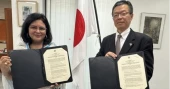
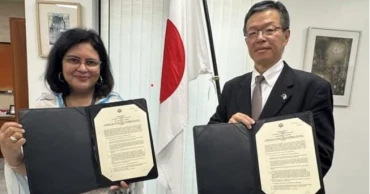
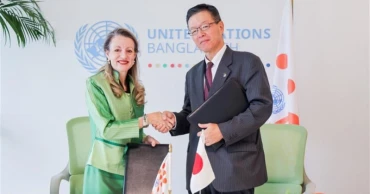
Grant contracts were signed on Monday at the Embassy of Japan in Bangladesh by Japanese Ambassador to Bangladesh Saida Shinichi and representatives of the recipient organisations.
Bangladesh, Japan discuss ways to operationalise 3rd terminal of Dhaka airport soon
The two beneficiaries are the Garo Baptist Convention Christian Health Project and Asian University for Women (AUW).
The Garo Baptist Convention Christian Health Project received $83,827 to expand medical facilities and provide equipment in Joyramkura village in Mymensingh district.
The organisation provides healthcare services, particularly to women and children living in remote north-eastern border areas.
Its initiative involves a 50-bed hospital project, registered with the government’s health ministry and designed to accommodate up to 100 inpatients.
7 months ago
Japan, UNHCR sign USD 2.6 million assistance to Rohingyas in Cox’s Bazar
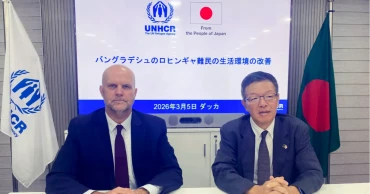
The government of Japan on Thursday renewed its commitment to Rohingyas in Bangladesh, pledging USD 2.6 million for shelter materials, primary healthcare, and clean cooking sets.
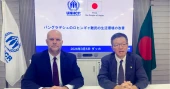
An exchange of notes was signed by Saida Shinichi, Ambassador of Japan to Bangladesh, and Ivo Freijsen, UNHCR Representative in Bangladesh.
Japan’s generous support enables UNHCR, the UN Refugee Agency, to maintain critical services in one of the world’s most densely populated refugee camps, where 1.18 million stateless Rohingya reside in precarious conditions.
Continued global assistance key to bolstering Bangladesh’s Rohingya response: UNHCR
Nine years since being forced to flee targeted persecution and conflict in Myanmar, Rohingya families still depend heavily on humanitarian assistance for safety, protection and survival.
In congested camps seasonally exposed to torrential rain, strong winds and drought, most Rohingya shelters are built of bamboo and tarpaulin, and regularly require urgent repairs.
Japan’s commitment covers essential repair materials for some 3,300 households, as well as the training and engagement of 300 shelter volunteers from the Rohingya community, said the UN refugee agency.
UNHCR welcomes Italy’s contribution of EUR 2.5mn for essential assistance to Rohingyas
It also strengthens health services through primary healthcare centres and health posts and engaging 162 refugees as community health workers.
These crucial livelihoods opportunities promote self-reliance and community ownership, and create hope.
The people of Japan’s steady support is deeply appreciated as the Rohingya enter their ninth year of displacement, said Freijsen.
“Steep reductions in global aid threaten lifesaving programmes and risk reversing critical achievements. In partnership with generous Bangladeshi host communities, we must safeguard and improve refugees’ dignity and well-being until political engagement in the context of Myanmar enables conditions for safe and voluntary return.”
Ambassador Saida expressed his hope that the support from the government of Japan will lead to improved living conditions for Rohingya refugees.
“I am delighted to announce Japan’s supplementary fund to UNHCR for critical assistance to Rohingya refugees in Bangladesh. We are confident this partnership with UNHCR will bring tangible positive change, and Japan remains committed to supporting a more secure and stable future for the Rohingya community,” said Ambassador Saida.
The grant also provides stove sets for 32,000 Rohingya households.
Complementing UNHCR’s liquified petroleum gas (LPG) distribution, these stove sets offer refugees cleaner cooking solutions, eliminating risks linked to firewood collection and use.
Women and girls face fewer protection challenges, and children spend more time in classrooms. LPG also prevents environmental degradation, allowing restoration of the area’s forested hills.
UNHCR and its partners, working with the government of Bangladesh, are preparing to launch the 2026 updated Joint Response Plan (JRP) for the Rohingya humanitarian crisis.
Japan has been a leading partner in the Rohingya response, contributing over USD 260 million to UNHCR and other UN agencies as well as Bangladeshi NGOs since 2017.
As humanitarian support continues to shrink globally, sustained and steadfast assistance of donors such as Japan is crucial until a durable solution can be achieved.
7 months ago
Japan commits further $3.2 million to Rohingya response
The government of Japan has reaffirmed its strong commitment to the Rohingya humanitarian response by approving JPY 500 million (approximately USD 3.2 million) in funding to the United Nations Population Fund (UNFPA).
Ambassador of Japan to Bangladesh Saida Shinichi expressed his hope that the support from the government of Japan would improve the living conditions of both Rohingya refugees and host communities.
Home Minister seeks Japan’s support in police reform
“Japan remains firmly committed to protecting the most vulnerable, particularly women and adolescents affected by displacement. Through our partnership with UNFPA, we aim to ensure continued access to essential health and protection services, even in the face of growing humanitarian and funding challenges,” he said on Tuesday.
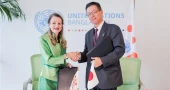
The government of Japan’s continued partnership comes at a critical moment for women and girls in the Rohingya response, said Catherine Breen Kamkong, UNFPA Representative in Bangladesh.
“This funding will allow UNFPA to sustain life-saving services that protect the health and dignity of women and adolescents who would otherwise face devastating gaps in care. We are deeply grateful for Japan’s principled and consistent support.”
Japan, UNICEF partner to support Rohingya children
The new two-year project will aim at protecting the health and rights of women and adolescents affected by displacement in Cox’s Bazar and Bhasan Char, said the Japanese Embassy in Dhaka.
The funding, Japan said, will enable UNFPA to sustain essential life-saving sexual and reproductive health and rights and gender-based violence services for Rohingya refugees and surrounding host communities.
The Rohingya crisis remains one of the world’s protracted humanitarian crises, with Cox’s Bazar hosting over one million refugees alongside vulnerable host communities.
Since 2024, a new influx of estimated 150,000 arrivals, over half of them women and girls, has further strained already cramped settlements.
Despite these growing needs, the funding environment became increasingly constrained, leaving the 2025-2026 Joint Response Plan for the Rohingya Humanitarian Crisis significantly underfunded.
This shortfall has already forced the closure of six government-run health facilities that supported refugees, a 16% reduction in the midwifery workforce and over 50% reduction in the number of GBV case managers.
Japan’s timely contribution will provide a vital lifeline, allowing UNFPA to maintain around the clock emergency obstetric care, GBV case management, and mental health support for approximately 180,000 direct beneficiaries.
The new phase builds on tangible results from previous Japan-funded initiatives. More than 38,000 women and girls have accessed essential services at UNFPA-supported facilities across Cox’s Bazar and Bhasan Char, helping to sustain critical care.
The partnership also successfully expanded survivor-centred GBV services through Women Friendly Spaces and Women-Led Community Centres, reaching thousands of vulnerable women and girls.
In Bhasan Char, Japan’s support contributed to the operationalization of the 20-bed hospital, significantly reducing life-threatening referrals and helping maintain exceptionally low maternal mortality rates in the years following its operationalization.
Adolescent empowerment initiatives strengthened life skills and gender equality awareness among girls and boys, supporting longer-term prevention of gender-based violence.
Since 2017, the Government of Japan has contributed over USD 250 million to the Rohingya humanitarian response to UN agencies and NGOs in Bangladesh, including through UNFPA, making it one of the most consistent and reliable partners in addressing the needs of displaced populations and host communities in Bangladesh.
UNFPA and the government of Japan partnership will aim at continuing to inspire international solidarity and sustained investment in the protection, health, and dignity of women and girls affected by the Rohingya crisis.
7 months ago