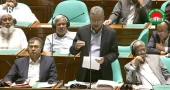
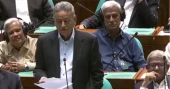
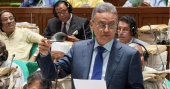
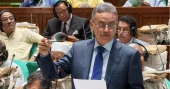
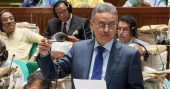
Finance Minister Amir Khosru Mahmud Chowdhury
Per capita public debt stands at Tk 1.29 lakh: Finance Minister
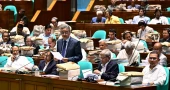
The per capita public debt of Bangladesh stood at Tk 129,239.19 as of March 31, 2026, Finance Minister Amir Khosru Mahmud Chowdhury told Parliament on Sunday.
He disclosed the figure while responding to a question from BNP MP Reza Ahmed of Kushtia-1.
The Finance Minister said the government is taking a range of measures to reduce the debt burden on people, with emphasis on increasing revenue collection, ensuring efficient management of public funds and strengthening debt management.
He said the government is working to expand the revenue base and increase tax and non-tax revenue to boost its own income and reduce the need for borrowing.
At the same time, efforts are being made to make public expenditure more economical and productive while curbing unnecessary and non-priority spending, he said.
The government is also pursuing market-based and disciplined borrowing and debt management to reduce refinancing risks, said the minister.
He said initiatives have been taken to develop the domestic debt market, broaden the investor base and make the government securities market more effective and competitive.
The government is also maintaining prescribed limits on additional borrowing through savings certificates, while taking steps to align their interest or profit rates with market conditions and prevailing interest rates, he said.
“These measures will help reduce dependence on relatively high-cost borrowing, keep the government’s overall interest expenditure under control and create a more balanced debt portfolio,” the minister said.
The government is also placing importance on preparing and following an Annual Borrowing Plan to avoid excessive and unplanned borrowing, he said.
“Cash Forecasting” initiatives are being undertaken by taking into account the government’s likely cash requirements, revenue and expenditure flows and debt repayment schedules, he added.
The minister said the government is also emphasising compliance with the Public Money and Budget Management Act, 2009 (PMBM Act) in financial management, budget implementation, borrowing and maintaining fiscal discipline.
He said the combined efforts to increase revenue and income, control public expenditure and borrowing costs, improve cash management and strengthen market-based debt management are aimed at reducing the government’s borrowing requirements and, in the long term, easing the debt burden on the people.
The minister, however, did not provide a separate figure for per capita debt for an earlier year in the response placed before Parliament.
12 days ago
Bangladesh received $82b in foreign loans from 2010 to June 2024: Khosru
Bangladesh received nearly $82 billion in foreign loans between 2010 and June 2024, Finance Minister Amir Khosru Mahmud Chowdhury told Parliament on Sunday.
“From 2010 to June 2024, 81.83 billion US dollars of foreign loans were taken,” he said, while replying to a starred question from ruling party lawmaker Lutfur Rahman (Cox’s Bazar-3) during the question-and-answer session in the House.
Earlier, the Sunday sitting of the Parliament started around 3:30pm with Deputy Speaker Barrister Kayser Kamal in the chair.
The finance minister said during the same period, the principal and interest payments against the government's foreign loans amounted to 17.11 billion and 6.04 billion US dollars, respectively.
According to the statistics provided by the minister, the total amount paid in principal and interest against the country’s foreign debt stood at $23.15 billion between 2010 and June 2024.
12 days ago
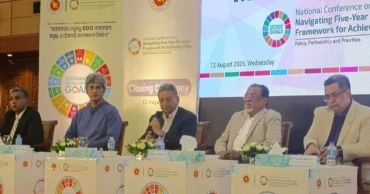
SDG implementation must improve quality of life for every citizen: Khosru
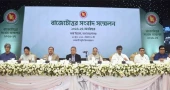
Finance Minister Amir Khosru Mahmud Chowdhury on Wednesday said the government is committed to implementing the Sustainable Development Goals (SDGs) in a manner that goes beyond the existing targets, with a focus on improving the quality of life and economic participation of every citizen.
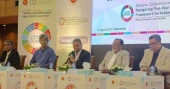
“SDG is already built into the BNP election manifesto. If we can implement the manifesto 100 percent, the SDGs will be fully implemented. In fact, we are beyond SDGs,” he said while addressing the closing ceremony of the three-day National Conference on Five-Year Strategy and SDG at the China Friendship Centre.
He said successful implementation of the SDGs requires coordinated efforts by all stakeholders, including ministries, ordinary citizens, private sector organisations and NGOs.
“We have to work together to deliver the SDGs. Ministries are being coordinated, consultations are being held with ordinary people, and pilot projects are being undertaken to identify and correct defects and errors before wider implementation,” he said.
Khosru said SDG implementation is not merely a matter of policy formulation or resource allocation, stressing the need for a “humanitarian government” capable of putting people at the centre of development.
He said the government has prioritised socially focused programmes including the Family Card and Farmer Card initiatives, despite the difficult economic situation.
“These projects have been designed keeping the low-income people, the poorest sections of society, rural communities and persons with disabilities in mind,” he said.
The minister said allocating resources for such programmes during a difficult economic period was not easy as the government has to reduce allocations for some other development projects to prioritise programmes directly benefiting disadvantaged people.
Khosru also stressed that SDGs should not be viewed as charity for poor people.
“SDG is not charity. It is about improving the quality of life of every citizen and ensuring their economic, social and civic rights,” he said.
He said the government’s concept of “democratisation of the economy” was closely aligned with the core objectives of the SDGs.
“The political democratisation will only be successful if the economy is democratised,” he said, adding that every citizen should have the opportunity to participate in economic activities and benefit from economic growth.
The Finance Minister said the government is also promoting a “creative economy” to help rural communities move beyond traditional economic activities.
“For generations, many people in rural Bangladesh have been engaged in the same activities without being able to graduate from those conditions. We want to monetise these activities so that they become sustainable, create value addition and generate markets,” he said.
He said products developed through such initiatives should not be confined to the domestic market but should eventually be made marketable globally.
Khosru said the government alone cannot provide design, inputs, financing and market access to people in every village.
“That is why we have brought the private sector and NGOs on board as partners. They have outreach and existing links with these communities,” he said.
He said an executive committee has been formed involving designers, NGOs and organisations capable of delivering inputs and other services to ensure effective implementation.
“Making policies and allocating resources in the budget is one thing, but delivery is another. Inshallah, we are working on the entire process in this way,” he said.
The Finance Minister expressed optimism that Bangladesh would be able to move beyond the SDGs through coordinated efforts and a development approach centred on human potential.
State Minister for Planning Zonayed Abdur Rahim Saki said the government’s five-year development strategy goes beyond achieving the Sustainable Development Goals (SDGs), aiming instead at broader economic, social and democratic transformation of Bangladesh.
“The SDGs are not merely an international obligation for us. Improving the lives of the people of Bangladesh is the government’s commitment, and this is clearly reflected in the election manifesto and the strategic framework,” he said.
He said the government, following the Prime Minister’s directives, has been preparing a five-year strategic framework based on its election manifesto, with instructions for ministries and institutions to realign their activities and development projects accordingly.
He said Bangladesh faces a financing gap of about US$421 billion, equivalent to more than Tk 50 lakh crore, to achieve the SDGs, making financing a major challenge for the country.
Saki said the government is therefore working to reform the statistical and data management system so that accurate information can be collected and actual progress measured.
1 month ago
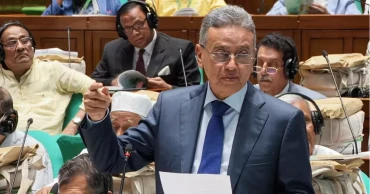
Finance Minister briefs JS on state banks' NPL situation, govt's debts
Finance Minister Amir Khosru Mahmud Chowdhury on Sunday informed Parliament that the total amount of default loans in nine state-owned banks stood at Tk 188,701.75 crore as of May 31 this year.
Replying to a question from reserved seat Jamaat-e-Islami MP Sabikun Nahar during the question-answer session, the minister said the figure was based on data submitted by the banks to the Credit Information Bureau (CIB) database of Bangladesh Bank.
The minister said the nine state-owned banks are Agrani Bank, Janata Bank, Rupali Bank, Sonali Bank, BASIC Bank, Bangladesh Development Bank, Bangladesh Krishi Bank, Rajshahi Krishi Unnayan Bank and Probashi Kallyan Bank.
He said reducing the high level of default loans is essential to restoring discipline in the country's banking sector.
Responding to a question from Jamaat MP Golam Rasul, the finance minister said the government's total outstanding debt stood at Tk 2,206,462 crore as of December 31. Of the total, external debt amounted to Tk 959,311 crore, while domestic debt stood at Tk 1,247,151 crore.
Answering another question from Jamaat MP Shahjahan Chowdhury, Amir Khosru said the government repaid foreign loans worth US$4.65 billion during the 2025-26 fiscal year. Of the total, US$3 billion was repaid as principal and US$1.65 billion as interest.
In reply to a question from Jamaat MP Mahbubul Alam, the minister said Bangladesh Bank has taken several initiatives to provide easier access to loans for young entrepreneurs.
He said the central bank has increased the refinancing fund for new entrepreneurs in the cottage, micro and small enterprise sector from Tk 100 crore to Tk 500 crore.
Under the scheme, new entrepreneurs can obtain collateral-free loans of up to Tk 10 lakh at a maximum interest rate of 7 percent, while loans of up to Tk 35 lakh are available against collateral.
Replying to a question from reserved seat MP Nilufar Chowdhury Moni, the minister said outstanding customs duties and taxes on imported goods collected by various customs houses under the National Board of Revenue over the past five years amounted to Tk 25,504.3 crore.
He added that out of Tk 3,912 crore payable by Bangladesh Petroleum Corporation, Chattogram Custom House had recovered Tk 590 crore by June this year.
Responding to a question from Dhaka-18 MP SM Jahangir Hossain, the finance minister said the government had decided to waive agricultural loans of up to Tk 10,000, including interest, for farmers across the country covering crops, livestock, fisheries and other agricultural activities.
Under the programme, banks had received Tk 1,352.74 crore from the government by July 2 to settle dues for 1,434,482 farmers, he said.
In reply to Nilphamari-4 MP Abdul Muntakim, the minister said Bangladesh Bank's regulations stipulate that a bank's fixed assets cannot exceed 30 percent of its paid-up capital.
As Sonali Bank's fixed assets are already significantly higher than the prescribed limit, the bank is currently unable to purchase additional fixed assets or construct new buildings, he added.
Answering a question from Cumilla-9 MP Abul Kalam, the finance minister said discussions between the Economic Relations Division and the World Bank are underway to prepare the financing pipeline for the 2026-27 fiscal year.
He said budget support remains one of the World Bank's financing instruments for Bangladesh, and the government's requirement and target for such support in FY2026-27 will be determined following consultations with the relevant stakeholders. The government will decide the sectors in which any budget support funds will be utilised based on national priorities.
2 months ago
No haircut, depositors of five troubled banks to get back full money with interest: Khosru
Finance Minister Amir Khosru Mahmud Chowdhury on Wednesday assured that depositors of the country's troubled five banks will receive their money back in full, along with interest, and categorically ruled out any "haircut" on deposits.
Responding to a notice from BNP reserved-seat MP Rahana Akter Ranu, he acknowledged the hardship faced by millions of depositors, describing the banking crisis as "a heartbreaking situation" inherited by the government.
"I have already said in Parliament that all depositors will get their deposits back with interest, Insha-Allah. However, they will have to be a little patient," the minister said.
He said the affected banks are operating at heavy losses, making it difficult to repay depositors immediately while also paying interest. "These banks are all running at a loss, and those losses are increasing every day. You have to understand how difficult it is for a loss-making bank that cannot even return deposits to also pay interest. Even so, an elected government is committed to protecting the interests of the people," he told the House.
Khosru gave an unequivocal assurance that depositors will not face any reduction in the value of their savings. "There will be no haircut. The question of a haircut does not arise," he said, responding to concerns raised by the BNP lawmaker.
He acknowledged the severe human suffering caused by the crisis, noting that many depositors are unable to pay for medical treatment or arrange family necessities because their savings remain inaccessible.
"I know people cannot afford to wait. Some are dying without treatment, while others cannot arrange their daughters' marriages. I face these problems every day," the minister said.
He, however, cautioned that resolving the crisis will require a medium- to long-term approach. "It will take some time, but I can assure you that depositors will receive their money back with interest," he added.
Khosru outlined the government's banking sector recovery strategy, saying a comprehensive resolution framework has been established under the Bank Resolution Act, 2026 to restore stability in the financial sector.
Under the framework, five troubled Islamic banks – Export Import Bank of Bangladesh (EXIM Bank), First Security Islami Bank, Global Islami Bank, Social Islami Bank and Union Bank – have been merged into a new entity named Combined Islami Bank PLC, which he described as the most significant resolution measure undertaken so far.
The minister said the merger has protected the interests and claims of all depositors of the five banks.
He also noted that the Deposit Protection Act, 2026 has doubled the insured deposit limit from Tk 100,000 to Tk 200,000 and extended deposit protection to finance companies, which were previously outside the scheme.
According to Khosru, depositors of banks under resolution are already receiving their money in phases in line with Bangladesh Bank's resolution scheme.
He said special forensic audits are underway to identify those responsible for loan irregularities in the five banks, with asset recovery measures to follow based on the audit findings.
The minister added that Section 57 of the Bank Resolution Act empowers Bangladesh Bank to seize and control assets, income and property acquired through misappropriated bank funds, enabling authorities to recover money through asset sales and auctions.
He also said the government has launched civil as well as criminal proceedings to recover defaulted loans and repatriate funds allegedly laundered abroad.
Around 30 affected banks have initiated the process of appointing nine international legal firms on a "no win, no fee" basis after signing non-disclosure agreements to pursue recovery of overseas assets, Khosru said.
Among 11 priority cases, civil proceedings have already begun against business groups and individuals, including S Alam, Beximco, Sikder Group, Nassa Group and Orient Group, he added.
During the debate, Rahana Akter Ranu welcomed the government's commitment but expressed concern that auctioning domestic assets alone will not be sufficient, claiming those responsible had siphoned off amounts many times greater than the value of their assets in Bangladesh.
She also urged the government to formally withdraw any proposal for a "haircut" on deposits, arguing that the burden of bank fraud should not fall on innocent depositors who had trusted the banking system with their savings.
The BNP lawmaker referred to demonstrations by depositors outside the finance minister's residence in Chattogram and said about 75 lakh customers were anxiously waiting for the return of their money.
She demanded that those responsible for looting banks be brought back to Bangladesh and compelled to repay the stolen funds.
2 months ago
Budget includes safeguards against global economic uncertainty: Finance Minister
The government has incorporated a series of special measures in the national budget to address potential external pressures arising from global economic uncertainty, the conflict in the Middle East and other external risks, Finance Minister Amir Khosru Mahmud Chowdhury told Parliament on Wednesday.
Responding to a tabled question from ruling party lawmaker Md Jalal Uddin elected from Chandpur-2, the minister said the government has adopted a comprehensive strategy to safeguard macroeconomic stability and strengthen the country's resilience against external shocks.
He said the first priority is maintaining stability in the external sector through export diversification and export growth, expansion of remittance inflows and control of non-essential imports to preserve balance in external transactions.
The government is also placing emphasis on strengthening foreign exchange reserves to ensure greater stability in the exchange rate of the taka, he added.
Addressing concerns over the Middle East crisis, the finance minister said the budget includes measures to tackle potential increases in international prices of fuel, liquefied natural gas (LNG) and fertiliser.
These measures include diversifying energy sources, intensifying domestic gas exploration, improving power and energy supply systems and continuing subsidy support where necessary, he said.
The minister also highlighted the government's 3R Strategy—Recovery and Stabilisation, Restoration, and Reconstruction for Acceleration—to manage external risks.
Under the recovery phase, the focus is on maintaining macroeconomic stability; the restoration phase aims at export diversification and strengthening the external sector; while the reconstruction phase seeks to build a more productive and competitive economy, he said.
The finance minister noted that the Middle East remains the principal destination for Bangladeshi migrant workers as prolonged instability in the region could affect overseas employment opportunities and remittance inflows.
To mitigate such risks, the government is placing special emphasis on creating new overseas labour markets. Initiatives have already been taken to sign bilateral agreements with countries including Russia, Portugal, Romania, Brazil, Greece, Serbia and North Macedonia as alternative destinations for Bangladeshi workers.
In addition, efforts have begun to reopen labour markets in Malaysia, Oman, United Arab Emirates and Kuwait, which had remained largely closed for an extended period.
The minister further said the government will continue providing a 2.5 per cent incentive on remittances sent through legal channels and has adopted precautionary measures to address any emerging pressures on the external sector.
2 months ago
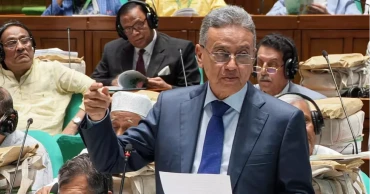
Govt plans to bring grocery shops, beauty parlours, other goods, services under VAT net: Minister
The government plans to bring several business sectors including grocery shops and beauty parlours under the Value Added Tax (VAT) net in the 2026–27 fiscal year, Finance Minister Amir Khosru Mahmud Chowdhury told Parliament on Wednesday.
The minister disclosed the plan while responding to a tabled question from reserved-seat lawmaker Selina Sultana.
The finance minister said the sectors being considered for inclusion in the VAT framework include garment and clothing retailers, confectionery businesses, cosmetics shops, sellers of plastic and ceramic household products, footwear outlets, hardware stores, decorators, and retailers of mobile phones, air conditioners, refrigerators, ovens and other electronic goods.
The proposed expansion of the VAT net would also cover paint and hardware businesses, sanitary ware and fittings shops, tile retailers, corrugated sheet outlets, rod and cement traders, furniture businesses, sweetmeat shops and restaurants.
The move is part of the government's broader efforts to widen the tax base and enhance domestic revenue mobilisation.
The minister also informed Parliament that the government collected Tk 141,586 crore in VAT revenue during the 2024–25 fiscal year.
2 months ago
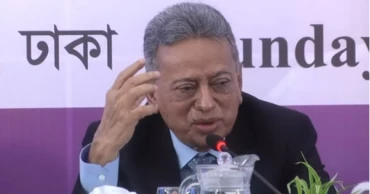
Govt to overhaul public finance architecture to reduce debt pressure: Khosru
Finance Minister Amir Khosru Mahmud Chowdhury on Sunday said the government will overhaul its public finance architecture to fund the proposed budget for the fiscal year 2026-27 while minimising debt burden on the economy.
“We cannot keep looking towards the World Bank, International Monetary Fund (IMF) and Asian Development Bank (ADB). We need to restructure our own public financing,” he said while speaking at the “CPD Budget Dialogue 2026” organised by the Centre for Policy Dialogue (CPD) at a city hotel.
The minister said the government is working to develop alternative financing channels and will introduce market-based financing mechanisms for budget funding.
He noted that the gap between multilateral financing rates and market interest rates is narrowing, making borrowing costs considerably higher and leaving little option but to rely on market-based instruments.
Announcing a phased withdrawal from local bank borrowing, Khosru said local banks are charging 12-14 percent interest, a burden that even the private sector struggles to bear. “It is simply not feasible for the government to sustain such borrowing costs.”
On broader economic challenges, he highlighted that the Middle East labour market, worth $4 billion, is facing headwinds, and that the government inherited hundreds of crores of taka in outstanding bills across every sector upon taking office.
The minister also noted the government got only one and a half months to prepare a budget that normally takes six months.
He said the government inherited 1,300 projects from the previous administration, many conceived to serve personal interests, and that a number of schemes have since been cancelled or repurposed. Projects that were 80 percent complete were being finished despite uncertain returns.
To ensure accountability, Khosru announced that an ADP dashboard will go live in the first week of July, allowing real-time tracking of project progress and implementation status.
On trade facilitation, he said Bangladesh will gradually move away from the letter of credit (LC) system towards direct payment mechanisms for import-export, in line with global practice, allowing credible businesses to trade internationally without opening LCs.
About education, the minister said the allocation will be raised to 5 percent of the ADP by the end of the government's current term, up from the current 2 percent.
He stressed that vocational training will receive the strongest emphasis this year, citing China's model, where 60 percent of students pursue vocational education after secondary school. “Bangladesh's certificates hold little value in the job market because skills are absent. Vocational training is how we bridge that gap.”
On health, Khosru said the government is working towards establishing universal healthcare, with preventive healthcare as the first priority.
Addressing questions over the Family Card programme, he said 72,000 people have already received cards under a pilot project, which he described as the largest social protection initiative in Bangladesh's history.
The minister said the selection process has been deliberately kept free of political interference, with a new formula developed to ensure fairness at both local and central levels.
He acknowledged a roughly 1-1.5 percent error rate and said the government is actively working to identify and resolve the causes.
Khosru reaffirmed the government's commitment to carrying out all necessary economic reforms during its tenure.
2 months ago
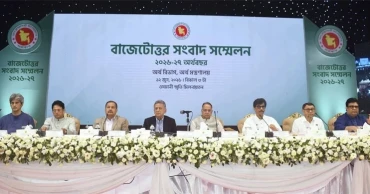
Inflation to be reined in through deregulation, administrative reforms and improved efficiency: Finance Minister
Finance Minister Amir Khosru Mahmud Chowdhury has said the government expects inflationary pressures to ease gradually through structural reforms aimed at reducing the cost of doing business, improving efficiency and strengthening supply chains.
“Inflation in Bangladesh is not a short-term phenomenon but the result of several years of accumulated pressures, compounded by global conflicts, rising import costs and weaknesses in the banking sector,” he said today (Friday), while addressing a post-budget press conference at the Osmani Memorial Auditorium.
The finance minister, who presented his first budget yesterday, noted that inflation has remained above 9 percent for the past three years. External factors, including conflicts in the Middle East, have pushed up global commodity prices, while capital shortages in banks caused by loan defaults, fraud and money laundering have increased the cost of funds.
He said that imported goods had become more expensive due to global developments and that Bangladesh had limited control over such external inflationary pressures.
However, the government could reduce domestic inflation by lowering business costs through deregulation, administrative reforms and improved efficiency, he said.
According to Amir Khosru, businesses in Bangladesh face excessive costs due to lengthy approval processes, bureaucratic delays, high borrowing costs, inefficiencies at ports and weaknesses in taxation and regulatory systems.
“Inflation cannot be controlled by deploying police, regulatory agencies or government officials in markets. It has to be managed through sound policies and efficient administration,” he said.
The newly elected BNP government's first budget set an inflation target of 7.5% for the next fiscal, against a GDP growth expectation of 6.5%.
Khosru said the government would focus on improving ease of doing business, reducing unnecessary regulations and ensuring greater transparency across public institutions. He added that reforms in ports, logistics and procurement systems would also help lower costs.
The finance minister stressed the need for long-term procurement planning, saying Bangladesh should maintain strategic reserves of fuel, food and fertiliser to reduce vulnerability to global market shocks.
Referring to energy imports, he criticised past reliance on spot purchases and said the government intended to pursue longer-term procurement arrangements to secure better prices and ensure energy security.
On the government’s decision to increase salaries for public servants, Khosru said the move was necessary to address rising living costs after years without significant adjustments.
“When people face financial hardship, the tendency towards corruption increases. Improved salaries should help reduce that pressure while ensuring a better standard of living for government employees,” he said.
The finance minister also highlighted employment generation as a central objective of the budget, saying investments in education, skills development and private-sector growth would help create jobs both at home and abroad.
He said the government had placed particular emphasis on vocational education, reskilling and upskilling programmes to improve employability, especially among young people and educated jobseekers.
“Investment means employment. Our focus is on creating demand for jobs through increased investment and improved skills,” he said.
Khosru said the budget represented a shift from traditional approaches and reflected changing global economic realities.
He reiterated the government’s commitment to reducing dependence on domestic bank borrowing, which he said often crowded out private-sector lending. He noted that planned borrowing from local banks had already been reduced compared with the previous fiscal year and that the government would continue this trend in the coming years.
The minister also defended the budget’s emphasis on social protection programmes, saying the largest investments were being made in initiatives designed to support low-income and vulnerable groups.
Programmes such as the Family Card, support for farmers, universal healthcare and preventive healthcare services were aimed at improving living standards while preparing beneficiaries for better employment opportunities, he said.
Khosru placed special emphasis on the government’s proposed “creative economy” initiative, which seeks to integrate artisans, cultural workers, performers and rural entrepreneurs into the mainstream economy.
He said the programme would provide financing, training, design support and market access to traditional craftsmen, weavers, potters, musicians and other creative workers whose contributions had long remained outside formal economic planning.
The minister said the government had allocated Tk 800 crore to launch creative economy initiatives, including creative centres, cultural districts, tourism-linked projects and heritage restoration programmes.
“Our objective is to monetise culture and creativity so that artists, craftsmen and performers can improve their livelihoods while contributing to economic growth,” he said.
Khosru also said the government was reviewing outdated mouza land valuation rates, which are often significantly below market prices, to curb opportunities for whitening undisclosed income through property transactions.
A committee has been formed to revise mouza rates and bring them closer to actual market values, although he acknowledged that the exercise would require a nationwide survey and could not be completed before the budget.
Responding to concerns about implementation, the finance minister said the government would establish a high-powered task force and an online complaint platform to monitor reform measures and ensure accountability.
“No one will be exempt from scrutiny if delays or violations occur. We are committed to implementation,” he said.
Earlier, in his opening remarks, Khosru described the budget as an “inclusive” one prepared under exceptional circumstances within less than two months of the new government’s formation.
He said the budget sought to move away from what he described as a patronage-based economic model and instead promote “economic democratisation” by extending opportunities to all sections of society.
The minister said the government inherited an economy weakened by institutional erosion, financial mismanagement and global economic uncertainty, making budget preparation particularly challenging.
He added that future public spending and development projects would be evaluated on four key criteria: value for money, return on investment, job creation and environmental sustainability.
“The budget is for all Bangladeshis. No group, profession or community has been left outside its scope,” he said.
3 months ago
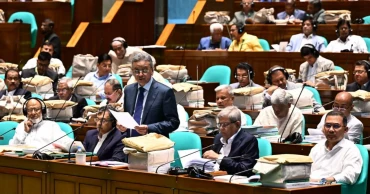
Tarique-led BNP govt's first budget resumes expansionary streak; reforms, investment-led growth, and national unity stressed
Finance Minister Amir Khosru Mahmud Chowdhury on Thursday placed the budget for the 2026-27 fiscal with a call for national unity, inclusive development, and continued reform-driven progress, emphasising the collective role of citizens from all walks of life in building a prosperous Bangladesh.
This is the first budget of the BNP government after winning the February 2026 election. Amir Khosru Mahmud Chowdhury as the Finance Minister delivered his maiden budget speech under the theme ‘Journey Towards a Democratic, Humane and Inclusive Economy’.
In the course of his nearly 4-hour budget speech, Amir Khosru, dressed in a dark grey suit paired with dark blue tie, repeatedly urged lawmakers and citizens including farmers, workers, students, women, youth, and expatriates to strengthen cooperation in achieving the country’s development aspirations. The finance minister took just two short breaks - that too for the Asr and Maghrib prayers.
He disclosed the government's vision to reduce inflation to 7.5 percent and raise GDP growth to 6.5 percent in the coming fiscal (2026-27).
For this, Khosru said he wants to rely on inclusive development, quality education and healthcare for all, universal social protection, an economy driven by investment, employment, and production.
He said he wants to step up deregulation and present a cost-effective, simplified business environment, financial sector stability, energy security, digital transformation and ICT development, management of life, nature, environment, and water resources and transparent, efficient, and accountable institutions and administrative systems.
The address highlighted that Bangladesh’s progress depends on the sustained implementation of electoral commitments, bold reform initiatives, and a united national effort.
“We firmly believe that through continued implementation of our electoral commitments, bold reform initiatives, and a united national effort, Bangladesh will advance steadily toward its development aspirations,” the Finance Minister said.
He said that it underscored the vision of building a society where equal opportunities are accessible to all, enterprise and innovation are encouraged, and the rewards of hard work are ensured, with the benefits of economic growth shared broadly among citizens.
“Our commitment is to build a Bangladesh where equal opportunities are available to all… through economic democratisation, deregulation, and the empowerment of the people, we shall build a prosperous and confident Bangladesh, InshaAllah,” he added.
Highlighting the importance of human capital, he said the strength, creativity, and entrepreneurial spirit of people remain the nation’s greatest asset.
The proposed national budget for the 2026–27 fiscal year has been framed with a strong emphasis on economic stability, investment, production, employment generation and building a more equitable society.
The government has set out an ambitious long-term vision of transforming the economy into a USD 1 trillion economy by 2034 through sustained and stable economic growth, driven by what it describes as “economic democratisation”, aimed at ensuring financial recovery and welfare for all citizens.
The budget claims to prioritise a shift away from debt-dependent growth towards a production- and private investment-led economic model.
In the medium term, efforts will be made to increase revenue collection, maintain budget deficits at sustainable levels, and restore discipline in debt management, with the aim of improving the country’s credit rating from moderate to low risk.
The budget deficit has been targeted at 3.6 percent of GDP, which will help keep borrowing risks at a manageable level.To encourage private sector investment, government borrowing from the banking sector will be gradually reduced.
At the same time, the government planned to diversify and strengthen the bond market through the introduction and expansion of corporate bonds and municipal bonds, thereby easing pressure on the banking system.
For the 2026–27 fiscal year, total revenue collection has been projected at Tk 6,95,000 crore, equivalent to 10.2 percent of GDP.
Of this, Tk 6,04,000 crore is expected to come from the National Board of Revenue (NBR), i.e. tax collection.
The tax-to-GDP ratio fell below 7 percent in FY2024–25, and the government said efforts will be made to significantly increase it in the coming years.
The total outlay proposed, or budget size, clocks a hefty Tk 9,38,000 crore, covering both operational and development spending - signaling a return to the expansionary fiscal policy that characterised much of the deposed Awami League government's tenure from 2009-24.
The interim government led by Dr Muhammad Yunus bucked that trend, as Finance Adviser Dr. Salehuddin Ahmed unveiled a Tk 7,90,000 crore national budget for the 2025–26 fiscal, marking a rare contraction of about 1% from the previous year's outlay.
If Khosru's proposed budget is passed without any major changes, it would mark an 18% jump over the current year's budget. One of the most significant points of departure between the two is the return to a much larger Annual Development Programme.
Operational expenditure includes subsidies, interest payments on public debt, procurement of capital equipment, food accounts, and administrative costs including advances to employees and state-owned enterprises.
The development budget, which is mainly made up of the ADP but includes some non-ADP schemes as well, stands at Tk 3,16,075 crore - nearly a third of the total outlay.
Priority has been given to investment-led and sustainable development initiatives.
In line with the party's promises on the campaign trail, the allocations for education and health have been significantly ramped up with a view to improve human capital development.
Education sector has been allocated around 2 percent of GDP, amounting to Tk 1,36,606 crore, compared to Tk 87,206 crore in the current fiscal year (1.39 percent of GDP).
The allocation spans multiple ministries beyond education including technical and vocational institutions under different sectors such as textiles, railways, defence, agriculture, fisheries, and ICT.
Similarly, the health sector's allocation has been increased to Tk 69,409 crore, equivalent to 1.01 percent of GDP, up from 0.58 percent in the current fiscal year.
The allocation includes spending by various ministries and agencies, including local government bodies, the Islamic Foundation, police-run hospitals, and social welfare institutions. The government has indicated a plan to gradually raise combined education and health spending to 5 percent of GDP in the future.
3 months ago