graft in EVM project
Graft-tainted EVMs turn burden; experts push for disposal after probe
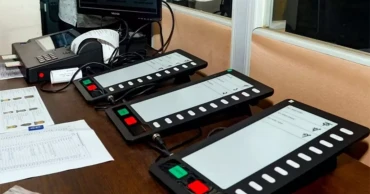
Around 150,000 Electronic Voting Machines (EVMs), procured at a cost of Tk 3,825.34 crore to modernise Bangladesh’s election system during the Awami League regime, have now become a burden for the Election Commission, with experts calling for their disposal after most of the devices fell into disrepair.
Officials say the majority of these machines are no longer usable – with only a few thousand currently functional, raising serious concerns over the effectiveness of the project and the use of public funds.
The EVM project has also been hit by allegations of massive corruption and irregularities.
Experts have questioned the quality of the machines, excessive expenditure and their overall usability, with some claiming that the devices were procured in a way that could allow manipulation in elections.
According to findings, audit objections have been raised over the procurement of the machines and related equipment. Investigators believe that irregularities in the purchase process contributed to significant financial losses.
Bangladesh first introduced EVMs on a trial basis in 2010 under the leadership of then Chief Election Commissioner ATM Shamsul Huda. The machines were used for the first time in a ward during the Chattogram City Corporation election in 2011, using devices developed by the Bangladesh University of Engineering and Technology.
However, technical problems soon became evident. In the 2013 Rajshahi City Corporation election, a malfunction in one centre prevented the announcement of results, prompting the then commission to step back from using EVMs.
The initiative was revived after a new Election Commission took charge under KM Nurul Huda, with plans to expand the use of EVMs in elections. In 2017, the machines were again used on a trial basis in several polling rooms in a ward during the Rangpur City Corporation election.
From the beginning, the introduction of EVMs remained politically controversial. While the then ruling Awami League promoted the system as a modern and transparent method of voting, opposition parties, including the BNP, raised doubts about its neutrality.
Election experts, observers and civil society members also expressed concerns, but critics say these views were largely ignored.
From digital dream to dumping dilemma: EVM project falters
Ahead of the 2018 national election, the government approved a project worth Tk 3,825 crore to procure 150,000 EVMs. However, the project reportedly did not clearly mention where the machines would be stored or how they would be maintained.
Now, the Election Commission is facing a dilemma over what to do with the machines, many of which have already exceeded their usable life. Officials are considering disposal, but the process has been stalled due to ongoing investigations into alleged corruption in procurement.
The Anti-Corruption Commission is currently probing the allegations, while audit objections from the Comptroller and Auditor General’s office remain unresolved.
Officials said the machines cannot be disposed of at this stage, as doing so could create further complications during the investigation.
In addition, any disposal process would require clearance from the Department of Environment, adding another layer of complexity to the situation.
As a result, the costly EVM project now stands as a major challenge for the Election Commission, with unresolved questions over accountability, financial loss and the future of electronic voting in Bangladesh.
One of the key issues highlighted by auditors relates to the pricing of the machines.
ACC finds defects in EVMs, questions experts' endorsement
According to the Comptroller and Auditor General’s office, each EVM was purchased at around Tk 2.34 lakh, significantly higher than the estimated market price. The audit suggests that the total cost could have been limited to about Tk 343 crore, indicating excess expenditure of more than Tk 3,000 crore.
Experts have also questioned the procurement method, noting that the machines were acquired without an open tender process. Instead, a direct procurement approach was followed, limiting competition and raising concerns about transparency and accountability.
Besides, the machines were supplied with only a one-year warranty. After the warranty period expired, further public funds were required to maintain and repair the equipment. Despite an expected lifespan of at least 10 years, many machines reportedly developed faults within a short period.
The ACC has launched an investigation into the project, focusing on procurement procedures, cost irregularities and the quality of the machines. Officials said the probe would also examine possible irregularities in training and operational expenses.
Contacted, election expert Dr Abdul Alim said the EVMs used in Bangladesh were fundamentally flawed as they lacked an internationally recognised verification system.
In many countries, he noted, EVMs are equipped with a Voter Verifiable Paper Audit Trail (VVPAT), which produces a paper slip after a vote is cast showing the chosen symbol.
Riding the rough ride: ADB projects modest growth for Bangladesh
The slip is then deposited in a sealed box and can be counted alongside the machine results in case of any dispute or audit. “This dual system ensures transparency and allows verification if confusion arises,” Alim said.
He said Bangladesh’s EVMs did not have such a provision, making the results difficult to independently verify.
The election expert also alleged that the machines were unusually expensive despite being locally produced with technology developed by BUET and manufactured at the Bangladesh Machine Tools Factory.
“Our EVMs are among the costliest in the world, which raises questions about possible corruption in the project,” he said.
Referring to the procurement, Alim claimed the initiative was associated with Tarique Ahmed Siddique, former military adviser to ousted Prime Minister Sheikh Hasina, alleging that the project was mainly designed to misappropriate public money.
He said the machines are currently unused but the government is still spending public funds to store them.
The expert suggested that after completing investigations and preserving a small number of machines as samples for legal or court purposes, the rest should be destroyed to avoid further wastage of taxpayers’ money.
Election Reform Commission Chairman and noted election expert Dr Badiul Alam Majumdar also criticised the EVM project, saying there are allegations that the machines were procured at several times the price of similar machines used in India.
Cleared today, occupied tomorrow! Why can’t Dhaka keep its footpaths free?
He described the machines as low-quality and unsuitable for ensuring credible elections, noting that many of them have already become damaged and unusable.
Badiul Alam said there are allegations that the procurement was carried out with the intention of facilitating the misappropriation of public funds.
He emphasised that a neutral and independent investigation should be conducted into the purchase of the EVMs and that anyone found responsible should face exemplary punishment.
The election expert said the machines are unlikely to be used again in Bangladesh’s elections and have effectively become a financial burden, making it necessary for the authorities to take a clear and lawful decision regarding their future.
5 months ago