Bobby Hajjaj
Govt taking initiative to revamp primary schools: Bobby Hajjaj
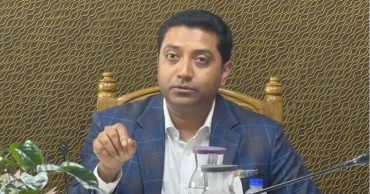
State Minister for Primary and Mass Education Bobby Hajjaj has said the government has taken an initiative to reorganise primary schools across the country to ensure that no child is left out of education.
"Prime Minister Tarique Rahman has instructed that no child, from villages to cities, should remain out of school," he said.
The state minister was speaking as the chief guest at an orientation and exchange meeting on the activities of the ‘Feeding Programme’ project at Shahid Satu Hall in Chapainawabganj on Wednesday afternoon.
Bobby said the management committees of government primary schools were not functioning effectively.
"They are often active during the formation of committees or when schools receive allocations, but cannot be found at other times," he said.
He said the government was therefore taking an initiative to involve local people by maintaining an informal register of people as ‘friends’ of the schools.
The state minister said there was a shortage of teachers in government primary schools across the country, and the government was working to address the problem.
"A good teacher can help develop a student even from a disadvantaged background," he said.
He also said night guards and lower subordinate staff (MLSS) would be appointed at every government primary school in the country.
The government is also considering providing cooked, nutritious food to students under the feeding programme, he said.
Bobby said the government would take all necessary measures to improve the quality of primary education.
23 days ago
Science toys, math labs planned for primary schools: Bobby Hajjaj
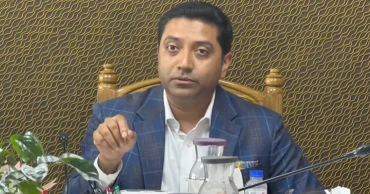
State Minister for Primary and Mass Education Bobby Hajjaj on Sunday said science toys and various hands-on learning materials will be introduced in the primary school curriculum to make children’s learning more enjoyable and practical.
The government is also taking an initiative to introduce math labs in primary schools, where students will learn basic mathematical concepts such as shapes, sizes, multiplication, division, addition and subtraction through practical activities and learning materials, he said while addressing a programme titled “Foundational Learning Action Tracker” organised by UNICEF Bangladesh at a city hotel.
The state minister said greater emphasis is being placed on science, mathematics, design and creativity in primary education.
Highlighting the need to address gaps in foundational learning, he said one of the most important goals of primary education is to ensure that every child develops basic reading, writing and mathematical skills.
Regarding out-of-school children, Bobby Hajjaj said the government is implementing various programmes to bring children who are currently outside the education system into school.
He said initiatives have also been taken to provide various forms of support, including free school uniforms, to help children stay in school.
The first-ever free school uniform distribution programme will be inaugurated on August 16, the state minister said.
Regarding the mid-day meal programme, he said steps have been taken to address the shortcomings and limitations identified during implementation of the pilot project.
Primary and Mass Education Secretary Jasmin Nahar, UNICEF Bangladesh Representative Rana Flowers and Director General of the Directorate of Primary Education Shahina Ferdousi, among others, attended the programme.
1 month ago
Bangladesh offers Japan access to 3bn-plus regional market: Bobby Hajjaj
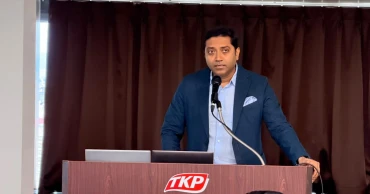
State Minister for Primary and Mass Education Bobby Hajjaj on Tuesday said Bangladesh's strategic geographic location at the junction of South Asia and ASEAN offers Japanese investors a unique opportunity, noting that investment in Bangladesh could give Japan access to a regional market of more than 3 billion consumers.
“Bangladesh is not just a promising investment destination but a strategic economic bridge between South Asia and ASEAN,” Bobby said while addressing the Bangladesh Investment Promotion Seminar in Osaka, jointly organised by the Japan External Trade Organization (JETRO), the Bangladesh Embassy in Japan, and the Osaka Chamber of Commerce and Industry.
The state minister said progress on the Economic Partnership Agreement (EPA) between Bangladesh and Japan, along with the establishment of a special economic zone for Japanese investors, would elevate bilateral economic ties to a new height.
He said these initiatives would play a groundbreaking role in expanding bilateral trade and investment and would ensure a more favourable environment for Japanese investors.
Referring to Japan's Meiji Restoration, Bobby described it as an exemplary case of national transformation through education, technology, industrialisation and visionary leadership, adding that Bangladesh wants to build its future economy by drawing on Japan's development experience through knowledge, technology, innovation, productivity and skilled human resource development.
He said Bangladesh's economy currently stands at more than $500 billion, having maintained growth above 6 percent for a long period and staying above 4.5 percent despite global economic challenges. “The government aims to elevate Bangladesh to a $1 trillion economy by 2034.”
The state minister said Bangladesh's biggest competitive strength lies in its workforce of more than 70 million young people.
He noted that with per capita income crossing $3,000, the domestic market is rapidly expanding and purchasing power is rising, creating new opportunities for foreign investors.
Bobby said bilateral trade between Bangladesh and Japan currently stands at around $3.5 billion, with both countries aiming to raise it to $10 billion in the coming years.
He identified machinery and light engineering, industrial components, automobile and electric vehicle (EV) parts, electronics, pharmaceuticals, API and medical equipment, diversified jute products, agro-processing, food security, cold-chain logistics, renewable energy, port and logistics infrastructure, industrial park development, robotics, education technology and skilled human resource development as promising sectors for Japanese investment.
He also pointed to the potential for partnership with organisations such as Artec in education technology and skills development.
Bobby said there is immense potential for cooperation between Bangladesh and Japan in education, skills development, healthcare and medical tourism. “Bangladesh's young, educated and skilled workforce can play a significant role in meeting Japan's growing labour shortage and the needs of its ageing population, creating scope for long-term partnership in skills development, technical training and employment between the two countries.”
The state minister thanked Japan, including JICA, for working for decades as one of Bangladesh's most trusted development partners in infrastructure, education, human resource development and economic progress through various bilateral initiatives.
Bangladesh and Japan are now entering a new era based on investment, trade, technology, innovation and shared prosperity, Bobby said, calling on Japanese businesses and investors to become long-term partners in Bangladesh's growth journey.
Investing in Bangladesh, he said, means not just entering one country's market but a strategic opportunity to access a vast regional market of more than 3 billion consumers.
1 month ago
Govt introduces major reform in primary teacher transfer process: State Minister
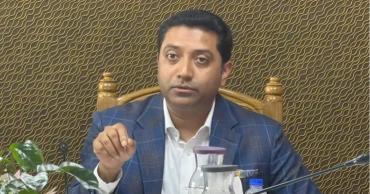
State Minister for Primary and Mass Education Bobby Hajjaj on Sunday said the government has introduced a new decentralised system for teacher transfers to make the process transparent, accountable and free from corruption.
The teacher transfer process had long been known as a major area of syndicate control and corruption, which stood as a significant obstacle to improving the quality of education, he said while addressing the Validation Workshop on the Bangladesh Education Sector Analysis (ESA) 2026, organised by GPE and UNICEF at a hotel in the capital.
Bobby Hajjaj said that under the directive of Prime Minister Tarique Rahman and the initiative of the Ministry of Primary and Mass Education, the teacher transfer process has been decentralised and brought to the local level.
Under the new policy, separate committees are being formed at the upazila, district, divisional and city corporation levels to review transfer applications at regular intervals, he said.
At the upazila level, a four-member committee headed by the Upazila Nirbahi Officer (UNO) will scrutinise applications, while the Upazila Primary Education Officer will issue transfer orders based on the committee’s recommendations, he added.
Besides, similar five- or six-member committees will operate at the district, divisional and city corporation levels to examine transfer applications and issue transfer orders, he said.
Education and Primary and Mass Education Minister Dr A N M Ehsanul Hoque Milon attended the programme as the chief guest.
Officials from the Ministry of Education, the Ministry of Primary and Mass Education, relevant departments and UNICEF were also present at the event.
3 months ago
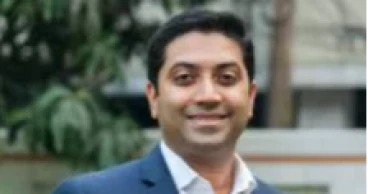
Bangladesh faces skilled workforce gap despite millions of jobs: Bobby Hajjaj
State Minister for Primary and Mass Education Bobby Hajjaj on Sunday said Bangladesh is facing a significant shortage of skilled human resources despite having millions of job opportunities.
“Everyone says there is a shortage of jobs in Bangladesh, but the reality is quite the opposite. There are millions of jobs available: the problem is finding skilled people to grab them,” he said while speaking at a skills development summit.
Global Entrepreneurship Network Bangladesh and Daffodil International University organised the programme at Daffodil Plaza in Dhanmondi.
The state minister noted that nationals from neighbouring countries, particularly India, are coming to Bangladesh and securing employment, while Bangladeshis remain jobless in their own country due to a lack of marketable skills.
Highlighting the gap between academic credentials and practical competence, he said, “When candidates appear before interview boards, they recite a list of degrees. But when it comes to skills, they fall short and that is why they fail to secure the jobs they desire.”
Bobby Hajjaj stressed that a fundamental shift in mindset is the first step towards addressing the crisis. “The core problem is our mindset. Having taught for 17 years, I have seen a serious lack of skills-oriented thinking among students. We want to bring about that change from the primary level and build a generation that is truly ready for the job market.”
He urged student participants to develop innovative, technology-driven projects capable of contributing to national development, and announced that students who successfully create practical and effective software solutions will be recognised and rewarded.
The State Minister also assured that government support will be extended to help commercialise such innovative projects.
5 months ago