FY2026-27 budget

Govt plans sweeping health sector reforms to take specialised care beyond Dhaka
Bangladesh is preparing for one of the most ambitious restructurings of its healthcare system promising to move specialised medical services closer to people, recruit over 100,000 health workers, modernise medical education and strengthen pharmaceutical and medical equipment industries.
The roadmap, outlined in the FY2026-27 budget, seeks to address some of the chronic weaknesses that have plagued the health sector for years: overcrowded hospitals in Dhaka, shortages of doctors and nurses in rural areas, rising out-of-pocket medical expenses and an overdependence on imported medical devices.
If implemented effectively, the reforms could significantly reshape healthcare delivery across the country.
A shift away from Dhaka-centric healthcare
Instead of forcing patients to travel to the capital for advanced treatment, every district hospital will be integrated with surrounding upazila health complexes under a new “Secondary Healthcare Unit.”
Under the proposed structure, upazila health complexes will handle most maternal, neonatal, child and reproductive healthcare services while district hospitals will provide specialised treatment and surgeries, according to budget document.
The objective is allowing patients to receive quality care near their homes while easing the overwhelming burden on tertiary hospitals in Dhaka.
For decades, thousands of patients have travelled long distances to the capital because district-level facilities often lack specialists, equipment and diagnostic services. The resulting congestion has strained both hospitals and patients’ finances.
The government believes strengthening district hospitals could reduce unnecessary referrals, lower treatment costs and improve healthcare equity.
Expanding access through private hospitals
Recognising the limitations of the public health system, the government also plans to increase collaboration with the private sector.
Under a Strategic Purchasing model, selected healthcare services will be purchased from accredited private hospitals for poor and low-income patients who face long waiting times in government hospitals.
If properly regulated, the approach could shorten waiting lists while making better use of existing private-sector capacity.
The budget also proposes converting 192 unused government properties into modern primary healthcare centres under Public-Private Partnership (PPP) arrangements.
Addressing workforce shortages
Bangladesh continues to face shortages of doctors, nurses and community health workers, particularly outside major cities.
The government says recruitment has already begun for 5,000 MBBS doctors to fill long-vacant posts.
It has also launched recruitment for another 100,000 health workers, around 80 percent of whom are expected to be women to strengthen maternal and community healthcare.
Additional nursing positions have already been created, including 941 senior staff nurse posts and 947 midwife positions.
The government also plans to train 60,000 frontline workers engaged in health, nutrition and family planning services.
Modernising medical education
Medical education is also set for a major overhaul.
The existing MBBS curriculum will be redesigned using competency-based learning, integrated modular teaching, expanded clinical training and artificial intelligence-assisted medical technologies.
An expert committee under the Bangladesh Medical and Dental Council has begun preparing the new curriculum, which is scheduled for implementation by 2030.
The reforms extend beyond doctors.
The government plans to strengthen nursing education through a specialised Nurse Teacher Training Centre, expand master’s programmes in government nursing colleges and introduce additional Bachelor of Science in Nursing courses.
Medical and dental students will also receive access to student loans, while talented students pursuing higher education abroad will be eligible for special bank loan facilities.
To expose future physicians to rural healthcare realities, five Residential Field Site Training centres will be established using underutilised government facilities.
Strengthening preventive healthcare
A new national nutrition programme will target child stunting and malnutrition through coordination among the health, agriculture, education, sanitation, food security and social protection sectors.
Priority areas include maternal nutrition, adolescent health, breastfeeding promotion, complementary feeding and nutrition awareness.
Meanwhile, the government says it has rebuilt momentum in immunisation following the recent measles outbreak, claiming that nearly all eligible children were vaccinated against measles and rubella within its first 100 days in office.
Affordable medicines and local production
Another major pillar of the reform agenda focuses on reducing healthcare costs through improved access to medicines.
Authorities are updating the National Essential Medicines List and preparing a modern drug policy to ensure safe, effective and affordable medicines.
The pharmaceutical sector will continue receiving government support, including development of the Active Pharmaceutical Ingredient (API) Industrial Park and expansion of medicine and vaccine supply chains.
Beyond pharmaceuticals, the government wants Bangladesh to emerge as a manufacturing base for medical equipment.
The budget document identifies products such as syringes, ventilators, pulse oximeters, ECG machines, X-ray equipment, hospital beds and diagnostic kits as items with strong domestic production potential.
To encourage investment, authorities plan export incentives, internationally accredited testing laboratories, online licensing systems, a specialised medical technology park and easier access to low-interest financing.
Biomedical engineering education and research will also receive increased emphasis as the country seeks to build an export-oriented medical technology industry.
2 months ago
42% revenue growth target ‘historically impossible’: Citizen’s Platform
Bangladesh’s proposed FY2026-27 budget faces a ‘near-impossible revenue challenge’ that could force the government to choose between paying civil servants more and protecting the poor, the Citizen’s Platform warned Monday.
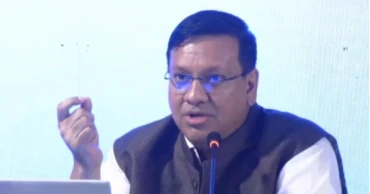
The government has set a revenue target of Tk 6.95 lakh crore for FY27, implying a growth rate of at least 42 percent over the revised FY26 target ,CPD Additional Research Director Towfiqul Islam Khan said presenting a keynote at a pre-budget dialogue at a hotel in Gulshan, organised by the Citizen’s Platform for SDGs, Bangladesh.
“No historical benchmark supports this,” he cautioned, noting that even the most optimistic compound annual growth rate from FY01 to FY19 stood at just 15.6 percent, and would still result in a shortfall of Tk 1.3 lakh crore.
The National Board of Revenue (NBR) collected only Tk 2.89 lakh crore in the first nine months of FY26 against a revised target of Tk 5.03 lakh crore, meaning revenue must grow 96 percent in the final quarter alone to meet the annual goal, a scenario CPD described as virtually impossible.
Towfiq said the proposed Ninth Pay Commission recommendations, which would raise minimum government salaries from Tk 8,250 to Tk 20,000 and maximum salaries from Tk 78,000 to Tk 1,60,000, would require an additional Tk 1.06 lakh crore beyond the government's current annual salary, allowance and pension bill of Tk 1.31 lakh crore.
While the government is reportedly considering implementing only 50 percent of the recommended basic salary increase in FY27, at a cost of Tk 30,000 to 35,000 crore, Towfiq cautioned that once rolled out, the pay scale cannot be reversed, and will squeeze allocations for subsidies, development projects and electoral commitments.
A central theme of the presentation was what Citizen’s Platform called “the tax expenditure paradox.” Bangladesh's NBR tax-to-GDP ratio has fallen to 6.6 percent in FY25, among the lowest in the world, while the country simultaneously forgoes roughly 6.9 percent of GDP through tax exemptions, based on FY22 data.
“Bangladesh forgoes nearly as much as it collects,” Towfiq said, noting that direct tax expenditure alone was 148 percent of direct tax collection in FY21.
The IMF, in its April 2025 review, suggested Bangladesh to begin phasing out tax exemptions from FY27.
CPD recommended a calibrated approach, retaining exemptions on remittance income and standard salary deductions while phasing out concessions to power and energy firms, microcredit institutions, large garments conglomerates and autonomous bodies.
Citizen’s Platform also flagged concerns over news reports suggesting the government may reintroduce tax amnesty for undisclosed income in FY27, calling it a move that would “directly contradict” the rationalisation agenda and breach a political consensus reached by all parliamentary parties.
On the debt front, the IMF has downgraded Bangladesh to “moderate risk” of both external and overall debt distress. Debt service liability, interest plus principal repayments, accounted for 26 percent of total expenditure in FY24, exceeding the entire Annual Development Programme outlay by 15 percent.
Bangladesh's debt service-to-revenue ratio stood at 33.4 percent in FY24, nearly double the 18 percent threshold set by the IMF for countries with medium debt-carrying capacity.
Platform’s field assessment, conducted across 18 districts between May 2 and 11, found that flagship welfare programmes, the Family Card, Farmers Card, mid-day meals and free school uniforms, were showing early implementation cracks.
Beneficiary selection remained unclear, grievance mechanisms were barely functional, and food quality complaints were surfacing in the school meals programme.
The Family Card scheme, which aims to reach 50 lakh beneficiaries at Tk 2,500 per month, is estimated to cost Tk 14,500 crore. The Farmers Card targeting 42.5 lakh beneficiaries at Tk 2,500 annually would cost approximately Tk 1,062 crore.
Summing up the budget outlook, Towfiq framed the FY27 challenge as a collision between economic compulsion and political necessity. Revenue must grow 42 percent, debt servicing is approaching a peak, and IMF conditionalities demand reform, while the government simultaneously faces pressure to raise salaries, expand subsidies and deliver on 51 manifesto commitments.
“Budget FY2026-27 faces dual pressures, balancing economic stability and reforms while meeting political demands to deliver quickly, all within the tightest fiscal space in recent memory,” he said.
Towfiq also urged the government to make the Ninth Pay Commission report public, publish FY25 tax expenditure estimates, and bring transparency to ADP project documents, including feasibility studies and impact assessments. “History may ultimately remember this administration for its concluding budget, rather than its beginning.”
Citizen's Platform for SDGs, Bangladesh, a network of civil society organisations, is working to advance the Sustainable Development Goals at the national level.
The event brought together policymakers, economists, development practitioners and civil society representatives ahead of the national budget expected to be placed before parliament next month.
4 months ago