Rubio
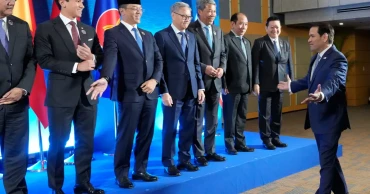
Rubio warns ASEAN that Iran's Hormuz demands could threaten global shipping
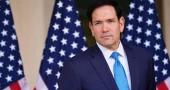
US Secretary of State Marco Rubio on Wednesday warned that Iran's demand to control and collect tolls from ships passing through the Strait of Hormuz could set a dangerous global precedent and threaten freedom of navigation.
Speaking at the opening of the annual Association of Southeast Asian Nations (ASEAN) foreign ministers' meeting in Manila, Rubio said allowing any country to control an international waterway and charge ships for passage would pose risks not only in the Middle East but also in the Indo-Pacific region.
"If a country is allowed to control an international waterway, charge tolls and attack ships that refuse to pay, it would create a dangerous precedent that could be repeated in other parts of the world, including this region," Rubio said.
His remarks came as ASEAN members voiced concern over the renewed conflict in the Middle East, which has also affected economies in Southeast Asia. Despite the US focus on the Middle East, Rubio assured ASEAN leaders that Washington remained fully committed to the regional bloc.
On the sidelines of the meeting, Rubio also joined his counterparts from the Quad grouping — the United States, Australia, India and Japan — to discuss cooperation on technology, humanitarian assistance, disaster response, maritime security and transnational security.
In a joint statement, the four countries reaffirmed their commitment to strengthening maritime security and maintaining peace and stability in the Indo-Pacific, amid growing concerns over China's expanding influence in the region.
"The Quad remains a priority, and we will meet again later this year," Rubio wrote in a post on X.
The Trump administration has repeatedly criticised China's increasingly assertive actions in the South China Sea, particularly those affecting smaller claimant countries such as the Philippines, a long-standing US treaty ally.
The South China Sea disputes, involving China, Taiwan, Vietnam, Malaysia, Brunei and the Philippines, are among the key issues being discussed during the three-day ASEAN meetings in Manila.
Rubio also held talks with Indian External Affairs Minister Subrahmanyam Jaishankar, where they discussed regional security, the conflict involving Iran and efforts to finalise an interim trade agreement aimed at reducing tariffs imposed by President Donald Trump on Indian goods.
According to US State Department spokesperson Tommy Pigott, both sides agreed on the importance of completing the interim trade deal, which is nearing completion.
Rubio was also scheduled to meet Chinese Foreign Minister Wang Yi on the sidelines of the ASEAN meetings.
2 months ago
Rubio visits India as US and New Delhi try to repair strained relations
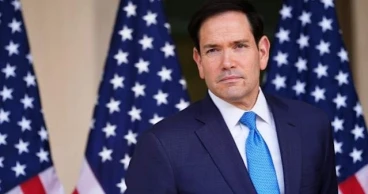
US Secretary of State Marco Rubio is holding talks on Sunday with Indian Foreign Minister Subrahmanyam Jaishankar as both sides work to ease tensions that have pushed relations to their weakest level in more than two decades.
Rubio arrived in New Delhi on Saturday on his first official visit to India, at a time when economic and diplomatic ties between Washington and New Delhi have been strained, largely due to tariff policies under US President Donald Trump that increased duties on several Indian exports.
His visit comes ahead of a meeting on Tuesday with foreign ministers of India, Japan and Australia under the Quad framework, the Indo-Pacific security partnership.
Speaking in New Delhi, Rubio said India remains central to US strategy in the Indo-Pacific, both through the Quad and bilateral relations.
India is also marking the 250th anniversary of US independence with a gala reception during Rubio’s four-day visit, which includes travel to multiple cities.
However, experts say trust between the two countries has weakened significantly over the past year. Former Indian foreign ministry adviser Ashok Malik said recent US statements on sensitive security and trade issues have contributed to a “trust deficit.”
He added that Rubio’s visit would be seen as successful if it helps stabilize ties and prevents further deterioration.
Analysts note that while India and the US share strategic interests, their priorities often differ. India’s long-standing ties with Russia and its cautious approach toward closer alignment with Washington have sometimes created friction.
Relations between the two countries have deepened over the past two decades, especially due to shared concerns over China’s growing influence in the Indo-Pacific. The Quad grouping has frequently raised concerns about China’s maritime claims in the South China Sea, which Beijing rejects, calling the alliance an attempt to contain its rise.
Tensions escalated further over the past year following several developments, including disagreements over trade, energy, and regional diplomacy.
The US imposed tariffs on Indian goods over New Delhi’s discounted purchases of Russian oil, adding strain to already delicate ties.
Observers also point to India’s dissatisfaction with Washington’s engagement with Pakistan during recent regional tensions, as well as US diplomatic moves involving Iran and China.
Senior analyst Praveen Donthi of the International Crisis Group said India-US relations face structural challenges that have become more visible in recent years.
He said India’s foreign policy has become more rigid and politically driven, particularly regarding US ties with Pakistan and Washington’s approach to China.
Despite current tensions, experts believe New Delhi may adopt a cautious approach, hoping for improved relations after the Trump administration.
For now, both sides are expected to focus on managing differences while trying to preserve a long-term strategic partnership built on shared regional interests.
4 months ago
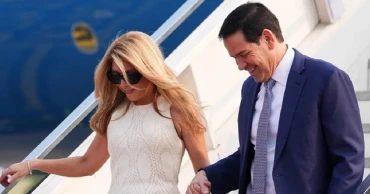
Rubio visits India ahead of Quad talks amid efforts to repair US-India ties
U.S. Secretary of State Marco Rubio arrived in India on Saturday ahead of a key meeting next week with foreign ministers from India, Australia and Japan under the Indo-Pacific strategic group known as the Quad.
The visit marks Rubio’s first official trip to India at a time when Washington is trying to steady ties with New Delhi after relations were strained over tariff policies introduced by U.S. President Donald Trump, which increased duties on several Indian exports.
Despite the diplomatic focus, much of Rubio’s four-day visit will include a multi-city tour and a gala reception in New Delhi marking the 250th anniversary of US independence.
Speaking ahead of the trip, Rubio described India as a “great ally and partner,” saying both sides are involved in important cooperation and have much work to do together.
He arrived in the eastern city of Kolkata early Saturday and is expected to visit the Mother House Kolkata, the headquarters of the Missionaries of Charity founded by Mother Teresa.
During the visit, Rubio is also scheduled to travel to Agra and Jaipur, two northern cities known for their historic monuments and palaces.
According to U.S. Ambassador to India Sergio Gor, Rubio will meet Indian Prime Minister Narendra Modi later Saturday in New Delhi for discussions on trade, technology, defence and Quad cooperation.
He is also set to hold bilateral talks with India’s External Affairs Minister Subrahmanyam Jaishankar on Sunday.
Rubio will join the Quad foreign ministers’ meeting on Tuesday in New Delhi, where the group is expected to discuss regional security concerns, particularly China’s growing military presence in the South China Sea and its maritime claims.
Beijing has repeatedly rejected such criticism, saying its military activities are defensive and accusing the Quad of attempting to contain its economic rise.
Rubio previously held his first major international engagement with Quad foreign ministers shortly after taking office, underscoring the group’s importance in U.S. Indo-Pacific strategy.
4 months ago