Rawhide traders discontent over the pricing of sacrificial animal
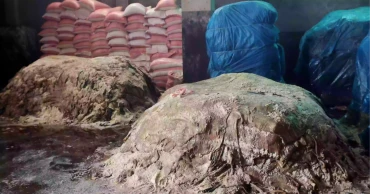
Hides of discontent: Rawhide traders count losses as tanneries duck blame
Rawhide traders and tannery owners have voiced sharp discontent over the quality and pricing of sacrificial animal hides collected during Eid-ul-Azha, with seasonal traders reporting heavy losses and tannery owners blaming poor preservation practices for widespread quality deterioration.
According to the Department of Livestock Services, approximately 1.24 crore animals were prepared for sacrifice this Eid, prompting tanneries to set a collection target of 80 lakh hides. While collection figures neared that target, the quality of hides delivered has left tannery owners deeply concerned.
The government this year raised the price of cattle hides by Tk 2 per square foot, fixing the rate at Tk 67 per sq ft for large hides and Tk 62 for smaller ones.
However, traders say they were unable to fetch anywhere near the government-set prices.
Belayat Hossain, a seasonal hide trader who has worked the annual trade for years, told UNB that a large hide measuring a minimum 31 sq ft should fetch Tk 2,077 when salted, or around Tk 1,500 unsalted.
Instead, he had to sell them for just Tk 700–800. Medium and smaller hides fetched only Tk 500–600.
“We bought hides from sellers at Tk 1,000 and sold them at Tk 700–800,” said another seasonal trader, Yunus. “I won't be doing this business again next year. It was a complete loss.”
The frustration extended to the rawhide traders at Posta in Old Dhaka, who said they lacked the capital to buy hides at competitive prices, as tannery owners had failed to clear previous outstanding payments.
Manzur Hasan, president of the Bangladesh Hide and Skin Merchant Association (BHSMA), told UNB that Posta collected 75,000 hides this year against a target of over one lakh. He attributed the shortfall primarily to unpaid dues from tannery owners.
Manzur alleged that the tannery sector has been syndicated, leaving traders at the mercy of a handful of powerful operators. “We are hostages to the tannery owners. There is no alternative market outside Savar in Dhaka. A leather industrial city was planned for Rajshahi but never materialised. As the entire industry is Savar dependent, tannery owners can act arbitrarily at will.”
He warned that unable to get fair prices, many traders discarded hides altogether, dealing a severe blow to what is a valuable national industry. Hides in Chattogram and Sylhet divisions were among the worst affected, with the majority reportedly going to waste.
Tannery owners, while acknowledging the wastage, placed the blame squarely on poor preservation rather than pricing. They cited lumpy skin disease (LSD) in cattle and the widespread use of unskilled butchers as the primary causes of quality degradation.
Shaheen Ahamed, president of the Bangladesh Tanners Association (BTA), said over 20 percent of hides this Eid were ruined before reaching tanneries. “Fifteen to twenty percent of cattle were found to have lumpy skin disease. Applying chemicals to such hides causes them to perforate. A hide with seven or eight holes cannot be placed in any grade.”
Goat hides drew the sharpest complaints from seasonal traders, many of whom said they could not sell a piece for even Tk 100, and in several cases gave goat hides away free alongside cattle hides.
Shaheen noted that goat hides suffer the most from unskilled flaying, even a single hole renders the hide nearly unsellable. He also criticised traders for repeatedly ignoring government advisories to apply salt to hides for preservation.
“Traders were bringing unsalted raw hides to the tannery at two or three in the morning, hides from animals slaughtered that same morning. Quality cannot be preserved under those conditions,” he said.
By Monday, over 6.5 lakh hides from Dhaka and surrounding areas had arrived at Savar, Shaheen added. Despite government restrictions barring hides from outside Dhaka for ten days post-Eid, hides from Faridpur, Madaripur, and Narsingdi reportedly entered tanneries in violation of the directive.
Analysts say the annual chaos in the hide trade reflects a deeper policy vacuum. While the global leather industry is valued at USD 150–200 billion, Bangladesh earns less than USD 1.5 billion annually from the sector, under three percent of total exports, despite considerable potential.
Abdul Bayes, former vice-chancellor of Jahangirnagar University and a noted economist, drew a parallel with the rice trade. “The same way marginal traders are cheated in the paddy-rice market, they are harmed in the hide trade. If the government wants to develop this industry, there is no alternative to formulating a leather policy and monitoring the market.”
Bayes said a syndicate has taken hold of the tannery business, inflicting annual damage on the sector through the same set of excuses. “Tannery businessmen are growing wealthier while marginal traders are exiting the trade. That alone proves there is no order in this market.”
Industry stakeholders have urged the government to formulate a comprehensive leather industry framework ahead of the next Eid season to prevent a repeat of this year's losses.
4 months ago