Switzerland talks postponed
Israeli strikes in Lebanon threaten Iran-US deal as Switzerland talks postponed
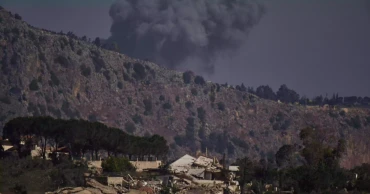
Israeli forces launched extensive airstrikes across southern Lebanon overnight into Friday following deadly attacks that killed four Israeli soldiers, escalating tensions that threaten a fragile agreement between Iran and the United States aimed at ending their recent conflict.
Lebanese media reported that at least 18 people were killed in the strikes, while Israel said four of its soldiers, including a lieutenant colonel, were killed when a tank was attacked near the southern Lebanese city of Nabatiyeh. Five other soldiers were wounded in a separate explosive drone attack.
The violence has cast doubt on the interim agreement reached between Tehran and Washington, which seeks to end regional hostilities and pave the way for negotiations over Iran’s nuclear programme. Although neither Israel nor the Iran-backed Hezbollah group is a signatory to the accord, the deal is intended to halt fighting involving both sides.
Iranian officials cancelled a planned trip to Switzerland for talks with US representatives on Friday, partly because of the renewed clashes in Lebanon, according to a regional official. US Vice President JD Vance also postponed his visit, prompting mediators to seek a new date for the discussions.
The Switzerland talks were expected to address restrictions on Iran’s nuclear activities—the central issue behind the recent war between Israel and the United States against Iran that began on February 28. The negotiations are also aimed at securing a permanent end to hostilities.
The interim agreement has already led to the reopening of the Strait of Hormuz to international shipping after months of disruptions caused by Iranian attacks and threats. The closure had severely affected global energy markets, driving up oil and gas prices worldwide.
The Israeli military said it carried out strikes on what it described as Hezbollah infrastructure in Nabatiyeh and other areas, accusing the group of violating the ceasefire. Later, Israeli forces also targeted locations in Lebanon’s eastern Beqaa Valley, including the village of Douris, according to Lebanese media reports.
Israeli Prime Minister Benjamin Netanyahu said Israel would respond forcefully to attacks on its soldiers and territory, warning that Hezbollah would pay a “very heavy price” for such actions.
Hezbollah acknowledged targeting Israeli tanks, saying the attacks were retaliation for Israeli violations of the ceasefire. The group said Israeli troops had attempted to advance toward the northern side of the strategically important Ali al-Taher hill overlooking Nabatiyeh.
The renewed fighting threatens to undermine the broader agreement between Iran and the United States, which includes commitments to respect Lebanon’s territorial integrity and sovereignty. However, the deal does not clearly state whether Israel must withdraw from areas of southern Lebanon it has occupied since Hezbollah entered the conflict by launching rockets and drones into northern Israel.
Iran has repeatedly demanded a full Israeli withdrawal, while Netanyahu has insisted Israeli troops will remain in a security zone in southern Lebanon as long as national security considerations require it.
The situation has also highlighted growing differences between Washington and Jerusalem, with US President Donald Trump reportedly becoming increasingly critical of Netanyahu’s approach. Nevertheless, US Ambassador to Israel Mike Huckabee defended Israel’s actions, saying on social media that “Israel strikes when struck” and that a ceasefire would be achieved when Hezbollah stops its attacks.
Regional officials said mediators are now concentrating on de-escalating tensions in Lebanon. One official said Iran withdrew from the Switzerland talks because it viewed the fighting and Netanyahu’s remarks as violations of the interim agreement. The White House, however, attributed Vance’s decision to postpone his trip to logistical reasons.
The planned negotiations remain focused on Iran’s nuclear programme. Tehran insists its nuclear activities are peaceful, although the International Atomic Energy Agency says Iran possesses highly enriched uranium that could potentially be used to build several nuclear weapons if it chose to do so.
Negotiators face a difficult task, with the interim agreement allowing 60 days to reach a comprehensive nuclear deal, though the deadline may be extended. The accord offers significant incentives for Iran, including the eventual removal of international sanctions and a proposed $300 billion post-war reconstruction fund.
The United States has already eased some restrictions by lifting its blockade on Iranian ports and allowing Tehran to resume oil exports. The agreement also provides for the release of frozen Iranian assets, although the timeline remains unclear.
Shipping traffic through the Strait of Hormuz has begun recovering, with the United States reporting that more than 12.5 million barrels of oil passed through the strategic waterway on Wednesday night. However, analysts expect it may take weeks or even months before oil and gas flows return fully to normal levels.
1 month ago