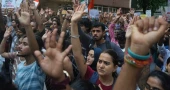
Cockroach movement
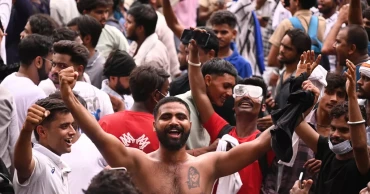
India's 'Cockroach' movement ends protests after education minister resigns
India's "Cockroach" movement on Saturday announced an end to its weeks-long nationwide protests after the government accepted its key demands, including the resignation of Education Minister Dharmendra Pradhan over alleged examination paper leaks and irregularities in the country's education system.
Pradhan confirmed his resignation in a post on X, delivering a major victory to the youth-led movement that organized demonstrations, sit-ins and hunger strikes across India. The resignation marks one of the most significant concessions made by Prime Minister Narendra Modi's government in response to sustained public protests during his more than 12 years in office.
The movement began over a month ago following allegations of paper leaks in several major entrance examinations. Initially focused on education reforms, it soon expanded into a broader campaign demanding greater government accountability, more employment opportunities and improved economic prospects. Students, professionals, parents and activists participated in protests in New Delhi and several other cities.
Following the minister's resignation, organizers said the government had also agreed to implement wider education reforms, compensate the families of students who died by suicide in connection with the exam leak controversy, and refrain from taking legal action against those who took part in the demonstrations.
"We urge everyone to peacefully withdraw from protest sites," Ashutosh Ranka, spokesperson for the Cockroach Janta Party, which launched the movement, told reporters in New Delhi.
1 month ago
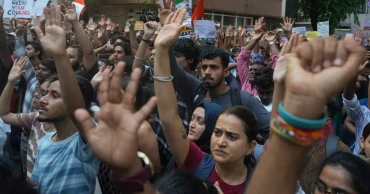
Thousands gather in New Delhi as 'Cockroach' movement seeks march to Parliament
Thousands of supporters of India's youth-led "Cockroach" movement gathered in New Delhi on Monday in an attempt to march to Parliament, demanding the resignation of the country's education minister despite police refusing permission for the protest.
Heavy police deployment surrounded the barricaded protest site at Jantar Mantar, close to Parliament, raising fears of clashes if demonstrators tried to move forward. Television footage showed police using batons to disperse some protesters after they attempted to cross security barricades.
The crowd included students, professionals and families, many carrying food, water and backpacks in preparation for a day-long demonstration. Protesters waved Indian flags and chanted slogans against Education Minister Dharmendra Pradhan and Prime Minister Narendra Modi, while police repeatedly urged them to leave the area through loudspeakers.
The "Cockroach" movement began in May after India's chief justice referred to some unemployed young people as "cockroaches" during an unrelated Supreme Court hearing. Supporters later adopted the term as a symbol of protest, turning it into a satirical campaign that has gained millions of followers on social media.
The movement has grown rapidly amid public anger over repeated leaks of entrance examination papers for medical colleges and government jobs. It gained further attention after police forcibly moved activist Sonam Wangchuk, who had been on a hunger strike, to a hospital on Saturday.
For the past month, protesters calling themselves "cockroaches" have been camping at Jantar Mantar. Student organisations from across the country have joined Wangchuk's hunger strike, while similar demonstrations have taken place at universities and in several other cities.
The protesters are demanding the resignation of the education minister, reforms to the country's examination system and compensation for families of students who died by suicide after examination paper leaks.
Before Monday's planned march, Wangchuk said he would end his nearly three-week hunger strike only if the government accepted responsibility for failures in the education system and the exam leaks, or if protesters were allowed to march to Parliament and lawmakers agreed to raise the issues in both houses.
Delhi Police said permission for the march had not been granted because security restrictions were in place around Parliament during the monsoon session, which began on Monday.
The protests have emerged as one of the most significant public challenges to Prime Minister Modi's government since it began its third term. The movement has received support from opposition parties, rights groups and some Bollywood personalities.
Protesters argue that freedom of dissent has declined under Modi's government, which has faced criticism from rights organisations over its handling of demonstrations, including arrests of activists and police crackdowns.
Senior government leaders have rejected the movement's demands. Education Minister Dharmendra Pradhan accused the protesters of acting against national interests, while other ministers acknowledged students' concerns but said there was no need for formal talks with the movement.
Among the demonstrators was yoga teacher Jyoti Rajput, who said she joined the protest because the authorities had failed to address students' concerns.
"This broken system refuses to take action. It does not understand the suffering of students, and that is why so many people have joined this movement," she said.
1 month ago