MRV
Private mission launches to extend life of aging communication satellites
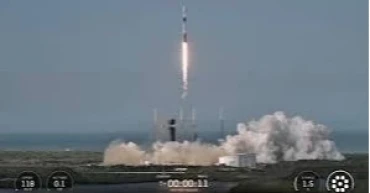
A private space mission was launched Tuesday to help extend the working life of aging communication satellites by attaching small propulsion units to spacecraft that are running low on fuel.
The mission, launched aboard a SpaceX rocket, is part of a growing effort to reduce costs by keeping satellites operating for longer instead of replacing them.
Northrop Grumman's Mission Robotic Vehicle (MRV), equipped with two robotic arms, will spend about a year travelling to geosynchronous orbit, around 36,000 kilometres above Earth. Satellites in this orbit move at the same speed as Earth's rotation, allowing them to remain fixed over the same location and provide continuous communications coverage.
By mid-2027, the robot is expected to attach a jet-powered propulsion unit to an aging communications satellite before moving on to service two more satellites.
The mission also carried three electric-powered propulsion units, each about the size of a washing machine. After separating from the launch vehicle, they will travel independently to the target orbit using xenon-powered thrusters. Once there, the robotic spacecraft will collect and install them on selected satellites.
These propulsion units are designed to give fuel-depleted satellites enough power to continue operating for several more years, potentially saving satellite operators millions of dollars by delaying the need for costly replacements.
The first customers for the service are Luxembourg-based satellite operator SES and Australia's Optus.
This is Northrop Grumman's latest satellite-servicing mission. In 2019 and 2020, the company successfully launched two servicing spacecraft that docked with aging communications satellites and extended their operational lives.
The company plans to expand the technology in the future so robotic spacecraft can repair, reposition and even remove inactive satellites from crowded orbital paths. The project is being developed in partnership with the US Naval Research Laboratory and the Defense Advanced Research Projects Agency (DARPA).
Meanwhile, another private company, Katalyst Space Technologies, is continuing to test its Link servicing spacecraft before attempting to raise NASA's Swift Observatory into a higher orbit.
Engineers have resolved early communication and navigation issues by sending software updates to the spacecraft.
Launched in 2004, NASA's Swift space telescope has been losing altitude faster than expected because of increased solar activity. If the planned orbit-raising mission succeeds in the coming weeks, the nearly $400 million observatory could continue studying powerful cosmic explosions for several more years.
NASA is paying Katalyst Space Technologies $30 million for the mission to return Swift to its original orbit of about 600 kilometres above Earth. Link was launched earlier this month aboard a Pegasus rocket provided by Northrop Grumman.
2 months ago