property to children
Parents to keep lifetime possession after gifting property to children under proposed law: Minister
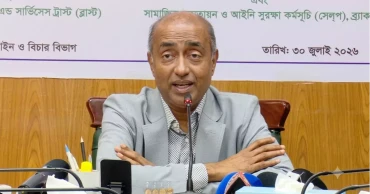
The government is planning to amend the Transfer of Property Act to allow parents to retain lifetime possession and enjoyment of property even after transferring it to their children, Law, Justice and Parliamentary Affairs Minister Md Asaduzzaman said on Thursday.
He made the remarks at a memorandum of understanding (MoU) signing ceremony between the National Legal Aid Services Organization and non-governmental organisations BRAC and BLAST on legal aid at the Secretariat.
The proposed amendment aims to strengthen legal protection for parents who transfer property to their children but later become financially or socially vulnerable.
"We are considering amendment to the relevant law because most civil cases in Bangladesh arise from disputes over property distribution and ownership," he said.
Under Muslim law, property can be transferred through heba (gift), while Hindu law recognises wills and Muslim law also provides for wills (wasiyat), he said.
However, once parents transfer property through heba, they immediately lose ownership and often become dependent on their children, he said adding "If children do not look after their parents, the parents are left with little legal protection and become helpless.”
To address the issue, the government plans to expand provisions under the Transfer of Property Act relating to gifts, drawing on a 1963 judgment of the Pakistan Supreme Court.
Under the proposed amendment, a parent transferring property as a gift would retain a usufruct right, allowing them to possess and enjoy the property throughout their lifetime.
"A parent may choose not to transfer property through heba or a will, but instead make a gift while continuing to enjoy and occupy the property during his or her lifetime," he said.
Under the proposal, although ownership would be transferred, the parents would retain lifetime possession. Neither the parents nor the children would be able to sell the property unilaterally.
Any sale by the parents would require the children's consent, while the children would also need the parents' permission to dispose of the property during the parents' lifetime, said the minister.
Asaduzzaman said provisions would also be included for exceptional circumstances, such as when a parent requires urgent medical treatment and the property must be sold but the children refuse consent.
"In such cases, the district judge will be empowered to consider an application and decide whether the sale should be allowed," he said.
The law minister expressed hope that the proposed reform would help reduce property-related civil litigation and resolve many disputes through clearer legal safeguards.
"We believe this initiative will reduce the number of civil cases in future and address many existing problems. We want to move forward with such new legal ideas," he added.
1 hour ago