Reform Watch
CGS launches ‘Reform Watch’ initiative; speakers warn against slacking
Democratic reform, institutional accountability, political tolerance and meaningful inclusion must remain at the centre of Bangladesh’s post-July political transition, speakers said at a dialogue on Saturday, warning that failure to implement agreed reforms could deepen public frustration and allow old political practices to return.
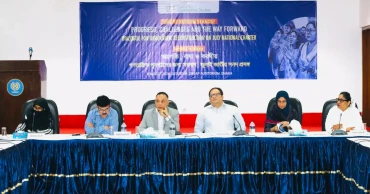
The remarks came at a dialogue titled “Where Does Reform Stand? Progress, Challenges and the Way Forward”, organised by the Centre for Governance Studies (CGS) under its Reform Watch initiative at the CIRDAP Auditorium in Dhaka.
The discussion presented findings from a mid-term report on implementation of the July National Charter and brought together representatives of major political parties, civil society, academia, law and the media.
The speakers stressed that the credibility of the reform process would increasingly be judged not by the number of proposals discussed, but by how effectively agreed reforms are translated into functioning institutions and political practice.
In the event, BNP MPs Shahadat Hossain Selim and Jahrat Adib Chowdhury; 11-party Party Alliance’s MPs Tasmia Prodhan, Subikunnahar Munni; Bangladesher Samajtantrik Dal’s (BSD) Joint General Secretary Razekuzzaman Ratan, Jatiya Party’s (Japa) Secretary General Barrister Shameem Haider Patwary, Jatiya Samajtantrik Dal’s (JSD) General Secretary Nazmul Haque Prodhan, AB Party’s Joint General Secretary and Head of International Affairs Barrister Nasreen Sultana Mily, Communist Party of Bangladesh’s (CPB) Presidium Member Joly Talukder, Rashtro Songskar Andolon’s Member Lamia Islam, Khelafat Majlis’s Organising Secretary Prof Kazi Minhazul Alam, journalist Sohrab Hassan, Bangladesh Indigenous Peoples Forum’s General Secretary, Sanjeeb Drong, former Chief Prosecutor of the International Crimes Tribunal Advocate Muhammad Tajul Islam, Centre for Governance Studies’ Executive Director, Parvez Karim Abbasi, senior jurist and former member of Constitutional Reform Commission Dr Sharif Bhuiyan, North South University’s Prof of Political Science and Sociology Dr Bulbul Siddiqi and NCP’s Joint Convener Sarwar Tusher spoke.
CGS President Zillur Rahman said that reform is an ongoing process. However, people often assume that everything can be achieved at once.
He said democratic reconstruction and democracy are fundamentally matters of broader political culture and continuous practice.
He noted that a good election had undoubtedly been held, although after such a long period, some may still not consider it fully acceptable.
Shahadat Hossain Selim said that there were “notes of dissent” on 16 out of 84 issues, but not all of them came from the BNP.
He argued that the proposals of various commissions had been framed in a way that left the BNP “trying to swim with its hands and feet tied.”
He added that constitutional amendments should be undertaken through a special committee based on broad discussion and consultation, as there is no realistic alternative.
Jahrat Adib Chowdhury said that corruption, violence against women, unemployment, and inequality have increased and must be addressed effectively. Greater political maturity had been expected after 5 August.
She stressed the need to continue dialogue between the government and the opposition, ensure transparency and accountability in the bureaucracy, and promote tolerance among young people so that a new Bangladesh can be built collectively.
Advocate Muhammad Tajul Islam said that fundamental and structural reforms are necessary to fulfil the aspirations that emerged after July.
Barrister Shameem Haider Patwary said that although the July movement created a major opportunity for reform, political interests later weakened that consensus.
While significant parts of the July Charter were positive, he argued that its initial process was legally questionable.
He said existing parliamentary committees could consult all political parties and pass key elements of the July Charter as legislation.
He noted that expected progress had not been achieved in judicial independence, the Human Rights Commission, judicial appointments, and other major reforms.
Parvez Karim Abbasi said that public opinion must be given priority and that bureaucratic reform, checks and balances, and accountability must be ensured.
2 months ago