Yellow school bus
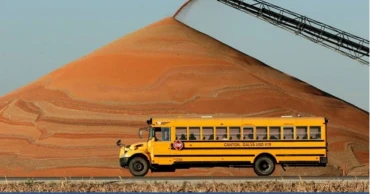
Yellow school buses evolve as US education and transport needs change
For generations, the yellow school bus has been a familiar sight across the United States. Although early school buses came in different colors, the distinctive yellow shade eventually became the national standard because it was easy to see on the road.
The color was not chosen by Congress. In 1939, transportation officials from all 48 US states selected the yellow shade, which has a slight orange tone, as an early safety measure. At their peak in the 1980s, yellow school buses carried more than 60% of US students to school.
The school bus has its roots in rural America. In Georgia, car dealer Albert Luce designed a metal bus to transport cement workers. When his company rejected the idea, he began marketing the vehicle to schools.
The timing was right. School districts were replacing small, one-room schools with larger schools located farther away, creating a growing need for school transportation.
“I don’t think you could’ve had one without the other,” said Matt Anderson, head transportation curator at the Henry Ford Museum of American Innovation in Dearborn, Michigan, which houses Luce’s 1927 bus.
School buses later played an important role in desegregating US schools by carrying Black and white children across racial boundaries. However, the practice of using buses for desegregation has largely ended, and many US schools have since become more segregated.
Carl Fisher spent 66 years driving school buses before retiring in 2012 at the age of 86. The Guinness Book of World Records recognized him as the longest-serving school bus driver.
His first bus was a modified Dodge truck that carried about 20 children in Pleasant Hope, Missouri. A family friend converted the vehicle by adding benches, stools and windows.
Over the years, features such as padded seats and folding stop signs became standard, along with other safety improvements.
Brad Beauchamp of electric bus maker Blue Bird said school buses remain among the safest forms of road transportation per passenger and mile, even without seat belts.
Today, however, driver shortages and other challenges mean many students no longer have access to a yellow school bus. This has put additional pressure on families to find other ways to get their children to school.
Jim Oppegard, who drove school buses for more than two decades in Brooklyn Park, a Minneapolis suburb, retired at 94 as the oldest recorded school bus driver.
He said the job was rewarding because it allowed him to help children and contribute to the wider community.
“You’re helping the kids and helping the overall society,” Oppegard said. “You’re doing an important job.”
6 hours ago