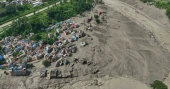
Nepal floods
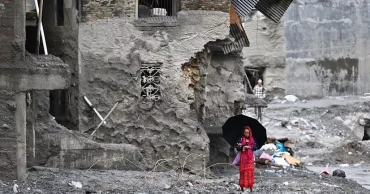
Nepal steps up relief and recovery efforts after deadly floods: UN
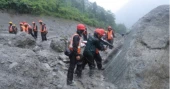
Nepal is stepping up relief and recovery efforts following last week's devastating flash floods along the Nepal-Tibet border, while rescue teams continue searching for survivors, the United Nations said.
For thousands of affected people, the immediate priorities are receiving emergency aid, finding missing family members, recovering the bodies of loved ones and reuniting children separated from their families, a spokesperson for UN Secretary-General said.
Nepal's disaster management agency said at least 1,200 people have been killed and more than 4,200 remain missing. On the Tibetan side, at least 21 people have died and more than 540 are still unaccounted for, according to Chinese state media.
Rescue teams are also working to reach potentially hundreds of workers believed to be trapped inside hydropower tunnels in Nepal.
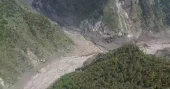
The disaster occurred last Wednesday when a massive flash flood, believed to have been triggered by a glacial collapse, swept through a Himalayan valley and destroyed villages in its path.
Nepal's disaster management agency said nearly 12,000 people have been rescued since the floods.
However, thousands of people remain missing, including hundreds of foreign nationals from countries such as India, the United Kingdom, Australia, the United States and Malaysia.
With a week having passed since the disaster, concerns are growing that the death toll could rise further as rescue teams reach more remote and severely affected areas.
With inputs from BBC
1 month ago
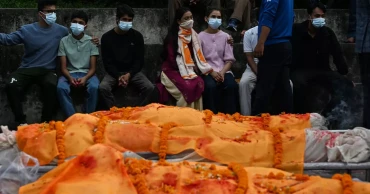
Symbolic funerals held in Nepal as some missing tourists contact authorities
Some tourists previously reported missing after Nepal's devastating floods have made contact with authorities, offering a glimmer of hope, while families of locals who remain unaccounted for are holding symbolic funerals for loved ones feared dead.
Nepal's Foreign Ministry said 324 foreign nationals have been rescued, while 590 people from 39 countries are still missing following the Aug. 26 disaster. The country's disaster management agency said at least 1,204 people have been killed and more than 4,200 remain missing.
Australian Prime Minister Anthony Albanese said the number of Australians reported missing had dropped from 43 to 38 after five people were confirmed safe overnight.
“Amidst all of this tragedy, we are seeing some positive news,” Albanese said while attending a regional summit in Palau, adding that efforts were continuing to locate others.
Australia said Thursday it would send a team of drone operators to Nepal within days to support search and rescue operations.
Nepal Tourism Board spokesperson Sunil Sharma said at least five other tourists previously listed as missing had contacted authorities by phone or email in recent days.
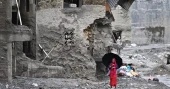
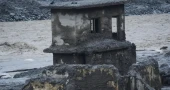
The disaster is believed to have been triggered by a glacial collapse in the Himalayas, sending huge amounts of rock, ice and meltwater into valleys and causing rivers in Tibet and Nepal to rise rapidly. Floodwaters swept away homes, roads, bridges and other infrastructure.
Families hold symbolic funeralsIn Nuwakot, one of the hardest-hit districts, some families have held symbolic funerals for relatives who remain missing and are feared dead.
For Hindu families, cremation is an important final rite. Performing the ceremony without recovering the bodies can offer families a sense of spiritual closure.
Mukunda Rijal said several of his cousins and their daughters were still missing, prompting the family to carry out symbolic funeral rites.
Along the banks of the Trishuli River, a priest placed straw effigies representing the missing relatives on funeral pyres and set them alight as family members gathered with traditional offerings.
Authorities have also been burying recovered bodies in temporary graves until they can be identified. DNA samples are being preserved, while photographs and other identifying details are being recorded to help match the bodies with missing people and eventually return them to their families.
China opens access route for rescue teamsAcross the border in China, rescue workers have completed a temporary road to reach the disaster-hit area near Gyirong Port, state broadcaster CCTV reported Wednesday.
The route will allow heavy machinery to reach the border crossing area, which was severely damaged by the floods and buried under water, mud and rocks.
China's state news agency Xinhua said at least 21 people had been killed and 541 others remained missing on the Chinese side of the disaster zone.
Survivors seek shelter in KathmanduMeanwhile, hundreds of flood survivors have fled to Kathmandu in search of shelter.
About 400 people, most of them from the town of Timure, around 110 kilometers west of the capital, are staying at the Yellow Gumba monastery. Local residents, relatives and charity groups are providing food and other relief supplies.
Among them is 21-year-old Riya Tamang, who escaped with her 10-month-old baby as floodwaters approached her home. She said she lost her grandparents in the disaster.
“I was the last one to leave the house. It was so difficult to escape,” she said.
Her husband, who works as a cook in Gyirong on the Chinese side of the border, also survived. The couple are now staying in contact through video calls.
1 month ago
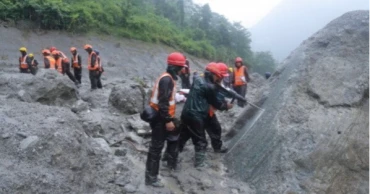
Nepal floods highlight growing risks to hydropower in warming Himalayas
Nepal's devastating floods have exposed the growing vulnerability of hydropower projects and other infrastructure in the rapidly warming Himalayan region, as authorities face the challenge of rebuilding without repeating past mistakes.
Workers were clearing thick mud from a flood-hit power station in central Nepal that supplies electricity to more than 20,000 people. Up to 900 workers remain unaccounted for at around a dozen hydropower projects, with hundreds believed trapped in tunnels.
The disaster, which has killed more than 900 people in Nepal and China and left about 4,700 missing, has taken an estimated 700 megawatts of electricity capacity offline — around 10% of Nepal's total capacity.
Hydropower projects, roads, bridges, schools and hospitals were damaged or destroyed across Rasuwa, Nuwakot and Dhading districts.
Disaster experts said reconstruction should focus on resilience, including safer locations, alternative routes, backup power, early-warning systems and insurance. Nepal has an estimated $124 billion worth of infrastructure exposed to climate-related disasters, while average annual disaster losses are nearly $760 million.
Climate experts warn that faster glacier melt, degrading permafrost, unstable slopes, glacial lakes and increasingly unpredictable rainfall are raising the risks of floods and landslides across the Hindu Kush Himalaya.
Experts said better risk assessments and timely warnings are crucial, while future energy planning could also include more decentralized solar power alongside hydropower.
1 month ago
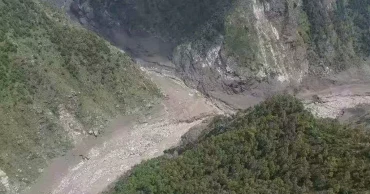
Nepal floods underscore rising glacier risks in warming Himalayas
The deadly flash flood that swept through parts of Nepal on Wednesday was likely triggered by a massive section of glacier breaking away and temporarily blocking a river, causing a sudden surge of water downstream, scientists said.
Researchers are still examining satellite images and ground data to determine exactly how the disaster unfolded. The flood killed hundreds of people and left many others missing, including foreign nationals and pilgrims.
The US Geological Survey identified the event as a magnitude 5.2 glacier collapse that sent ice, rock and debris downstream with devastating force.
Jakob Steiner, a geoscientist at Austria’s University of Graz, said satellite imagery indicated that a large lower section of the glacier had broken away and fallen.
Scientists cautioned against directly linking the disaster to climate change at this stage. However, they said rising global temperatures are altering the Hindu Kush Himalaya region and increasing the likelihood of dangerous glacier-related events.
Saswat Sanyal, a disaster risk reduction specialist at the International Centre for Integrated Mountain Development (ICIMOD) in Kathmandu, said rising temperatures are causing significant changes in the region and accelerating glacier melt.
Sudden surge left little time to escape
Researchers said water levels in some rivers rose by as much as 9 metres within 30 minutes following the glacier collapse.
Preliminary findings suggest a large amount of ice and rock fell into the Lhende Khola, a tributary of the Bhote Koshi River. The collapse may have displaced water and swept up loose sediment and boulders, creating a powerful debris flow.
Scientists are also investigating whether the falling material temporarily blocked the river, allowing water to accumulate before the blockage gave way and intensified the downstream flood.
The affected area has experienced other major mountain disasters. A glacial lake flood struck the same valley in 2025, while an ice and rock avalanche hit another part of the region in 2024.
Warming increases glacier-related hazards
The Hindu Kush Himalaya is warming rapidly, causing major changes to glaciers, snow cover, permafrost and mountain slopes.
The region contains more than 63,000 glaciers that supply water to at least 10 major Asian river systems and support the food, water and energy needs of billions of people.
Scientists say about 78% of the glacier area between 4,500 and 6,000 metres above sea level is highly exposed to warming.
Research by ICIMOD has found that glacier melt across the region has accelerated, with ice-loss rates doubling since 2000.
As glaciers retreat, melting ice can enlarge glacial lakes and increase the risk of sudden floods. The loss of ice support can also expose mountain rock to warmer temperatures, rainfall and repeated freezing and thawing, making slopes less stable.
Experts warn that a single glacier collapse or avalanche can trigger a chain of events involving debris flows, river blockages and devastating flash floods.
Early warning systems crucial
Scientists said the latest disaster highlights the need for stronger monitoring and early warning systems across the Himalayas.
Steiner said about 10% of Nepal’s power generation capacity is located in the affected valley, underscoring the risks to critical infrastructure.
With more than a million tourists visiting Nepal annually in recent years, experts said warning systems should protect both local communities and visitors.
However, monitoring thousands of glaciers, steep slopes and river valleys across the Himalayas remains extremely difficult.
Sanyal said authorities may have only a few minutes to respond once a chain of mountain hazards begins.
Experts called for stronger early warning systems, improved monitoring and faster information sharing among countries in the Himalayan region as climate change continues to make mountain environments increasingly unstable.
1 month ago
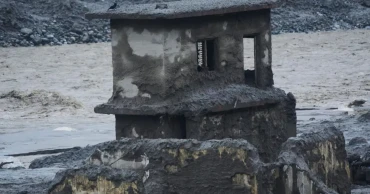
Catastrophic floods kill nearly 400 in Nepal and Tibet, more than 1,400 missing
Catastrophic floods and mudslides along the Nepal-China border have killed nearly 400 people and left over 1,400 missing, as rescue teams backed by military helicopters searched on Thursday for survivors in communities devastated by a massive surge of water and debris.
The disaster struck a day earlier after a glacier collapse triggered a torrent that swept through settlements in Nepal and Tibet, destroying homes, bridges and roads. The number of missing includes hundreds of foreign nationals and pilgrims.
Nepalese police reported 389 deaths and more than 460 injuries, while 910 people remained missing in the country. Authorities in Tibet, an autonomous region of China, reported three deaths and 558 missing. Figures from the two sides may not be fully comparable because of differences in how the data were collected and verified.
The floods destroyed dozens of bridges and damaged nearly 40 kilometres of roads in Nepal, making it difficult for rescue teams to reach isolated areas.
Nepal Army spokesperson Brig. Gen. Raja Ram Basnet said the army had rescued more than 100 people by helicopter. Army personnel also evacuated people trapped inside facilities linked to the Trishuli hydropower project.
Dozens of injured people were transported to Kathmandu for treatment, while bodies were recovered in Chitwan district, hundreds of kilometres downstream from some of the worst-hit areas.
Bishal Kumar Bhandari, chairman of the Nepal Red Cross Society, said the organisation had shifted its focus from rescue operations to large-scale relief efforts. About 1,200 people had been displaced from at least three villages, he said.
In Tibet, the mudslide engulfed a multistorey port building and a bus parking area at the Gyirong Port border crossing. Chinese state broadcaster CCTV reported that mud in the surrounding area was more than 1.5 metres deep on average.
Chinese Premier Li Qiang visited Gyirong on Thursday to oversee rescue efforts involving about 500 military and paramilitary personnel. Military helicopters were deployed to search for survivors, assess damage and identify possible evacuation routes.
Chinese authorities also warned that a newly formed lake near the confluence of the Tsogyal and Purupqiangzangbu rivers was overflowing and could potentially burst.
Foreigners among missing
Nepal's Tourism Board said 517 foreigners were among those reported missing, including 178 Indians and more than 60 Americans. Nationals from more than 30 countries were reportedly in the affected areas, including people from Ukraine, the United Kingdom, South Africa and Japan.
Many of the missing may have been travelling to Mount Kailash in Tibet, a sacred pilgrimage site for Hindus, Buddhists and followers of other faiths.
Indian spiritual leader Sadhguru Jaggi Vasudev said 77 members of a pilgrimage group were caught in the floods at an immigration office near the border. The group included 22 Americans and people from several other countries.
The US State Department said 90 Americans were unaccounted for in Nepal and China, while three Americans had been rescued. It said it had no information about any US deaths.
India's Ministry of External Affairs said 288 Indians, including some workers involved in a power project, were missing.
Chinese Foreign Ministry spokesperson Lin Jian said nearly 100 Chinese nationals were missing in Nepal. He said 260 foreigners were among those reported missing in Tibet.
Glacier collapse suspected
The US Geological Survey initially reported a magnitude 4.4 earthquake early Wednesday near Nepal's border. It later revised its assessment, saying the event was a magnitude 5.2 glacier collapse that sent debris flowing downstream.
Climate experts at the International Centre for Integrated Mountain Development in Kathmandu said an avalanche from a glacier likely triggered the flash flood.
They said water levels at one point on the Trishuli River rose by as much as 9 metres within 30 minutes.
Experts have warned that growing instability in Himalayan glaciers poses increasing risks to communities, infrastructure and water supplies in the densely populated region.
The Himalayan region has experienced similar disasters in recent years. In August 2025, a glacial lake in Tibet overflowed amid high temperatures, killing nine people and damaging critical infrastructure, including a bridge linking Nepal and China.
1 month ago

Bangladesh ready to bring back nationals if affected by Nepal floods: FM
Though there is no report of any Bangladeshi being killed or injured, Foreign Minister Dr Khalilur Rahman on Thursday said Bangladesh is ready to take appropriate steps to bring back Bangladeshi nationals from Nepal if anyone is found to have been affected.
Asked whether Bangladeshis have been affected by the disaster, Dr Khalilur said Bangladesh has specifically informed Nepal that if any Bangladeshi nationals are found affected - whether alive or dead - Dhaka would extend full cooperation and take appropriate measures to bring them back.
“There were foreign tourists there when the incident happened,” he told reporters at the Ministry of Foreign Affairs, noting that the government has not yet received any names or confirmed information about Bangladeshi casualties.
1 month ago
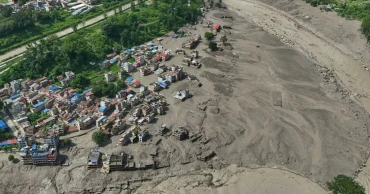
Glacial collapse triggers deadly floods on Nepal–China border, leaving at least 160 dead and hundreds missing
Devastating flash floods caused by the collapse of a glacier have killed at least 160 people and left hundreds more missing along the Nepal–China border. The disaster struck without warning on Wednesday, sweeping through villages, disrupting transportation, and highlighting the growing dangers of climate change in the Himalayan region.
Authorities in Nepal confirmed 157 deaths, while Chinese state media reported three fatalities and 265 missing in Tibet’s Gyirong County, close to the border. Drone footage revealed roads washed away, buildings buried under thick mud, and widespread destruction. China's Xinhua News Agency also reported heavy casualties.
The mountainous region, known for its steep valleys that serve as key transport and trade routes, is highly vulnerable to natural disasters. In Nepal’s severely affected Nuwakot district, floodwaters coated buildings in mud up to their second floors, while vehicles were buried and debris clung to trees and power lines. Many survivors were left covered in mud, with little time to escape the fast-moving waters.
Resident Shoyam Rajbhandari recalled that the flood engulfed Dhunge Bazaar within half an hour, destroying the entire marketplace as people were preparing to leave for work. He said the number of people dead or missing remained unknown.
Officials reported that 403 people, including 341 foreign nationals, are missing. Among them are 133 Indian pilgrims traveling to Mount Kailash in Tibet, a sacred destination for Hindus. Also unaccounted for are 47 Americans, 34 Australians, 33 Britons, and 24 Canadians. The U.S. State Department confirmed it is aware that American citizens have been affected.
In Nepal’s Rasuwa district, bordering Tibet, at least 62 Nepali citizens remain missing. Many had been trekking near Gosaikunda Lake during the Janai Purnima festival. Although the monsoon season is generally unsuitable for trekking, it is a peak period for pilgrimages to Mount Kailash through the Rasuwa route.
Nepal Police spokesperson Abi Narayan Kafle said at least 28 police officers are also missing. Authorities have warned residents to stay away from the Trishuli, Bhotekoshi, and Narayani rivers, as floodwaters swept away 19 bridges and nearly 40 kilometers (25 miles) of roads. The Bhotekoshi River overflowed around 9 a.m., destroying several villages and hydropower facilities.
Government spokesperson Sasmit Pokharel said Nepal has requested assistance from both India and China to support ongoing rescue operations.
1 month ago
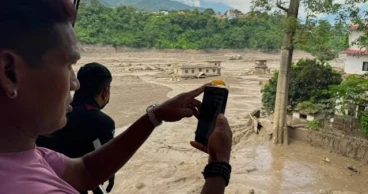
Hundreds missing, at least 8 killed as avalanche triggers flash floods in Nepal
At least eight people were killed and hundreds remained missing after an avalanche of ice and rocks triggered massive flash floods in parts of Nepal on Wednesday, sweeping away villages and damaging roads and other infrastructure.
Officials said 384 tourists were reported missing, including 291 visitors from India, the United States, the United Kingdom and Malaysia.
The Bhotekoshi River overflowed around 9 a.m., flooding several villages and damaging roads and hydropower projects, officials said. Authorities warned people in several districts to stay away from the banks of the Bhotekoshi, Trishuli and Narayani rivers.
“We have asked both India and China to help us with the rescue efforts,” Nepali government spokesperson Sasmit Pokharel said.
Rasuwa district was among the worst-hit areas. The district experienced similar flooding in August last year after a glacial lake in neighboring Tibet overflowed amid rising temperatures in the mountain region. Nine people were killed and key infrastructure, including a bridge linking Nepal and China, was damaged at the time.
Climate experts at the Kathmandu-based International Centre for Integrated Mountain Development said an avalanche from a glacier likely caused Wednesday’s flooding.
The Lhende Khola River, a tributary of the Bhotekoshi, saw the highest level of flooding, they said.
“The Lhende Khola has flooded twice in 14 months, this time after an ice-rock avalanche from a glacier on the Nepal side blocked the river and sent a sudden surge downstream,” said Saswata Sanyal, a disaster risk reduction specialist at the organization.
“In a warming Himalaya, early warning is the first line of adaptation,” he said.
The Himalayan region, which includes Nepal and parts of several neighboring countries, including India, is highly vulnerable to floods, landslides and heavy rainfall. Experts say the region is warming faster than the global average because of human-driven climate change.
Extreme weather events such as heatwaves, heavy rainfall and glacier melt have become more frequent in the region.
Researchers at the Kathmandu-based organization said earlier this year that glaciers across the Hindu Kush Himalaya are melting at an accelerating pace, with the rate of ice loss doubling since 2000, largely due to rising global temperatures and climate change.
1 month ago