Death toll rises Nepal
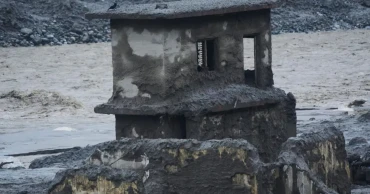
Catastrophic floods kill nearly 400 in Nepal and Tibet, more than 1,400 missing
Catastrophic floods and mudslides along the Nepal-China border have killed nearly 400 people and left over 1,400 missing, as rescue teams backed by military helicopters searched on Thursday for survivors in communities devastated by a massive surge of water and debris.
The disaster struck a day earlier after a glacier collapse triggered a torrent that swept through settlements in Nepal and Tibet, destroying homes, bridges and roads. The number of missing includes hundreds of foreign nationals and pilgrims.
Nepalese police reported 389 deaths and more than 460 injuries, while 910 people remained missing in the country. Authorities in Tibet, an autonomous region of China, reported three deaths and 558 missing. Figures from the two sides may not be fully comparable because of differences in how the data were collected and verified.
The floods destroyed dozens of bridges and damaged nearly 40 kilometres of roads in Nepal, making it difficult for rescue teams to reach isolated areas.
Nepal Army spokesperson Brig. Gen. Raja Ram Basnet said the army had rescued more than 100 people by helicopter. Army personnel also evacuated people trapped inside facilities linked to the Trishuli hydropower project.
Dozens of injured people were transported to Kathmandu for treatment, while bodies were recovered in Chitwan district, hundreds of kilometres downstream from some of the worst-hit areas.
Bishal Kumar Bhandari, chairman of the Nepal Red Cross Society, said the organisation had shifted its focus from rescue operations to large-scale relief efforts. About 1,200 people had been displaced from at least three villages, he said.
In Tibet, the mudslide engulfed a multistorey port building and a bus parking area at the Gyirong Port border crossing. Chinese state broadcaster CCTV reported that mud in the surrounding area was more than 1.5 metres deep on average.
Chinese Premier Li Qiang visited Gyirong on Thursday to oversee rescue efforts involving about 500 military and paramilitary personnel. Military helicopters were deployed to search for survivors, assess damage and identify possible evacuation routes.
Chinese authorities also warned that a newly formed lake near the confluence of the Tsogyal and Purupqiangzangbu rivers was overflowing and could potentially burst.
Foreigners among missing
Nepal's Tourism Board said 517 foreigners were among those reported missing, including 178 Indians and more than 60 Americans. Nationals from more than 30 countries were reportedly in the affected areas, including people from Ukraine, the United Kingdom, South Africa and Japan.
Many of the missing may have been travelling to Mount Kailash in Tibet, a sacred pilgrimage site for Hindus, Buddhists and followers of other faiths.
Indian spiritual leader Sadhguru Jaggi Vasudev said 77 members of a pilgrimage group were caught in the floods at an immigration office near the border. The group included 22 Americans and people from several other countries.
The US State Department said 90 Americans were unaccounted for in Nepal and China, while three Americans had been rescued. It said it had no information about any US deaths.
India's Ministry of External Affairs said 288 Indians, including some workers involved in a power project, were missing.
Chinese Foreign Ministry spokesperson Lin Jian said nearly 100 Chinese nationals were missing in Nepal. He said 260 foreigners were among those reported missing in Tibet.
Glacier collapse suspected
The US Geological Survey initially reported a magnitude 4.4 earthquake early Wednesday near Nepal's border. It later revised its assessment, saying the event was a magnitude 5.2 glacier collapse that sent debris flowing downstream.
Climate experts at the International Centre for Integrated Mountain Development in Kathmandu said an avalanche from a glacier likely triggered the flash flood.
They said water levels at one point on the Trishuli River rose by as much as 9 metres within 30 minutes.
Experts have warned that growing instability in Himalayan glaciers poses increasing risks to communities, infrastructure and water supplies in the densely populated region.
The Himalayan region has experienced similar disasters in recent years. In August 2025, a glacial lake in Tibet overflowed amid high temperatures, killing nine people and damaging critical infrastructure, including a bridge linking Nepal and China.
1 month ago