Sirajganj wetlands
Sirajganj wetlands come alive with arrival of migratory birds
Migratory birds have started arriving in the wetlands, canals and rivers of Sirajganj well ahead of winter, turning the quiet water bodies into lively habitats filled with birdsong.
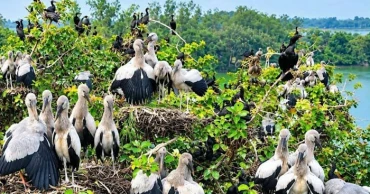
The trees surrounding Ulupur Dighi in Tarash upazila are now echoing with the calls of visiting birds. Every afternoon, the banks of the pond draw visitors, bird lovers and curious onlookers eager to watch the birds.
Many other areas, including the historic Chalan Beel, offer abundant food and suitable shelter for a wide variety of bird species.
Local people said thousands of birds have already been seen in the wetlands this season. During winter, the region's water bodies become home to different species, including egrets, Badar, Lalmon, Soli, Asian openbills, whistling ducks, Kaiyum and Bagar birds.
The sight of large flocks flying over the wetlands, foraging for food and returning to the trees as the afternoon sets in, has added a new dimension to the area's natural beauty.
Ulupur Dighi, in particular, has emerged as a safe haven for migratory birds. Local students and bird enthusiasts said the trees around the pond have gradually developed into a suitable habitat, encouraging birds to return year after year.
"Every afternoon, people from different walks of life gather here to see the birds. The number of visitors is increasing every day," said a local bird enthusiast.
Many visitors take photographs and selfies while watching the birds. The growing interest, however, has also raised concerns about protecting the habitat from disturbance.
Locals and bird lovers have urged the administration to take effective measures to preserve the pond, surrounding vegetation and other wetlands so that the birds can continue to use the area safely.
According to ornithologists, migratory birds move to countries with relatively mild weather and favourable feeding and breeding conditions when harsh winter makes their native habitats difficult to survive in.
Bangladesh, with its relatively moderate winter and extensive wetlands, attracts thousands of migratory birds every year. The birds cross long distances to reach the country's rivers, haors, beels, ponds and coastal wetlands.
Many species begin arriving in Bangladesh between September and October, while their numbers generally peak in December and January.
A total of 744 bird species have been recorded in Bangladesh, including 301 resident species, according to relevant bird records.
District Livestock Officer Dr AKM Anwarul Hoque said the sight of thousands of birds around the calm waters of the ponds and the surrounding greenery creates a remarkable natural scene.
"The birds come here mainly in search of food and safety. When winter is over, they return to their native habitats," he said.
The official, however, expressed concern over the hunting and killing of migratory birds by unscrupulous people.
Bird numbers are declining in many places because of hunting and other threats, he said, stressing the need for greater public awareness and vigilance to protect them.
As winter approaches, the wetlands of Tarash are therefore becoming more than just feeding grounds for migratory birds.
For local residents and visitors, they are also a seasonal reminder of the rich biodiversity that survives when nature is given a safe place to thrive.
7 hours ago