vessel methanol
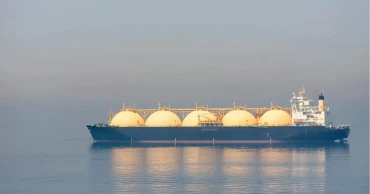
The vessel carrying methanol headed for Dhaka in Bangladesh.
A cargo barge carrying 540 metric tonnes of methanol departed from the Bogibeel terminal on the Brahmaputra River in Assam’s Dibrugarh for Dhaka on Monday, marking the first cargo shipment from Upper Assam to a foreign port since India gained independence in 1947.
The voyage comes nearly seven decades after Dibrugarh’s historic river ghat ceased operations.
Indian Union Minister for Ports, Shipping and Waterways Sarbananda Sonowal formally flagged off the vessel at a ceremony attended by several ministers, MPs and MLAs.
Assam Chief Minister Himanta Biswa Sarma joined the programme virtually.
The methanol, manufactured by state-owned Assam Petro-Chemicals Ltd. (APCL) at Namrup, is being transported to Pangaon Port in Dhaka, reports Indian media.
The vessel will initially travel around 768 kilometres along National Waterway-2 on the Brahmaputra to the India-Bangladesh border before proceeding through the Indo-Bangladesh Protocol Route (IBPR).
The overall journey from Bogibeel in Dibrugarh to Narayanganj in Dhaka will cover approximately 1,300 kilometres.
The voyage is being viewed as a test of the Brahmaputra’s potential as a commercially viable freight corridor connecting India’s Northeast with international markets.
“Our grandparents grew up hearing the steamer whistle at Dibrugarh Ghat. For 70 years, that whistle fell silent and the ships stopped coming,” Sonowal said. “Today, a ship leaves Dibrugarh for the world once again. The river never failed us. What it lacked for decades was the will to revive it.” Sonowal added.
“Assam’s own product, made in Namrup, is now traveling to an international market on Assam’s own river. The Northeast is no longer a frontier. It is India’s gateway to the East,” he said.
Sonowal described the shipment as the start of a new chapter. “This is the first voyage, not the last,” he said.
Dibrugarh was historically one of eastern India’s major river ports. Government steamers had begun reaching the town from Calcutta, now Kolkata, by 1856.
The Dibru-Sadiya Railway started operating from the Dibrugarh steamer ghat in 1882, while by 1913 steamers were making daily journeys up the Brahmaputra to the town, transporting tea, timber and passengers.
The Partition of 1947 disrupted the river route, forcing Assam’s goods to travel through East Pakistan to reach Calcutta. A 1950 earthquake also altered the riverbed around Dibrugarh.
Regular bookings from Dibrugarh Ghat ended in 1954, and the ghat was formally closed on October 15, 1956, as tea transportation increasingly shifted to railways.
Cross-border river trade was further halted following the 1965 India-Pakistan war.
India and Bangladesh signed a river trade protocol in 1972. In 1988, the 891-kilometre stretch of the Brahmaputra between Sadiya and Dhubri was declared National Waterway-2.
However, regular cargo operations on the waterway began only in December 2017, when cement was transported from Pandu to Dhubri.
River transport along the route has expanded in recent years. Tata Steel barges reached Pandu via Bangladesh in February 2022, while the river cruise vessel MV Ganga Vilas travelled from Varanasi to Dibrugarh through Bangladesh in 2023.
The Bogibeel passenger and cargo terminal, for which the foundation stone was laid in July 2023, became operational in February 2024. The ‘Jalvahak’ cargo incentive programme was introduced in December 2024.
The voyage involved the Inland Waterways Authority of India, Assam Petro-Chemicals, Cochin Bunkers Pvt. Ltd. and Bangladeshi partners.
7 hours ago