Samsung

Samsung posts record profit as AI boom drives South Korean chipmakers
Samsung Electronics on Thursday reported a record operating profit of 89.5 trillion won ($62 billion) for the April-June quarter, as the South Korean technology giant and rival SK Hynix continue to benefit from surging global demand for chips used in artificial intelligence systems.
The earnings came a day after SK Hynix, the world's second-largest memory chipmaker, also reported record quarterly revenue, highlighting how the global AI boom is boosting South Korea's semiconductor industry.
However, shares of both companies have fallen sharply this week amid concerns about their huge planned investments to expand chip production and growing competition from China.
Samsung's second-quarter operating profit was more than 19 times higher than a year earlier, with almost all of the earnings coming from its semiconductor business.
The chip division benefited from higher prices, strong demand for AI servers and increased sales of advanced high-bandwidth memory (HBM) chips used in AI applications. These gains more than offset losses in Samsung's mobile devices, televisions and home appliances businesses, which were affected partly by higher component costs.
Samsung's quarterly revenue also reached a record 171.5 trillion won ($119 billion).
The company said it expects demand for memory chips to remain strong during the second half of the year, supported by continued investment in AI infrastructure and wider use of so-called agentic AI.
Demand for chips used in data centers is also expected to grow further, potentially keeping supplies below market demand, Samsung said.
SK Hynix reported record second-quarter revenue of 60.5 trillion won ($42 billion) on Wednesday. However, its profit fell short of market expectations, sending its shares down more than 9 percent. Samsung's shares have also declined this week.
Kim Jaejune, an executive in Samsung's memory chip division, said the gap between chip supply and demand could widen further in 2027.
He said Samsung plans to begin construction of its second semiconductor factory in Taylor, Texas, before the end of this year, with the facility expected to start operations by 2030.
Kim said Samsung has secured long-term chip supply agreements with five major global data center customers, possibly referring to Amazon Web Services, Google, Meta, Oracle and Microsoft.
The company is also in talks with other major technology firms as demand for AI infrastructure continues to rise.
"Despite our efforts to increase production, demand growth is outpacing our efforts," Kim said during a conference call.
Samsung and SK Hynix together account for about two-thirds of global memory chip production.
Both companies are making major investments in new semiconductor factories and data centers as South Korea seeks to strengthen its position in the global AI industry. However, some analysts have raised concerns about whether such large-scale spending will generate sufficient returns.
South Korean chipmakers are also facing pressure from concerns over stronger competition from China.
Reports that a state-owned Chinese company has started mass-producing domestically developed immersion deep-ultraviolet lithography machines, which are important for advanced chip manufacturing, have added to investor concerns.
The strong stock market debut of Chinese memory chipmaker ChangXin Memory Technologies has also increased worries about competition from China, analysts said.
Last month, Samsung and SK Hynix announced plans to jointly invest 800 trillion won ($554 billion) in a new semiconductor hub in southwestern South Korea to take advantage of rapidly growing AI-related demand.
The heads of Samsung, SK and South Korean automaker Hyundai joined President Lee Jae Myung during his trip to San Francisco last week, where they announced hundreds of billions of dollars in planned cooperation with major US technology companies.
The agreements involve AI firms OpenAI and Anthropic, as well as chip designers Nvidia and Broadcom, and cover chip technology, data centers and other AI infrastructure.
Kim Yong-beom, President Lee's chief policy adviser, said at a foreign media roundtable last week that the initiatives show how global technology companies are seeking long-term partnerships with South Korean chipmakers to secure reliable supplies of memory chips for AI systems.
However, the sharp swings in the share prices of Samsung, SK Hynix and other global technology companies suggest that investors are increasingly looking beyond short-term earnings and focusing on whether such growth can be sustained over the long term, semiconductor analyst Son In-joon of Eugene Securities said in a report this week.
1 month ago
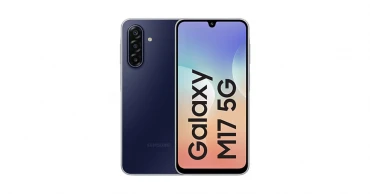
Samsung Galaxy M17 5G Review: Mid-Range Power with Premium Touch
The Samsung Galaxy M series is famous for offering massive battery life and vivid AMOLED displays at a budget-friendly price. The new Samsung Galaxy M17 5G, announced in October 2025, continues this legacy while adding premium features like on-device AI, targeting consumers who are looking for endurance and smart functionality. Let's take a look at the main specs, features, merits, demerits and pricing of the Samsung Galaxy M17 5G in Bangladesh.
Key Features of Samsung Galaxy M17 5G
.
Design and Build Quality
The design of the Samsung Galaxy M17 5G strikes the perfect balance between simplicity and sophistication. With a 7.5mm slim profile, the phone feels light yet sturdy in hand. The back panel has a soft matte finish that resists fingerprints quite well, giving it a refined look.
The IP54 rating ensures protection against dust and minor splashes. M17 5G is not just about looks—it is built for everyday life, and the side-mounted fingerprint sensor is quick and responsive. Even though it is a plastic frame, it does not feel cheap at all. Available in a classy Black color (with more options expected), the M17 5G gives off a subtle premium vibe—ideal for users who want elegance without the extra cost.
Read more: Top Flagship Smartphones Released in 2025 So Far
Display Quality
Samsung's expertise in displays shines through with the M17 5G. It sports a spacious 6.7-inch Super AMOLED panel with FHD+ resolution (1080x2340), which translates to deep, inky blacks and vibrant, punchy colours that make media consumption a treat. Crucially, the screen peaks at an impressive 1100 nits of brightness, ensuring excellent visibility even under harsh midday sun.
While the 90 Hz refresh rate is not the cutting-edge 120 Hz found on some higher-end models, it represents a very noticeable jump in smoothness over a standard 60 Hz screen. Scrolling, swiping, and general interface animations feel fluid and responsive, providing a premium experience that enhances daily interaction without excessively draining the battery.
Camera Performance
The Galaxy M17 5G enters the ring with a very competitive triple-camera setup on the back. The highlight is undoubtedly the 50 MP primary sensor, which, thankfully, includes Optical Image Stabilisation (OIS). In the mid-range segment, OIS is a game-changer, dramatically reducing camera shake when shooting photos or videos, resulting in sharper images, especially in challenging low-light conditions.
The primary camera captures excellent detail in good daylight, producing high-quality, well-exposed images. Complementing the main sensor is a standard 5 MP ultrawide camera, which is decent for fitting more into the frame but lacks the sharpness of the main lens.
Read more: Best 10 Smartphones Releasing in Bangladesh in October 2025
There is also a 2 MP macro sensor, which, while functional for close-up shots, is largely a checklist item. For selfies, the 13 MP front camera is sharp and reliable, though video recording is capped at 1080p and 30 fps across both the front and rear cameras, which is adequate but not stellar.
Processor Performance
Under the hood, the M17 5G is powered by the 5 nm Exynos 1330 chipset. Fabricated on an efficient 5nm process, this octa-core processor, with its two high-performance Cortex A78 cores clocked at 2.4 GHz, is a capable and power-conscious engine.
This chip is explicitly designed to offer robust performance for daily multitasking, application switching, and general web browsing. It is a workhorse that handles typical phone usage—social media, streaming, and light productivity—with great stability and speed. It sits firmly in the upper mid-range of budget chipsets, prioritising energy efficiency and solid daily reliability over raw, unbridled speed.
Gaming Performance
For those interested in mobile gaming, the combination of the Exynos 1330 and the Mali-G68 MP2 GPU offers a respectable experience. Casual games run flawlessly, and popular, graphically moderate titles like Brawl Stars or Candy Crush are handled easily. Even demanding games like COD Mobile or Genshin Impact are playable, provided you stick to moderate or low graphics settings.
Read more: iPhone 17 Pro and Pro Max Review : Apple’s Bold Leap into the Future
The 90 Hz display provides a competitive edge in fast-paced games by reducing motion blur. However, the one significant bottleneck here is the standard 4 GB of RAM. For heavy-duty, sustained gaming or running multiple complex apps in the background, this limited RAM configuration is likely to cause stutters and force background apps to reload more frequently than a device with 6 GB or 8 GB.
Battery Life
While the M-series title of "Battery King" often conjures images of ultra-capacity cells, the 5000 mAh battery in the M17 5G is still very respectable. It easily promises a full day of heavy use and, for moderate users, should comfortably stretch into a second day.
The combination of the efficient 5 nm Exynos chip and the 90 Hz AMOLED display helps conserve power effectively. The main critique in this department is the charging speed; the 25W wired fast charging, while present, feels quite slow when topping up a 5000 mAh cell, meaning you will need to set aside a couple of hours for a full charge from empty.
Software and User Interface
Running on Android 15 with Samsung’s One UI skin, the software experience feels clean and user-friendly. The UI is intuitive, smooth, and packed with customisation options. From colour themes to home screen layouts, Samsung gives users enough flexibility to personalise their experience.
Read more: Apple iPhone Air: The Ultra-Thin Revolution – A Complete Review
Samsung has also refined animations and improved app responsiveness in this iteration. Multitasking, split-screen use, and app pairs all work flawlessly. While there is a bit of pre-installed bloatware, most of it can be easily removed. Security updates and OS upgrades are expected for at least three years, which is impressive for a mid-range device.
Storage Options
The phone comes with a single main configuration offering 128 GB of internal storage. For most users, this is adequate for storing thousands of photos, dozens of apps, and videos. The inclusion of USB OTG support is a great addition for easily transferring files to external drives.
However, the device features a hybrid SIM slot, meaning the user must choose between using a second SIM card for connectivity or expanding the 128 GB storage via a microSD card. Coupled with the 4 GB of RAM, while the 128 GB of storage is fine, the RAM capacity is certainly the weak point in the memory section and might be the first thing a power user finds limiting.
Read more: Apple iPhone 17 Review – “More Than Just a Better Camera?”
Pros & Cons of Samsung Galaxy M17 5G
.
Pros
- Sleek and lightweight design (7.5mm thickness)- Bright 6.7-inch Super AMOLED display with 90Hz refresh rate- Smooth performance with Exynos 1330 (5nm) chipset- Reliable 5000mAh battery with 25W fast charging- Good camera quality (50MP triple rear setup)- Decent gaming performance for mid-range users- Android 15 with clean and user-friendly One UI- Gorilla Glass Victus protection for better durability- Side-mounted fingerprint sensor is quick and accurate- IP54 rating for dust and splash resistance.
Read more: realme 15T Review with Price in Bangladesh
Cons
- Only 4GB RAM may limit heavy multitasking- Plastic body feels less premium- No 4K video recording option- No stereo speakers- Lacks wireless charging- Slight bloatware in One UI- No official IP68 water resistance- Fast charging could be faster for 2025 standards- Average low-light camera performance- Limited color options available.
Read more: Samsung Galaxy S25 FE Review: Perfect Balance of Power, Performance
Price of Samsung Galaxy M17 5G
The Samsung Galaxy M17 5G is expected to be priced at around BDT 20,000 in Bangladesh.
Final Words
The Samsung Galaxy M17 5G is a solid mid-range phone with a great display, reliable battery, and smooth performance. It is perfect for casual gamers, students, and everyday users. However, heavy multitaskers or those seeking premium builds and flagship-level cameras might want to explore higher-end options instead.
Read more: Oppo A6 Max Review with Price in Bangladesh
11 months ago
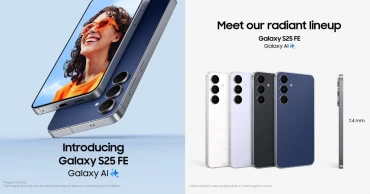
Samsung Galaxy S25 FE Review: Perfect Balance of Power, Performance
Samsung's Galaxy S series has been many people’s go-to recommendation for years, consistently delivering flagship smartphones that just work beautifully, featuring cutting-edge technology. In this legacy, the Samsung Galaxy S25 FE launched on September 4, 2025. Let's take a look at the key specifications, merits, demerits, and pricing of the Samsung Galaxy S25 FE in Bangladesh.
Key Features of Samsung Galaxy S25 FE
.
Design and Build Quality
The Galaxy S25 FE immediately feels like an upgrade the moment you hold it. At 190 grams, it is noticeably lighter than its predecessor while managing to fit in a larger battery, which is a rare engineering feat. The flat design (6.35 by 3.02 by 0.29 inches) paired with matte-finished sides and back glass gives the phone a polished, understated premium look. It is not screaming for attention, but it definitely turns heads in the right way.
Durability is not compromised either. The enhanced aluminium armour frame feels sturdy, while Gorilla Glass Victus+ (Mohs level 5) and IP68 water and dust resistance mean you do not need to baby this phone. Even the colour choices, like Icy Blue, Jet Black, Navy, and White, are thoughtfully chosen to add character without looking too loud.
Read more: Oppo A6 Max Review with Price in Bangladesh
Display Quality
Samsung’s display game has always been strong, and the 6.7-inch Dynamic AMOLED 2X panel continues that streak. With a 1080 by 2340 resolution, a 120 Hz refresh rate, and a peak brightness of 1900 nits, this screen is a joy to use whether you are indoors or under direct sunlight.
Streaming movies in HDR10+ looks fantastic, scrolling feels fluid, and gaming benefits from smooth responsiveness. The 89.2% screen-to-body ratio makes the viewing experience immersive, while the 385 ppi density ensures sharp visuals. Even though it is “just 1080 pixels”, in real-world use, you would struggle to notice any difference compared to higher-res displays.
Camera Performance
Many have been genuinely impressed with how this triple camera setup performs in real-world situations. That 50 MP main camera features an f/1.8 aperture, 24 mm width, 1/1.57-inch, and 1.0 µm lens with optical stabilisation. It consistently delivers sharp, well-balanced photos whether shooting in bright sunlight or dimmer conditions. What will really surprise you is the low-light performance. Photos bear way more detail than expected at this price point.
The 8 MP telephoto offers an f/2.4 aperture, 75 mm, 1/4.4", and a 1.0 µm lens size. It comes with 3x zoom, which proves more useful than anticipated, perfect for getting closer without moving, though image quality is not quite as crisp as the main camera.
The 12 MP ultrawide sensor sports an f/2.2 aperture, 13 mm width, and 123-degree field of view. It captures fantastic landscape shots and group photos but struggles in tricky lighting like most ultrawide cameras.
Read more: 10 Best Smartphones Releasing in September 2025
The video recording capacity of the S25 FE shines with an utmost 8K capability, which sounds impressive, but the 4K footage with stabilisation is where it excels. You can walk around filming and get surprisingly smooth results. Whether you are posting to social media or creating content seriously, this camera delivers everything most people actually need.
The Samsung Galaxy S25 FE bears a 12 MP selfie shooter offering an f/2.2 aperture, 26 mm width, 1/3.2", and lens size of 1.12 µm. It can capture a maximum of 4K videos at 30/60 fps.
Processor and Performance
Powering the S25 FE is the Exynos 2400 chipset with the Xclipse 940 GPU. This is where Samsung really seems to have nailed it. Day-to-day tasks feel lightning fast, apps open instantly, and multitasking is handled with ease.
Perhaps the biggest win is thermal management. Older Exynos chips had issues with overheating, but this phone stays cool under pressure. Even when pushing it with demanding apps or long sessions of browsing, performance does not throttle aggressively. Simply put, it feels smooth and reliable in daily use.
Gaming Experience
Gaming on this phone has been a pleasant surprise. Call of Duty Mobile and Genshin Impact run beautifully at high settings, with that 120 Hz display making everything feel incredibly responsive. Frame rates stay consistent even during intense sessions, and while the phone gets warm after extended play, it never becomes uncomfortably hot.
Read more: Xiaomi Redmi Note 15 Pro 5G Review: What’s New?
The stereo speakers genuinely impressed me with their spatial audio – actually helpful for pinpointing enemies. Samsung's Game Booster keeps notifications away and optimises performance nicely. Sure, it will not beat flagship Snapdragon chips in benchmarks, but for actual gameplay, most people will not notice the difference.
Battery Life
The 4900 mAh battery is another highlight. It comfortably lasts a full day of heavy use—gaming, social media, streaming, and photography included. On lighter days, you can even push it into the next afternoon without charging.
Charging is efficient too. The 45W wired charging gets you up to 65% in about half an hour, while 25W wireless charging is ideal for overnight use. There is also reverse wireless charging for accessories like earbuds or a friend’s phone in a pinch.
Software and User Interface
Running One UI 8 on Android 16, the S25 FE feels polished and mature. Samsung has trimmed unnecessary clutter while keeping genuinely useful features like Samsung DeX, Circle to Search, and enhanced privacy controls.
Read more: Xiaomi Redmi Note 15 Pro Plus Review: Robust processor with massive battery
The biggest win is Samsung’s promise of seven years of major Android updates, meaning this phone will be supported until 2032. That kind of longevity is almost unheard of in the Android world and adds tremendous value.
Storage Options
You can choose between 128GB, 256GB, or 512GB of storage, all paired with 8GB RAM. There is no microSD slot this time, which may disappoint some, but the storage options are generous. For most users, the 256GB variant is the sweet spot. Thanks to fast UFS storage, apps load instantly and file transfers via USB 3.2 Type-C are quick and seamless.
Pros and Cons of Samsung Galaxy S25 FE
.
Pros
- Premium Armour Aluminium Frame with Gorilla Glass Victus+- 6.7-inch Dynamic AMOLED 2X, 120 Hz refresh rate- Peak brightness of 1900 nits with HDR10+- Triple rear cameras: 50 MP main, 8 MP telephoto, 12 MP ultrawide- 8K video recording with good stabilization- Stereo speakers for clear, loud audio- NFC and fast under-display fingerprint scanner- Smooth Exynos 2400 performance with strong gaming capability- Long-term support with 7 years of Android updates
Read more: realme P4 Pro Review: Mid-ranger gaming phone with huge battery and robust processor
Cons
- No 3.5mm headphone jack
- Lack of IP69 water and dust resistance
- No FM radio support
- No expandable storage (no microSD card slot)
- Lack of 1 TB internal memory option
- Telephoto and ultrawide cameras weaker in low light
- 4900 mAh battery smaller than some rivals
- 1080p resolution may not satisfy spec enthusiasts.
Price of Samsung Galaxy S25 FE
The Samsung Galaxy S25 FE price in Bangladesh starts from BDT 80,000.
In a Nutshell
The Samsung Galaxy S25 FE balances flagship features with accessible pricing beautifully. Standard performance, capable cameras, and seven-year updates make it perfect for mainstream users wanting a premium experience without flagship costs.
However, you may look for alternatives if you need a bigger battery, powerful charging support, expansive display, absolute peak performance, a 1 TB memory option, or expandable storage.
Read more: realme P4 5G Review: A True Mid-Range Game Changer?
1 year ago
Samsung sees revenue boost from smartphone sales despite chip slump
Samsung Electronics reported a record-high consolidated revenue of 79.14 trillion won ($56 billion) for the January–March quarter, driven by strong sales of its flagship Galaxy S25 and other premium smartphones.
The tech giant’s operating profit rose slightly to 6.7 trillion won ($4.7 billion), up from 6.61 trillion won ($4.6 billion) in the same period last year, reports AP.
Weak grid investment slows Asia-Pacific energy transition: ADB
However, the company’s semiconductor business saw a sharp decline in profitability. Operating profit for the division fell to 1.1 trillion won ($774 million), down from 1.91 trillion won ($1.3 billion) a year ago.
Samsung attributed the decline to falling average selling prices and reduced demand for high-bandwidth memory, as customers await next-generation chip releases.
While the mobile business continues to drive growth, the chip unit—historically a key profit engine for Samsung—faces pressure from market uncertainties and cautious customer spending. The company expects the launch of new memory products to revive demand in the coming quarters.
1 year ago
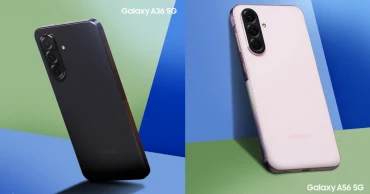
Samsung Galaxy A36 5G Review: A Mid-range marvel with standard features
The Samsung Galaxy 'A' series has long been celebrated for delivering premium features at accessible prices, striking a balance between performance and affordability. Continuing this legacy, the A36 was first released on March 10, 2025. Let’s delve into the key specs, pros, cons, and pricing of the Samsung Galaxy A36 5G in Bangladesh.
Key Features of Samsung Galaxy A36 5G
.
Design and Build Quality
The Samsung Galaxy A36 5G impresses with its sleek, premium look and feel. At 7.4mm thick and weighing 195g, it is slightly lighter and thinner than the Galaxy A35, which measures 8.2mm in thickness and weighs 209g. The A36 also features Gorilla Glass Victus+ on both the front and back with a plastic frame, mirroring its predecessor but in a more refined form. Both phones sport IP67 water and dust resistance, which adds to their durability.
Compared to the realme 14 Pro and vivo Y300 Pro+, the A36 falls somewhere in between. The realme model is lighter at 179g and features a MIL-STD-810H rating along with IP68/IP69 certification, making it more rugged. Meanwhile, the vivo Y300 Pro+ offers an elegant form but only IP64 splash resistance. Overall, the A36 strikes a balance between elegance and robustness, with modern colours like lavender, lime, and white.
Read more: ZTE Nubia Red Magic 10 Pro Golden Saga Special Edition Review
Display Quality
Samsung's Super AMOLED display in the A36 is a highlight, offering 6.7 inches of vivid display with a 120Hz refresh rate and 1900 nits peak brightness. It is a solid upgrade from the A35’s 6.6-inch panel that maxes out at 1000 nits. The jump in brightness and screen-to-body ratio (86.5% vs 84.8%) makes for a more immersive viewing experience, especially under sunlight.
When stacked against the realme 14 Pro and vivo Y300 Pro+, the A36 still holds its own. realme boasts a 6.77-inch OLED panel with a whopping 4500 nits peak brightness, the highest in the category, which is impressive for outdoor usage.
Vivo’s Y300 Pro+ is not far behind with 5000 nits peak brightness and AMOLED technology. Despite slightly lower peak brightness, Samsung's colour tuning, sharpness, and Always-on Display feature give it an edge in everyday usability and visual appeal.
Read more: realme P3 5G Review: Is it a value-for-money smartphone
Like the ancestor A35, the latest A36 features a resolution of 1080 by 2340 pixels with ~385 ppi density, which is close to the realme 14 Pro and vivo Y300 Pro+, featuring 1080 by 2392 with ~388 ppi density.
Camera Performance
The Galaxy A36 features a triple camera setup: a 50MP (f/1.8) main shooter with OIS, an 8MP (f/2.2) ultrawide, and a 5MP (f/2.4) macro lens. This setup mirrors the A35’s cameras, but the A36 benefits from improved image processing thanks to the newer Snapdragon chipset. It captures better detail in low light and handles HDR more effectively.
Against competitors, the realme 14 Pro offers a dual setup with a similar 50MP sensor and a depth lens. It lacks an ultrawide camera, which limits its versatility. The vivo Y300 Pro+ also has a dual setup with a 50MP primary and 2MP depth sensor. While both realme and vivo benefit from solid hardware, the absence of a dedicated ultrawide limits their camera flexibility.
Read more: Home Safety Digital Lockers and Vaults: Popular Models with Price Ranges in Bangladesh
Selfie performance gets a slight bump in the A36 with a 12MP (f/2.2) sensor featuring 10-bit HDR, better than the A35’s 13MP selfie cam with no HDR. The Vivo Y300Pro+ does stand out here with its 32MP front-facing camera. Capable of 4K recording with the front sensor, the Samsung Galaxy A36 outperforms the realme 14 Pro and Vivo Y300 Pro+, limited to 1080p video.
Processor Performance
Under the hood, the Galaxy A36 5G is powered by the Snapdragon 6 Gen 3 chip, a 4nm octa-core processor that brings considerable improvements over the 5nm Exynos 1380 in the A35. Multitasking, app launches, and AI tasks feel noticeably faster and smoother. It is a much-needed boost and helps the A36 stay relevant through future Android updates (6 major upgrades promised vs. 4 in the A35).
Compared to the Dimensity 7300 of the realme 14 Pro and the Snapdragon 7s Gen 3 of the vivo Y300 Pro+, the A36 offers good competition. The Snapdragon 6 Gen 3 matches realme’s chip in efficiency but slightly lags behind vivo’s newer 7s Gen 3 in raw benchmarks. However, the A36 delivers stable thermal performance and handles day-to-day tasks without stutters, keeping it highly competitive.
Read more: Samsung Galaxy A56 5G: Know the pros and cons
Gaming Performance
Gaming on the A36 is a treat for casual and semi-heavy gamers. The Adreno 710 GPU and 120Hz refresh rate offer fluid gameplay in titles like PUBG Mobile, Call of Duty: Mobile, and Genshin Impact at medium-high settings. It maintains frame rates well without significant heating, unlike the A35, which struggled during extended gaming sessions due to its older GPU.
The realme 14 Pro, with its Mali-G615 GPU, delivers marginally better frame rates in graphics-intensive titles, while the vivo Y300 Pro+’s Adreno 710 clocked at 940MHz offers similar performance with a bit more efficiency thanks to better thermal handling. In real-world usage, all three phones deliver respectable gaming performance, but realme edges out slightly for hardcore gamers.
Battery Life
Battery life is a strong suit of the Galaxy A36, thanks to its 5000 mAh cell and efficient processor. It easily lasts a full day with moderate to heavy use. Samsung has also improved charging with 45W wired support, filling the battery to 66% in 30 minutes and a full charge in just over an hour.
Read more: Honor X9c Review: What’s special about this midrange smartphone
This is a major leap over the A35’s 25W charging, which feels sluggish in 2025.
Still, the realme 14 Pro and vivo Y300 Pro+ outperform the A36 in this department. realme supports 45W charging but has a 6000 mAh battery that delivers more screen time. Vivo takes the crown here with a massive 7300 mAh battery and 90W fast charging that powers the phone in record time. For power users and frequent travellers, vivo clearly leads.
However, the Samsung Galaxy A36 lacks demanding features like reverse charging and wireless charging features, which many competitors like the vivo Y300 Pro+ are offering in similar price ranges.
Read more: OnePlus 13 5G Review: Flagship Killer with high-end features
Software and User Interface
Samsung's One UI 7, based on Android 1515, offers a smooth, intuitive, and feature-rich user experience on the A36. Samsung has committed to 6 major Android updates, which is outstanding and surpasses even some flagship brands. The interface is bloat-free, customisable, and integrates features like Circle to Search and enhanced virtual proximity sensing.
In contrast, the A35 ships with One UI 6.1 and Android 14 with only 4 years of updates. The realme 14 Pro runs realme UI 6.0, which is clean but slightly behind Samsung in polish and support. The Vivo Y300 Pro+ uses OriginOS 5, which is vibrant and feature-packed, though a bit cluttered for first-time users. In terms of longevity and overall software experience, the A36 is the clear winner.
Storage Options
Samsung offers a wide range of configurations for the A36, starting at 128GB with 6GB RAM and going up to 256GB with 12GB RAM. However, there is no microSD card support, which might disappoint some users. The A35 does offer expandable storage, which gives it a niche advantage.
Read more: OPPO A5 Pro 4G Review: Can it fulfil the expectations?
realme and vivo also skip the SD card slot but offer higher internal storage variants—up to 512GB with 12GB RAM. Power users and media hoarders might lean toward those options, but for average users, the A36 provides enough flexibility in its current options.
Pros and Cons of Samsung Galaxy A36 5G
Pros
- Large 6.7-inch Super AMOLED display with a 120Hz refresh rate.- Bright screen with up to 1900 nits peak brightness.- Powered by Snapdragon 6 Gen 3 for smooth performance.- Available in 6GB, 8GB, and 12GB RAM options.- Triple rear camera setup with 50MP main lens.- 12MP selfie camera supports 4K video and HDR.- Stereo speakers for better audio experience.- In-display fingerprint sensor for secure unlocking.- 45W fast charging, 100% in about 68 minutes.- IP67 rated for dust and water resistance.- One UI 7 with Android 15 and long software support.
Read more: Tecno Phantom V Fold 2 Review: Pros, Cons and Price in Bangladesh
Cons
- Plastic frame, not as premium as metal.- No 3.5mm headphone jack.- FM radio not supported.- No microSD card slot for storage expansion.- Slightly higher price compared to rivals with similar specs- No wireless charging option- No reverse charging option.
Price of the Samsung Galaxy A36 5G in Bangladesh
The Samsung Galaxy A36 5G is priced at approximately BDT 37,000 for the base variant.
Final Words
The Samsung Galaxy A36 5G shines with its AMOLED display, strong performance, and fast charging. However, the plastic build and lack of a headphone jack may disappoint some. Ideal for users seeking a balanced mid-range phone with reliable performance and camera quality. Not recommended for those needing expandable storage, a wireless or reverse charging option, or a more premium build.
Read more: Top Smartphones Launching in March 2025: Flagship & Budget Models to Watch
1 year ago
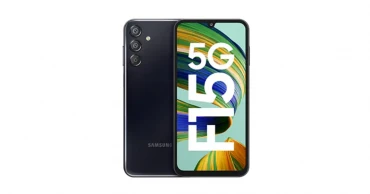
Samsung Galaxy F15 5G Review: Decent budget-friendly smartphone with large battery
The Samsung Galaxy 'F' series is known for delivering feature-rich smartphones at competitive prices, targeting budget-conscious consumers without compromising on quality. The Samsung Galaxy F15 5G, released on March 11, 2024, continues this tradition by offering a blend of performance and affordability. Let's dive into the key specs, pros, cons, and pricing of the Galaxy F15 in Bangladesh.
Key Features of Samsung Galaxy F15 5G
.
Design and Build Quality
The Samsung Galaxy F15 5G features a glass front, plastic back, and plastic frame, similar to its predecessor, the Galaxy F14. While it feels solid in hand, its 217g weight makes it heavier than the Oppo K12x (186g) and Poco M7 Pro 5G (190g). Unlike the Poco M7 Pro 5G, which has an IP64 rating, the Galaxy F15 5G lacks any official dust or water resistance.
The side-mounted fingerprint scanner is a convenient addition, though it is less advanced than the under-display fingerprint sensor on the Poco M7 Pro 5G. Overall, the design is functional, but the lack of premium materials and water resistance puts it slightly behind some competitors.
Read more: Samsung Galaxy A56 5G: Know the pros and cons
Display Quality
Samsung has upgraded the display in the Galaxy F15 5G, equipping it with a 6.6-inch Super AMOLED panel with 1080 by 2340 resolutions and a 90Hz refresh rate. Compared to the PLS LCD on the Galaxy F14, the F15 brings a significant improvement, providing better contrast, deeper blacks, and improved energy efficiency.
However, it falls short when compared to the Poco M7 Pro 5G, which features a 6.67-inch AMOLED display with a 120Hz refresh rate, Dolby Vision, and HDR10+ support, making it the best display among the competitors. The Oppo K12x, on the other hand, has a 6.67-inch IPS LCD with a 120Hz refresh rate, but its 720p resolution is a major drawback.
In terms of display quality, the Galaxy F15 5G is a solid choice but is outshined by the Poco M7 Pro 5G.
Camera Performance
The Galaxy F15 5G features a 50 MP (f/1.8) main camera, a 5 MP (f/2.2) ultrawide sensor, and a 2 MP (f/2.4) macro lens. Compared to the Galaxy F14, which lacks an ultrawide lens, this is an upgrade. In daylight conditions, the 50 MP sensor produces sharp and detailed images, but low-light photography struggles with noise and limited dynamic range.
Read more: Honor X9c Review: What’s special about this midrange smartphone
Against competitors, the Poco M7 Pro 5G has a similar 50 MP camera but with a larger f/1.5 aperture and OIS, making it superior for night photography. The Oppo K12x, with its 32 MP main sensor, falls behind in overall image quality.
The 13 MP (f/2.0) front camera on the Galaxy F15 5G is decent for selfies, though the Poco M7 Pro 5G’s 20 MP front camera captures more details. Overall, while the Galaxy F15 5G delivers solid camera performance, it struggles in low-light scenarios compared to the Poco M7 Pro 5G.
The Samsung Galaxy F15 5G can capture a maximum of 1080p footage at 30fps by the rear and front shooters.
Processor Performance
The Galaxy F15 5G is powered by the MediaTek Dimensity 6100+ 6nm chipset, which has an octa-core CPU (2x Cortex-A76 at 2.2GHz & 6x Cortex-A55 at 2.0GHz). While efficient for everyday tasks, it lags behind its competitors. The Galaxy F14’s Exynos 1330 (5nm) has higher clock speeds and performs slightly better, while the Poco M7 Pro 5G’s Dimensity 7025 Ultra (6nm) offers the best processing power in this segment.
Read more: OnePlus 13 5G Review: Flagship Killer with high-end features
The Oppo K12x’s Dimensity 6300 (6nm) is marginally better than the Galaxy F15 5G’s chipset, particularly in multi-core performance. Although the Galaxy F15 5G handles daily usage smoothly, it falls behind its rivals in terms of raw processing power.
Gaming Performance
When it comes to gaming, the Mali-G57 MC2 GPU on the Galaxy F15 5G can handle casual gaming well, but it struggles with high-graphics games. Titles like PUBG Mobile and Call of Duty: Mobile run at medium settings, but frame drops occur at high settings.
In comparison, the Poco M7 Pro 5G’s IMG BXM-8-256 GPU offers a better gaming experience, with smoother frame rates and fewer stutters. The Oppo K12x’s Mali-G57 MC2 performs similarly to the Galaxy F15 5G but benefits from its slightly better CPU. If gaming is a priority, the Poco M7 Pro 5G is the best choice in this category.
Battery Life
One of the strongest features of the Galaxy F15 5G is its massive 6000 mAh battery, which offers 1.5 to 2 days of usage with moderate use. This feature is the same as the Galaxy F14, but it surpasses the Poco M7 Pro 5G (5110 mAh) and Oppo K12x (5100 mAh) in terms of longevity.
Read more: OPPO A5 Pro 4G Review: Can it fulfil the expectations?
However, the F15’s 25W charging speed is slower than the 45W charging on the Poco M7 Pro 5G and Oppo K12x, meaning it takes longer to recharge. If battery life is your main concern, the Galaxy F15 5G is an excellent choice, butfaster charging options exist in competing devices.
Galaxy F15 lacks reverse wired and wireless charging option.
Software and User Interface
Running on Android 14 with One UI 6, the Galaxy F15 5G provides a clean and feature-rich user experience. Samsung’s software is well-optimized, ensuring smooth navigation and long-term software support. Compared to HyperOS on the Poco M7 Pro 5G, which has heavy customization and bloatware, One UI 6 feels more polished and user-friendly. T
The Oppo K12x’s ColorOS 14 is also feature-packed but can feel cluttered for some users. Samsung’s track record for software updates is a key advantage, making the Galaxy F15 5G a strong option for those who prioritise long-term software support.
Read more: Tecno Phantom V Fold 2 Review: Pros, Cons and Price in Bangladesh
Storage Options
The Galaxy F15 5G offers 128GB of internal storage and supports microSDXC expansion via a hybrid SIM slot. Compared to the Galaxy F14, which provides a dedicated microSD slot, this is a slight drawback.
The Poco M7 Pro 5G offers both 128GB and 256GB options with UFS 2.2 storage, which results in faster app loading times and better overall performance. The Oppo K12x also has 128GB/256GB options with expandable storage, making it more versatile than the Galaxy F15 5G’s hybrid SIM setup. While expandable storage is a plus, the lack of a dedicated microSD slot is a minor limitation.
Pros and Cons of Samsung Galaxy F15 5G
.
Pros
- Sturdy and modern design.- Long-lasting 6000 mAh battery.- 128GB storage with expandable option.- 4GB/6GB RAM for smooth multitasking.- 6.6-inch Super AMOLED display with vibrant colours- 90Hz refresh rate for fluid scrolling.- Triple-camera setup with a 50 MP main sensor.- Android 14 with One UI 6 for a clean and smooth experience.
Read more: Top Smartphones Launching in March 2025: Flagship & Budget Models to Watch
Cons
- FM Radio is missing.- 25W charging is slower than some competitors.- Low-light camera performance is average.- Not the best for high-end gaming.- No official water or dust resistance.- Hybrid SIM slot limits microSD expansion.- Lack of 120Hz refresh rate.- No options for reverse or wireless charging.
Price of Samsung Galaxy F15 5G in Bangladesh
The Samsung Galaxy F15 5G is available at an approximate price of 24,000 Taka in Bangladesh. Pricing may vary based on RAM, retailer, and ongoing promotions.
Final Words
The Galaxy F15 5G offers a Super AMOLED display, long battery life, and decent performance, making it a great option for casual users, students, and those needing a reliable daily driver. However, its slow charging, average low-light camera, and lack of FM radio may disappoint some users.
Read more: vivo Y29 4G Review: What’s special about this budget-friendly phone?
Gamers and photography enthusiasts should consider alternatives like the Poco M7 Pro 5G, which offers better performance and camera quality. If battery life, display quality, and software support are your priorities, the Samsung Galaxy F15 5G is a solid choice in its price range.
1 year ago
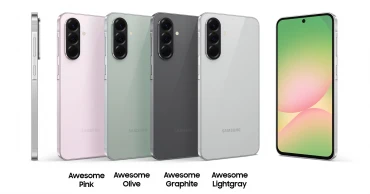
Samsung Galaxy A56 5G: Know the pros and cons
The Samsung Galaxy 'A' series has consistently delivered quality smartphones at accessible prices, blending essential features with innovative technology. The latest in this lineup, the Samsung Galaxy A56 5G, was first released on March 10, 2025. Let’s take a look at the key specs, pros, cons, and pricing of the Samsung Galaxy A56 5G in Bangladesh.
Key Features of the Samsung Galaxy A56 5G
.
Design and Build Quality
The Samsung Galaxy A56 5G maintains the premium feel of the A-series, featuring a glass front and back (Gorilla Glass Victus+) with an aluminum frame. Its 7.4mm thickness makes it sleeker and lighter (198g) than the A55 5G (213g, 8.2mm thick), improving comfort for long usage. The IP67 dust and water resistance ensures durability.
Looking into the competitors, the OnePlus Ace 3 Pro offers an IP65 rating, making it less water-resistant, while the vivo S19 Pro features IP68/IP69K, providing better protection against high-pressure water.
The rival vivo S19 Pro's plastic frame is a downside compared to the A56’s premium aluminum.
Read more: Honor X9c Review: What’s special about this midrange smartphone
Display Quality
Samsung continues its legacy of high-quality displays with the 6.7-inch Super AMOLED panel, boasting 120Hz refresh rate, HDR10+ support, and a peak brightness of 1900 nits. This makes it a significant upgrade over the A55 5G’s 1000-nit brightness, offering better visibility in sunlight.
However, OnePlus Ace 3 Pro and vivo S19 Pro outshine the A56 5G in display quality. The Ace 3 Pro features an LTPO AMOLED panel with 4500 nits peak brightness, delivering richer colors and smoother adaptive refresh rates. Similarly, the vivo S19 Pro’s AMOLED display offers 4500 nits peak brightness, providing an ultra-bright viewing experience.
The A56 5G holds its ground in color accuracy and contrast, though its brightness levels are not the highest among its competitors.
Camera Performance
The triple-camera setup on the Galaxy A56 5G consists of a 50MP (f/1.8) main sensor (OIS), 12MP (f/2.2) ultra-wide, and 5MP (f/2.4) macro. It delivers detailed shots with AI enhancements like ‘Best Face’ and improved HDR. The A55 5G has the same setup but lacks AI-assisted photography, giving the A56 an edge in image processing.
Read more: OnePlus 13 5G Review: Flagship Killer with high-end features
When comparing with rivals, the vivo S19 Pro is the winner in photography, featuring a 50MP main sensor, 50MP telephoto lens (2x optical zoom), and an 8MP ultra-wide sensor. The addition of optical zoom makes it superior for portrait and long-range shots. On the other hand, the OnePlus Ace 3 Pro includes a weaker 8MP ultra-wide and a 2MP macro sensor, making it less versatile.
For selfies, the A56 5G has a 12MP (f/2.2) front camera, which is a downgrade from its ancestor, the A55 5G sporting a 32MP sensor. The vivo S19 Pro dominates with its 50MP selfie camera, offering the best front-facing camera performance. The OnePlus Ace 3 Pro's 16MP selfie shooter is decent but falls behind in detail and clarity.
Samsung Galaxy A56 5G can shoot 4K footage at 30fps at maximum with rear and front sensors, which is similar to Galaxy A55 and vivo S19 Pro. On the other hand, the OnePlus Ace 3 Pro can shoot 4K video with the rear sensor, but its front sensor falls behind the rivals with 1080p shooting capacity.
Processor Performance
The A56 5G is powered by Samsung’s Exynos 1580 (4nm) chipset, delivering better power efficiency and performance compared to the A55’s Exynos 1480. With an octa-core CPU (1x2.9 GHz & 3x2.6 GHz & 4x1.9 GHz) and an Xclipse 540 GPU, the A56 handles multitasking, streaming, and light gaming smoothly.
Read more: OPPO A5 Pro 4G Review: Can it fulfil the expectations?
However, when comparing performance to the OnePlus Ace 3 Pro (Snapdragon 8 Gen 3) and vivo S19 Pro (Dimensity 9200+), the A56 5G falls behind. The Snapdragon 8 Gen 3 in the Ace 3 Pro is a flagship-grade chipset capable of handling high-end gaming and demanding apps effortlessly. The vivo S19 Pro’s Dimensity 9200+ also offers superior performance over Samsung’s Exynos 1580, making it a better choice for power users.
Gaming Performance
Gaming on the A56 5G is smooth, thanks to the Xclipse 540 GPU and 120Hz refresh rate. Popular games like PUBG Mobile, Call of Duty Mobile, and Genshin Impact run decently at medium to high settings, but thermal management and sustained performance over long sessions could be better. The A55 5G struggled with frame drops due to the weaker Exynos 1480, so the A56 offers noticeable improvements.
However, for hardcore gaming, the OnePlus Ace 3 Pro and vivo S19 Pro are far superior. The Snapdragon 8 Gen 3 (Ace 3 Pro) and Dimensity 9200+ (vivo S19 Pro) are optimized for high-refresh-rate gaming. The Adreno 750 GPU in the OnePlus Ace 3 Pro enables ultra-smooth gameplay with ray tracing support, while the vivo S19 Pro’s Immortalis-G715 GPU handles demanding graphics well. If gaming is a priority, these two are better choices than the A56 5G.
Battery Life
The A56 5G comes with a 5000mAh battery, the same as the A55 5G, but with better efficiency due to its upgraded chipset. The 45W fast charging (0-65% in 30 mins, 100% in 68 mins) is a significant improvement over the A55 5G’s 25W charging.
Read more: Tecno Phantom V Fold 2 Review: Pros, Cons and Price in Bangladesh
While the A56 5G provides around a whole day of battery life on moderate use, competitors offer bigger batteries and faster charging. The OnePlus Ace 3 Pro’s massive 6100mAh battery and 100W charging (full charge in 36 mins) far exceed the A56 5G. Likewise, the vivo S19 Pro’s 5500mAh battery and 80W charging are superior, making them better options for users who need ultra-fast charging and extended usage.
However, in this price range, the provision of reverse wired and wireless charging options could make the Galaxy A56 a better deal. The vivo S19 Pro offers a reverse charging feature, which makes it more user-friendly than Galaxy A56 and Ace 3 Pro.
Software and User Interface
The Galaxy A56 5G runs Android 15 with One UI 7, providing a clean, feature-rich experience with extended software support (6 major Android updates). The A55 5G, in comparison, launched with Android 14 and gets only 4 major updates, making the A56 a better long-term investment.
The OnePlus Ace 3 Pro (ColorOS 14) and vivo S19 Pro (OriginOS 4) offer different Android skins. ColorOS is known for customization, but it has ads and bloatware. OriginOS is visually appealing but lacks the deep optimization of One UI. If long-term software updates matter, the A56 5G is a better choice over these Chinese brands.
Read more: Samsung Galaxy M16 5G: Elevating the budget-friendly experience
Memory and Storage Options
The A56 5G’s RAM capacity ranges from 8 to 12GB, while internal storage reaches up to 256GB starting from 128GB supported by UFS 3.1 technology. It comes in 3 variants: 128GB/8GB RAM, 256GB/8GB RAM, and 256GB/12GB RAM. Unlike the A55 5G, it does not include microSD card support, which could be a drawback for some users.
Compared to rivals, the vivo S19 Pro and the OnePlus Ace 3 Pro offer significantly larger storage capacities (up to 1TB), and more powerful RAMs (up to 16GB and 24GB), making them better for users who need extra space and power. The OnePlus Ace 3 Pro steps ahead in the race with the UFS 4.0 mechanism.
However, Samsung’s software optimizations and One UI’s storage management make the A56 5G efficient even with its limited options.
Pros and Cons of Samsung Galaxy A56 5G
.
Pros
- Aluminum frame- Gorilla Glass Victus+ back.- 6.7-inch Super AMOLED display- 120Hz refresh rate- Stereo speakers- In-display fingerprint sensor- IP67 water and dust resistance- Android 15 with One UI 7- 6 years of software updates.
Read more: Top Smartphones Launching in March 2025: Flagship & Budget Models to Watch
Cons
- No 3.5mm headphone jack, requiring wireless or USB-C headphones.- No expandable storage, unlike the A55 5G.- NFC is region-dependent, so not available in all markets.- No telephoto lens, limiting optical zoom capabilities.- USB Type-C 2.0 instead of 3.0, making data transfer slower.- Lack of 1TB internal storage option- Lack of high RAM capacity options- No wireless charging option.- No reverse charging option.
Price of Samsung Galaxy A56 5G
The unofficial Samsung Galaxy A56 5G is priced at approximately BDT 55,000 in Bangladesh. However, the price may vary depending on sellers.
Final Words
The Galaxy A56 offers a premium design, a 120Hz Super AMOLED display, solid performance, long battery life, and a fast charging capacity. It also provides stereo speakers, an in-display fingerprint sensor, IP67 water resistance, long-term software updates, etc.
However, it lacks expandable storage, and NFC in some regions. Those who prefer top-tier gaming performance, a 3.5mm jack, 1TB memory, 16 or 24GB RAM, reverse/wireless charging, or a telephoto camera, may look for the other options.
Read more: vivo Y29 4G Review: What’s special about this budget-friendly phone?
Overall, the Samsung Galaxy A56 5G is a balanced choice for everyday users looking for a reliable, durable, and feature-rich mid-range smartphone.
1 year ago

Samsung Galaxy M16 5G: Elevating the budget-friendly experience
The Samsung Galaxy 'M' series has consistently delivered smartphones that balance affordability with robust features, catering to a broad spectrum of users. The latest addition, the Samsung Galaxy M16 5G, continues this tradition, offering notable enhancements over its predecessors. Officially releasing on March 5, 2025, let's delve into what this device brings to the table.
Key Features of Samsung Galaxy M16 5G
.
Design and Build Quality
The Samsung Galaxy M16 features a sleek design with a glass front, plastic back, and plastic frame, making it lightweight and comfortable to hold. Measuring 164.4 x 77.9 x 7.9 mm, it is relatively slim and easy to handle. It also offers IP54 dust and water resistance, providing some protection against minor water splashes.
Compared to the Samsung Galaxy M15, which is slightly bulkier at 9.3 mm thickness and weighs 217 g, the M16 appears more ergonomic and refined. However, when compared to the Realme P3x, which boasts an aluminium frame and an IP68/IP69 rating for better durability, the Galaxy M16 falls short in terms of premium materials. The vivo Y29 also has an IP64 rating but includes MIL-STD-810H compliance for additional ruggedness, making it a sturdier option for those needing more protection.
Read more: Top Smartphones Launching in March 2025: Flagship & Budget Models to Watch
Display Quality
The Galaxy M16 sports a 6.7-inch Super AMOLED display with a 90Hz refresh rate and a peak brightness of 800 nits (HBM). This provides vibrant colours, deep blacks, and smooth animations, making it a great choice for content consumption. While the rival Samsung Galaxy M15 offers a smaller 6.5-inch Super AMOLED panel with the same refresh rate, the M16 offers a slightly larger and more immersive viewing experience.
However, when stacked against the realme P3x and vivo Y29, both of which feature IPS LCD panels, 950 to 1000nits peak brightness levels with 120Hz refresh rates, the M16’s Super AMOLED display delivers superior contrast and colour accuracy but lacks the higher refresh rate and peak brightness level for ultra-smooth scrolling or gaming and better outdoor visibility.
Camera Performance
The Samsung Galaxy M16 is equipped with a triple-camera setup consisting of a 50MP (f/1.8) primary sensor, a 5MP (f/2.2) ultrawide lens, and a 2MP (f/2.4) macro lens. The camera delivers decent performance in daylight conditions, producing sharp and detailed images with good colour reproduction. The 5MP ultrawide sensor allows for wider shots, but its quality drops in low-light conditions. The 13MP (f/2.0) front camera captures good selfies. Both front and rear sensors support 1080p video recording at 30 fps at maximum.
Read more: vivo Y29 4G Review: What’s special about this budget-friendly phone?
Compared to the Galaxy M15, which has the same triple-camera configuration and video recording capacity, the M16 does not bring any significant improvements.
However, the realme P3x, with its 50MP primary camera and a depth sensor, offers similar performance but lacks an ultrawide lens. The vivo Y29, with its single 50MP main sensor, takes good photos but lacks the versatility of multiple lenses.
Processor Performance
Powered by the Mediatek Dimensity 6300 6nm chipset, the Galaxy M16 offers solid budget-friendly performance. Its octa-core CPU (2x2.4 GHz Cortex-A76 & 6x2.0 GHz Cortex-A55) ensures smooth multitasking and efficient power consumption. While it is an upgrade from the M15’s Dimensity 6100+ 6nm chipset, the performance difference is marginal in daily tasks.
Read more: itel S25 Ultra Review: Budget-Friendly Phone with AMOLED Display, Reliable Battery, and More
The realme P3x, with the Dimensity 6400 6nm chipset and a higher clock speed, outperforms the M16 in demanding applications. Similarly, the vivo Y29, which also runs on the Dimensity 6300 6nm, provides a comparable experience but lacks significant performance enhancements over the M16.
Gaming Performance
For casual gaming, the Galaxy M16 performs adequately, thanks to the Mali-G57 MC2 GPU. It handles most mobile games smoothly at medium settings but struggles with high-end games at maximum graphics. The 90Hz refresh rate adds fluidity to gameplay, but it falls short of the Realme P3x and vivo Y29, both of which feature 120Hz displays for a more responsive gaming experience.
The M16’s performance is slightly better than the M15 due to its upgraded chipset, but hardcore gamers may prefer the Realme P3x, which offers a more optimised gaming experience with its higher refresh rate and better GPU performance.
Read more: Kieslect Pura Reno Review: A Compact Smartwatch for Women
Battery Life
The Samsung Galaxy M16 houses a 5000mAh battery, providing a full day of usage under normal conditions. It supports 25W wired charging, which is a reasonable upgrade over the M15’s similar 25W charging but with a larger 6000mAh battery.
While the M16 delivers a standard battery life, it is outperformed by the realme P3x and vivo Y29, both of which feature larger 6000mAh and 5500mAh batteries, respectively. The realme P3x and vivo Y29 also support faster 45W and 44W charging along with reverse wired charging options, making them a better option for users who need quick recharges.
Software and User Interface
Running on Android 15 with One UI 7, the Galaxy M16 offers a modern and intuitive user experience. One UI 7 brings several enhancements, including improved customisation, better privacy controls, and long-term software support with up to six major Android upgrades.
Read more: iPhone 16e Review: Budget-Friendly Apple Experience with Premium Features
While the M15 runs on Android 14 with One UI 6, the latest M16 has a clear advantage in terms of longevity and features. The realme P3x, running on Android 15 with realme UI 6.0, provides a similar experience but lacks Samsung’s extensive update commitment. The vivo Y29, operating on Android 14 with Funtouch 14, also offers a decent UI but falls behind in software longevity.
Storage Options
Samsung Galaxy M16 comes with multiple storage options, including 128GB with 4GB, 6GB, or 8GB RAM, as well as a higher-end 256GB variant with 8GB RAM. It also includes microSDXC support, though it uses a shared SIM slot. This makes it a versatile option for users needing expandable storage.
The ancestor M15 offers the same storage configurations, making both devices equally matched in this aspect.
Read more: Kieslect Kr 2 Ltd Review: A Premium Smartwatch Within Budget
The vivo Y29 has similar storage capacities with shared SIM slots for microSD expansion. While the realme P3x lacks the 256GB internal storage option, giving an extra point to the Galaxy M16 and vivo Y29.
Pros and Cons of Samsung Galaxy M16 5G
.
Pros
- 5000mAh battery with 25W fast charging.- Super AMOLED display.- 5G connectivity for faster internet speeds.- Up to 256GB storage and 8GB RAM.- SIM slot for microSDXC expansion.- Long-term software support with 6 major Android updates.- Decent 50MP triple camera setup with ultrawide lens.- IP54-rated for dust and water resistance.- Side-mounted fingerprint scanner for quick unlocking.
Read more: OPPO Reno 13F 5G Review: A Stylish Powerhouse or Just Another Mid-Range Phone?
Cons
- No FM Radio support.- No 3.5mm headphone jack.- Low refresh rate.- Low peak brightness level.- No reverse or wireless charging.- Not the best for heavy gaming due to the GPU.
Price of Samsung Galaxy M16 5G
In Bangladesh, the Samsung Galaxy M16 5G is expected to be priced at approximately BDT 20,000 for the basic variant (128/4 GB). However, the price may vary depending upon the sellers.
Read more: iPhone SE 4 (2025): Latest Leaks, Rumors, and Features of Apple’s Most Affordable Powerhouse
Final Words
The Samsung Galaxy M16 5g is a well-rounded budget-friendly smartphone with some improvements over the M15, including a better chipset, a larger display, and extended software support. However, it faces strong competition from the realme P3x and vivo Y29, which offer better gaming performance, higher refresh rate displays, higher peak brightness levels, larger batteries, and faster charging options.
Depending on user priorities, the Samsung Galaxy M16 can be a good choice for those who are looking for a smartphone in the 20000 taka price range offering a standard display quality, camera versatility, and long-term software updates.
Read more: Lenovo Yoga Slim 7i Aura Edition Review: A True MacBook Competitor or Just Hype?
1 year ago
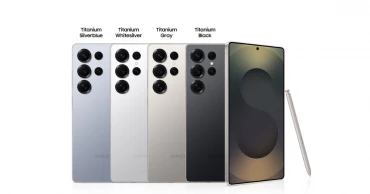
Samsung Galaxy S25 Ultra Review: A Game-Changer or Overpriced Flagship?
The Samsung Galaxy S series has long been synonymous with cutting-edge technology and premium design, setting benchmarks in the smartphone industry. Continuing this legacy, the Samsung Galaxy S25 Ultra is officially releasing this month. Let’s go over the specs, standout features, limitations, and pricing of the S25 Ultra in Bangladesh.
Key Features of Samsung Galaxy S25 Ultra
.
Design and Build Quality
The Samsung Galaxy S25 Ultra retains the premium build quality that the Ultra series is known for, featuring Corning Gorilla Armor 2 on both the front and back, along with a grade 5 titanium frame. This makes it more durable than the S24 Ultra, which uses grade 2 titanium. Additionally, weighing 218g, the S25 Ultra appears a bit lighter (232g) than its predecessor S24 Ultra, improving comfort for long-term use.
Compared to its competitors, the Google Pixel 9 Pro Fold and Huawei Mate X6 feature foldable designs, which make them bulkier but offer a different experience for users who prefer a larger, expandable display. The Huawei Mate X6, for instance, has an aerospace-grade aluminum frame and is IPX8 water-resistant, making it more resistant to water damage than the S25 Ultra's standard IP68 rating.
Read more: Smartphones Launching in February 2025: Top Flagship and Mid-Range Releases
Display Quality
The S25 Ultra comes with a 6.9-inch Dynamic LTPO AMOLED 2X display with a 120Hz refresh rate and a standard 2600 nits peak brightness.
However, it is quite disappointing that in the market a bunch of mid-range smartphones are offering higher refresh rates and peak brightness levels. For instance, the realme Neo7 offers 6000 nits peak brightness and iQOO Neo10 boasts a 144Hz refresh rate for much lower price tags. It can be a deal breaker for flagships like the Samsung Galaxy S25 Ultra.
S25 Ultra features a resolution of 1440 by 3120 pixels. Compared to the S24 Ultra, the screen-to-body ratio has increased from 88.5% to 92.5%, offering a more immersive experience.
Read more: Xiaomi 15 Review: Specs, Features, and Price in Bangladesh
When compared to competitors, the Google Pixel 9 Pro Fold offers an 8-inch foldable OLED display, making it great for multitasking but with a lower peak brightness of 2700 nits. Meanwhile, the Huawei Mate X6 has a 7.93-inch foldable LTPO OLED display with Kunlun Glass 2 protection, which is a great alternative for those who prefer foldable devices.
Camera Performance
Samsung has made notable improvements to the S25 Ultra's camera system. It retains the 200MP (f/1.7) primary sensor, but the ultrawide camera has been upgraded to 50MP (f/1.9) from 12MP in the S24 Ultra. Its quadruple rear camera setting also boasts a 10MP (f/2.4) telephoto lens and a 50MP (f/3.4) periscope telephone lens. Additionally, Samsung has optimized AI-powered enhancements such as Best Face, which helps improve group photos.
Against competitors, the Google Pixel 9 Pro Fold only has a 48MP primary camera, but it leverages Google’s AI algorithms to produce outstanding images. On the other hand, the Huawei Mate X6 boasts a 50MP primary camera with a variable aperture (f/1.4-f/4.0), allowing for better control over depth of field and low-light photography.
Read more: realme Neo7 Review: Is This Mid-Range Gaming Powerhouse Worth Buying?
What’s more, the S25 Ultra outshines both in video recording, offering 8K at 30 fps. However, the S25 Ultra bears a 12MP (f/2.2) front sensor that maxes out at 4K like the S24 Ultra.
Processor Performance
The S25 Ultra features Qualcomm’s Snapdragon 8 Elite (3 nm chipset), which offers a 37% faster CPU and 30% improved GPU performance compared to the S24 Ultra’s Snapdragon 8 Gen 3. With an octa-core configuration, including two high-performance 4.47GHz cores, this processor makes the S25 Ultra one of the most powerful smartphones available.
The Google Pixel 9 Pro Fold comes with the Google Tensor G4 chipset, which is designed for AI-based computing but is not as powerful as Qualcomm’s flagship chip. Similarly, the Huawei Mate X6 runs on Kirin 9020, which performs well in general tasks but falls short in gaming and high-intensity applications compared to the S25 Ultra.
Read more: Honor Magic7 Pro Review: A Flagship Killer or Just Another Premium Phone?
Gaming Performance
The S25 Ultra has significantly improved gaming performance due to the Adreno 830 GPU and real-time ray tracing support, making it ideal for high-end mobile gaming. The Snapdragon 8 Elite chipset also enhances power efficiency, allowing longer gaming sessions without excessive heating.
In comparison, the S24 Ultra, while still excellent for gaming, lacks the same level of GPU optimization and AI-driven gaming features. The Pixel 9 Pro Fold and Huawei Mate X6 are less gaming-focused, as they are optimized for multitasking and productivity rather than high-performance gaming.
Battery Life
Like the ancestor S24 Ultra, the latest S25 Ultra comes with a 5000mAh battery. However, the new 3nm chipset in the S25 Ultra allows for better power efficiency. Samsung claims that the S25 Ultra lasts up to 10% longer than its predecessor on a single charge.
Read more: Honor X5b Plus Review: Powerful Contender in the Budget-friendly Segment
While charging speeds remain unchanged at 45W wired, the wireless charging speed has increased from 15W to 25W (Qi2). In contrast, the Google Pixel 9 Pro Fold has a smaller 4650mAh battery with 21W wired charging, making it less efficient than the S25 Ultra. However, the Huawei Mate X6 surpasses them all with a 5200mAh battery and 66W wired charging, which offers the fastest charging speeds.
Nevertheless, the mid-ranger realme Neo7 wins the race against these flagships with a 7000 mAh battery.
Software and User Interface
The S25 Ultra launches with Android 15 and One UI 7, offering seven major Android upgrades, ensuring longevity. Samsung’s One UI 7 is known for its user-friendly design, customization options, and seamless integration with Samsung’s ecosystem.
Read more: OnePlus Pad 2 Review: Is It Worth Buying?
In comparison, the Google Pixel 9 Pro Fold also offers seven years of updates, but its stock Android experience lacks Samsung’s custom features like DeX mode. The Huawei Mate X6, running HarmonyOS 4.3/EMUI 15, does not have access to Google Play Services, which may be a dealbreaker for some users.
Storage Options
The Samsung Galaxy S25 Ultra offers multiple storage configurations, including 256GB with 12GB RAM, 512GB with 12GB RAM, 1TB with 12GB RAM, and a high-end 1TB with 16GB RAM variant. This marks an improvement over its predecessor, the S24 Ultra, which lacked a 16GB RAM option. It sports UFS 4.0 data transfer technology.
When compared to its competitors, the Google Pixel 9 Pro Fold maxes out at 512GB with 16GB RAM, while the Huawei Mate X6 provides storage options up to 1TB with 16GB RAM, putting it on par with the S25 Ultra in terms of capacity.
Read more: Top Smartphones Launching in January 2025: What to Expect
Pros and Cons of Samsung Galaxy S25 Ultra
.
Pros
- Premium build with a titanium frame and IP68 water resistance.- 6.9-inch Dynamic LTPO AMOLED 2X display- Snapdragon 8 Elite processor with 12GB/16GB RAM for smooth performance.- 45W wired, 25W wireless, and 4.5W reverse wired charging.- 8K video recording with gyro-EIS stabilization.- 200MP main camera with dual 50MP ultrawide and telephoto lenses.- 5X optical zoom for detailed distant shots.- Android 15 with One UI 7 and 7 years of software updates.- Under-display fingerprint scanner for secure unlocking.- Ultra Wideband (UWB) support for better connectivity.- Samsung DeX and Wireless DeX support for a desktop-like experience.- Stylus (S Pen) support for added productivity.- Stereo speakers for immersive sound.- 5G and NFC enabled for fast connectivity.
Read more: Honor GT Review: A Power-Packed Mid-range Smartphone for Gamers
Cons
- No microSD card slot for expandable storage.- No 3.5mm audio jack for wired headphones.- Lacks an infrared port for remote control functionality.- No FM radio support.- No Satellite SOS feature, unlike some competitors.- Average peak brightness level- Average refresh rate.- Average battery support.- Low-powered selfie sensor.
Read more: ZTE Nubia Red Magic 10 Pro Review: Is It a Value-for-money Gaming Smartphone?
The Price of the Samsung Galaxy S25 Ultra
The Galaxy S25 Ultra will be available at multiple prices for different configurations. The price of the 12/256GB variant is about BDT 224,999. However, the price is subject to change.
Final Words
The Samsung Galaxy S25 Ultra is perfect for power users, photographers, and gamers who want a premium display, top-tier performance, and advanced cameras. However, those needing a microSD slot, 3.5mm jack, FM radio, brighter display, higher refresh rate, or Satellite SOS may look into the other options.
On the whole, if you seek robust RAM, a versatile camera line-up, cutting-edge features, and long-term software support, this flagship is a great choice.
Read more: Xiaomi Redmi Turbo 4 Review: Is It a Value-for-money Midranger?
1 year ago

Samsung Galaxy A16 5G Review: Value-for-Money or Just Another Upgrade?
Launched on October 25, 2024, the A16 5G is a new addition to the Samsung Galaxy A series which is famous for high performance with standard features. It aims to combine affordability and modern features, promising a balanced experience for budget-conscious users. Let’s take a look at the key specs, pros, cons, and price of the Samsung Galaxy A16 5G in Bangladesh.
Key Features of Samsung Galaxy A16 5G
.
Design and Build Quality
The Samsung Galaxy A16 5G combines a lightweight, slim design with a plastic back and frame, paired with a glass front. With 7.9mm thick and weighing 200g, it is comfortable to hold and pocket-friendly. The phone also features IP54 dust and splash resistance, offering some protection for everyday mishaps.
The colour options, including Blue Black and Light Gray, are sleek but lack the premium look of the Redmi Note 13, which has a Gorilla Glass build. Similarly, the vivo iQOO Z9’s thinner and light-weight profile and brushed finish give it a more premium feel compared to the A16.
Read more: 9 Best Smartphones to Watch Out for in December 2024
Display Quality
The 6.7-inch Super AMOLED display on the Galaxy A16 5G is one of its highlights, offering sharp visuals and vivid colours. With a 90Hz refresh rate, it ensures smooth scrolling and an enjoyable viewing experience for casual media consumption. However, similarly priced rivals like iQOO Z9 and Redmi Note 13 offer 120Hz refresh rate.
The 800 nits maximum brightness is sufficient for outdoor use, though it is outshined by the vivo iQOO Z9’s HDR display with 1800 nit pearl brightness, making it a better option for users who prioritize screen quality. Similarly, the Redmi Note 13’s higher brightness (1000 nits) levels and sharper contract surpasses the A16 in overall clarity and vibrancy.
Camera Performance
The Galaxy A16 5G features a 50MP (f/1.8) main lens, 5MP (f/2.2) ultrawide, and 2MP (f/2.4) macro camera, producing decent daytime photos with good detail and natural colours. However, with visible noise and limited dynamic range, its low-light performance leaves room for improvement. The 13MP (f/2.0) front camera takes clear selfies. Both the front and rear sensors can capture a maximum of 1080-pixel footage at 30fps. However, the absence of advanced modes like 4K recording limits its appeal.
Read more: Honor X7c Review: A Budget-friendly Powerhouse for Everyday Use
While the vivo iQOO Z9’s OIS-enabled 50MP camera with 4K video recording capacity and the Redmi Note 13 Pro’s 108 MP sensor deliver significantly better results, the A16’s setup remains sufficient for casual photography. The camera improvements over its predecessor, the Samsung Galaxy A15 5G, are minor, making the upgrades feel less impactful.
Processor Performance
Powered by the MediaTek Dimensity 6300 6nm, the Galaxy A16 ensures smooth performance for daily activities such as browsing, streaming, and multitasking. With 6GB/8GB RAM options, it can handle moderate workloads efficiently.
Compared with its predecessor A15, the A16 is slightly better in speed and efficiency but does not set a new standard in its category. A16 outperforms the Redmi Note 13 featuring MediaTek 6080 6nm chipset. However, A16 lags behind the vivo iQOO Z9. Equipped with the Dimensity 7200 4nm chipset, Z9 is more adept at resource-heavy tasks.
Read more: realme GT7 Pro Review: Speed, Style, and Gaming Excellence at a Competitive Price
Gaming Performance
Popular multiplayer games like PUBG Mobile and Call of Duty: Mobile run smoothly in medium settings. However, prolonged sessions may lead to heating and occasional frame drops, particularly in graphically intensive games like Genshin Impact.
In comparison, the Redmi Note 13 and vivo iQOO Z9 offer superior thermal management and smoother gameplay, making them better choices for gaming enthusiasts.
Battery Life
The 5000mAh battery ensures all-day performance for moderate users, handling tasks like browsing and video playback without issues. The 25W fast charging is convenient, allowing for quick top-ups, though it is slower than the 33W fast charging on the Redmi Note 13, which recharges its battery more quickly.
Read more: ZTE Blade A55 Review: Affordable Excellence with Modern Features
The vivo iQOO Z9, with 44W charging, also competes well in this aspect. Despite these differences, the A16 remains a dependable option for users prioritizing battery life.
Software and User Interface
The Galaxy A16 runs on Android 14 with One UI 6.1, delivering a clean and user-friendly experience. Samsung’s promise of up to six major Android upgrades is a standout feature, ensuring the device stays updated for years.
While competitors like the Redmi Note 13 and vivo iQOO Z9 also run Android 14, their software support is less extensive, making Samsung a better choice for users seeking long-term usability.
Read more: Walton NexG N74 Review: A Competitive Budget-friendly Smartphone Worth Considering
Storage Options
The Galaxy A16 offers 128GB or 256GB storage options paired with 4GB, 6GB, or 8GB RAM. It supports microSD expansion, a feature missing in many competitors. This flexibility makes the A16 a great option for users needing additional storage without upgrading to higher-priced models.
However, with a maximum of 12GB RAM with 512 GB of internal storage, the Redmi Note 13 surmounts the A16 and Z9.
Pros and Cons of Samsung Galaxy A16 5G
.
Pros
- Vibrant Super AMOLED display.- Long-lasting battery with decent fast charging.- Clean UI and guaranteed software updates.- Expandable storage for added flexibility.
Read more: vivo iQoo Neo9s Pro Review: The Mid-Range Gaming Powerhouse You’ve Been Waiting For?
Cons
- Average camera performance in low-light settings.- Gaming performance lags behind competitors.- Plastic build feels less premium.
Price of Samsung Galaxy A16 5G
The Samsung Galaxy A16 5G is unofficially available at around 26,500 Tk in Bangladesh. However, the official price may vary due to tax and other issues.
Verdict
The A16 is a competent smartphone in the budget-friendly to early midrange segment. It can be a standard choice for budget-conscious users seeking a reliable smartphone with long battery life, expandable storage, and future-proof software updates. It’s ideal for casual users who prioritize practicality over premium features. However, it may not suit gamers or photography enthusiasts who need better performance, advanced camera capabilities, or a high-refresh-rate display. Overall, the Samsung Galaxy A16 5G strikes a solid balance between affordability and functionality.
Read more: Tecno Spark 30 Pro Review: Power-packed Performance at a Budget-friendly Price
1 year ago