Mediterranean Sea
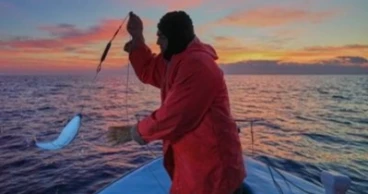
Warming Mediterranean waters drive spread of invasive species
The Mediterranean Sea is undergoing major changes as rising temperatures linked to climate change create favorable conditions for hundreds of invasive species, threatening native marine life and the livelihoods of coastal communities.
Scientists say the warming is largely driven by climate change caused by the burning of fossil fuels such as oil, coal and gas.
“The Mediterranean of our grandfathers, of our elders, and of the Greeks, of ancient Greece is lost forever. So many of those changes are irreversible,” said Ernesto Azzuro, a marine biologist at the Italian National Research Council’s Institute for Marine Biological Resources and Biotechnology.
The Mediterranean is considered a climate change “hot spot,” with scientists predicting that its waters could warm by 2 to 6 degrees Celsius (3.6 to 10.8 degrees Fahrenheit) by 2100. Marine heat waves are also expected to become more frequent and severe.
Ronan McAdam, an oceanographer with the Euro-Mediterranean Center on Climate Change, said the Mediterranean is particularly vulnerable because it is an enclosed sea, meaning heat cannot escape as easily as it does in the open oceans.
The warmer waters are helping invasive species such as the spotted puffer fish expand their range. Azzuro described the species as a highly aggressive predator and one of the Mediterranean’s “worst invaders.”
Many of these species entered the Mediterranean through the Suez Canal and are now spreading toward France and Spain.
The U.N. Food and Agriculture Organization’s General Fisheries Commission for the Mediterranean said invasive species have been present in the region for decades, but their spread accelerated after the early 2000s as sea temperatures increased.
Lionfish, for example, were first recorded in the eastern Mediterranean in 2012 and have since rapidly spread westward.
“The Mediterranean will be even poorer, even with less species, simply because climate change is really making this part of the Mediterranean, especially the eastern part of the Mediterranean, really unsuitable for native species,” Azzuro said.
Cyprus was among the first countries to experience the impact because of its location near the Suez Canal. Lionfish have reduced populations of native fish such as red mullet, affecting fishers who depend on popular local varieties.
Rabbitfish are also causing problems by feeding heavily on algae on the seabed, damaging habitats that are important for native species.
“We know what should be done. We should reduce the use of fossil (fuels),” said Piero Genovesi Papik, a zoologist with Italy’s Higher Institute for Environmental Protection and Research.
“But that's definitely an urgent matter for humanity, and we all know the solutions, but of course they require a global and joint vision,” he said.
About 1,000 invasive species identifiedAzzuro said around 1,000 invasive species have been identified in the Mediterranean, with about 800 of them now firmly established.
The impact is already severe. Shallow waters in the eastern Mediterranean have lost about 93% of their mollusk population, he said.
Along the Adriatic coast, mussels that were once plentiful have nearly disappeared as water temperatures have at times climbed above 30 degrees Celsius (86 degrees Fahrenheit).
“Unless we … find population able to survive through these different climates, the future of mussels is not a happy future, at least in the Adriatic Sea,” Azzuro said.
Azzuro’s institute and its partners also launched a campaign several years ago called “Beware of those four” to warn people about invasive species that can pose risks to human health.
Puffer fish, for example, are toxic and can be deadly if eaten, while lionfish have venomous spines that can cause serious injuries.
Experts seek ways to limit damageScientists say the spread of invasive species in the Mediterranean cannot now be fully reversed, but steps can be taken to reduce their impact.
One option is to promote the commercial fishing and sale of invasive species that are safe to eat. Another is to provide incentives for fishers to catch species such as puffer fish that cannot be consumed, allowing them to be safely destroyed.
Some invasive species, including lionfish, can have economic value because they fetch high prices in some markets. However, fishers have not yet made much use of the dusky spinefoot, whose numbers have increased significantly in Italian waters.
Papik said it is now “too late” to completely reverse the spread of invasive species, but practical measures can still limit further damage.
One important step is to prevent new species from entering the Mediterranean by enforcing an international agreement requiring ships to treat ballast water before entering the region. Such water can carry marine organisms from one part of the world to another.
“This is something that is technically doable and that can reduce the number of ... new alien species by 95 to 99%,” Papik said.
Another measure is using special coatings on ship hulls to prevent marine organisms from attaching themselves to vessels and spreading to new areas.
Fishing rules are also being revised to help native species recover. In some areas, experts are considering encouraging the growth of native mollusks that are more resistant to invasive species such as the blue crab.
“In the coming years, I think that the challenge will be to restore, to find new ways to restore the environment,” Papik said.
1 month ago

Bodies of 8 Bangladeshis who died in Tunisia boat capsize to arrive today
The bodies of eight Bangladeshi nationals who died while attempting to cross the Mediterranean Sea to Europe and subsequently drowned near the coast of Tunisia will arrive in the country this afternoon.
According to a Facebook post by the Bangladesh Embassy in Libya, the coffins, transported via Saudia Airlines, are scheduled to arrive at Hazrat Shahjalal International Airport in Dhaka at 12:15 pm on May 2.
On Tuesday, in the presence of Bangladesh's Ambassador to Libya and non-resident envoy to Tunisia, Major General (Retd.) Abul Hasnat Mohammad Khairul Bashar, embassy officials transferred the bodies to the authorities at Tunis International Airport.
Hasan Mahmud to attend OIC Summit in Gambia
Following the tragic incident on the night of February 14, officials at the Bangladesh Embassy in Tripoli worked closely with Tunisia's Foreign Ministry and local authorities to manage the forensic identification, confirmation of identities through domestic agencies, issuance of death and medical certificates, and coordination of the repatriation process.
The Foreign Ministry's Africa Wing coordinated inter-ministerial efforts to facilitate the repatriation of the bodies, with assistance from the ministries of home, law, and funds from the Expatriates Welfare Ministry.
Among the deceased are Sajal, Noyon Biswas, Mamun Sheikh, Kazi Sajib, and Kaiser Khalifa from Madaripur district, and Rifat, Russel, and Imrul Kayes from Gopalganj district.
A boat, carrying 52 passengers and a sailor from the coast of Zuwarah on its way to Europe, sank off the Tunisian coast. Out of the 44 survivors, 27 are Bangladeshis, with others from Pakistan (8), Syria (5), and Egypt (4). Among the nine fatalities, eight were identified as Bangladeshis and one as a Pakistani national.
Read more: Bangladesh, Austria agree to conclude MoU on migration, mobility
2 years ago

Desperate journey to Europe: 8 Bangladeshis among those who drowned in the Mediterranean
In a somber announcement on Tuesday (February 20, 2024), the Ministry of Foreign Affairs (MoFA) revealed the identities of eight Bangladeshis who met a tragic fate while attempting to cross the Mediterranean Sea. The individuals, embarking on an unauthorized voyage from Libya to Europe, drowned in a devastating incident that underscores the perilous journey faced by many seeking a better life abroad.
The victims, identified as Sajal, Nayan Biswas, Mamun Seikh, Kazi Sajeeb, Kaisar, Rifat, Russell, and Imrul Kayes Apon, hailed from the Madaripur and Gopalganj districts of Bangladesh. Specifically, the first five victims originated from various villages within the Rajoir upazila of Madaripur, while the remaining were from Muksudpur upazila in Gopalganj.
Read more: Out of options, Rohingya fleeing Myanmar and Bangladesh by boat despite soaring death toll
The details were shared in a press release distributed by MoFA, which aimed to shed light on the tragic event and its impact on the victims’ communities.
The ill-fated journey began on February 13, when a boat carrying individuals from Bangladesh, Pakistan, Egypt, and Syria set sail from a Libyan coastal area with hopes of reaching Europe. The group comprised 27 Bangladeshis, 8 Pakistanis, 3 Egyptians, 5 Syrians, and an Egyptian individual who navigated the boat. However, their aspirations were cut short when the vessel capsized off the Tunisian coast in the early hours of February 14.
Rescue operations later recovered the bodies of the eight Bangladeshis and one Pakistani, which were subsequently transferred to local hospitals. The foreign ministry's report further highlighted that among the Bangladeshi victims, seven were traveling without passports, indicating the desperate measures taken by individuals in pursuit of better opportunities.
Read more: Bangladesh wants to boost cooperation with Libya to curb illegal migration
2 years ago

30 more Bangladeshis rescued from the Mediterranean return from Tunisia: BRAC
Thirty more Bangladeshis, rescued in the Mediterranean Sea on their way to Italy, returned to Dhaka Thursday from Tunisia.
All of them, who were victims of human trafficking, arrived home on a Turkish Airlines flight at around 12:00 pm, Brac Migration Programme head Shariful Hasan said.
They are now under the care of the Hazrat Shahjalal International Airport authority and being provided with emergency support, including food and water.
Of them, 7 are from Shariatpur,6 from Madaripur, 4 from Gopalganj, 3 from Tangail, 2 each from Faridpur, Kishoreganj and Sylhet and 1 each from Cumilla, Dhaka, Noakhali and Munshiganj.
Earlier this year they went to Dubai with visit visas and then moved to Libya and finally to Tunisia. Next, they crossed the Mediterranean through Tunisia and headed towards Italy.
Read: 13 Bangladeshis rescued in Mediterranean return home
Similarly, 13 Bangladeshi victims returned from Tunisia on August 19, 17 on July 1 and 7 more on March 24.
According to information provided by BRAC, around 5,278 Bangladeshis entered Europe this year in similar ways.
As many as 65,000 people entered Europe illegally from Bangladesh in the past 12 years among which 40,000 crossed the Mediterranean Sea in risky voyages.
Most of them belong to the age group 25-50, added BRAC sources.
Read: 49 Bangladeshi migrants rescued from Mediterranean
Many of them have become victims of either trafficking or smuggling into several countries – Libya, Tunisia, Malta, Bosnia and Herzegovina even amid the Covid-19 pandemic. Untold numbers have perished of course.
Bangladesh now tops the list of source countries whose nationals have tried to cross into Europe through the dangerous voyage across the Mediterranean Sea.
UNHCR, the UN refugee agency, recorded 937 deaths in just the first six months of this year in the Mediterranean, many of them Bangladeshis.
Also, Covid-19-induced worsening poverty situation can be linked with people's desperation to take risky journeys, crossing the Mediterranean Sea and land routes to reach Europe.
Meanwhile, Covid-19 has increased the risk of trafficking not only for potential migrants who are looking for better opportunities in Europe. Recent trends also suggest that traffickers are using social media platforms to lure potential victims of human trafficking.
Around 4,510 irregular Bangladeshi nationals entered Italy, Malta, Spain or Greece in 2020 through sea and by land, according to the International Organization for Migration Displacement Tracking Matrix.
At least 17 Bangladeshi migrants drowned in a shipwreck off Tunisia as they tried to cross the Mediterranean to reach Europe, the Tunisian Red Crescent said in July.
On July 3, at least 43 migrants, including Bangladeshis, went missing while 84 were rescued after a boat heading towards Europe drowned off the coast of Tunisia.
Several migrant boats sank recently while trying to reach Europe as more people are now trying to make the dangerous voyage across the Mediterranean to the continent amid warmer summer weather.
Between May 18 and June 24 this year, Tunisian naval authorities rescued over 700 Bangladeshis, shipwrecked in the Mediterranean on their way to Europe from Libya.
They were part of at least 3,332 Bangladeshis who have so far been either rescued or detained on their way to the continent this year.
5 years ago

Bangladesh top source country for migrants reaching EU via risky Meditarranean route
Bangladesh now tops the list of source countries whose nationals have tried to cross into Europe through the dangerous voyage across the Mediterranean Sea.
The number of Bangladeshis reaching Europe through the illegal route was 3,332 till July 26 of this year, which is the highest among the 47,425 refugees and migrants reaching Italy, Greece, Spain, Cyprus and Malta, mostly through sea routes in the same period. It means roughly 1 in every 7 of these individuals washing up on Europe's shores if they are lucky is a Bangladeshi.
Many of them have become victims of either trafficking or smuggling into several countries – in Libya, Tunisia, Malta, Bosnia and Herzegovina even amid the Covid-19 pandemic. Untold numbers have perished of course.
UNHCR, the UN refugee agency, recorded 937 deaths in just the first six months of this year in the Mediterranean sea, many of them Bangladeshis.
Although European authorities have always sounded out the fact that Bangladeshis have figured heavily among these movements off the coast of Africa - as recently as April, UNB reported Bangladesh was 4th on the list for 2021 arrivals via the Mediterranean -it has not always been clear why this is so.
Looking at the list of top 10 source countries, Bangladesh is clearly the odd one out. Rounding out the top 5 are three African nations (Tunisia, Ivory Coast and Egypt) and war-torn Syria. Geographically, Bangladesh is the farthest from the departure point.
There is no war to speak of, and even in terms of economic performance, Bangladesh's record is more robust than the other countries. That should act as a disincentive to not just migration, but particularly such risky-laden, desperate ventures.
Read: 49 Bangladeshi migrants rescued from Mediterranean
And that all points to what must be a huge number of Bangladeshis falling prey to human trafficking networks, that operate precisely on the Meditarranean route. In recent times, arrests of human traffickers in various districts of the country have revealed perilous journeys, sometimes years, that the victims are made to endure to get them to the Libyan coast, before they're cast off.
At least 60,000 Bangladeshis have entered Europe irregularly since 2009, according to the European Border and Coast Guard Agency, also known as Frontex.
Also, Covid-19-induced worsening poverty situation can be linked with people's desperation to take risky journeys, crossing the Mediterranean Sea and land routes to reach Europe.
Most of those who are crossing into Europe in this way are aged 25-40 and using at least 18 routes.
However, the central Mediterranean route has emerged as the key transit point for Bangladeshis seeking irregular migration to Europe, according to Frontex.
Meanwhile, Covid-19 has increased the risk of trafficking not only for potential migrants who are looking for better opportunities in Europe. Recent trends also suggest that traffickers are using social media platforms to lure potential victims of human trafficking.
The grim scenario came up at the webinar "Human trafficking and irregular migration: Situation analysis, challenges and ways forward."
Brac Migration Programme organised the event Thursday ahead of World Day Against Trafficking in Persons which falls tomorrow.
"It is a disturbing development that Bangladesh nationals sit atop the list of countries from where most people tried to enter Europe through sea route. War-torn and impoverished countries like Syria, Eritrea, Sudan, and Afghanistan are on the list. So, the desperation of Bangladesh nationals cannot be justified along the same line," said Shariful Hasan, head of Brac Migration Programme.
Around 4,510 irregular Bangladeshi nationals entered Italy, Malta, Spain or Greece in 2020 through sea and by land, according to the International Organization for Migration Displacement Tracking Matrix.
At least 17 Bangladeshi migrants drowned in a shipwreck off Tunisia as they tried to cross the Mediterranean to reach Europe, the Tunisian Red Crescent said in July.
On July 8, the Tunisia navy rescued 49 undocumented Bangladeshi migrants from the Mediterranean.
On July 3, at least 43 migrants, including Bangladeshis, went missing while 84 were rescued after a boat heading towards Europe drowned off the coast of Tunisia.
Several migrant boats sank recently while trying to reach Europe as more people are now trying to make the dangerous voyage across the Mediterranean to the continent amid warmer summer weather.
Between May 18 and June 24 this year, Tunisian naval authorities rescued over 700 Bangladeshis, shipwrecked in the Mediterranean on their way to Europe from Libya.
They were part of at least 3,332 Bangladeshis who have so far been either rescued or detained on their way to the continent this year.
5 years ago
.jpg)
49 Bangladeshi migrants rescued from Mediterranean
Tunisia navy has rescued 49 undocumented Bangladeshi migrants from the Mediterranean Sea.
The Bangladesh nationals boarded the oil platform "Didon" Thursday after their boat broke down 80km off the coastal town of Zarzis, close to the Libyan border, according to Tunis Afrique Presse.
The migrants, aged between 16 and 50, were heading towards Europe and had set sail from the Libyan coast on July 5, the Tunisian defence ministry said.
Also read: Bangladeshi migrants among 43 missing as boat sinks off Tunisia
"The Bangladesh nationals were transferred to the El Ktef seaport in Ben Guerdane city where they will be handed over to National Guard," it added.
Several migrant boats sank recently while trying to reach Europe as more people are now trying to make the dangerous voyage across the Mediterranean Sea to the continent amid warmer summer weather.
Also read: 20 migrants dead off Tunisia after boat sinks, more missing
Between June 26 and July 3, Tunisian naval authorities fished out 49 bodies of migrants and saved 78 after four boats sank off the coast of Sfax city.
On July 3, at least 43 migrants, including Bangladeshis, went missing while 84 were rescued after a boat heading towards Europe drowned off the coast of Tunisia.
5 years ago
.jpg)
Migrants evade Libyan coast guard to reach Europe
The February storm is unforgiving, violently shaking the humanitarian rescuers’ vessel as they try to revive a faulty engine and save African migrants drifting in the Mediterranean Sea after fleeing Libya on unseaworthy boats.
5 years ago

20 migrants dead off Tunisia after boat sinks, more missing
About 20 African migrants were found dead Thursday after their smuggling boat, which was trying to reach Europe, sank in the Mediterranean Sea, Tunisian authorities said. Five survivors were rescued and the Tunisian navy is searching for up to 20 others still believed missing, reports AP.
5 years ago
.png)
Europe-bound boat sinks in Meditarranean; 8 Bangladeshis among 22 rescuees
Twenty-two Europe-bound migrants, including eight Bangladeshis, were rescued from Libya's Mediterranean coast, after their dingy capsized in the sea.
5 years ago
Malta rescues 106 migrants
The Armed Forces of Malta (AFM) has rescued a group of 106 migrants who were in distress in Maltese waters.
6 years ago