Govt
Govt eyes 3,000km expressway network to modernise road transport
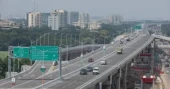
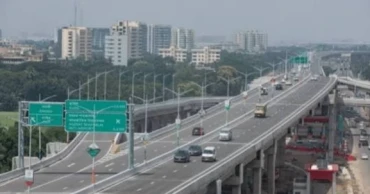
The government has unveiled an ambitious plan to develop a nationwide network of nearly 3,000 kilometres of expressways as part of a long-term strategy to build a safer, modern and technology-driven road transport system.
According to a budget document, the government plans to identify potential expressway corridors and conduct feasibility studies as part of its long-term road development strategy.
It also plans to develop an integrated multimodal transport system linking road, rail, water and air transport, while introducing smart technologies for axle-load control and setting up new control stations.
The government has also planned measures to improve road safety, reduce congestion in Dhaka through ring roads and radial roads, expand digital toll collection and promote environmentally sustainable infrastructure.
Bus services are also set for major changes, with plans to rationalise bus routes, gradually replace ageing buses with electric ones and improve driver training.
For FY2026-27 and the medium term, the government plans to establish an integrated and sustainable road and public transport system. Among the proposed measures are enactment of a Metropolitan Transport Authority Act, introduction of metro rail-based feeder services and adoption of transit-oriented development plans.
The government also plans to prepare technical manuals, promote electric vehicles and introduce an automated vehicle fitness certification system. Training will be provided to nearly 5,50,000 professional drivers.
The budget document said roads that have remained neglected and deteriorated for years are being brought under accelerated repair and renovation programmes to ensure smooth and uninterrupted road communication across the country.
In urban transport, the government plans to expand integrated ticketing systems, Rapid Pass services and online platforms to improve transparency and efficiency in public transportation.
It is also pursuing a six-line metro rail network for Dhaka and its surrounding areas. Construction of MRT Line-1 and MRT Line-5 (Northern Route) is progressing, while planning activities for MRT Line-5 (Southern Route), MRT Line-2 and MRT Line-4 are underway.
A monorail-based feeder network is planned to connect metro rail terminal points with different destinations. The government also intends to introduce electric buses gradually in Dhaka.
The plans include developing women-friendly and safer transport services and expanding fully electric metro rail and bus systems to reduce air and noise pollution.
The Bridges Division is also set to accelerate the construction of major bridges and elevated expressways to reduce travel time and transport costs.
The government plans to expand electronic toll collection, introduce smart traffic management and use environmentally sustainable technologies in infrastructure management.
Looking ahead, it plans to increase investment in the bridge and expressway sector, construct the Second Jamuna Bridge and implement the Dhaka-Chattogram Elevated Expressway.
Projects under public-private partnership arrangements will also be pursued as part of the government’s broader plan to strengthen the country’s road and transport connectivity.
The government said the transport-sector plans have been adopted in line with the Sustainable Development Goals and are intended to build a safer, more efficient and integrated transport network.
4 days ago
Govt plans measures to improve business climate, diversify exports
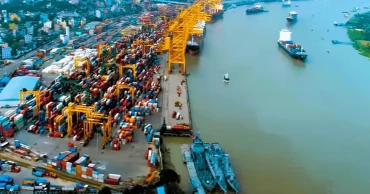
The government plans to take a series of measures to improve the cost and ease of doing business, attract foreign investment, diversify exports and promote balanced industrial development across the country, according to a budget document.
Giving priority to deregulation, the government plans to streamline investment-related services, fully digitalise them and integrate them with the Bangladesh Investment Development Authority’s One-Stop Service (BIDA-OSS) platform.
It also plans to strengthen coordination among investment promotion agencies through an interactive website and map investment-related services sector by sector.
The government will further develop BanglaBiz as a single digital platform for business approval services to provide investors with faster, predictable, coordinated and transparent government services.
To attract foreign direct investment, it plans to promote 19 promising sectors identified in an investment heat map.
The government has set an export target of $63.4 billion for the 2026-27 fiscal year, aiming for 15 percent growth in both goods and services exports, Commerce Minister Khondakar Abdul Muktadir announced recently.
There are already signs of stronger investment interest. The Bangladesh Export Processing Zones Authority (BEPZA) said they secured investment proposals worth $717.71 million from 36 companies in FY2025-26, the highest annual commitment in its history.
The proposed projects are expected to create 75,744 jobs once fully operational.
BEPZA-run zones also generated $8.41 billion in exports in FY26, accounting for 17.51 percent of the country’s total merchandise exports.
BEPZA is also planning to establish new export processing zones in Patuakhali and Jashore.
The Patuakhali EPZ is expected to create employment for nearly one lakh people, while the Jashore EPZ is expected to generate around 1.5 lakh jobs.
The establishment of Rangpur EPZ in Gaibandha and Sirajganj EPZ in Sirajganj is also in the pipeline.
The government plans to expand digital services under the Bangladesh Economic Zones Authority (BEZA), where 60 of its 125 services have already been brought online. Standard Operating Procedures have been prepared for 88 services.
The Cabinet in July approved in principle three major policy measures, including the draft Invest Bangladesh Act, 2026, the National Renewable Energy Development Strategy (2026–2030) and the Import Policy Order, 2026–2029, aimed at improving the investment climate, expanding renewable energy and updating the country's import framework.
It also plans to promote environmentally sustainable industrialisation through the Green and Resilient Economic Zone guidelines, renewable energy facilities, solar power systems and Central Effluent Treatment Plants.
Economic zones are planned in Kurigram, Nilphamari, Chandpur and Kushtia to reduce Dhaka-Chattogram-centric industrialisation and support balanced regional development.
Ahead of Bangladesh’s graduation from the Least Developed Country category, the government plans to pursue Free Trade Agreements, Preferential Trade Agreements and Economic Partnership Agreements with potential trading partners to maintain the country’s competitiveness in global trade.
The government also plans to reduce dependence on ready-made garments, which currently account for nearly 82 percent of export earnings, by promoting handicrafts, home décor items, jute products, natural cosmetics, toys and baby products in international markets.
Facilities will be extended to promising export-oriented sectors, including agricultural products, light engineering, pharmaceuticals, electronics, gold and diamonds, to import goods under customs bonded facilities or against bank guarantees on a duty-free basis.
The government plans to diversify export markets by giving priority to Latin America, Africa, Central Asia, the Middle East and various European countries.
It also plans to expand online trade services, including electronic Certificates of Origin through the Business Single Window platform, and develop an Interactive Exporters Database to help exporters identify and connect with foreign buyers.
The government plans to modernise laws and policies for safer and environmentally sustainable shipbreaking, shipbuilding and ship recycling.
Policy support will also be provided for energy-efficient and environmentally friendly electric bikes and scooters.
For cottage, micro, small and medium enterprises, the government plans to develop service platforms, update SME cluster mapping, expand financial inclusion and launch programmes to create new entrepreneurs.
It also plans to provide mentorship, technical and skills training, financing, export support, design and branding assistance and access to domestic and international marketplaces for CMSMEs.
The government plans to accelerate industrialisation in unused BSCIC plots, develop existing industrial areas, expand industrial park capacity and introduce investment-friendly policies.
Under the National Green Industrial Policy, incentives will be introduced to promote energy-efficient technologies, waste-to-resource production and low-carbon industrialisation.
The government also plans to implement Bangladesh Bank’s Tk 60,000 crore Stimulus Package-2026 for agriculture, cottage and small industries, SMEs and sick and closed industrial enterprises.
Of the package, Tk 41,000 crore will come through a refinancing fund and Tk 19,000 crore from Bangladesh Bank’s own resources.
The package includes Tk 20,000 crore for reopening closed industries and supporting the service sector, Tk 10,000 crore for agriculture and rural economic activities, Tk 5,000 crore for CMSMEs, Tk 3,000 crore for export diversification and Tk 3,000 crore to develop North Bengal as an agricultural hub.
The government expects these initiatives to create more than 2.5 million direct and indirect jobs.
It also plans to provide a 6 percent interest subsidy to support expansion of production activities, reducing the effective borrowing cost for entrepreneurs to less than half the prevailing market-based interest rate.
5 days ago
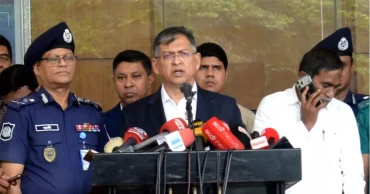
Govt raises rewards for information on looted, illegal arms
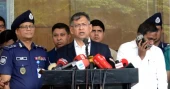
Home Minister Salahuddin Ahmed on Saturday announced increased cash rewards for people providing information leading to the recovery of looted and illegal firearms as part of intensified efforts to recover such weapons.
The minister warned that police officers who fail to make expected progress within the stipulated timeframe in curbing terrorism, extortion and drug-related crimes will face strict legal and administrative action.
The minister made the remarks while speaking at a press briefing after attending as the chief guest the Quarterly Crime Review Conference (April-June 2026: Second Quarter) organised by Police Headquarters at the Bangladesh Police Auditorium in Rajarbagh
Under the newly revised reward scheme, informants will receive up to Tk 2 lakh for information leading to the recovery of heavy weapons while those providing information on pistols, revolvers or shotguns will be rewarded up to Tk 50,000, said the minister.
Besides, people providing information leading to the recovery of sound grenades, looted tear-gas shells and other looted weapons will receive rewards of Tk 10,000, Tk 15,000 or Tk 20,000, depending on the circumstances, the minister said.
He assured that the identities of informants would be kept completely confidential.
Salahuddin said the government is regularly adopting strategic plans to bring the country’s law and order situation to the desired level and improve the image of the police by turning the force into a public-friendly and people-oriented institution.
He said a special unit has already been formed in coordination with various intelligence agencies to intensify operations to recover looted and illegal firearms.
Salahuddin said weapons whose cancelled licences were not surrendered within the stipulated deadline have already been treated as illegal firearms and cases have been filed, while drives to recover them are continuing.
He added that special strategic operations are being conducted across the country with assistance from intelligence agencies to prevent illegal arms, drugs, smuggling and extortion.
Inspector General of Police Md Ali Hossain Fakir chaired the conference, while Senior Secretary of the Ministry of Home Affairs Manzur Morshed Chowdhury addressed it as a special guest.
Additional IGP (Crime and Operations) Khandaker Rafiqul Islam delivered the welcome speech. Additional IGP (Administration) AKM Awlad Hossain, among others, was present.
During the conference, the minister responded to various questions from DIGs of different ranges, police commissioners and additional police commissioners of different metropolitan areas, and superintendents of police (SPs) of different districts and exchanged views.
21 days ago
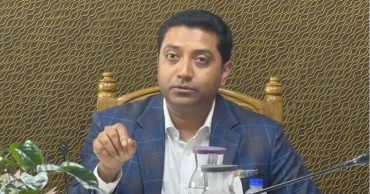
Govt taking initiative to revamp primary schools: Bobby Hajjaj
State Minister for Primary and Mass Education Bobby Hajjaj has said the government has taken an initiative to reorganise primary schools across the country to ensure that no child is left out of education.
"Prime Minister Tarique Rahman has instructed that no child, from villages to cities, should remain out of school," he said.
The state minister was speaking as the chief guest at an orientation and exchange meeting on the activities of the ‘Feeding Programme’ project at Shahid Satu Hall in Chapainawabganj on Wednesday afternoon.
Bobby said the management committees of government primary schools were not functioning effectively.
"They are often active during the formation of committees or when schools receive allocations, but cannot be found at other times," he said.
He said the government was therefore taking an initiative to involve local people by maintaining an informal register of people as ‘friends’ of the schools.
The state minister said there was a shortage of teachers in government primary schools across the country, and the government was working to address the problem.
"A good teacher can help develop a student even from a disadvantaged background," he said.
He also said night guards and lower subordinate staff (MLSS) would be appointed at every government primary school in the country.
The government is also considering providing cooked, nutritious food to students under the feeding programme, he said.
Bobby said the government would take all necessary measures to improve the quality of primary education.
23 days ago
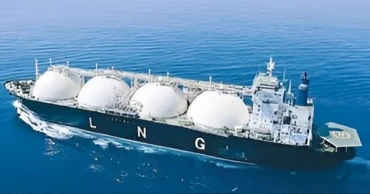
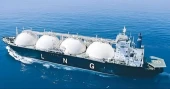
Govt clears procurement of 2 LNG cargoes for September delivery
The Cabinet Committee on Government Purchase (CCGP) on Monday approved a proposal to procure two cargoes of liquefied natural gas (LNG) for delivery in September at prices of more than US$24 per million British thermal units (MMBtu).
The approval was given at a meeting of the committee held at Secretariat with Finance Minister Amir Khosru Mahmud Chowdhury in the chair.
Under the approved proposal, Posco International Corporation, South Korea's largest trading company, will supply one LNG cargo for delivery on September 13-14 at US$24.625 per MMBtu.
Another cargo will be supplied by TotalEnergies Gas & Power Ltd, UK, for delivery on September 23-24 at US$24.25 per MMBtu.
The Ministry of Power, Energy and Mineral Resources placed the proposal before the committee under Rule 105(3)(a) of the Public Procurement Rules 2025 through the Request for Quotation (International) process.
The committee approved the proposal following consideration of the procurement process and the recommended bidders.
The latest approval comes as Bangladesh continues to rely heavily on imported LNG to meet its growing demand for natural gas, particularly for power generation and industrial consumption.
25 days ago
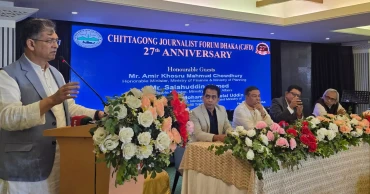
Govt focusing on domestic gas exploration, marine resource extraction: Home Minister
Home Minister Salahuddin Ahmed has said the current government is putting importance on exploration of domestic gas resources, extraction of marine resources to develop the blue economy, expansion of green energy and diversification of energy sources for sustainable economic development.
“Unless we extract the resources of the deep sea and harness the potential of the blue economy…..we will lag behind. Why not start it from today? That is why we have made plans,” he said.
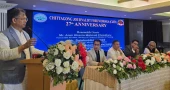
The home minister made the remark, while addressing a programme marking the 27th founding anniversary of Chattogram Journalist Forum Dhaka (CJFD) at the All Community Club in Gulshan on Friday night.
Focusing on Chattogram and Cox’s Bazar based enormous potentials for the country’s economy, he said: "There is only one Matarbari, one Sonadia and one Cox’s Bazar that houses the country’s single marine drive road and the world's longest sandy beach. Still, it remains largely virgin. We have to develop it. Everything is there.”
He said Cox’s Bazar and Chattogram should not be known only for tourism destinations but also for economic hubs.
“It is not enough to know Cox’s Bazar and Chattogram as tourist destinations, rather we have to complete the process by turning them into economic hubs. We have to flourish and explore their potential,” the minister said.
Noting that Bangladesh has yet to properly utilise its marine resources, he stressed the need for initiating a process now to extract marine resources in future.
“How many marine resources do we extract? How much seaweed do we extract from the sea? Nothing (we extract). We could not extract the gas beneath the sea either. We have not been able to harness the other potential of the blue economy, including mineral resources,” Salahuddin said.
He said the government has also decided to give greater attention to both offshore and onshore gas exploration.
“We have focused on our own gas exploration, both offshore and onshore, and decisions have been taken in this regard. But it will take time,” he said.
Salahuddin said even if exploration begins today, it could take at least seven to eight years to start commercial extraction and bring the gas into the national grid.
“But if we do not start today, we will remain dependent on the same sources even after seven years,” he said.
About green energy, he said the government has also set a target of generating between 5,000 and 10,000 megawatts of electricity from renewable energy by 2030.
“We will gradually move towards green energy and renewable energy. For that, we have set a target of generating 5,000 to 10,000 megawatts from the renewable energy sector by 2030,” he said, adding that the government has relaxed its policies to attract foreign investment in this sector.
The Minister also stressed the need to diversify Bangladesh's sources of gas and energy imports to reduce dependence on a single source.
Citing that during the Awami League period, Bangladesh had become dependent on the single sources for gas, he said, “We became dependent on the Middle East and the Gulf,” he added.
As the Ukraine war and the Iran-Israel war created crises, now Bangladesh still sometimes has to buy gas from the spot market at two or three times the price, he went on.
“So, we’ve decided that there will be no single sourcing. We’re now trying to source gas from Malaysia, Indonesia and various other countries. Discussions are underway with them,” said the Minister.
He said the government is preparing a long-term master plan to meet the country's growing energy and power demand in line with economic growth, industrialisation and increasing use by consumers.
He said Bangladesh currently generates around 15,000 megawatts of electricity, while peak-hour demand reaches around 17,000 megawatts, leaving a shortage of around 2,000 megawatts, particularly after the evening.
“We are meeting this shortage now, but gradually we have to take our generation capacity to 30,000 megawatts,” he said.
The minister also said the government has a plan to build an expressway railway from Chattogram to Dhaka. “If this is implemented, it will be possible to travel from Chattogram to Dhaka in just two hours,” he said.
The 27th founding anniversary of CJFD was celebrated in a festive atmosphere with the participation of its members. The programme included a discussion, cultural event, cake cutting and dinner.
State Minister for Land Mir Mohammed Helal Uddin joined the programme virtually as a special guest.
Besides, Prime Minister's Speech Writer SAM Mahfuzur Rahman and Bangladesh Federal Union of Journalists (BFUJ) Secretary General Kader Gani Chowdhury, among others, spoke on the occasion.
CJFD President Shamim Jahangir delivered the welcome address, while its General Secretary Touhidur Rahman conducted the event.
1 month ago
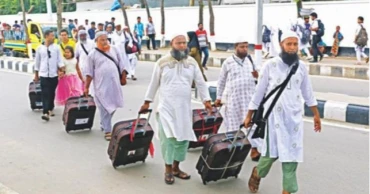
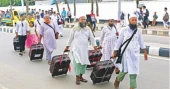
Govt announces Hajj packages for 2027; airfare cut by Tk 24,830
The government on Tuesday announced the Hajj packages for 2027, setting the cost of maximum hajj package at Tk 6,15,263 and minimum package at Tk 5,05,648.
The two Hajj packages were fixed for pilgrims travelling under the government arrangement, said Religious Affairs Minister Kazi Shah Mofazzal Houssain at a press briefing held at Secretariat.
Pilgrims under first hajj package will be accommodated within 1,000 to 1,400 metres of Masjid al-Haram in Makkah and in Markazia area of Madinah, he said.
They will stay in Zone-2 tents in Mina, while services and meals in Mina and Arafat will be provided under Service Package-3 through authorised Moallems.
The expected stay in Saudi Arabia will be between 35 and 40 days, with options to upgrade rooms or choose a shorter-duration package by paying additional charges, said the minister.
Pilgrims under the second package will stay within two to three kilometres of Masjid al-Haram in Makkah and within 800 metres of Masjid an-Nabawi outside the Markazia area in Madinah.
Accommodation in Mina will be arranged in Zone-5 tents. Shuttle bus services (Salawat buses) will be provided in line with Saudi riles if hotels are located more than two kilometres from the Grand Mosque, said the minister .
Besides, pilgrims intending to travel under private Hajj agencies, the cost of the standard package has been set at Tk 5,13,648, said the minister
Under the private package, accommodation must be arranged within three kilometres of Masjid al-Haram in Makkah and within one kilometre of Masjid an-Nabawi in Madinah.
A maximum of six pilgrims will be allowed in each room and pilgrims will stay in Zone-5 tents in Mina, while services and meals in Mina and Arafat will be provided under Service Package-3.
Salawat bus services will be mandatory if hotels are located more than two kilometres from the Grand Mosque.
The minister said the government's election manifesto pledged to ensure an affordable, accessible, humane and expatriate-friendly Hajj management system.
As part of that commitment, he said, the airfare for Hajj flights has been reduced by Tk 24,830 from previous year’s to Tk 1,30,000.
He noted that Hajj airfare stood at nearly Tk 2,00,000 in 2023 during the Sheikh Hasina’s government and it was reduced to Tk 1,67,820 in 2025 under the interim government and has now been further lowered to Tk 1,30,000 for the 2027 Hajj.
1 month ago
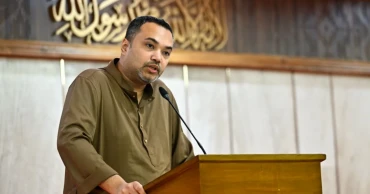
Govt lays foundation for democratic, discrimination-free Bangladesh in first 150 days: PMO
The government has laid a strong foundation for building a democratic, discrimination-free and prosperous Bangladesh during its first 150 days in office by restoring public confidence, rebuilding institutions, stabilising the economy and delivering on key election pledges, Prime Minister's Office (PMO) Spokesperson Mahdi Amin said on Saturday.
Addressing a press conference at the PMO to mark the government's first five months in office, he said the administration, led by Prime Minister Tarique Rahman, achieved "multi-dimensional and unprecedented successes" despite inheriting what he described as a devastated economy, weakened institutions and a dysfunctional governance system.
"The government's achievements over the past five months have opened a new chapter in Bangladesh's political history and paved the way for building a humane, discrimination-free, secure, merit-based, prosperous and self-reliant Bangladesh," Mahdi said.
He said after assuming office through a direct mandate from the people, the government gave top priority to rebuilding democratic institutions, restoring economic stability and strengthening good governance.
2 months ago
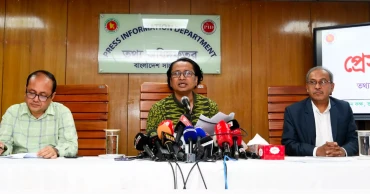
Govt to generate 42.5MW electricity from Dhaka waste by 2028
The government has taken an initiative to generate 42.5 megawatts (MW) of electricity by August 2028 by processing around 3,000 tonnes of waste produced daily in Dhaka, said Prime Minister's Adviser on Information and Broadcasting Dr Zahed Ur Rahman on Tuesday.
Zahed revealed this information while talking at a press briefing on the progress of various activities held at the Press Information Department (PID) conference room.
Prime Minsiter Tarique Rahman recently chaired a meeting on two waste-to-energy projects involving Aminbazar under Dhaka North City Corporation (DNCC) and Matuail under Dhaka South City Corporation (DSCC) on Sunday, held at the Secretariat.
China's CMEC Group will invest in the construction of a waste-to-energy power plant at Aminbazar.
The plant will process around 3,000 tonnes of municipal waste every day to produce 42.5MW of electricity, with a target of supplying power to the national grid by August 2028, he said.
The facility is expected to continue generating electricity for 25 years, he added.
Highlighting efforts to modernise urban sanitation services, Zahed said the Dhaka South City Corporation has launched a digital waste management system named "Clean Care."
The application was inaugurated on Tuesday by DSCC Administrator Md Abdus Salam at a programme held at Nagar Bhaban.
Through the app, city residents will be able to lodge complaints related to waste collection and cleanliness directly, which is expected to help authorities resolve such issues more efficiently, he said.
The adviser also said the stretch of highway from Aminbazar to Hemayetpur has long remained littered with waste and affected by poor management.
As the matter drew attention of the Prime Minister, the government has decided to coordinate with the Dhaka district administration to remove waste from the area, improve environmental cleanliness and plant saplings ‘Neem tree’ along both sides of the highway.
2 months ago
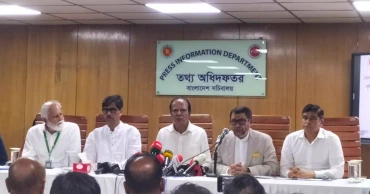
Govt considering relocation of hill residents: Minister
The government is considering relocating families living on hills and at the slopes to safer plain lands, Disaster Management and Relief Minister Asadul Habib Dulu said on Tuesday.
"To reduce casualties from future natural disasters, the government is considering a plan to rehabilitate vulnerable families living on hills and at the foothills in safer plain areas," he said at press briefing after an inter-ministerial meeting on flood disaster management, emergency response and coordination held at the Press Information Department (PID) conference room in the capital.
The minister said 54 people have died in the floods, with the majority of the fatalities caused by landslides in hilly areas.
Dulu said his ministry has already allocated Tk 1.75 crore for emergency relief operations, along with 3,250 tonnes of rice and dry food for the affected areas.
Besides, the Prime Minister has allocated an extra Tk 20 lakh for each district from the Prime Minister’s Relief Fund to support relief activities.
Cooked meals and dry food are being distributed at flood shelters, while the Bangladesh Army, Border Guard Bangladesh (BGB) and the Bangladesh Coast Guard have been deployed for rescue operations, he said.
He said the ministry has also sent speedboats and rubber boats on an emergency basis to strengthen rescue efforts in inundated areas.
The government took several key decisions at Tuesday's meeting to support the rehabilitation of affected families and restore damaged infrastructures, he said.
The Roads and Highways Department will repair damaged highways, while roads under the Local Government Division will also be restored. Earthen roads will be repaired through the ministry's KABIKHA (Kajer Binimoye Khaddo - Food for Work) and KABITA (Kajer Binimoye Taka - Cash for Work, he added.
The minister also said the Ministry of Food will continue its food-friendly programme on an emergency basis in the flood-hit areas.
Describing the floods as a top government priority, Dulu said the Prime Minister has already held several meetings with senior officials, divisional authorities and deputy commissioners to oversee the response.
Health and Family Welfare Minister Sardar Md. Sakhawat Husain, Agriculture, Fisheries and Livestock Minister Mohammed Aminur Rashid, State Minister for Disaster Management and Relief M. Iqbal Hossain, State Minister for Water Resources Forhad Hossain Azad and Disaster Management and Relief Secretary Md Saidur Rahman Khan, among others, attended the meeting.
2 months ago