WB
Bangladesh trade policy: WB finds para-tariffs doubling border protection, urges phased reform
Bangladesh's actual protection at the border is roughly double what its tariff schedule suggests, with regulatory and supplementary duties, not customs tariffs, driving both the distortion and the fiscal risk of reform, according to a new World Bank study presented on Tuesday.
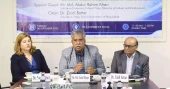
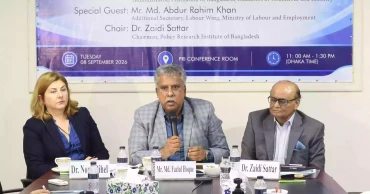
The study, titled "Bangladesh Trade Policy at a Crossroads: Evidence for the National Tariff Policy, LDC Graduation, and the Next Generation of Trade Agreements," was presented by Nora Dihel, Senior Economist for Macroeconomics, Trade and Investment at the World Bank, at a programme organised by the Policy Research Institute of Bangladesh (PRI) at its Banani office.
Using FY2026 data, the study finds Bangladesh's trade-weighted average Most Favoured Nation (MFN) tariff stands at 7.0 percent across 5,666 tariff lines.
But once regulatory and supplementary duties, so-called para-tariffs are added, average nominal protection nearly doubles to 15.4 percent.
The extra protection is concentrated in specific sectors rather than applied uniformly, with footwear, hides and skins, stone and glass, and transportation equipment carrying the widest gap between tariff and actual protection, footwear alone sees nominal protection of 70.4 percent against an MFN tariff of just 25 percent.
The report notes that tariff rationalisation, though committed to under the National Tariff Policy gazetted in August 2023 and reiterated under the Smooth Transition Strategy, has not moved beyond the proposal stage.
The proposed FY2026-27 budget revised duties on 261 tariff lines, but independent assessments cited in the study conclude that incentives remain oriented toward the domestic market and fall short of earlier commitments. Bangladesh is scheduled to graduate from Least Developed Country (LDC) status on November 24, 2026, though the government has formally requested a deferral of at least three years, with a decision still pending.
Using its Tariff Reform Impact Simulation Tool (TRIST), the World Bank modelled the fiscal cost of reform under several scenarios. It found the cost is driven almost entirely by para-tariffs rather than customs duties: a 10 percent cut to customs duty alone would cost about $189 million in import tax revenue, but the same cut combined with full removal of para-tariffs would cost $1.4 billion.
Full elimination of both customs duties and para-tariffs would cost $3.7 billion, or 40.8 percent of import tax revenue, equivalent to 0.83 percentage points of GDP.
The study recommends a phased approach, prioritising duty cuts on intermediate inputs alongside reductions on the most protected consumer goods, followed by a pre-announced multiyear phase-out of remaining para-tariffs, and eventual convergence toward the tariff levels of regional competitors India, China and Vietnam.
It cautions that reforming intermediate inputs alone, without addressing high-protection consumer goods, could worsen the existing bias against exporters.
The report also flags that Bangladesh's statutory tariff schedule diverges sharply from duties actually collected. Analysis of FY2025 transaction-level customs data shows 28.4 percent of Tk 5,686 billion in total imports entered without full payment of customs duties, while 25.6 percent benefited from an exemption of at least half the statutory duty.
Over half of imports from China and India received such exemptions, with exemption incidence rising alongside both transaction value and the statutory rate.
A companion computable general equilibrium (CGE) analysis using the GTAP model examined Bangladesh's broader trade policy choices.
It found that if all trade preferences lapse upon LDC graduation with no replacement, real GDP would contract by 0.24 percent (roughly $1.1 billion), while a passive "do nothing" approach, allowing preferences to lapse while competitors deepen their own market access, would cost about 0.21 percent of GDP, hitting unskilled wages (-0.83 percent) and total exports (-2.48 percent) hardest.
By contrast, the study found that a deep multi-partner free trade agreement push, benchmarked on the depth of Vietnam's trade deals, would boost real GDP by 0.73 percent, or about $3.2 billion, with two-thirds of the gain concentrated in agreements with the Regional Comprehensive Economic Partnership (RCEP) and ASEAN.
Unilateral reforms requiring no negotiating partner, deeper cuts to input tariffs and removal of para-tariffs on intermediate goods, could deliver GDP gains of up to 0.52 percent on their own, the study found.
The World Bank saud while tariff reform carries a manageable fiscal cost of under one percentage point of GDP even under the most comprehensive scenario, it must be paired with domestic revenue mobilisation, removal of non-tariff barriers, services trade liberalisation, and adjustment support for workers in sectors most affected by liberalisation, to be effective.
16 days ago
WB okays $150.75m for youth, micro-entrepreneur jobs in Bangladesh
The World Bank has approved $150.75 million to help Bangladesh scale up support to create employment, opportunities and better income for low-income youth and micro-entrepreneurs, with a focus on women and those living in climate-vulnerable areas.
The additional financing to the Recovery and Advancement of Informal Sector Employment (RAISE) Project will create employment and income opportunities for about another 176,000 youth across Bangladesh, in addition to the earlier 233,000 project beneficiaries.
Participants will benefit from a comprehensive package of services including skills training, apprenticeships, entrepreneurship development, and access to microfinance to help young people and micro-entrepreneurs overcome barriers to employment and business growth.
It will also introduce innovative approaches for women’s empowerment, including access to quality childcare, and climate resilient livelihoods to help communities adapt to climate shocks.
Read more: China’s K Visa For Bangladeshi Professionals: Eligibility, Application Process, Fees
World Bank Acting Division Director for Bangladesh and Bhutan Gayle Martin said that a good job can transform a life, a family, and a community.
Yet, he said, every year many young Bangladeshis entering the labor market can't find work. The country also faces challenges in job quality, skills shortages and mismatches.
“This additional financing will help more young people from low-income families, especially women and those in vulnerable communities, to access market-relevant skills, resources, and training they need for better employment and livelihood opportunities.”
The financing will help the project expand its coverage beyond urban centers to rural communities, ensuring that marginalized youth and micro-entrepreneurs across the country can benefit from targeted support.
It will pilot quality and affordable home-based childcare services by providing training and start-up grants to women.
Read more: Bangladesh’s external debt crosses $104bn amid rising interest burden: WB
By addressing both demand and supply of childcare needs, these efforts will boost female labor force participation and create new jobs in the care sector, while also enhancing children’s early health and development.
Besides, women will be targeted with life skills training to enhance their confidence and empowerment.
The additional financing will also supplement training with job intermediation efforts by organising job fairs, connecting potential employers with candidates and assisting in marketing and contract negotiations.
Team Leader for the project Aneeka Rahman said that the RAISE project has shown that targeted support can make a real difference for youth and micro-entrepreneurs. “With this new financing, we can scale up proven interventions, expand access to microfinance, and introduce innovative solutions like quality childcare, helping even more young people and women unlock their potential and build resilient futures.”
The project has already shown strong results: over 80 percent of graduated apprentices secured employment within three months of completing the program and the young microentrepreneurs reported better earning and business practices.
With this additional financing, the World Bank’s total support to the RAISE project now stands at $350.75 million.
Read more: Bangladesh sets its own economic policy, not dictated by IMF or WB: BB Governor
9 months ago
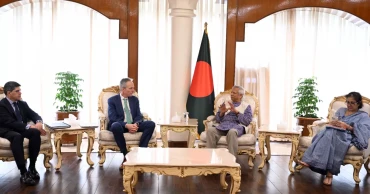
WB reaffirms support to interim govt’s reform agenda
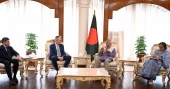
World Bank Vice President Martin Raiser on Tuesday met Chief Adviser Prof Muhammad Yunus and reiterated the lender’s pledge to support the reform agenda of Bangladesh's interim government.
"The World Bank is supporting Bangladesh with a range of urgent reforms to improve transparency and governance, including in tax policy and administration, public procurement, and statistics," Raiser said during the meeting held at the State guest house Jamuna.
He said reforms are very important for Bangladesh's democratic transition and for future governments and inclusive growth.
World Bank VP for S Asia to meet Dr Yunus, other key advisers
"These reforms will help lay the foundation for future inclusive growth by strengthening people’s and businesses confidence in the integrity of Bangladesh’s institutions," said Raiser.
He called for the separation of tax administration and tax policy to improve transparency and governance in the revenue system.
Raiser said parliament should be the sole authority to decide on tax exemptions, according to the Chief Adviser’s press wing.
They discussed issues of mutual interest, including the World Bank's financing of the country's major transparency, governance, and digitalisation reforms, including tax administration.
The chief adviser explained his recent creation of a consensus commission to facilitate dialogue with the political parties over the reforms recommended by six major commissions.
"Once the political parties have reached consensus over the reforms, they will sign a July Charter, which will be implemented by the interim government and later by the political government," he said.
World Bank to provide $30 mln more for Bangladesh’s power transmission network
Raiser also stressed the improvement of public procurement and the importance of the independence of the Bangladesh Bureau of Statistics to improve the quality of data, which is essential for sound policymaking.
The meeting also discussed the importance of a strong digitisation agenda, including details of the National Identification (NID), with Raiser saying the World Bank can help Dhaka connect with countries that have robust digital identification infrastructure.
1 year ago

Net reserves of foreign exchange as per BPM-6 below $18 billion: Economist Zahid Hussain
Former Chief Economist of the World Bank's Dhaka office Zahid Hussain said on Wednesday (October 04, 2023) that the actual calculation of foreign exchange entering into the country and leaving does not match.He said that the reserves are decreasing due to a deficit in the balance of payments or transaction balance. The net reserves of foreign exchange as per BPM-6 is below $18 billion.Zahid gave this information while speaking at the annual conference of the International Business Forum of Bangladesh (IBFB) held in a city hotel on Wednesday. Indian High Commissioner to Dhaka, Pranay K. Verma, was the chief guest at the event.
Read: IMF reviewing reserves, macroeconomic condition ahead of next fund releaseHe pointed out that one of the reasons for the overall macroeconomic instability of the country is external. The major aspect of this external factor is the price of the dollar.The exchange rate of the US dollar was remained below Tk100 in 2021. But in September 2022 it went above Tk100. It is still above Tk110 even though it has decreased a bit now.Zahid complained that the account of how much foreign currency is entering the country and how much currency is going outside does not match with the reserve.
Read: Why Bangladesh’s forex reserves dipped to $21.15 billion? Economists cite reasonsHe said that usually this calculation is sometimes positive and sometimes negative. But recently it is seen in case of Bangladesh, this account has been negative for quite some time."This means that something is happening beyond our knowledge,” he said.
2 years ago

Govt meets with WB over sustainable plastic management
The Ministry of Environment, Forest and Climate Change on Thursday held a meeting with the World Bank regarding the implementation of a sustainable plastic management action plan to prevent plastic pollution in the country.
At the same time, discussions were held with Lafarge Holcim regarding the implementation of Geocycle, a modern waste management system.
Presided over by Environment, Forest and Climate Change Secretary Dr Farhina Ahmed, the meeting was attended, among others, by Additional Secretary (Climate Change) Md Moniruzzaman, Additional Secretary (Environment) Sanjay Kumar Bhowmik, Additional Secretary (Environmental Pollution Control) Md Mizanur Rahman, the World Bank's senior environmental expert Yoon Ju Alison Yee and Bangladesh Environmental Lawyers Association (BELA) Executive Director Syeda Rizwana Hasan.
Read: Anti-plastic laws not being implemented: Speakers
At the meeting, on behalf of the World Bank, proposals were presented on policies and financing mechanisms for implementing the Sustainable Plastic Management Action Plan.
The meeting also informed that the World Bank is preparing Extended Producer Responsibility (EPR) as part of the implementation of the action plan.
Syeda Rizwana Hasan spoke on the draft guidelines of EPR on plastics.
Kaushik Mukherjee, head of LafargeHolcim's Geocycle Division, presented the Geocycle waste management approach to control pollution.
Kaushik said LafargeHolcim is implementing the method of burning garbage without any residue in a furnace with a temperature of 80°C-2,000°C.
The Geocycle process burns 100% of the waste, and because it uses garbage instead of fossil fuels, the process does not produce greenhouse gases, he said.
Praising the Geocycle system, Dr Farhina Ahmed said the government will implement it if it is found to be environmentally friendly and feasible after on-site inspections.
"The necessary guidelines for the implementation of the Sustainable Plastic Management Action Plan will be formulated in consultation with all concerned", she added.
3 years ago

World Bank to remain Bangladesh's dev partner: Vice President for South Asia
World Bank (WB) new Vice President for South Asia Martin Raiser has said the WB will remain beside Bangladesh as a partner in adopting economic policies to overcome the challenges of development.
Raiser said this at a meeting with Finance Minister AHM Mustafa Kamal on Tuesday night. This is his first visit to Bangladesh after taking over as WB Vice President. Martin Raiser arrived in Dhaka on September 19 on a three-day visit.
Raiser praised Bangladesh's economic development in the meeting with the Finance Minister. He also appreciated the timely steps taken by Prime Minister Sheikh Hasina to face the crisis created by the Covid-19 pandemic situation.
Read: Martin Raiser World Bank's new VP for S Asia
The finance minister said that the WB is one of the development partners of Bangladesh. The organization has provided budget support to various development projects in Bangladesh including education, health, electricity, and disaster management sectors.
Kamal also thanked the WB for its support in the fight against the Covid-19 pandemic .
The Finance Minister emphasized further partnership of the World Bank in various initiatives for the socio-economic development of the country.
Raiser called the continuity of Bangladesh's progress an exemplary example for many countries in the world and said that Bangladesh is one of the countries receiving the highest IDA loans.
Bangladesh Bank Governor Abdur Rouf Talukder, Finance Department Senior Secretary Fatima Yasmin, Economic Relations Department Secretary Sharifa Khan, Financial Institutions Department Secretary Sheikh Mohammad Saleem Ullah, and others were present at the meeting.
4 years ago
.jpg)
WB approves $500 million credit to bolster flood preparedness in Bangladesh
The World Bank on Friday approved a loan of $500 million to help Bangladesh improve disaster preparedness against inland flooding in 14 flood-prone districts, benefiting over 1.25 million people.
The Resilient Infrastructure for Adaptation and Vulnerability Reduction (RIVER) project will help Bangladesh reduce vulnerability to riverine and flash floods by constructing over 500 multipurpose flood shelters, access roads, and climate-resilient community infrastructure, the World Bank said in a release.
In normal times, the flood shelters will operate as primary schools and they will be equipped with solar energy systems, water, sanitation and hygiene facilities that cater to the needs of women and vulnerable populations.
The project will also help strengthen the capacity of communities and government agencies to prepare and respond to floods and undertake behavioural change interventions.
Also read: UN announces $5 million more flash flood relief for Bangladesh
Mercy Tembon, World Bank Country Director for Bangladesh and Bhutan, said that the heart-wrenching flood situation in Sylhet region is a stark reminder of the increasing risks of climate change to development -- more frequent, unpredictable and intense natural disasters.
“Building on our five-decade long partnership of improving disaster risk management in the coastal region, this project will help Bangladesh improve disaster preparedness in the non-coastal flood-prone areas. It will also support the country’s transition from a disaster response to a disaster risk management approach."
Every year, floods and riverbank erosion in By affect about one million people but in some years, the numbers can be substantially higher.
The project will help save lives and properties in the highly flood-prone districts in the Teesta-Brahmaputra-Jamuna, the Padma, and the Surma-Meghna river basins -- Nilpamari, Lalmonirhat, Kurigram, Rangpur, Gaibandha, Bogura, Pabna, Sirajganj, Rajbari, Faridpur, Gopalganj, Madaripur, and Sunamganj, Habiganj.
Ignacio Urrutia, World Bank team leader for the project, said that Inadequate evacuation facilities for people and their livestock in the highly flood-prone areas not only leads to the loss of lives and livelihoods, but it also hampers the ability to provide adequate relief.
Also read: President Hamid calls for stepping up flood relief distribution
“This project will contribute to developing evacuation facilities that provide WASH, apply gender-sensitive design, and provide sufficient space for community members and livestock, while at the same time benefiting the community in regular times.”
The project will also develop a database on the availability and condition of flood shelters, which will be critical for disaster preparedness and future investment planning.
The project will support the Bangladesh Delta Plan 2100, a long-term plan to achieve a safe, climate-resilient, and prosperous delta, as well as the World Bank Group’s Climate Change Action Plan 2021-2025.
4 years ago

WB to provide Tk 255 cr as food aid to Rohingyas: State Minister
The World Bank will provide a grant of Tk 255 crore for food aid to the forcibly displaced Rohingya community from Myanmar staying at Teknaf and Ukhia in Cox's Bazar, said State Minister for Disaster Management and Relief Md Enamur Rahman on Sunday.
The state minister told reporters after the signing ceremony of an agreement between the Ministry of Disaster Management and Relief and the World Food Program (WFP) at the ministry.
Also read: Rohingya repatriation should be UNHCR's priority: Momen
Secretary of the Ministry of Disaster Management and Relief Md Kamrul Hasan on behalf of the ministry and Country Director Jane Pearce on behalf of the WFP signed the agreement in presence of other senior officials from the ministry and the WFP.
Under the agreement, WFP will provide food aid to Rohingyas in Cox's Bazar through the Safety Net System for the Poorest project, funded by the World Bank, said the state minister.
Also read: Take care of Rohingyas like Bangladesh: UNHCR to regional countries
The project will provide nutrition education to women, assistance to children under the five in health centers, materials and training in vegetable gardening, plantation and preservation of trees, and mountain slopes, cleaning roads and sewers and carrying out various awareness activities to prevent anti-social activities in the Rohingya camps, he added.
4 years ago
.jpg)
WB loan to help Bangladesh sustain post-Covid growth
The World Bank has approved a $250 million financing to help Bangladesh strengthen its policies to sustain growth following the pandemic and enhance resilience to future shocks.
The Bangladesh First Recovery and Resilience Development Policy Credit — the first in a series of two credits — supports fiscal and financial sector policies to enhance macroeconomic stability and sustain growth.
It supports expanding and modernising social protection programmes and energy sector policies to improve efficiency and reduce greenhouse gas emissions. These actions will help the country build resilience against future shocks, including climate change, the World Bank said in a release.
“Since 2020, the World Bank has provided over $3 billion to Bangladesh to support emergency response, vaccination, and other Covid-19 recovery efforts,” said Mercy Tembon, World Bank country director for Bangladesh and Bhutan.
“This credit will further accelerate the government’s endeavours to strengthen its policies and regulatory framework to pave the way for a green, resilient, inclusive recovery and low-carbon growth.”
This programme supports the development of the National Tariff Policy, which will help modernise trade taxes. New policies also enable foreign firms, including non-resident digital services companies, such as the search, social media, and cloud services firms, to submit VAT returns and make payments.
READ: WB approves $120 mln loan to develop climate smart agriculture, water management
Expanded coverage of the national e-Government Procurement (e-GP) system will increase the efficiency of public expenditure. The financing will also help streamline the bank recovery framework. All scheduled banks will prepare recovery plans, which will be updated annually.
New legislation will be prepared to strengthen the stability and efficiency of payment and settlement systems, which will also foster digital and mobile financial services, according to the World Bank.
The programme also supports adjustments to the interest rates of several public savings instruments, bringing them closer to the market to reduce distortions.
This programme will help the government rapidly scale up cash transfer programmes to respond to future shocks and to expand the use of the government-to-person payment platform for cash-based schemes.
This will allow the government to respond more quickly to climate-related crises, including floods and cyclones, by identifying and targeting new and existing beneficiaries for emergency assistance.
It will also help Bangladesh with its transition to a low-carbon economy. The revised National Building Code will improve energy efficiency in buildings, while the cancellation of 8,451 MW of planned investment in coal-fired power generation projects supports progress towards Bangladesh’s Nationally Determined Contributions (NDC) 2021.
“This financing will help Bangladesh harness digital technology to ensure green and resilient growth,” said Bernard Haven, World Bank senior economist and task team leader for the project.
“Fiscal and financial sector policies will help sustain growth, while enhancing the coverage and efficiency of social protection programmes will protect the poor and vulnerable during economic shocks and natural disasters.”
The credit is from the World Bank’s International Development Association (IDA), which provides concessional financing, has a 30-year term, including a five-year grace period. Bangladesh currently has the largest ongoing IDA programme, totalling over $14.5 billion.
4 years ago
.jpg)
Bangladesh, World Bank sign $120 mn financing deal to support food security
The government of Bangladesh and the World Bank have signed a $120 million financing agreement to help improve the irrigated agricultural and fisheries production and increase the incomes of 170,000 poor people vulnerable to climate change.The Climate-Smart Agriculture and Water Management Project will improve climate resilience by modernizing flood management, drainage and irrigation infrastructures.
The project will help with climate resilient and improved irrigation, flood management and drainage service covering 120,000 hectares of land, which will reduce damage to crops from floods by 60 percent, said the global lending agency on Thursday.“Bangladesh’s success is well-rooted in the agriculture sector. With a large population and scarce arable land, it is a major accomplishment for the country to achieve its level of food production today. But the climate change and increased natural disasters pose threat to food security,” said Dandan Chen, Acting World Bank Country Director for Bangladesh and Bhutan.
Also read: World Bank keen on investing in rural development: LGRD Minister
“The project will help Bangladesh sustain food security by protecting crops and fisheries through better flood management, irrigation and drainage systems with active participation of local communities, and with particular emphasis on regulating the excess water during the monsoon and water deficits in the post-monsoon.”The project has identified 19 Flood management, Irrigation and Drainage schemes in poor and climate change vulnerable areas for rehabilitation.
It will also provide training to 100,000 farmers on climate-smart agricultural technologies, diversification of crops, and post-harvest management.
The project will also support conservation of indigenous species and improving disease control and management.It will also support rice and fish/shrimp farming through setting up of cold storage facilities and improvement of local markets.
This will improve the productivity of fisheries by almost 37 percent, vegetables by 10 percent and rice by 7.5 percent.The agreement was signed by Fatima Yasmin, Secretary, Economic Relations Division, Government of Bangladesh and Dandan Chen on behalf of the Government and the World Bank, respectively.The credit is from the World Bank’s International Development Association (IDA), and has a 35-year term, including a five-year grace period.
Also read: World Bank presents its areas of interest for future projects in Bangladesh
Bangladesh currently has the largest ongoing IDA program totaling $14.8 billion.
The World Bank was among the first development partners to support Bangladesh and has committed more than $35 billion in grants, interest-free and concessional credits to the country since its Independence.
4 years ago