Weather Warning
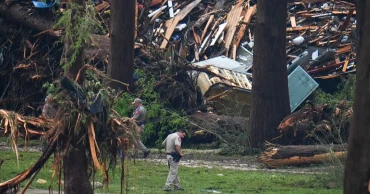
Over 100 dead in US floods amid extreme weather warning
As extreme weather events grow more frequent and intense across the United States, experts warn that government preparedness and public awareness are failing to keep pace, putting lives and infrastructure increasingly at risk.
Climate scientists and disaster researchers say climate change is turning rare events into regular occurrences, yet many Americans still underestimate the threat. The consequences have been devastating — as seen in this month’s deadly flash floods in central Texas that killed over 100 people, despite the region’s long history of floods.
Michael Oppenheimer, a climate scientist at Princeton University, explained how the nature of weather extremes is evolving. “What happens with climate change is that what used to be extreme becomes average, typical, and what used to never occur in a human lifetime or maybe even in a thousand years becomes the new extreme,” he said. “We start to experience things that just basically never happened before.”
According to the National Oceanic and Atmospheric Administration (NOAA), the 10-year summer average of its Climate Extreme Index — which tracks hurricanes, droughts, rainfall, and temperature extremes — is now 58% higher than it was in the 1980s.
Despite the growing threat, experts argue that both public and institutional responses remain alarmingly inadequate. “There’s plenty of evidence that we sit there and do absolutely nothing while these risks are coming right at us like a moving railroad train and we’re standing in the tracks. And then all of a sudden, bam,” Oppenheimer said.
Part of the problem lies in how people perceive disaster risk. Many base their decisions on past experiences, assuming similar outcomes. “That is flash flood alley. We know that floods happen in that region all the time... I’ve already seen normalcy bias statements by people in the regions saying, well, we get flooding all the time,” said Marshall Shepherd, a meteorology professor at the University of Georgia.
Experts warn that outdated thinking is leaving people vulnerable, especially as disasters become more severe in previously unaffected regions. “The message needs to be, if you’re used to some degree of nuisance flooding, every so often, look at what happened in Texas and realize that this is a shifting baseline,” said Kim Klockow McClain, a social scientist who studies extreme weather communication.
Flash floods kill over 80 in Texas; dozens still missing
Psychological denial is another factor. People often believe disasters won’t happen to them — until they do. “It’s sort of a psychological mechanism to protect us that it can’t happen to me,” said Susan Cutter, co-director of the Hazards Vulnerability & Resilience Institute at the University of South Carolina.
“Just because I’ve lived through a fire or a flood or a hurricane or a tornado, that does not mean that the next time is going to look like the last time,” added Lori Peek, director of the Natural Hazards Center at the University of Colorado.
As climate threats intensify, aging infrastructure and population growth in vulnerable areas compound the risks. Peek warned that the U.S. is unprepared for the scale of future disasters. “As our population has continued to rise, it’s not only that we have more people in the country, it’s also that we have more people living in particularly hazardous areas like our coastal areas,” she said.
Experts also criticized recent government decisions, including staff cuts to key federal agencies under the Trump administration, such as the Federal Emergency Management Agency (FEMA), the National Weather Service, NOAA, and the U.S. Geological Survey. These agencies play crucial roles in disaster response and climate research.
“We’re destroying the capability we have that we’re going to need more and more in the future,” Oppenheimer warned.
Looking ahead, Peek urged a shift in strategy: “This is our future. It’s obvious that we’re living into a future where there are going to be more fires and floods and heat waves.”
1 year ago

Amphan: Govt says 18.61 lakh people evacuated
The government has evacuated about 18.61 lakh people and 3.61 livestock to 14,636 shelter centres in coastal districts until Wednesday noon as super cyclone ‘Amphan’ is likely to make landfall this (Wednesday) evening.
6 years ago
.jpg)
Govt prepared to tackle Amphan: PM
Prime Minister Sheikh Hasina on Wednesday said the government has all the necessary preparations to protect the lives and property of people from Super Cyclone Amphan.
6 years ago
.jpg)
Amphan set to hit coast today
Super Cyclone ‘Amphan’ is set to make landfall on the coast this afternoon or evening, with 200 kph to 220 kph wind speeds at its centre.
6 years ago

‘Amphan’ intensifies into extremely severe cyclonic storm
The super cyclone ‘Amphan’ over west central bay and adjoining area moved north-northeastwards and lies over the same area as an extremely severe cyclonic storm.
6 years ago

‘Amphan’ intensifies into ‘Super Cyclone’
Very severe cyclonic storm ‘Amphan’ intensified into a ‘Super Cyclone’ on Monday evening, the Met Office said.
6 years ago

Prepare to tackle cyclone ‘Amphan’: Secretary
Water Resources Ministry Secretary Kabir Bin Anwar on Sunday asked officials concerned to take necessary preparations as a severe cyclonic storm ‘Amphan’ is likely to hit the coastal areas of Khulna division on Wednesday evening.
6 years ago

River ports asked to hoist signal one
The river ports have been asked to hoist cautionary signal number one on Wednesday as rain or thundershowers is likely in some regions of the country.
6 years ago
.jpg)
River ports asked to hoist warning signal 2
River ports in some regions have been asked to hoist ‘warning signal No 2’ as temporary west or north-westerly squally wind is likely to hit the country.
6 years ago