Oil prices fall
Oil prices fall, Asian shares mostly lower as chip stocks retreat
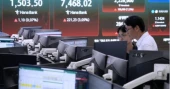
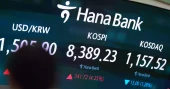
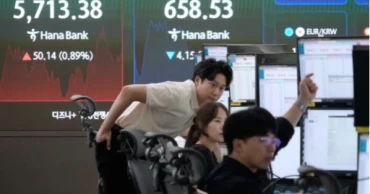
Oil prices fell and most Asian stocks traded lower Thursday as investors sold shares of major chipmakers, while South Korea’s benchmark Kospi extended its sharp losses.
Oil markets remained volatile after the United States said it had carried out a “heavy wave” of strikes against Iran in response to an attack on a US military base.
US stock futures edged higher after Wall Street ended lower on Wednesday.
In South Korea, the Kospi has come under heavy pressure following a sharp rally driven by the global artificial intelligence boom. Some analysts say the recent sell-off reflects growing concerns about the huge amounts technology companies are spending to expand AI-related capacity.
The Kospi was down 1.3% at 5,587.82 on Thursday after plunging 10.8% Tuesday and nearly 6% Wednesday. It has fallen more than 35% from its record high of above 9,000 reached in June, although it remains about 30% higher so far this year.
Samsung Electronics rose 2.4% after the technology giant reported record operating profit for the latest quarter, broadly matching market expectations.
Chipmaker SK Hynix fell 4% after dropping more than 9% Wednesday. The company reported a record quarterly operating profit that nearly increased sixfold, but the result fell short of analysts’ expectations, prompting investors to sell its shares.
Japan’s Nikkei 225 gained 0.6% to 61,778.02. SoftBank Group, which has invested in OpenAI, dropped 2.7%, while Tokyo Electron, a maker of chip production equipment, climbed 4.4%. Memory chipmaker Kioxia Holdings gained 7.5%.
Taiwan’s Taiex, another major beneficiary of the AI boom, advanced 0.8%, while leading chipmaker TSMC rose 1.8%.
Hong Kong’s Hang Seng index slipped less than 0.1% to 25,779.70, while the Shanghai Composite fell 1.2% to 3,784.55.
Australia’s S&P/ASX 200 declined 0.9% to 8,959.90, while India’s Sensex edged up less than 0.1%.
Oil prices remain volatileOil prices fell Thursday despite renewed exchanges of attacks between the US and Iran.
US President Donald Trump said Washington would hit Iran “very hard” after Iranian forces attacked a US base in Jordan.
Shipping through the Strait of Hormuz, a key route for global oil supplies, remains limited, raising concerns about disruptions to international energy markets.
Brent crude, the international benchmark, fell 1% to $87.18 a barrel after rising sharply the previous day. It was trading at around $72 a barrel in late February, before the war began.
US benchmark crude fell 0.9% to $83.74 a barrel.
US stocks end lowerOn Wall Street, the S&P 500 dropped 1.5% to 7,316.15 on Wednesday. The Dow Jones Industrial Average fell 2.2% to 51,594.14, while the tech-heavy Nasdaq composite declined 1.7% to 24,442.94.
Major chipmakers also suffered losses. Nvidia fell 3.6%, Advanced Micro Devices dropped 5.5% and Broadcom declined 2.8%.
US stocks were also pressured after the Federal Reserve kept interest rates unchanged, although some members of its policy committee had favored raising rates.
Fed Chairman Kevin Warsh reaffirmed his commitment to bringing inflation back to the 2% target. At the same time, he maintained his approach of providing financial markets with limited guidance about the central bank’s next interest-rate moves.
With fewer signals from the Fed, investors could face more volatile trading as uncertainty over the direction of interest rates continues.
“Did the Fed take an explicit change in its policy rate today?” Warsh asked at a news conference after the decision. “No, but I think that's the beginning of the story.”
In the bond market, the yield on the 10-year US Treasury note rose to 4.70% from 4.61% late Tuesday.
In early Thursday trading, the US dollar rose to 163.49 Japanese yen from 163.41 yen. The euro fell to $1.1454 from $1.1467.
1 month ago

Asian stocks rise as tech shares gain, oil prices fall amid Iran war concerns
Most Asian stock markets closed higher on Friday, supported by gains in technology shares, while oil prices declined as investors kept a close watch on the latest developments in the Iran war.
U.S. stock futures were mixed.
Market sentiment remained cautious after tensions between Iran and the United States intensified this week. President Donald Trump declared that the Iran war ceasefire agreement was "over," while both countries continued exchanging attacks.
South Korea's Kospi index climbed 2.5% to 7,475.94, recovering part of the losses recorded earlier this week. However, shares of memory chipmaker SK Hynix slipped 0.3% in Seoul ahead of its Nasdaq debut in New York later on Friday.
Japan's Nikkei 225 gained 1.2% to close at 68,557.73. SoftBank Group, a major investor in OpenAI, surged 10.7%, while chip equipment manufacturer Tokyo Electron rose 2.7%.
Hong Kong's Hang Seng Index added 0.5% to 24,156.29. In mainland China, the Shanghai Composite Index erased early gains and ended 1% lower at 3,996.16.
Australia's S&P/ASX 200 advanced 0.5% to 8,806.00, while India's Sensex rose 1%.
Oil prices moved lower after fluctuating sharply, as concerns persisted over global oil supplies due to the limited number of vessels able to pass through the Strait of Hormuz, one of the world's most important energy shipping routes.
Brent crude, the international benchmark, fell 0.8% to $75.66 a barrel, compared with around $72 before the war began in late February. U.S. benchmark crude dropped 0.9% to $71.47 a barrel.
On Wall Street, the S&P 500 gained 0.8% on Thursday, while the Dow Jones Industrial Average rose 0.3%. The tech-heavy Nasdaq Composite climbed 1.3% to 26,206.89.
Technology stocks, especially semiconductor companies, led the gains. Micron Technology jumped 4.5% after announcing plans to expand its U.S. investments, citing strong demand for memory chips driven by artificial intelligence.
Advanced Micro Devices (AMD) rose 5.7%, while Marvell Technology gained 5% and ON Semiconductor added 4.4%.
In currency trading early Friday, the U.S. dollar fell to 161.70 Japanese yen from 162.37 yen, while the euro edged up to $1.1439 from $1.1430.
The Japanese yen strengthened after Finance Minister Satsuki Katayama said the government would encourage major pension funds to invest more in domestic assets denominated in yen.
2 months ago
Asian stocks mixed, oil prices fall as Iran-US tensions intensify
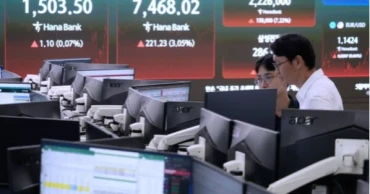
Asian stock markets showed mixed performance on Thursday, while oil prices fell as tensions in the Middle East deepened following fresh military strikes by Iran and the United States.
US stock futures moved higher.
The US carried out additional airstrikes on Iran, while Iran responded by launching attacks targeting Bahrain, Kuwait and Qatar. The latest escalation came a day after US President Donald Trump declared that the temporary ceasefire between the two sides was "over."
Despite the renewed fighting, efforts to revive an interim agreement aimed at ending the conflict were continuing through high-level diplomatic talks, according to a regional intelligence official involved in the mediation process who spoke anonymously because of the sensitive nature of the negotiations.
Japan's Nikkei 225 index rebounded, rising 1.4 percent to 67,743.85 after earlier losses this week, supported mainly by technology stocks. Chip equipment maker Tokyo Electron jumped 5.5 percent, while AI-focused investment firm SoftBank Group slipped 0.1 percent.
South Korea's Kospi index gained 0.6 percent to 7,291.91 after fluctuating during the session. The index had dropped 5.4 percent on Wednesday. Samsung Electronics added 0.2 percent, while memory chip manufacturer SK Hynix surged 5.3 percent.
In China, the Shanghai Composite Index climbed 1.7 percent to 4,036.59, even after data showed producer prices rose 4.1 percent in June from a year earlier, compared with a 3.9 percent increase in May. Some economists linked the faster inflation to higher costs resulting from the Iran conflict.
Hong Kong's Hang Seng Index fell 0.7 percent to 24,027.97. Apple supplier Luxshare lost 2.5 percent during its Hong Kong market debut, while Chinese artificial intelligence company Zhipu, also known as Z.ai, jumped 9.3 percent after announcing plans to raise about $4 billion through a share sale.
Australia's S&P/ASX 200 slipped 0.3 percent to 8,762.50. Taiwan's Taiex fell 0.8 percent, while India's Sensex advanced 0.7 percent.
Oil prices eased after rising sharply the previous day. Brent crude, the international benchmark, fell $1 to $77 a barrel after briefly climbing above $80 on Wednesday. Before the Iran conflict began, Brent crude had been trading near $72 a barrel. Earlier hopes for an interim peace deal had briefly pushed prices back to pre-war levels.
US benchmark crude oil also declined, falling 83 cents to $72.69 a barrel.
On Wall Street, the S&P 500 closed 0.3 percent lower at 7,482.71 on Wednesday after dropping as much as 1.1 percent following Trump's remarks on the ceasefire.
The Dow Jones Industrial Average fell 1.1 percent to 52,348.39, while the technology-heavy Nasdaq Composite edged up 0.2 percent to 25,870.65 after recovering from earlier losses.
Broadcom shares rose 4.8 percent after Apple announced a multi-year partnership with the US chipmaker.
In currency trading, the US dollar slipped to 162.37 Japanese yen from 162.59 yen, while the euro strengthened to $1.1438 from $1.1417.
2 months ago
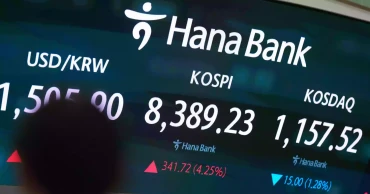
Asian shares mostly rise as Wall Street hits record highs; oil prices fall
Asian stock markets mostly advanced on Wednesday, tracking record gains on Wall Street, while global oil prices slipped amid easing market concerns.
South Korea’s Kospi index led regional gains, jumping nearly 5% to a record high as strong buying in technology and semiconductor stocks continued. Taiwan’s main index also surged, driven by optimism around artificial intelligence (AI) demand.
In Japan, the Nikkei 225 rose 1.3% to 65,816.62, briefly crossing the 66,000 mark during intraday trading for the first time. Shares of major chip-related companies such as Tokyo Electron and Advantest rose sharply.
The rally in Asian tech stocks followed a strong performance in the United States, where Micron Technology jumped nearly
3 months ago

Joint efforts needed to tackle coronavirus: Anisul
Law, Justice and Parliamentary Affairs Minister Anisul Huq on Wednesday called for joint efforts of public and private organisations to tackle the coronavirus outbreak in Bangladesh.
6 years ago