Donation
Japan commits further $3.2 million to Rohingya response
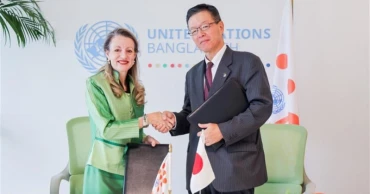
The government of Japan has reaffirmed its strong commitment to the Rohingya humanitarian response by approving JPY 500 million (approximately USD 3.2 million) in funding to the United Nations Population Fund (UNFPA).
Ambassador of Japan to Bangladesh Saida Shinichi expressed his hope that the support from the government of Japan would improve the living conditions of both Rohingya refugees and host communities.
Home Minister seeks Japan’s support in police reform
“Japan remains firmly committed to protecting the most vulnerable, particularly women and adolescents affected by displacement. Through our partnership with UNFPA, we aim to ensure continued access to essential health and protection services, even in the face of growing humanitarian and funding challenges,” he said on Tuesday.
The government of Japan’s continued partnership comes at a critical moment for women and girls in the Rohingya response, said Catherine Breen Kamkong, UNFPA Representative in Bangladesh.
“This funding will allow UNFPA to sustain life-saving services that protect the health and dignity of women and adolescents who would otherwise face devastating gaps in care. We are deeply grateful for Japan’s principled and consistent support.”
Japan, UNICEF partner to support Rohingya children
The new two-year project will aim at protecting the health and rights of women and adolescents affected by displacement in Cox’s Bazar and Bhasan Char, said the Japanese Embassy in Dhaka.
The funding, Japan said, will enable UNFPA to sustain essential life-saving sexual and reproductive health and rights and gender-based violence services for Rohingya refugees and surrounding host communities.
The Rohingya crisis remains one of the world’s protracted humanitarian crises, with Cox’s Bazar hosting over one million refugees alongside vulnerable host communities.
Since 2024, a new influx of estimated 150,000 arrivals, over half of them women and girls, has further strained already cramped settlements.
Despite these growing needs, the funding environment became increasingly constrained, leaving the 2025-2026 Joint Response Plan for the Rohingya Humanitarian Crisis significantly underfunded.
This shortfall has already forced the closure of six government-run health facilities that supported refugees, a 16% reduction in the midwifery workforce and over 50% reduction in the number of GBV case managers.
Japan’s timely contribution will provide a vital lifeline, allowing UNFPA to maintain around the clock emergency obstetric care, GBV case management, and mental health support for approximately 180,000 direct beneficiaries.
The new phase builds on tangible results from previous Japan-funded initiatives. More than 38,000 women and girls have accessed essential services at UNFPA-supported facilities across Cox’s Bazar and Bhasan Char, helping to sustain critical care.
The partnership also successfully expanded survivor-centred GBV services through Women Friendly Spaces and Women-Led Community Centres, reaching thousands of vulnerable women and girls.
In Bhasan Char, Japan’s support contributed to the operationalization of the 20-bed hospital, significantly reducing life-threatening referrals and helping maintain exceptionally low maternal mortality rates in the years following its operationalization.
Adolescent empowerment initiatives strengthened life skills and gender equality awareness among girls and boys, supporting longer-term prevention of gender-based violence.
Since 2017, the Government of Japan has contributed over USD 250 million to the Rohingya humanitarian response to UN agencies and NGOs in Bangladesh, including through UNFPA, making it one of the most consistent and reliable partners in addressing the needs of displaced populations and host communities in Bangladesh.
UNFPA and the government of Japan partnership will aim at continuing to inspire international solidarity and sustained investment in the protection, health, and dignity of women and girls affected by the Rohingya crisis.
6 months ago
How to Declutter Your Wardrobe to Donate Some Clothes
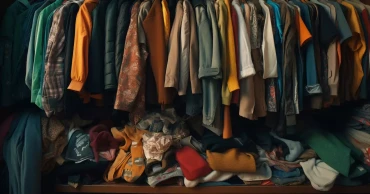
Ready to make a difference? Declutter your wardrobe and donate clothes to help those in need. It is a simple way to simplify your life and give back to others. Start by organising your wardrobe, choosing items in good condition, and making space while making a positive impact.
Tips to Declutter Your Wardrobe to Donate Some Clothes
Set Clear Goals
Before you start decluttering, define your goals. Are you looking to reduce clutter or simply donate clothes? Setting clear objectives will keep you focused and motivated throughout the process.
Knowing why you are decluttering helps you make quicker decisions about what to keep and what to donate. It also ensures that you remain committed to the task, reducing the chances of giving up halfway. A clear goal can make the decluttering process more purposeful.
Read more: How to Identify an Authentic Bangladeshi Jamdani Saree?
Schedule Time for Decluttering
Decluttering your wardrobe is a time-consuming task, so it is essential to set aside dedicated time. Depending on the size of your wardrobe, you might need a few hours or an entire day. Block out this time on your calendar to avoid distractions.
By allocating specific time, you can focus on the task at hand without feeling rushed. It also helps you mentally prepare, making the process smoother and more organised. It is necessary to remember that rushing can lead to poor decisions.
Empty Your Closet Completely
Start by emptying your entire closet. This allows you to see everything you own and prevents you from overlooking any items. Spread your clothes out on your bed or floor to get a full view.
By emptying your closet, you can better assess what you have, making it easier to identify duplicates or items you no longer need. It also gives you a clean slate to reorganise your space once the decluttering is complete. This step is crucial for thorough decluttering.
Read more: Personal Grooming Tips and Tricks for Better Life and Career
Categorise Your Clothes
Create categories for your clothes: Keep, Donate, Toss, and Unsure. This methodical approach helps you organise your wardrobe more efficiently. As you sort through each item, decide which category it belongs to.
By doing this, you can streamline the decluttering process and make better decisions. It also makes it easier to identify which clothes are suitable for donation and which need to be discarded. Organising items into categories prevents you from keeping unnecessary clutter.
Evaluate Each Item for Condition
Carefully inspect each piece of clothing for wear and tear. Check for stains, holes, or fading. Only donate items that are in good condition. This ensures that your donations are usable and appreciated by the recipients. Evaluating the condition also helps you identify clothes that need repair before donation. Clothes in poor condition should be discarded or recycled. By donating only quality items, you contribute to the well-being of those in need and ensure your donations have a positive impact.
Read more: Gemstones Guide: Precious, Semi-precious Stones Used in Jewelry
Consider Last Worn Dates
If you have not worn an item in over a year, it is time to consider letting it go. Clothes that sit unworn in your closet are prime candidates for donation. This rule helps you make quick decisions and reduces the emotional attachment to items.
By considering when you last wore something, you can better assess its relevance in your current wardrobe. Items that are no longer worn often indicate a change in style, size, or need. Letting go of these items frees up space and benefits others.
Prioritise Fit and Comfort
Try on clothes to ensure they still fit and are comfortable. If an item does not fit well or feels uncomfortable, it is unlikely you will wear it again. These items should go into the donation pile.
This ensures that your wardrobe consists only of clothes you love to wear. It also makes your daily dressing routine easier and more enjoyable. Donating ill-fitting clothes gives someone else the chance to use them, while you make room for items that suit you better.
Read more: How to find right perfume, body spray for you
2 years ago

CNG station owners donate Tk 50.81 lakh to earthquake-hit people of Turkey
Bangladesh CNG Filling Station Owners Association has donated essential goods worth Tk 50.81 lakh to the earthquake-hit people of Turkey.
A delegation of the association, led by its general secretary Farhan Noor, handed over the goods to Turkish volunteer agency TiKA through the Embassy of the Republic of Turkey in Dhaka on Sunday.
The goods include long jacket 3900 pieces, sleeping bags 1000 pieces, big size tents (14x14) 33 pieces, mid size tents (10x10) 35 pieces, generators (5.5 kilowatt capacity) 3 pieces, generators (2.5 kilowatt capacity) 14 pieces, room heaters 20 pieces.
3 years ago

Together for Turkiye
The event – Together for Turkiye – was hosted by Agile Minds Corporation in collaboration with
· The Turkish Embassy in Bangladesh
· TIKA (Turkish Cooperation and Coordination Agency)
· AFAD (an on-the-ground Turkish NGO which will help with logistical and installation aspects)
· The Earth Identity Project - NGO no. 1969 (which will help with local fund collection)
· THRIVE (a US-registered NGO that will, in due course, provide food packages for the earthquake victims)
Read More: Banglalink donates relief items for Turkey earthquake victims
Mishal Karim, Chairman of Agile Minds Corporation, started his speech with a quote by Mahatma Gandhi, “Be the change that you wish to see in the world.”
He then stated, “Our initiative will attempt to deliver a functional field hospital with all the required elements: 2 Air Domes - each 4,380 Square Feet, with a connecting channel of 459 Square Feet. The 2 Air Domes come with a 30KW Generator required for their operations. Furthermore, we are arranging for the donation of Sleeping bags, Battery-powered Heaters, Power banks, and Tent mats.”
3 years ago

Chevron donates ambulance to SCC
Chevron Bangladesh donated an ambulance to Sylhet City Corporation (SCC).
President and Managing Director of the company Eric M Walker handed over the ambulance to the SCC at its Jalalabad Gas Field Office in Sylhet.
According to Chevron, the ambulance will help SCC in providing healthcare to the people in Sylhet.
Read: Search for gas: Chevron plans drilling in Bibiyana’s flanked area in April
Eric M Walker visited Sylhet and Habiganj where he attended events to support the local community as part of its Social Investment Initiatives.
Chevron Bangladesh has been able to step in at a moment when the country needs reliable, affordable energy to run its hospitals and emergency facilities.
Eric M Walker also visited the Integrated Support for Children with Disabilities (ISCwD) Project at SSKS Clinic, ¬Karimpur, Bibiyana, Habiganj to provide assistive devices among children with disability in one-year program to support children with disabilities aged between 0-18 years and their families and community members living in the project locations.
This initiative started in collaboration with Save the Children in March 2022 to support children with disabilities and their parents to get accessible basic services like health, education, and development from mainstream service providers.
The ISCwD project aims to benefit 300 Children with Disabilities, 300 Parents and caregivers, 200 School teachers, and 20 local schools.
Read: Uttoron: Chevron-funded skill development project draws to a close
Chevron Bangladesh has been managing social investment programs since 2006.
Chevron is one of the world’s leading integrated energy companies, involved in virtually every aspect of the energy industry.
Chevron Bangladesh operates three gas fields in the northeast of the country. It is the largest producer of natural gas in Bangladesh, accounting for over 60% of total domestic natural gas production and over 80% of the domestic condensate production.
3 years ago

UN climate talks near halftime with key issues unresolved
As the U.N. climate talks in Egypt near the half-way point, negotiators are working hard to draft deals on a wide range of issues they’ll put to ministers next week in the hope of getting a substantial result by the end.
The two-week meeting in Sharm el-Sheikh started with strong appeals from world leaders for greater efforts to curb greenhouse gas emissions and help poor nations cope with global warming.
Scientists say the amount of greenhouse gases being pumped into the atmosphere needs to be halved by 2030 to meet the goals of the Paris climate accord. The 2015 pact set a target of ideally limiting temperature rise to 1.5 Celsius (2.7 Fahrenheit) by the end of the century, but left it up to countries to decide how they want to do so.
Read more: Climate Change: Int’l community must act with fund and solutions to help most vulnerable nations
With impacts from climate change already felt across the globe, particularly by the world’s poorest, there has also been a push by campaigners and developing nations for rich polluters to stump up more cash. This would be used to help developing countries shift to clean energy and adapt to global warming; increasingly there are also calls for compensation to pay for climate-related losses.
Here is a look at the main issues on the table at the COP27 talks and how they might be reflected in a final agreement.
KEEPING COOL
The hosts of last year’s talks in Glasgow said they managed to “keep 1.5 alive,” including by getting countries to endorse the target in the outcome document. But U.N. chief Antonio Guterres has warned that the temperature goal is on life support “and the machines are rattling.” And campaigners were disappointed that agenda this year doesn’t explicitly cite the threshold after pushback from some major oil and gas exporting nations. The talks’ chair, Egypt, can still convene discussions on putting it in the final agreement.
CUTTING EMISSIONS
Negotiators are trying to put together a mitigation work program that would capture the various measures countries have committed to reducing emissions, including for specific sectors such as energy and transport. Many of these pledges are not formally part of the U.N. process, meaning they cannot easily be scrutinized at the annual meeting. A proposed draft agreement circulated early Saturday had more than 200 square brackets, meaning large sections were still unresolved. Some countries want the plan to be valid only for one year, while others say a longer-term roadmap is needed. Expect fireworks in the days ahead.
SHUNNING FOSSIL FUELS
Last year’s meeting almost collapsed over a demand to explicitly state in the final agreement that coal should be phased out. In the end, countries agreed on several loopholes, and there are concerns among climate campaigners that negotiators from nations which are heavily dependent on fossil fuels for their energy needs or as revenue might try to roll back previous commitments.
MONEY MATTERS
Rich countries have fallen short on a pledge to mobilize $100 billion a year by 2020 in climate finance for poor nations. This has opened up a rift of distrust that negotiators are hoping to close with fresh pledges. But needs are growing and a new, higher target needs to be set from 2025 onward.
COMPENSATION
The subject of climate compensation was once considered taboo, due to concerns from rich countries that they might be on the hook for vast sums. But intense pressure from developing countries forced the issue of ‘loss and damage’ onto the formal agenda at the talks for the first time this year. Whether there will be a deal to promote further technical work or the creation of an actual fund remains to be seen. This could become a key flashpoint in the talks.
3 years ago

Australia to send millions to Bangladesh, Myanmar for food, shelter
Australia will provide $135 million in 2022-23 for life-saving food, water and shelter in Bangladesh and Myanmar through partner organisations.
The package of support builds on $480 million provided since 2017 to people across Myanmar, forcibly displaced Myanmar nationals, Rohingya, and host communities in Bangladesh.
It will also deliver essential protection, education and health services for those most in need, including women, girls and people with disabilities, the Australian foreign ministry said in a statement Thursday.
Since the military coup in February 2021, the number of people in humanitarian need in Myanmar has surged from 1 million to an estimated 14.4 million.
Read: Bangladesh seeks OIC’s help to continue Rohingya genocide case
Australia commended Bangladesh's ongoing support to over 919,000 displaced Rohingya who rely on humanitarian assistance to survive while recognising the ongoing impact on communities hosting the Rohingya.
"Australia's humanitarian assistance will be delivered through the United Nations, the International Red Cross and Red Crescent Movement and non-government organisations," the Australian foreign ministry said.
Read: EU announces € 3m for Rohingyas in Bhasan Char
"All partner organisations have proven capacity to deliver neutral and independent humanitarian assistance and reach those most in need. They are carefully chosen to ensure that Australia's assistance does not directly benefit or legitimise the military regime in Myanmar."
3 years ago

Unilever Bangladesh donates Tk 50 lakh to employees affected by flood
Unilever Bangladesh Limited (UBL), the largest Fast Moving Consumer Goods Company has recently launched a Voluntary Donation Programme to support the families of its outer core employee, the Distribution Field Force (DFF), who have been impacted by the devastating floods in Sylhet, Bogra, and the central-northern region of Bangladesh.
Through this programme, employees of Unilever Bangladesh have donated a portion of their monthly salary, and the company matched the donations to raise a total of Tk 50 lakhs, read a media statement.
More than 550 DFF staff were affected by the floods, living without basic necessities such as clean water and shelter.
Read: Bangladesh wins Unilever Future Leaders' League 2022
To stand beside them, Unilever Bangladesh is providing a sum of Tk fifty lakhs of monetary assistance over July and August and distributing water purifier tablets and protective gear like gum boots.
“The Distribution Field Force (DFF) is an integral part of UBL. Despite the impact of the flood, they are doing their duties to smooth business continuity.
“We are committed to the health and wellbeing of our staff, and as a company, rallied together to stand beside our DFF in their tough time. After all, when you take care of your people, they will take care of the business,” said Sakshi Handa, Human Resource Director, Unilever Bangladesh Limited.
Read Unilever starts collecting plastic in partnership with Circular
As one resilient team, Unilever Bangladesh is ensuring the continued safety and well-being of the DFF and their families.
4 years ago
.jpg)
ASEAN Dhaka Committee holds donation prog for Covid-hit people
The ASEAN Dhaka Committee (ADC) in collaboration with the Bangladesh-Malaysia Chambers of Commerce and Industry (BMCCI) organised a donation programme Monday to help the low-income people in Dhaka, who have been hit hard by the Covid-19 pandemic.The programme was organised to express solidarity with the people of Bangladesh and was part of the ADC's community outreach activity. Distributing several hundred care bags, donated by all the ASEAN diplomatic missions in Dhaka, was part of the humanitarian effort. The bags contained a combination of basic food items – namely rice, lentil, sugar, flour, and cooking oil – masks, and blankets to help the low-income people to stay warm during the upcoming winter.
READ: ASEAN: Dhaka seeks Jakarta's proactive role for Rohingya repatriation
The logistic aspects of the donation programme were facilitated by the BMCCI, a non-profit organisation with an aim to foster trade ties between Bangladesh and Malaysia.Haznah Md Hashim, high commissioner of Malaysia and ADC chair, expressed her appreciation to BMCCI president Raquib Mohammad Fakhrul for the support.The envoy highlighted that this contribution showed the ADC's care to the vulnerable people in Bangladesh, including the day labourers and rickshaw pullers, amid the pandemic.The programme reflected the ADC's firm commitment to strengthening the people-to-people relations and further signified the long-standing relations between ASEAN and Bangladesh, said the organisers.The ADC, established in 2014 and now being chaired by Malaysia, comprises eight ASEAN diplomatic missions based in Dhaka.
READ: Dhaka calls for ASEAN leaders’ concerted efforts to tackle regional challengesTheir current heads of mission are Haznah Md Hashim, high commissioner of Malaysia; Haji Haris Haji Othman, high commissioner of Brunei Darussalam; Pham Viet Chien, ambassador of Viet Nam; Aung Kyaw Moe, ambassador of Myanmar; Makawadee Sumitmor, ambassador of Thailand; Alan L Deniega, ambassador of the Philippines; Hidayat Atjeh, chargé d'affaires of Indonesia, and Sheela Pillai, head of Mission of the Singapore Consulate.
4 years ago

Robi partners with SKS to help Covid-hit low-income people
Robi and Bangladesh Sena Kalyan Sangstha (SKS) have teamed up to help the Covid-hit low-income people across the country.
As a part of the partnership, Robi has donated a significant number of packets consisting of essential food items to SKS in the capital Sunday.
Also read: Robi deploys 4.5G technology in all its network sites
Robi Chief Corporate and Regulatory Officer Shahed Alam handed over the packets to SKS Chairman Major General Mohammed Saidul Islam.
Also, Robi Managing Director and CEO Mahtab Uddin Ahmed joined the event virtually, read a press release.
Also read: Robi gets strong growth momentum with Tk 155 cr profit
5 years ago