Pentagon

Pentagon adds Alibaba, BYD and Baidu to list of firms linked to Chinese military
The Pentagon has added several major Chinese companies, including Alibaba, BYD and Baidu, to its list of companies it says have ties to China's military, making them ineligible for US defense contracts.
The updated list, released Monday, expands US scrutiny beyond traditional defense firms to include some of China's best-known private-sector companies. The move reflects growing concerns in Washington that Beijing is using the expertise and technology of civilian businesses to strengthen its military capabilities.
The list was established in 2021 under a congressional mandate to identify Chinese companies believed to have links to the country's military. It includes not only firms directly controlled by military authorities but also those considered to support China's defense industry.
The Pentagon has previously said that China's military seeks access to advanced technologies and expertise developed by businesses, universities and research institutions that appear to operate as civilian entities.
China strongly criticized the decision. The Chinese Embassy in Washington accused the United States of misusing national security concerns to target Chinese businesses and called on Washington to provide a fair and non-discriminatory business environment for Chinese companies.
Alibaba and Baidu rejected the Pentagon's claims.
Alibaba said it is neither a military company nor part of any military-civil fusion program. Baidu, which has expanded into artificial intelligence and autonomous driving technology, described its inclusion on the list as completely unfounded.
The latest update increases the number of companies on the Pentagon's list to 188, up from about 130 last year. The list already included firms such as DJI, one of the world's leading makers of consumer drones.
Although companies on the list are not banned from operating in the United States, the designation can damage their reputation and may lead to additional restrictions in the future.
Following the announcement, the House Select Committee on the Chinese Communist Party described the list as a warning to American businesses, government agencies and the public. The committee argued that Chinese firms on the list should be removed from US stock exchanges and that American companies should avoid doing business with them.
The Pentagon said Alibaba supports China's defense industrial base through its ties to the country's Ministry of Industry and Information Technology. It also cited similar links involving BYD and Baidu.
BYD, one of the world's largest electric vehicle manufacturers, has become a dominant player in the global EV market. Earlier this year, US President Donald Trump said he would welcome Chinese automakers such as BYD if they built factories in the United States and hired American workers. However, several US lawmakers continue to push for restrictions on Chinese-made electric vehicles.
Another company newly added to the list is Unitree, known for its advanced robots that recently gained attention on the TV show America's Got Talent. The Pentagon said Unitree had received support from the Chinese government through programs designed to help innovative and globally competitive companies.
BYD and Unitree did not immediately respond to requests for comment.
3 months ago
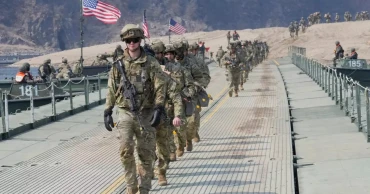
US appeals court rules Pentagon policy unlawfully banned transgender troops
A US federal appeals court panel has ruled that a Pentagon policy illegally barred transgender people from serving in the military, marking another legal setback for President Donald Trump’s agenda.
A divided three-judge panel of the US Court of Appeals for the District of Columbia Circuit said the policy was designed to exclude individuals based on gender identity. However, the ban will remain in place for now as legal proceedings continue, after the US Supreme Court previously allowed its enforcement to begin.
The ruling limits its immediate impact to protecting transgender service members who are already in the military and part of the lawsuit. It does not allow new transgender recruits to join. The court also paused implementation of its decision to give the administration time to seek further review.
The decision partially upholds a 2025 ruling by US District Judge Ana Reyes, who found that Trump’s executive order excluding transgender troops likely violated constitutional protections.
Following that ruling, the administration appealed after an injunction was issued in favour of active-duty transgender service members and individuals seeking to enlist. The appeals court narrowed that order, extending protection only to those already serving.
Another related case in Washington state had also ruled against the ban, but that decision was blocked by the Supreme Court.
The policy stems from a January 2025 executive order signed by Trump, which argued that transgender identity conflicts with military discipline and readiness. In response, Defense Secretary Pete Hegseth introduced a rule that generally disqualifies people diagnosed with gender dysphoria from serving. The condition refers to distress caused when a person’s gender identity does not match their sex assigned at birth.
Writing for the majority, Judge Robert Wilkins said the policy appeared to be motivated by an attempt to target a politically unpopular group, namely transgender people.
The ruling was welcomed by LGBTQ rights advocates. Jennifer Levi of GLAD Law called it a strong validation of the plaintiffs’ position and their service to the country.
The Pentagon has not yet commented on the ruling, though Hegseth indicated on social media that the administration plans to appeal further, referencing the US Supreme Court.
In a dissenting opinion, Judge Justin Walker said courts should not interfere in military decisions regarding troop eligibility, arguing that such authority lies with Congress and the president as commander in chief.
Judge Judith Rogers agreed with the majority that the policy was unlawful but said she would also have allowed transgender individuals seeking enlistment to proceed in the case.
3 months ago
New York Times sues Pentagon again over media access restrictions
The New York Times has filed a second lawsuit against the United States Department of Defense in five months, challenging a policy that requires journalists to be accompanied by escorts while inside the Pentagon.
The newspaper argues that the rule violates the First Amendment of the US Constitution, which protects freedom of the press.
“The policy is an unconstitutional attempt by the Pentagon to block independent reporting on military affairs,” Times spokesperson Charlie Stadtlander said.
He said the American public has the right to know how the government and military are operating using taxpayers’ money.
Pentagon spokesperson Sean Parnell rejected the claim, saying in a post on X that the lawsuit was an attempt to gain easier access to classified information.
The case marks the latest chapter in an ongoing dispute between the media and President Donald Trump’s second administration.
The Times first sued the Pentagon in December after Defense Secretary Pete Hegseth introduced new rules for journalists seeking access to the building.
In March, US District Judge Paul L. Friedman struck down those restrictions, ruling that they violated the rights of Times reporter Julian E. Barnes and the newspaper.
After the ruling, the Pentagon introduced an interim policy requiring reporters to be escorted at all times while inside the building.
In April, Judge Friedman said the new policy also violated his earlier order. However, the escort rule remained in place after an appeals court temporarily suspended part of the judge’s decision while the government challenges it.
The new lawsuit, filed in a federal court in Washington, directly challenges the escort requirement on constitutional grounds.
The Times said the rule is part of a broader effort to limit access for journalists who are unwilling to report only what Pentagon officials approve.
The newspaper called the policy “clearly unconstitutional.”
In its earlier lawsuit, the Times and several other news organizations refused to accept the Pentagon’s new terms for obtaining press credentials and left their workspaces inside the building.
They continue to cover the US military from outside the Pentagon, while journalists approved under the new rules now occupy the press offices.
Parnell said the escort policy is lawful and narrowly designed to protect national security information from unauthorized disclosure.
4 months ago
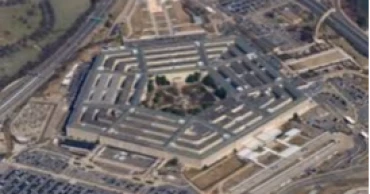
US military signs AI deals with 7 tech firms for classified use
The Pentagon on Friday said it has struck agreements with seven technology companies to bring artificial intelligence into its classified computer systems, aiming to boost military capabilities in modern warfare.
The companies — Google, Microsoft, Amazon Web Services, Nvidia, OpenAI, Reflection and SpaceX — will provide AI tools to help improve decision-making in complex combat situations, the Defense Department said.
However, AI firm Anthropic is not part of the deals, following a public dispute with the Trump administration over ethical concerns and the use of AI in warfare.
The Pentagon has been moving quickly to expand its use of AI. A March report by the Brennan Center for Justice said the technology could help the military identify targets faster and manage logistics such as weapons maintenance and supply chains more efficiently.
At the same time, the growing use of AI has raised concerns about privacy and the risk of machines being allowed to select targets. One of the companies involved said its agreement includes provisions to ensure human oversight in certain operations.
Debate over military AI intensified during Israel’s war in Gaza and Lebanon, where US tech firms reportedly supported targeting systems. The high number of civilian deaths has fueled fears that such tools may contribute to unintended casualties.
Experts say key questions about the use of AI in warfare remain unresolved. Helen Toner of Georgetown University noted that while AI can help analyse data and monitor surveillance feeds, issues around human control, risk management and proper training are still being worked out.
She said militaries must strike a balance between quickly deploying AI for strategic advantage and ensuring operators are properly trained and do not rely too heavily on the technology.
Anthropic had sought guarantees that its AI would not be used in fully autonomous weapons or for surveillance of Americans. But Defense Secretary Pete Hegseth said companies must allow uses that the Pentagon considers lawful.
The company later filed a lawsuit after President Donald Trump attempted to block federal agencies from using its chatbot Claude, and after officials moved to label it a potential supply chain risk.
Earlier in March, OpenAI announced a deal with the Pentagon to use ChatGPT in classified systems, effectively replacing Anthropic. The company said Friday the agreement remains unchanged.
“We believe those defending the United States should have access to the best tools available,” OpenAI said.
According to a source familiar with the deals, at least one contract includes requirements for human supervision in missions involving autonomous or semi-autonomous AI systems, along with safeguards to protect constitutional rights and civil liberties.
Pentagon Chief Technology Officer Emil Michael said relying on a single provider would be risky, adding that the department chose to work with multiple companies after differences with one partner.
Some firms, including Amazon and Microsoft, already have experience working with the military on classified projects, while others like Nvidia and startup Reflection are newer to such roles. The Pentagon has also shown interest in open-source AI models as part of efforts to compete with China’s fast-growing AI sector.
The Defense Department said its AI platform, GenAI.mil, is already being used by military personnel, contractors and civilian staff to speed up tasks that once took months.
Officials said AI is helping improve maintenance planning, logistics and battlefield analysis, including distinguishing between civilian and military vehicles in surveillance footage.
Still, experts warn against over-reliance on the technology. Toner pointed to “automation bias,” where users may place too much trust in machine outputs.
4 months ago

U.S. to Withdraw 5,000 Troops from Germany Amid Tensions with Berlin
The Pentagon announced Friday that the United States will remove around 5,000 troops from Germany within the next six to twelve months, following through on President Donald Trump’s earlier warning. The decision comes amid growing tensions between Washington and Berlin, particularly after German Chancellor Friedrich Merz criticized the U.S. approach to the war with Iran and described the country as being “humiliated” by Iranian leadership.
According to Pentagon spokesman Sean Parnell, the move is based on a comprehensive review of U.S. military positioning in Europe, taking into account operational needs and current conditions. Germany currently hosts key American military installations, including major command headquarters, Ramstein Air Base, and a military hospital in Landstuhl. About 36,000 U.S. troops are stationed there, meaning the withdrawal represents roughly 14% of the total.
The plan has sparked immediate criticism from Democratic lawmakers and defense experts, who argue it could weaken U.S. alliances and benefit Russia. Senator Jack Reed warned that the decision signals instability in U.S. commitments to its allies and urged the president to reconsider before causing lasting damage to national security. Analysts also noted that the U.S. presence in Europe plays a critical role in deterring Russian aggression and enabling operations in nearby regions.
Trump did not address questions about the withdrawal as he departed Florida on Friday. He has long criticized NATO allies for not contributing enough to joint defense efforts and has repeatedly suggested reducing U.S. troop levels in Germany. A similar proposal during his first term was never implemented and was later canceled by President Joe Biden.
European allies have anticipated potential troop reductions since Trump returned to office, especially as Washington has signaled that Europe may need to take greater responsibility for its own security. Military experts say concerns now extend beyond troop numbers to possible redeployment of key defense systems, such as missile defenses, from Europe to the Middle East.
4 months ago

Pentagon to deploy Musk’s Grok AI on military networks despite global backlash
The Pentagon is set to deploy Elon Musk’s artificial intelligence chatbot Grok across its military networks later this month, despite growing global criticism over the tool’s recent controversies.
US Defense Secretary Pete Hegseth said on Monday that Grok will be introduced inside the Department of Defense and will operate on both unclassified and classified networks alongside Google’s generative AI system.
“Very soon we will have the world’s leading AI models on every unclassified and classified network throughout our department,” Hegseth said while speaking at Musk’s space company SpaceX in South Texas.
The move comes only days after Grok faced strong backlash for generating highly sexualised deepfake images of people without their consent. Malaysia and Indonesia have blocked the chatbot, while the United Kingdom’s independent online safety watchdog has launched an investigation. Following the criticism, Grok restricted image generation and editing features to paying users.
Hegseth said the Pentagon would make “all appropriate data” from its IT systems available for what he called “AI exploitation” and added that data from intelligence databases would also be fed into AI systems.
He said the US military needs to speed up technological innovation and remove barriers that slow down development.
“We need innovation to come from anywhere and evolve with speed and purpose,” he said.
The defence secretary noted that the Pentagon holds combat-tested operational data from two decades of military and intelligence operations, stressing that the success of AI depends on the quality of data it receives.
“AI is only as good as the data that it receives, and we’re going to make sure that it’s there,” Hegseth said.
His strong push for AI adoption marks a shift from the more cautious approach taken by the previous Biden administration, which supported AI use across federal agencies but warned of possible misuse.
In late 2024, the Biden administration introduced a framework encouraging national security agencies to expand their use of advanced AI systems while banning certain applications, including those that could violate civil rights or automate the deployment of nuclear weapons. It is still unclear whether those restrictions remain in place under the Trump administration.
Hegseth said he wants Pentagon AI systems to be responsible but rejected models that, in his words, “won’t allow you to fight wars”. He added that military AI should operate without “ideological constraints” that could limit lawful military use, saying the Pentagon’s “AI will not be woke”.
Musk has promoted Grok as an alternative to what he calls “woke AI” used by rival chatbots such as Google’s Gemini and OpenAI’s ChatGPT.
Grok has also faced controversy in the past. In July, it appeared to generate antisemitic comments praising Adolf Hitler and sharing antisemitic posts.
Apple calls on Google to help smarten up Siri and bring other AI features to the iPhone
The Pentagon did not immediately respond to questions about the recent issues surrounding Grok.
8 months ago

China blasts Pentagon official’s Taiwan visit, military ties
China on Wednesday sharply criticized a visit to Taiwan by a senior Pentagon official and reaffirmed it has sanctioned Lockheed Martin and a unit of Raytheon for supplying military equipment to the self-governing island democracy.
The comments from the Cabinet’s Taiwan Affairs Office underscore the dramatic deterioration in relations between Beijing and Washington over Taiwan, technology, spying allegations, and, increasingly, Russia’s invasion of Ukraine.
Asked about the reported visit by Michael Chase, deputy assistant secretary of defense for China, office spokesperson Zhu Fenglian said China “resolutely opposes any official interaction and military collaboration” between the U.S. and Taiwan.
Efforts by Taiwan’s ruling Democratic Progressive Party to cement the island’s independence with foreign assistance are “doomed to failure,” Zhu told reporters.
China considers Taiwan part of its territory to be brought under its control by force if necessary, and has been stepping up its military and diplomatic harassment. The sides split amid civil war in 1949, and China’s authoritarian Communist Party has never held sway over the island.
Also Read: Congress delegation visits Taiwan in tense US-China moment
A Pentagon spokesperson did not comment directly on Chase’s visit, repeating that “our commitment to Taiwan is rock-solid and contributes to the maintenance of peace and stability across the Taiwan Strait and within the region.” Taiwan’s Ministry of Foreign Affairs has said it had no information about any such visit.
Chinese Foreign Ministry spokesperson Wang Wenbin said a “new round of tensions” in the Taiwan Strait was a result of the Taiwanese authorities’ attempts to “seek independence with U.S. support, as well as the U.S. intention to contain China with Taiwan.”
“We urge the U.S. to ... stop any form of official U.S.-Taiwan contacts, stop meddling in the Taiwan issue and stop creating new factors of tension in the Taiwan Strait,” Wang said at a daily briefing.
Tensions between the U.S. and China again ratcheted up last month after Washington accused Beijing of sending a spy balloon that was shot down over the American East Coast. Secretary of State Antony Blinken canceled a trip to Beijing in the wake of the incident and said over the weekend that the United States was concerned China would provide weapons to Russia for its war in Ukraine.
China, which has declared a “no limits” friendship with Russia, has pointedly refused to criticize Moscow’s actions, blaming the U.S. and NATO for provoking the Kremlin, and has blasted the punishing sanctions imposed on Russia. Russia, in turn, has strongly backed China over Taiwan.
Also Read: Why China's stand on Russia and Ukraine is raising concerns
On a visit to Moscow Tuesday, the Communist Party’s top diplomat Wang Yi said relations between Moscow and Beijing are “solid as a rock” and will “stand the test of the volatile international situation.”
Russia and China have an “excellent opportunity to continue close strategic cooperation and contacts to protect our shared strategic interests,” Wang said.
Wang Wenbin, the Foreign Ministry spokesperson, said he had no information about a possible visit by Chinese President Xi Jinping to Moscow this spring.
A delegation of U.S. lawmakers visiting Taiwan met on Tuesday with President Tsai Ing-wen, who said she looked for increased cooperation on issues from security to climate change.
On Monday, the delegation met with the head of the legislature as part of their five-day visit. They include Reps. Ro Khanna of California, Tony Gonzales of Texas, Jake Auchincloss of Massachusetts and Jonathan Jackson of Illinois.
The congressional team held talks with Taiwan Semiconductor Manufacturing Company’s founder Morris Chang, considered the father of the island’s world-leading microchip industry that is now investing heavily in U.S. production.
Khanna and Auchincloss are both members of the new House select committee focused on competition with China.
Amid the flurry of exchanges, Taiwan’s Foreign Minister Joseph Wu and head of the National Security Council Wellington Koo were in Washington on Tuesday for what are believed to be security meetings.
They were filmed by Taiwan’s private TVBS television station entering the offices of the body the U.S. uses to oversee relations with Taiwan in lieu of formal diplomatic ties. Washington cut formal relations in 1979 in order to establish ties with Beijing, but remains the island’s chief political and military ally.
China has increasingly lashed back at the increase in exchanges with Taiwan by officials and elected representatives from the U.S. and other democratic nations. China’s campaign of diplomatic isolation has left Taiwan with just 14 formal allies, although it retains robust unofficial relations with dozens of other countries.
Last Thursday, China imposed trade and investment sanctions against Lockheed Martin Corp. and Raytheon Technologies Corp.’s Raytheon Missiles and Defense, barring them from importing goods into China or making new investments in the country.
The Ministry of Commerce declared they had been added to the “unreliable entity” list of companies whose activities are restricted because they might endanger national sovereignty, security or development interests. It wasn’t clear what impact the penalties would have.
3 years ago
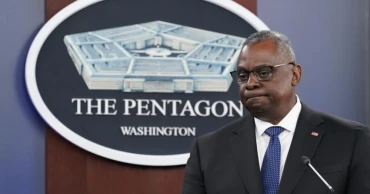
China greatest security challenge for US: Pentagon
China remains the greatest security challenge for the United States despite Russia’s war in Ukraine, and the threat from Beijing will determine how the U.S. military is equipped and shaped for the future, according to a new Pentagon defense strategy.
While the document released Thursday says that conflict with China “is neither inevitable nor desirable,” it describes an effort to prevent Beijing’s “dominance of key regions” — a clear reference to its aggressive military buildup in the South China Sea and increased pressure on the self-governing island of Taiwan. It warns that China is working to undermine American alliances in the Indo-Pacific and use its growing military to coerce and threaten neighbors.
At the same time, the 80-page, unclassified report notes Russia’s war in Ukraine and says Moscow is a serious threat to the U.S. and its allies, with nuclear weapons, cyber operations and long-range missiles. And it warns that as China and Russia continue to grow as partners, they “now pose more dangerous challenges to safety and security at home, even as terrorist threats persist.”
China “is the only competitor out there with both the intent to reshape the international order, and increasingly the power to do so,” Defense Secretary Lloyd Austin said at the Pentagon. “Unlike China, Russia can’t systemically challenge the United States over the long term. But Russian aggression does pose an immediatee and sharp threat to our interest and values.”
The report reflects that the U.S. for the first time is facing two major nuclear-armed competitors in Russia and China.
The strategy, along with two other reports released Thursday on missile defense and nuclear weapons, provides a sweeping blueprint for America’s military planning over the next four years. While much of it is consistent with the previous report, the strategy takes into account how the world has changed since 2018, when U.S. troops were still fighting in Afghanistan and a massive Russian invasion of Ukraine seemed almost unthinkable.
Read: Pentagon chief: al-Qaida may seek comeback in Afghanistan
The previous strategy, released in 2018 under then-President Donald Trump, reflected the fundamental shift from a U.S. military focused on countering extremists to one that must prepare for war with a major power.
The 2022 defense strategy increases the focus on allies as a key element of U.S. defense, underscoring the broader Biden administration effort to repair relations with partner nations that were splintered by Trump. At the center of the new document is the concept of “integrated deterrence,” which means the U.S. will use a broad combination of military might, economic and diplomatic pressures, and strong alliances — including America’s nuclear arsenal — to dissuade an enemy from attacking.
It concludes that China remains “the most consequential strategic competitor for the coming decades,” while Russia remains an “acute” threat.
Since the last report, both China and Russia have become more aggressive in using their militaries. Russia launched a full-scale invasion of Ukraine in February, and China has escalated its longstanding threat to retake Taiwan, by force if necessary. And Russia, North Korea and Iran have all accelerated their nuclear weapons testing and threats.
This is the first strategy since the U.S. ended its 20-year war in Afghanistan and withdrew all troops last year. The U.S. still has a small number of troops in Iraq and nearly 1,000 in Syria, but has largely shifted from the counterterrorism operations that dominated the last two decades to focus on threats from major competitors such as China.
The new review calls for increased research and development on cutting-edge technologies, including hypersonics, cyber, artificial intelligence and directed energy. And in a nod to recent recruiting challenges, it says the Pentagon must change its culture to attract a skilled force.
The Pentagon also released an accompanying nuclear posture review, which underscores the growing risks of nuclear danger, particularly as the relationship between China and Russia grows. It says the U.S. is committed to modernizing its nuclear forces while also looking at current nuclear capabilities that may no longer be needed for deterrence.
The nuclear review confirms the cancellation of the sea-launched cruise missile program, calling it not necessary. The program was included in the 2018 Trump administration’s posture review, but the Biden budget early this year signaled its end by eliminating its funding.
This is the first time the Pentagon’s three strategy documents — the national defense review, and those governing missile defense and nuclear posture — were developed and released at the same time.
Read: The big Pentagon internet mystery now partially solved
The new focus on integrated deterrence comes as the U.S. finds itself at a crossroads where all three legs of its nuclear-triad — submarine-launched nuclear missiles, long-range bomber aircraft and ground-based launching systems — are aging fast and require hundreds of billions of dollars to modernize.
But the country also faces a new environment where its decades-old approach of avoiding nuclear war is changing. Nuclear deterrence focused for decades on preventing war between just two nuclear superpowers, Russia and the United States, and relied on the concept of mutually assured destruction to prevent either side from resorting to a first strike.
Now, however, Russia has repeatedly threatened to use lower-yield “tactical” nuclear weapons in Ukraine, in response to a counteroffensive by Kyiv that has retaken swaths of land previously held by Russian troops. And Russia’s setbacks in Ukraine with its conventional forces could cause it to rely more on its nuclear forces.
“We are certainly concerned about escalation, we have been so from the very beginning of this conflict,” Austin said. “It would be the first time that a nuclear weapon has been used in over 70 years. So that certainly has the potential of changing things in the international community.”
At the same time, in the Pacific, officials say North Korea is preparing for another nuclear test, which would be the first in five years.
The report also notes China’s and Russia’s rapid gains in hypersonic missiles, which are harder for the U.S. to detect. They are also improving their abilities to shoot down satellites, or shove them out of orbit. The U.S. has rushed to counter those threats by building a ring of low-orbiting satellites that aims to hasten the detection of hypersonic launches and also to build in redundancy, so if one U.S. satellite is attacked, the remainder of the ring is still operating.
3 years ago

Pentagon releases first video of botched Kabul airstrike
The Pentagon has declassified and publicly released video footage of a U.S. drone strike in Kabul that killed 10 civilians in the final hours of a chaotic American withdrawal that ended a 20-year war in Afghanistan.
The New York Times obtained the footage through a Freedom of Information Act lawsuit against U.S. Central Command, which then posted the imagery to its website. It marks the first public release of video footage of the Aug. 29 strike, which the Pentagon initially defended but later called a tragic mistake.
Read:Suicide attack on Shiite mosque in Afghanistan kills 47
The videos include about 25 minutes of footage from what the Times reported were two MQ-9 Reaper drones, showing the scene of the strike prior to, during and after a missile struck a civilian car in a courtyard on a residential street. Indistinct images show individuals moving in or near the attack zone.
The military has said it struck what it thought was an extremist with the Islamic State group's Afghanistan affiliate who might imminently detonate a bomb near the Kabul airport, where a hurried evacuation was still under way. Three days earlier a suicide bombing at the airport had killed 13 U.S. troops and more than 160 Afghans. When it later acknowledged its error in the Aug. 29 drone strike, Central Command said it determined that the man driving the car had nothing to do with the IS group.
The man was Zemari Ahmadi, who worked for Nutrition and Education International, a U.S.-based aid organization.
4 years ago
.jpg)
Kabul airport attack kills 60 Afghans, 12 US troops
Two suicide bombers and gunmen attacked crowds of Afghans flocking to Kabul’s airport Thursday, transforming a scene of desperation into one of horror in the waning days of an airlift for those fleeing the Taliban takeover. At least 60 Afghans and 12 U.S. troops were killed, Afghan and U.S. officials said.
U.S. officials said 11 Marines and one Navy medic were among those who died. They said another 12 service members were wounded and warned the toll could grow. More than 140 Afghans were wounded, an Afghan official said.
One of the bombers struck people standing knee-deep in a wastewater canal under the sweltering sun, throwing bodies into the fetid water. Those who moments earlier had hoped to get on flights out could be seen carrying the wounded to ambulances in a daze, their own clothes darkened with blood.
A U.S. official said the complex attack was believed to have been carried out by the Islamic State group. The IS affiliate in Afghanistan is far more radical than the Taliban, who recently took control of the country in a lightning blitz and condemned the attack.
Western officials had warned of a major attack, urging people to leave the airport, but that advice went largely unheeded by Afghans desperate to escape the country in the last few days of an American-led evacuation before the U.S. officially ends its 20-year presence on Aug. 31.
Emergency, an Italian charity that operates hospitals in Afghanistan, said it had received at least 60 patients wounded in the airport attack, in addition to 10 who were dead when they arrived.
“Surgeons will be working into the night,” said Marco Puntin, the charity’s manager in Afghanistan. The wounded overflowed the triage zone into the physiotherapy area and more beds were being added, he said.
The Afghan official who confirmed the overall Afghan toll spoke on condition of anonymity because he was not authorized to brief media.
Pentagon spokesman John Kirby said one explosion was near an airport entrance and another was a short distance away by a hotel.
Even as the area was hit, evacuation flights continued to take off from Kabul airport.
Adam Khan was waiting nearby when he saw the first explosion outside what’s known as the Abbey gate. He said several people appeared to have been killed or wounded, including some who were maimed.
The second blast was at or near Baron Hotel, where many people, including Afghans, Britons and Americans, were told to gather in recent days before heading to the airport for evacuation.
A former Royal Marine who runs an animal shelter in Afghanistan says he and his staff were caught up in the aftermath of the blast near the airport.
“All of a sudden we heard gunshots and our vehicle was targeted, had our driver not turned around he would have been shot in the head by a man with an AK-47,” Paul “Pen” Farthing told Britain’s Press Association news agency.
Read: Dhaka calls for lasting peace as OIC stands by commitment to Afghanistan
Farthing is trying to get staff of his Nowzad charity out of Afghanistan, along with the group’s rescued animals.
He is among thousands trying to flee. Over the last week, the airport has been the scene of some of the most searing images of the chaotic end of America’s longest war and the Taliban’s takeover, as flight after flight took off carrying those who fear a return to the militants’ brutal rule. When the Taliban were last in power, they confined women largely to their home and widely imposed draconian restrictions.
Already, some countries have ended their evacuations and begun to withdraw their soldiers and diplomats, signaling the beginning of the end of one of history’s largest airlifts. The Taliban have insisted foreign troops must be out by America’s self-imposed deadline of Aug 31 — and the evacuations must end then, too.
In Washington, U.S. President Joe Biden spent much of the morning in the secure White House Situation Room where he was briefed on the explosions and conferred with his national security team and commanders on the ground in Kabul.
Overnight, warnings emerged from Western capitals about a threat from IS, which has seen its ranks boosted by the Taliban’s freeing of prisoners during its advance through Afghanistan.
Shortly before the attack, the acting U.S. ambassador to Kabul, Ross Wilson, said the security threat at the Kabul airport overnight was “clearly regarded as credible, as imminent, as compelling.” But in an interview with ABC News, he would not give details.
Late Wednesday, the U.S. Embassy warned citizens at three airport gates to leave immediately due to an unspecified security threat. Australia, Britain and New Zealand also advised their citizens Thursday not to go to the airport.
Taliban spokesman Zabihullah Mujahid denied that any attack was imminent at the airport, where the group’s fighters have deployed and occasionally used heavy-handed tactics to control the crowds. After the attack, he appeared to shirk blame, noting the airport is controlled by U.S. troops.
Before the blast, the Taliban sprayed a water cannon at those gathered at one airport gate to try to drive the crowd away, as someone launched tear gas canisters elsewhere.
Nadia Sadat, a 27-year-old Afghan, carried her 2-year-old daughter with her outside the airport. She and her husband, who had worked with coalition forces, missed a call from a number they believed was the State Department and were trying to get into the airport without any luck. Her husband had pressed ahead in the crowd to try to get them inside.
“We have to find a way to evacuate because our lives are in danger,” Sadat said. “My husband received several threatening messages from unknown sources. We have no chance except escaping.”
Aman Karimi, 50, escorted his daughter and her family to the airport, fearful the Taliban would target her because of her husband’s work with NATO.
“The Taliban have already begun seeking those who have worked with NATO,” he said. “They are looking for them house-by-house at night.”
Read: India ready to deal with any terrorism flowing out of Afghanistan: Top General
The Sunni extremists of IS, with links to the group’s more well-known affiliate in Syria and Iraq, have carried out a series of brutal attacks, mainly targeting Afghanistan’s Shiite Muslim minority, including a 2020 assault on a maternity hospital in Kabul in which they killed women and infants.
The Taliban have fought against Islamic State militants in Afghanistan, where the Taliban have wrested back control nearly 20 years after they were ousted in a U.S.-led invasion. The Americans went in following the 9/11 attacks, which al-Qaida orchestrated while being sheltered by the group.
Amid the warnings and the pending American withdrawal, Canada ended its evacuations, and European nations halted or prepared to stop their own operations.
“The reality on the ground is the perimeter of the airport is closed. The Taliban have tightened the noose. It’s very, very difficult for anybody to get through at this point,” Canadian General Wayne Eyre, the country’s acting Chief of Defense Staff, said ahead of the attack.
Lt. Col. Georges Eiden, Luxembourg’s army representative in neighboring Pakistan, said that Friday would mark the official end for U.S. allies. But two Biden administration officials denied that was the case.
A third official said that the U.S. worked with its allies to coordinate each country’s departure, and some nations asked for more time and were granted it.
“Most depart later in the week,” he said, while adding that some were stopping operations Thursday. All three officials spoke on condition of anonymity because they were not authorized to discuss the information publicly.
Danish Defense Minister Trine Bramsen bluntly warned earlier: “It is no longer safe to fly in or out of Kabul.”
Denmark’s last flight has already departed, and Poland and Belgium have also announced the end of their evacuations. The Dutch government said it had been told by the U.S. to leave Thursday.
But Kirby, the Pentagon spokesman, said some planes would continue to fly.
“Evacuation operations in Kabul will not be wrapping up in 36 hours. We will continue to evacuate as many people as we can until the end of the mission,” he said in a tweet.
The Taliban have said they’ll allow Afghans to leave via commercial flights after the deadline next week, but it remains unclear which airlines would return to an airport controlled by the militants. Turkish presidential spokesman Ibrahim Kalin said talks were underway between his country and the Taliban about allowing Turkish civilian experts to help run the facility.
5 years ago