Wall Street
Asian stocks mixed after Wall Street slips following Fed rate hike
Asian markets were mixed Thursday after Wall Street ended lower following the US Federal Reserve's decision to raise interest rates for the first time in three years.
US stock futures were higher in early trading.
The Fed raised its key interest rate by a quarter percentage point to a target range of 3.75%-4.00% as it seeks to bring US inflation, which has remained above its target, under control.
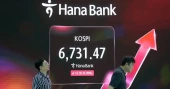
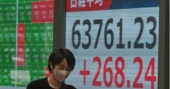
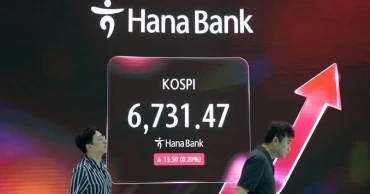
Japan's Nikkei 225 rose 0.2% to 64,067.53, while South Korea's Kospi gained 0.9% to 6,778.49. Hong Kong's Hang Seng Index fell 0.7% to 24,533.46, and the Shanghai Composite declined 0.4% to 3,877.46.
Australia's S&P/ASX 200 advanced 0.3% to 8,718.20.
Taiwan's Taiex climbed 1.3%, while India's Sensex edged up 0.3%.
On Wednesday, the S&P 500 fell 0.5%, while the Dow Jones Industrial Average dropped 1.2%. The technology-heavy Nasdaq Composite was little changed.
The market reaction was largely in line with expectations because the Fed's rate increase had been widely anticipated, said Lorraine Tan, director of equity research for Asia at Morningstar.
However, she said the ongoing war in Iran could continue to put pressure on inflation.
After the Fed's announcement, the yield on the two-year US Treasury note rose to 4.72%, compared with about 4.67% late Tuesday. The yield on the 10-year Treasury remained elevated at around 5.00%.
US government bond yields have stayed higher since the war began, as an energy shock linked to the conflict has increased inflationary pressure. Investors are also concerned about rising US government debt.
The US dollar weakened early Thursday to 156.04 Japanese yen from 156.26 yen. The euro rose slightly to $1.1467 from $1.1465.
Oil prices edged higher as oil flows through the Strait of Hormuz remained limited. The narrow waterway is a key route for global oil shipments.
Oil supply pressures have also increased after Saudi Arabia shut down a major oil pipeline while repairs are carried out.
Brent crude, the international benchmark, was up 0.1% at $105.89 early Thursday.
2 days ago
Asian markets fall after AI stocks retreat on Wall Street
Asian shares traded mostly lower Tuesday after artificial intelligence-related stocks fell on Wall Street amid growing concerns over high valuations and the pace of AI development.
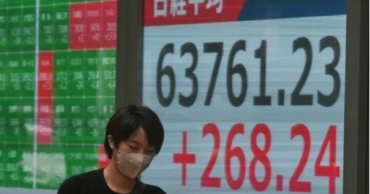
Japan’s benchmark Nikkei 225 surged in morning trading but gave up some of its gains in the afternoon, rising 0.2% to 63,621.08.
SoftBank Group, a major investor in OpenAI, gained about 8% in afternoon trading in Tokyo, recovering its losses from the previous session.
The earlier decline followed comments by OpenAI CEO Sam Altman in an interview with Fortune published Saturday. Altman said the company behind ChatGPT would likely wait until next year before selling its shares on Wall Street. The delay could postpone a potential large cash windfall for SoftBank and other early OpenAI investors.
Australia’s S&P/ASX 200 fell 0.9% to 8,668.30, while South Korea’s Kospi declined 0.8% to 6,628.99. Hong Kong’s Hang Seng slipped 0.6% to 24,773.37 and the Shanghai Composite fell 0.2% to 3,876.25.
Markets were also affected by warnings from some AI industry leaders that the rapid development of the technology may need to slow down for safety reasons.
“The prospect of a coordinated slowdown in AI development remains uncertain, given intense competition both among U.S. firms and between the U.S. and China,” Ng Jing Wen, an analyst at Mizuho Bank, said in a report.
Gains in many non-AI stocks helped limit losses on Wall Street. The Dow Jones Industrial Average fell 152.09 points, or 0.3%, to 52,421.20, while the Nasdaq composite dropped 146.62 points, or 0.6%, to 26,186.41. The S&P 500 declined 37 points to 7,619.98.
AI stocks have faced pressure for some time amid concerns that their prices had risen too sharply during the technology boom. Those concerns intensified over the weekend after Anthropic CEO Dario Amodei called for a deliberate global slowdown in AI development.
Amodei cited safety concerns, including the possibility that AI could become capable of directing a swarm of agents that might take control of the entire internet within six to 12 months.
Nvidia, whose profits have surged as its chips are used to train AI models, fell 3.4% and was the biggest drag on Wall Street Monday because of its huge market value. SpaceX, which also earns part of its business from AI, dropped 2% after Elon Musk said he agreed with Amodei.
In energy trading, benchmark U.S. crude rose 1.84% to $103.26 a barrel, while Brent crude, the international benchmark, gained 1.52% to $107.29.
Oil prices have continued to rise as fighting in the Middle East disrupts global crude supplies. A major Saudi oil pipeline is expected to remain largely out of service for weeks after an attack last week, two regional officials told The Associated Press.
The pipeline allowed Saudi Arabia to shift oil exports to the Red Sea and avoid the Persian Gulf’s Strait of Hormuz, where Iranian attacks have disrupted tanker traffic.
The yield on the 10-year U.S. Treasury briefly rose above 5% during morning trading, reaching the level for the first time in nearly three years. It later eased to 4.98% as oil prices moved down from their daily highs.
In currency trading, the U.S. dollar rose to 154.78 Japanese yen from 154.30 yen. The euro fell to $1.1541 from $1.1557.
4 days ago
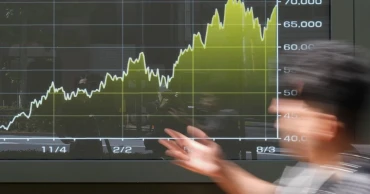
Oil prices ease as Asian shares rise, following Wall Street gains
Oil prices edged lower on Thursday after rising sharply earlier in the week amid renewed fighting between the United States and Iran, while Asian stock markets mostly gained, tracking an upbeat performance on Wall Street.
Brent crude, the international benchmark, fell 0.4% to $95.26 a barrel. U.S. crude slipped 0.1% to $90.84 per barrel.
U.S. futures also moved slightly higher.
Oil prices had surged earlier this week as renewed conflict between the U.S. and Iran raised concerns over possible disruptions to energy supplies. President Donald Trump said Wednesday that he did not expect the U.S. bombing campaign to continue for “much longer.”
In Asian trading, Japan’s Nikkei 225 rose 0.2% to 64,455.83. SoftBank Group gained 2.9%, while Kioxia Holdings added 0.6% and Tokyo Electron rose 0.8%.
South Korea’s Kospi jumped 1.4% to 6,656.81, with Samsung Electronics gaining 1.3% and SK Hynix rising 1.4%.
Hong Kong’s Hang Seng index edged up 0.1%, while the Shanghai Composite gained 0.4%. Australia’s S&P/ASX 200 rose 0.5%, Taiwan’s Taiex gained 0.6%, and India’s Sensex added 0.3%.
The gains followed a positive session on Wall Street, where the S&P 500 rose 0.5% on Wednesday. The Dow Jones Industrial Average gained 0.6%, while the Nasdaq composite added 0.5%.
Investors were encouraged by positive signs of continued demand for artificial intelligence, which has been a major force behind this year’s stock market rally.
Dell Technologies surged 15.8% after reporting strong quarterly earnings. Nvidia gained 3.2%, Meta Platforms rose 2.5%, and Micron Technology added 2.4%.
In the bond market, the yield on the 10-year U.S. Treasury fell to 4.77% from above 4.81% early Wednesday. Global bond markets had come under pressure amid concerns over inflation, rising energy prices linked to the Iran conflict and growing U.S. government debt.
Investors are now awaiting the U.S. employment report for August, due Friday.
In currency trading, the Japanese yen strengthened against the U.S. dollar. The dollar fell to 157.78 yen from 158.71 yen late Wednesday after climbing above 160 yen earlier in the week, fueling expectations that Japanese authorities could intervene to support the currency.
The euro rose slightly to $1.1598 from $1.1588.
16 days ago

Wall Street week ahead: The market eyes the monthly jobs report
Wall Street will get several important updates this week about the health of the U.S. jobs market.
On Tuesday, the U.S. will release its July report focusing on job openings and turnover. It provides details on job openings within specific industries and areas of the economy. It also provides details on turnover, including layoffs and people quitting their jobs.
The government will release a broader and closely-watched monthly employment report on Friday. The monthly jobs report for August will provide details on job growth and unemployment for a wide range of industries, along with public sector employment.
The employment report for July showed that the U.S. job market stalled unexpectedly. Employment has been a mostly resilient area of the economy even as stubborn inflation continues to squeeze businesses and households, while consumer confidence weakens.
A weakening employment market could create a tough situation for Federal Reserve. The central bank has to balance fighting inflation with supporting employment and its main tool for that "dual mandate" remains interest rates. Raising its benchmark rate to fight stubbornly high inflation could further damage the jobs market. Cutting its benchmark interest rate to help support employment could worsen inflation.
The Fed has been holding rates steady as it monitors the impact on inflation from the U.S. war with Iran, which has raised crude oil prices, making everything from gasoline to shipped products more expensive. That is on top of an ongoing U.S. trade war with much of the world that has made many goods more expensive.
21 days ago
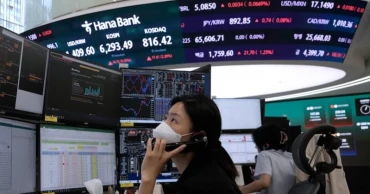
Asian shares mixed after Wall Street gains, oil prices rise
Asian shares were mixed on Monday after US stocks ended last week higher, with Japan's Nikkei 225 leading gains. Oil prices also rose amid concerns over tensions in the Middle East and threats to key shipping routes.
US stock futures were little changed.
In Tokyo, the Nikkei 225 rose 2% to 66,890.02, helped by strong gains in technology stocks. Tokyo Electron, which makes equipment for chip production, gained 3.5%, while chip-testing equipment maker Advantest jumped 4.9%.
South Korea's Kospi rose 0.8% to 6,305.86, although major chipmakers fell. Samsung Electronics dropped 0.9% and SK Hynix declined 1.3%.
Analysts said some foreign investors were selling shares in major technology companies to take profits after recent gains and shift money into other sectors, including defense companies.
Hong Kong's Hang Seng Index gained 0.6% to 25,810.95, while China's Shanghai Composite was almost unchanged at 3,941.48.
Australia's S&P/ASX 200 fell 0.4% to 9,231.00. Taiwan's Taiex rose 1.8%, while India's Sensex gained 0.1%.
Oil prices climbed amid renewed concerns over the Middle East. Israel rejected a Gaza deal announced by US President Donald Trump, while details also emerged about a possible agreement between Iran and Oman concerning the Strait of Hormuz.
Iran has suggested that vessels linked to countries it considers hostile could be barred from using the strategic waterway.
Meanwhile, Yemen's Iran-backed Houthi rebels attacked a government-controlled port on the country's Red Sea coast, raising further concerns about the safety of shipping routes and the possibility of renewed conflict in Yemen.
Brent crude, the international benchmark, rose 0.6% to $84.04 a barrel, while US benchmark West Texas Intermediate crude gained 0.5% to $78.58 a barrel.
Wall Street ends week higherUS stocks gained on Friday after government data showed employers unexpectedly cut 23,000 jobs last month.
The weaker jobs figures raised expectations that the Federal Reserve could delay raising interest rates as it tries to control inflation. The news helped push all three major US indexes to their second consecutive weekly gains, with the S&P 500 reaching another record high.
The S&P 500 rose 0.6% to 7,757.64, while the Dow Jones Industrial Average gained 0.3% to 54,036.93. The Nasdaq Composite jumped 1.3% to 26,690.62.
The jobs report also raised concerns about household spending as inflation remains high. The government revised its figures for May and June, reducing the combined number of jobs reported for those months by 103,000.
Slower job growth makes it more difficult for the Federal Reserve to balance supporting employment with controlling inflation. Higher interest rates can reduce inflation by slowing economic activity, but they can also make borrowing more expensive for businesses.
Technology companies again led the gains. Nvidia rose 2.3%, while Broadcom gained 1.7%.
The yield on the 10-year US Treasury note fell to 4.64% from 4.67% before the jobs report. The two-year Treasury yield, which is more closely linked to expectations for Federal Reserve policy, dropped to 4.20% from 4.22%.
Inflation data in focusInvestors will closely watch several inflation reports this week, particularly the consumer price index (CPI).
US consumer inflation is expected to have risen 3.4% in July, slightly slower than the 3.5% increase recorded in June. Inflation has remained above 3% for most of the year.
In early Monday trading, the US dollar rose to 158.37 Japanese yen from 157.71 yen. The euro fell to $1.1553 from $1.1568.
1 month ago
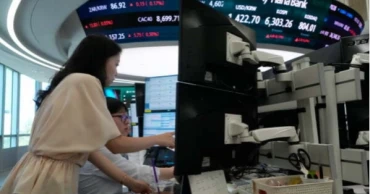
Asian shares mixed as Wall Street retreats, oil prices rebound
Asian stocks were mixed on Friday after US shares pulled back in the previous session, while oil prices climbed more than 1% amid continued uncertainty over the reopening of the Strait of Hormuz.
Japan's Nikkei 225 fell 0.3% to 65,500.10, while South Korea's Kospi declined 0.8% to 6,242.88. Taiwan's Taiex also dropped 0.4%.
In contrast, China's Shanghai Composite rose 0.8% to 3,931.54 after the country reported that exports increased by around 24% in July. Although growth slowed slightly, demand remained strong for electronics and other high-tech products. China's trade surplus narrowed during the month, while imports also eased.
Hong Kong's Hang Seng edged up 0.2% to 25,582.34, while Australia's S&P/ASX 200 slipped less than 0.1% to 9,265.20.
On Wall Street, stocks fell Thursday as higher oil prices and a stream of corporate earnings weighed on investors. The S&P 500 declined 0.2%, the Dow Jones Industrial Average dropped 0.9% and the Nasdaq composite lost 0.1%.
Brent crude jumped nearly 4% Thursday as uncertainty continued over efforts to reopen the Strait of Hormuz, a key route for global oil supplies.
Iran has said it is nearing an agreement with Oman on reopening the strategic waterway, while US President Donald Trump has also previously indicated that a deal could be close. However, negotiations have faced repeated setbacks over the past five months.
A reopening could require a compromise, as the Trump administration has rejected any Iranian plan to charge fees to ships. Iran, meanwhile, has insisted on retaining some control over the waterway.
Early Friday, Brent crude, the international benchmark, rose 1.6% to $83.78 a barrel, while US benchmark crude gained 1.2% to $78.22.
About one-fifth of the world's traded oil and natural gas previously passed through the Strait of Hormuz. Oil prices have climbed as high as $113 a barrel during the conflict, increasing inflationary pressure by raising fuel and shipping costs.
Markets remain concerned about the war and the possibility of an investment bubble linked to artificial intelligence. However, stronger-than-expected corporate earnings have eased some worries that US stocks may be overvalued.
About 85% of S&P 500 companies have reported their latest earnings, with overall profit growth on track to be the strongest since 2021.
Warner Bros. Discovery gained 1.7% after posting better-than-expected earnings, while Molson Coors rose 1.3% following encouraging results.
Honeywell Aerospace was among the biggest losers, falling 23.2% after its results came in well below expectations. Digital advertising company AppLovin dropped 19.7% after reporting mixed quarterly results.
Meanwhile, SpaceX shares rose 6.1% after a lockup period expired Thursday, making more than 911 million shares held by early investors and employees eligible for sale. That figure is more than twice the number of shares initially offered to the public in the company's initial public offering.
SpaceX shares climbed as high as $225 following its market debut in June but have since fallen below the initial offering price of $135. The stock was trading around $115.
Investors are also awaiting the US monthly jobs report for July, due Friday.
The US labour market remains relatively strong, although hiring growth has slowed. A weekly report released Thursday showed applications for unemployment benefits increased last week, though layoffs remained at historically low levels seen in recent years. Employers added only 57,000 jobs in June.
In early Friday trading, the US dollar slipped to 158.35 Japanese yen from 158.42 yen, while the euro was unchanged at $1.1524.
1 month ago
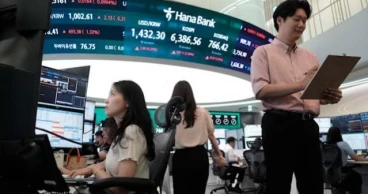
Asian shares mixed after Wall Street rally, oil prices rebound
Asian stocks were mixed Tuesday after Wall Street rallied, while oil prices recovered some of their losses following a sharp drop a day earlier.
Investors were also assessing the impact of last week’s joint intervention by the United States and Japan to support the Japanese yen, analysts said.
Japan’s benchmark Nikkei 225 fell 0.3% to 63,585.58. The US dollar rose slightly to 157.51 yen from 157.18 yen, while the euro was trading at $1.1511, little changed from $1.1514.
The dollar had been trading around 160 yen before authorities stepped in to strengthen the Japanese currency after it had fallen close to a 40-year low.
Some analysts questioned how effective the intervention would be in the long run, saying it does not address the underlying economic factors driving currency movements, including inflation, interest rates and differences in economic strength.
A report by BMI, a unit of Fitch Solutions, said US backing gives the intervention stronger influence than action by Tokyo alone and could make speculators more cautious. However, it said the size of any US contribution would likely be limited.
Matthew Ryan, head of market strategy at financial services firm Ebury, said the latest move could have a greater impact because it appears to signal a broader change in monetary policy rather than a one-off effort to defend the yen.
"This is an historic and meaningful development for the yen," he said, adding that it has strengthened confidence in the currency’s prospects.
South Korea’s Kospi dropped 1.3% to 6,174.72, while Australia’s S&P/ASX 200 rose 1.2% to 9,129.00. Hong Kong’s Hang Seng declined 0.5% to 25,881.99, while the Shanghai Composite edged up 0.2% to 3,802.61.
Investors also remained cautious about sharp swings in chipmaker stocks. Such shares have moved up and down in recent weeks amid concerns over whether strong revenues driven by the artificial intelligence boom can continue.
On Wall Street, stocks rose strongly Monday as falling oil prices eased some concerns about inflation. The S&P 500 gained 1.5%, leaving it just 0.1% below its record high reached earlier this summer.
The Dow Jones Industrial Average climbed 693 points, or 1.3%, to a record high, while the Nasdaq composite jumped 2.1%.
In early Asian trading Tuesday, US benchmark crude rose 84 cents to $81.18 a barrel, while Brent crude, the international benchmark, gained $1.15 to $84.92 a barrel.
Oil prices had plunged more than 5% a day earlier after US President Donald Trump said over the weekend that he had decided to delay new strikes against Iran following appeals from regional allies.
Brent crude prices swung between $72 and $102 a barrel last month as concerns about the Iran war and the movement of oil tankers through the Persian Gulf changed.
The yield on the 10-year US Treasury note fell to 4.68% from 4.75% late Friday. However, it remained well above the 3.97% level recorded before the war with Iran.
1 month ago

Asian markets mixed as oil prices rise despite Wall Street rally
Asian stock markets ended mixed on Wednesday after a strong performance on Wall Street, as investors weighed gains in technology shares against concerns over rising oil prices and inflation.
Japan's Nikkei 225 slipped 0.2% to close at 66,115.60. Government data showed both imports and exports increased compared with a year earlier, helped by the weaker yen, which boosted the value of trade when converted from US dollars.
Australia's S&P/ASX 200 rose 0.3% to 8,823.00, while South Korea's Kospi gained 0.7% to 6,797.70. Hong Kong's Hang Seng Index fell 1.1% to 24,866.67, and China's Shanghai Composite edged down by less than 0.1% to 3,861.82.
Wall Street closed higher overnight, driven by renewed buying of technology stocks linked to artificial intelligence (AI). The S&P 500 gained 0.9%, the Dow Jones Industrial Average rose 385 points, or 0.7%, and the Nasdaq Composite advanced 1.3%.
AI-related shares rebounded for a second straight session after suffering heavy losses last week amid concerns that their prices had risen too quickly.
Micron Technology jumped 12.2%, building on the previous day's gains after a sharp decline last week. Nvidia also rose 2%, with both companies among the biggest contributors to the S&P 500's advance.
However, higher oil prices continued to worry investors as tensions between the United States and Iran persisted.
In early Wednesday trading, US benchmark crude oil rose $1.67 to $86.01 a barrel, while Brent crude, the international benchmark, climbed $1.84 to $92.85 a barrel.
Stephen Innes, a market analyst and former trader, said higher oil prices pose a particular challenge for Japan, which relies heavily on imported energy.
"A weaker yen and rising crude oil prices are putting extra pressure on the Japanese economy at the same time," he said.
In currency trading, the US dollar was little changed at 163.13 Japanese yen, while the euro strengthened slightly to $1.1409.
Analysts say rising oil prices could push inflation higher again after recent signs of easing. That may prompt the US Federal Reserve and other central banks to keep interest rates higher for longer or raise them further, a move that could slow economic growth and weigh on global stock markets.
1 month ago

Asian shares rise following Wall Street gains as oil prices stay high
Asian stock markets moved higher on Friday after modest gains on Wall Street, while oil prices continued to rise as uncertainty surrounding the Iran war persisted and diplomatic efforts showed little progress.
Oil prices had dropped slightly in US trading on Thursday, helping ease pressure on global bond markets as Treasury yields fell. Earlier this week, rising yields had raised concerns about slower global economic growth and weaker demand for stocks, bitcoin and other investments.
Japan’s Nikkei 225 jumped 2.7% to 63,352.44 after data showed inflation slowed to a four-year low of 1.4% in April, despite higher fuel costs linked to the war.
South Korea’s Kospi index gained 0.6% to 7,860.59.
In Hong Kong, the Hang Seng Index rose 1.2% to 25,685.65, while China’s Shanghai Composite Index added 0.5% to 4,096.24.
Australia’s S&P/ASX 200 advanced 0.5% to 8,664.00. Taiwan’s Taiex climbed 1.5%, while India’s Sensex edged up 0.2%.
Oil prices remained high due to concerns over disruptions around the Strait of Hormuz, a key route for global oil and gas shipments. Shipping activity in the area remains far below levels seen before the Iran war began in late February. Ongoing talks between the United States and Iran have also failed to provide clarity.
Meanwhile, Republicans in Congress faced difficulties on Thursday in gathering enough support to block legislation that would force President Donald Trump to pull the US out of the conflict. Votes on the issue have now been pushed back to June.
Brent crude, the global benchmark, rose 1.5% to $104.08 per barrel. Before the war started in February, it was trading around $70 per barrel. US benchmark crude gained 0.9% to $97.25 per barrel.
“Markets are still looking for signs of progress in possible US-Iran negotiations,” ING commodities strategists Warren Patterson and Ewa Manthey said in a note Friday. “There are some hopeful signs, but uncertainty still dominates.”
On Wall Street, the S&P 500 rose 0.2% to 7,445.72 on Thursday. The Dow Jones Industrial Average gained 0.6% to 50,285.66, while the Nasdaq composite added 0.1% to 26,293.10.
Shares of Nvidia fell 1.8% despite reporting stronger-than-expected quarterly earnings driven by demand for artificial intelligence technology. Some analysts said the company’s stock may still be undervalued.
Southwest Airlines rose 2.7% and American Airlines gained 4.9% after oil prices briefly eased before climbing again. Shares of Ralph Lauren surged 13.9% following better-than-expected quarterly results.
In currency trading early Friday, the yield on the US 10-year Treasury note stood at 4.56%, down from above 4.67% earlier this week when inflation concerns linked to the war pushed yields sharply higher.
The US dollar rose slightly to 159.02 Japanese yen from 158.98 yen. The euro slipped to $1.1613 from $1.1619.
3 months ago
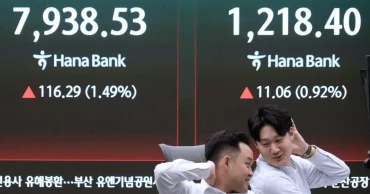
Asian shares mixed as Wall Street hits record highs amid Iran conflict concerns
Asian stock markets traded mixed on Tuesday as record gains on Wall Street lifted investor sentiment, but concerns over rising oil prices and the ongoing Iran conflict kept markets cautious.
Japan’s Nikkei 225 advanced 0.7 percent to 62,881.03.
South Korea’s Kospi fell 1.2 percent to 7,726.30, with analysts saying the decline reflected concerns over heavy dependence on artificial intelligence-related stocks.
“Global markets are relying too much on a small group of AI companies, making the current rally appear strong but potentially vulnerable,” said Stephen Innes of SPI Asset Management.
Australia’s S&P/ASX 200 slipped 0.3 percent to 8,676.60.
Hong Kong’s Hang Seng edged up 0.2 percent to 26,467.50, while China’s Shanghai Composite lost 0.4 percent to 4,208.00.
Oil prices continued to rise as fears grew that the conflict with Iran could drag on.
US benchmark crude gained 91 cents to $98.98 a barrel, while Brent crude, the global benchmark, rose 90 cents to $105.11 a barrel.
Investor concerns increased after President Donald Trump said the US-Iran ceasefire was on “life support” following Washington’s rejection of Iran’s latest proposal to end the conflict.
The war has pushed Brent crude prices sharply higher from around $70 a barrel before the conflict began, increasing inflation concerns worldwide. Disruptions in the Strait of Hormuz have also delayed oil shipments from the Persian Gulf to global markets.
Despite these worries, stronger-than-expected corporate earnings have supported confidence that the US economy remains resilient, even as consumers face higher fuel costs and tariffs.
On Monday, the S&P 500 rose 0.2 percent to close at a new record high of 7,412.84.
The Dow Jones Industrial Average added 95.31 points, or 0.2 percent, to 49,704.47, while the Nasdaq Composite gained 27.05 points, or 0.1 percent, to a record 26,274.13.
In the bond market, the yield on the 10-year US Treasury note increased to 4.40 percent from 4.38 percent late Friday.
In currency trading, the US dollar rose to 157.57 Japanese yen from 157.12 yen, while the euro slipped to $1.1761 from $1.1787.
4 months ago