Freedom of speech
Freedom of speech should not cross limits of civility: PM
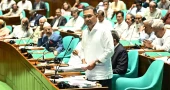
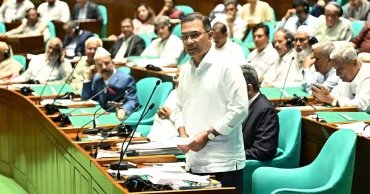
Prime Minister Tarique Rahman on Thursday called upon all to unite against the culture of abusive language, stressing the need for responsible behaviour in public discourse.
He made the call while delivering his concluding speech at the third session of the 13th Jatiya Sangsad.
“The fascist regime had taken away all democratic rights of the people, including freedom of speech. At present, there is a democratic environment in the country and freedom of speech is unrestricted. But we must remember that freedom of speech should not cross the limits of civility,” Tarique Rahman said.
He said no one wants the people of the country to be subjected to a fascist, authoritarian regime again.
“Likewise, no conscious person or patriotic politician will want our political culture to turn into a culture of abusive language. That is why all of us, irrespective of party affiliation, must play a responsible role,” the Prime Minister said.
He questioned why words that people will not feel comfortable using in a family environment should be used in the public domain. “Why should we use such words in public life? Why cannot we refrain from using such words in the public sphere? Through you, Mr Speaker, I want to leave this question before all members of this House and all conscious citizens of the country,” he said.
“If we are genuinely united on this issue, let us all play a united role against the culture of abusive language,” Tarique Rahman said.
Members of Parliament repeatedly thumped their desks in support of the Prime Minister’s remarks.
Conflict, division may revive fascist forces
Prime Minister Tarique Rahman also called for unity among democratic forces, warning that conflict and division could create a path for the ousted fascist forces to return.
He called on members of both the ruling and opposition benches to work together to build a welfare-oriented state.
“My appeal to the people and to the forces of democracy is this: let us not forget that divisions and conflicts among the pro-democracy forces may ultimately revive the ousted fascist evil forces and perhaps pave the way for them,” Tarique Rahman said.
He said everyone must continue working together to rebuild the state for the sake of future generations and as part of their duty to the martyrs.
The Prime Minister said differences of opinion and political competition are natural in a democratic system, as such differences exist around the world and political competition is also part of democratic practice.
“But we must remain vigilant so that differences of opinion do not turn into hostility,” he said.
Tarique Rahman said people sacrificed their lives at different times during the movements for protecting the country’s independence and sovereignty and restoring democracy.
He said people were also killed “like birds” during the anti-fascist mass uprising in 2024.
The Prime Minister said establishing justice and good governance is a sacred duty and a way of repaying the debt owed to the martyrs.
He said the people have entrusted one party with running the state and another with playing the role of the opposition, and urged both sides to work together to build a welfare-oriented state.
Tarique Rahman reiterated his message: “Bangladesh first, Bangladesh for all.”
He said people had repeatedly entrusted the BNP with running the state whenever they had the opportunity to cast their votes freely and fairly.
Referring to the 1991 election held after the anti-autocracy movement of 1990, the Prime Minister said the people had entrusted the BNP with running the country, while the party received support from Bangladesh Jamaat-e-Islami at the time.
He said the government led by then Prime Minister Khaleda Zia had expanded education, brought about a revolution in female education and created greater opportunities for women to participate in the labour market alongside men.
Around 2 crore people were also able to come out of poverty during that period, Tarique Rahman said, attributing the achievement to the BNP government.
He said after the 2001 election, the BNP was again entrusted with running the country to bring the state back on the right track and establish good governance.
The Prime Minister said Bangladesh had previously been placed at the top of global corruption rankings under the government that came to power in 2009, and that the BNP government subsequently worked to free the country from the stigma of corruption.
He said the country had later been burdened with huge loans due to mismanagement, corruption, looting and money laundering during the subsequent regime.
Tarique Rahman said the BNP government now has the responsibility of freeing Bangladesh from the burden of defaulted loans.
He said the actual volume of defaulted loans has been much higher than the figure shown during the previous regime.
The Prime Minister said the amount of defaulted loans, which had been shown at around 11 percent in 2024, was found to be 35.5 percent after a forensic audit conducted during the interim government in 2025.
He said the ratio has now declined to 32.6 percent following various measures taken by the BNP government, compared to 35.5 percent after the previous election, describing the decline as an indication that the situation has started to improve.
Tarique Rahman said the BNP government will work to free Bangladesh from the stigma of loan default that it inherited in 2026.
He said the government inherited a country heavily burdened with foreign debt, while many of those responsible for creating the debt burden left the country.
“Those who burdened Bangladesh with debt have fled the country, but Bangladesh still has to repay those loans,” the Prime Minister said.
He said the government has paid a record $2.0476 billion in principal and interest on foreign loans during the past five months.
Tarique Rahman said Bangladesh still has to bear a huge foreign debt burden due to the looting and money laundering committed under the previous regime.
He also agreed with the opposition leader that the country has inherited a fragile situation in various sectors, including education, health, banking, insurance, financial institutions, administration and law enforcement.
The Prime Minister said some of the problems still persist in specific areas and that the erosion of religious, social and family values in the state and society is also visible.
Parliament to be centre of all activities
Tarique Rahman said the government wants the current Parliament to become the centre of all activities, expressing confidence that both the ruling and opposition sides have demonstrated their commitment to working in the interests of the country and its people.
He said he has no doubt that both sides have discussed issues and tried to take effective initiatives in the national and public interest during the session.
The Prime Minister thanked all MPs present for keeping Parliament effective and vibrant.
He said people expect Parliament to discuss their problems and ease their sufferings to some extent, while bringing peace and prosperity to their lives.
The final sitting of the third session began at 3:00pm with Deputy Speaker Kayser Kamal in the chair. After Maghrib prayers, Speaker Hafiz Uddin Ahmad read out the President’s order proroguing the session.
As per parliamentary tradition, Leader of the Opposition Shafiqul Rahman spoke first, followed by Leader of the House and Prime Minister Tarique Rahman, who began his speech at 7:44pm and concluded it at 8:17pm.
The third session of the 13th Jatiya Sangsad began on August 27.
8 days ago
Diplomats call for stronger protection of freedom of speech, press in Bangladesh
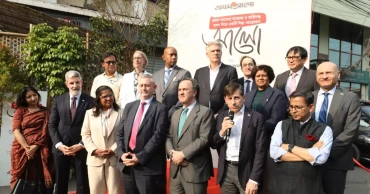
Diplomats stationed in Dhaka on Wednesday expressed solidarity with The Daily Star and Prothom Alo, highlighting the importance of freedom of press and freedom of speech as an important pillar of democracy.
The Ambassadors and High Commissioners and representatives of the diplomatic missions in Dhaka joined a programme held in front of the Prothom Alo office at Karwan Bazar, marking the inauguration of an art exhibition titled ‘An Artwork on the Attacked and Burnt Prothom Alo Building’ by artist Mahbubur Rahman.
Ambassador and Head of Delegation of the European Union to Bangladesh Michael Miller, Indian High Commissioner to Bangladesh Pranay Verma, British High Commissioner to Bangladesh Sarah Cooke, Canadian High Commissioner to Bangladesh Ajit Singh, French Ambassador to Bangladesh Jean-Marc Séré-Charlet and Italian Ambassador to Bangladesh Antonio Alessandro were, among others, present.
EU Ambassador Miller said he and many of his colleagues came to express solidarity in December last and they have come back as they believe in freedom of media and freedom of expression and they believe that journalists are fearless defenders of democracy.
Expressing solidarity with The daily Star and Prothom Alo, the Italian Ambassador said freedom of information is at the core of their values.
The British High Commissioner said they joined the programme to demonstrate their support for media freedom as an important foundation pillar of democracy.
She recalled the shocking events that happened in December and mentioned that as a member of the Media Freedom Coalition in Bangladesh, they strongly condemned the attacks carried out against journalists, editors, and media houses.
"Such acts of violence and intimidation are unacceptable and strike at the heart of press freedom and the public's right to be informed," said the MFC in a statement on December 19.
The MFC called for the safety of all media professionals to be ensured and for swift, impartial investigations so that those responsible are held to account. "Journalists must be able to carry out their work without fear," it said.
The MFC said protecting them is essential to upholding the rule of law, democratic values, and an open, informed society.
US Embassy Spokesperson Poornima Rai said the United States is fully committed to freedom of expression and freedom of speech and they stand behind The Daily Star and Prothom Alo.
Prothom Alo Editor Matiur Rahman said journalists need to remain committed to standing beside one another, rejecting division.
He affirmed that they will continue to pursue the truth, and that the growing spirit of unity within the journalistic community will endure.
The Daily Star Editor Mahfuz Anam urged the new government to conduct an unhindered investigation into the twin attacks to uncover those who orchestrated these attacks from behind the scenes, those who instigated and those who implemented the attacks.
He appreciated his colleagues for the spirit they demonstrated in the post-attacks period, describing it as unbelievable.
He finds this as a symbol of devotion to journalism and courage.
7 months ago

World Press Freedom Index and Retrogressive Bangladesh
World Press Freedom Index has placed Bangladesh in 152 this year. A total of 180 countries were still as always. Following Honduras, Bangladesh has secured its position with a score of 49.71 just before Turkey. Reporters Without Border – which is also known as Reporters sans frontières (RSF) – has ensured it on their web homepage on the last 20th April 2021. They mentioned the word “Tougher politics” while showing the reason for it. Besides, they added the consequences of the covid-19 pandemic. RSF also pointed the police and civilian violence against reporters. Thus, journalism got completely blocked or seriously impeded in 73 countries. It is just as devastating as coronavirus.
World Press Freedom Index at a glance
The Press Freedom Index is a yearly list for ranking of countries based on the freedom of journalism. An international non-Government organization named Reporters Without Border, shortly RSF, compile and publish the list. Since 2002, they have been releasing the list intending to safeguard the right to freedom of information. They mainly rank 180 countries based on the freedom of journalism.
Read Why press freedom matters
Survey Questionnaire
RSF develops the index through a survey of 87 questionnaires following the 7 general criteria.
1. Pluralism (Opinions in the media space)
2. Media independence
3. environment and self-censorship
4. legislative framework
5. Transparency
6. Infrastructure
7. Abuses
Read Prothom Alo senior reporter Rozina arrested under Official Secrets Act
The survey questionnaire focuses on the legal framework for the media including-
➢ the consequences for press offenses
➢ the way Government regulates the media
➢ the extent of independence of the public media
➢ uninterruptible information flow over the Internet
Read Rozina Islam: Journalism Vs the Colonial hangover of official secrecy
Survey Respondents
The survey respondents are the RSF’s partner organizations. They are 150 correspondents of 18 freedom of expression non-government organizations in five continents. A remarkable number of journalists, researchers, jurists, and human rights activists around the world also participate in this survey.
Scoring
RSF staffs monitor both the victims and the assailants of the press offenses to evaluate the final score. The victims are the journalists, netizens, and media assistants, while the violence may come from the state, armed militias, clandestine organizations, or pressure groups.
RSF send the survey questionnaire translated into 20 languages to the corresponding countries. They assign a score on each country based on the answers given.
Read: Top Bookstore Cafés in Dhaka: 6 Places Bringing Back the Joy of Reading
0 point is for the best while 100 points is for the worst. Accordingly, RSF has a colorful scoring map categorizing the press freedom status of countries.
➔ 0 to 15: Good (White)
➔ 15.01 to 25: Satisfactory (Yellow)
➔ 25.01 to 35: Problematic (Orange)
➔ 35.01 to 55: Difficult (Red)
➔ 55.01 to 100: Very Serious (Black)
Read Freedom of speech threatened in the name of Digital Security: TIB
World Press Freedom Index 2021 Toppers
1. Norway: Score → 6.72
2. Finland: Score → 6.99
3. Sweden: Score → 7.24
4. Denmark: Score → 8.57
5. Costa Rica: Score → 8.76
6. Netherlands: Score → 9.67
7. Jamaica: Score → 9.96
8. New Zealand: Score → 10.04
9. Portugal: Score → 10.11
10. Switzerland: Score → 10.55
Read Freedom of speech must not be undermined with false propaganda: PM
Underneath World Press Freedom Index 2021
1. Eritrea: Score → 81.45
2. North Korea: Score → 81.28
3. Turkmenistan: Score → 80.03
4. China: Score → 78.72
5. Djibouti: Score → 78.62
6. Vietnam: Score → 78.46
7. Iran: Score → 72.70
8. Syria: Score → 70.63
9. Laos: Score → 70.56
10. Cuba: Score → 63.94
Read World Press Freedom Index: Bangladesh slips one place to 151st
Bangladesh’s Whereabouts in World Press Freedom Index
The number 152 in the crowd of 180 with a score of 49.71 basically represents the level of freedom available for Bangladeshi journalists. In the last 10 years, Bangladesh’s scenario is as follows:
1. 2011 Ranking 112 Score → 54
2. 2012 Ranking 129 Score → 57
3. 2013 Ranking 144 Score → 42.01
4. 2014 Ranking 146 Score → 42.58
5. 2015 Ranking 146 Score → 42.95
6. 2016 Ranking 144 Score → 45.94
7. 2017 Ranking 146 Score → 48.36
8. 2018 Ranking 146 Score → 48.62
9. 2019 Ranking 150 Score → 50.74
10. 2020 Ranking 151 Score → 49.37
Last year, the coronavirus disaster and accompanying lockdown led to an alarming growth in police and civilian violence towards newshounds. Some journalists, bloggers, and cartoonists had been additionally arrested and prosecuted for his or her reporting of the pandemic and its effect on society. Under the Digital Security Act 2018 “bad propaganda” is punishable via way of means of up to fourteen years in prison. As a result, self-censorship has reached unparalleled ranges due to the fact editors are justifiably reluctant to hazard imprisonment or their media outlet’s closure.
Read: Watchdog: Media freedom has deteriorated during pandemic
However, despite this violence, there is also a length of speedy improvement for Bangladesh’s media marketplace, with many retailers taking part in each profitability and affect an increasing marketplace. Over the beyond decade, big privately-owned Bangladeshi agencies have moved into the marketplace and lots of the countrywide media is now inside the palms of the most important company organizations inside the country.
Final words
Regardless of World Press Freedom Index criticism, the circulation of information demands unconditional independence. However, it is needless to say that professional reporting requires minimum ethics. Otherwise, the knowledge may go beyond authenticity. A journalist must handle the power given to him carefully. Similarly, every government and non-government entity should cooperate with them spontaneously. And that is when the general people can expect the truth.
Read Future of journalism depends on adaptation, professionalism: Dr Arefin
5 years ago

Freedom ends when someone spreads falsehoods, hurts others: Joy
Prime Minister's ICT Adviser Sajeeb Wazed Joy has said everyone has the right to freedom of speech, but that freedom ends when someone spreads falsehoods that end up hurting others.
5 years ago
.jpg)
Freedom of speech must not be undermined with false propaganda: PM
Prime Minister Sheikh Hasina on Monday asked all concerned to highlight the facts of any incident alongside protesting the spread of rumours and false propaganda in the name of freedom of speech.
"Spreading false propaganda is not freedom of speech…there should be immediate protests against any false propaganda….people must know the facts. Sitting silent will not help," she said.
The Prime Minister said this while speaking in the beginning of the regular weekly meeting of the cabinet at Bangladesh Secretariat. The Prime Minister chaired the meeting joining it from her official residence Ganobhaban through videoconferencing.
“There might be some pain in telling the truth of any incident, but ultimately it’ll surely work and that’s the reality,” Hasina said, adding that a vested quarter is accustomed to making ill-efforts to cause harm to people and the government of Bangladesh.
Calling upon all to remain aware about that quarter, she said concerned all need to highlight truth and facts. “A section of people is trying to spread rumours to undermine the government’s image, but they can never succeed in fulfilling their ill motives.”
She went on saying, "The area where there’s a scope to create anarchy is freedom of speech? Nabbing those delivering speech for creating conflicts is snatching the freedom of speech? This is not correct."
She said it cannot be accepted in this era of digital media that one would write and publish whatever he or she wants in the name of freedom of speech.
"In social media, anyone can say whatever he/she likes…one can spread false propaganda, when the government takes any step against those then the vested quarters makes hue and cry and spreads various arguments across the globe ," she said.
Hasina said people usually do not look into the matter why the step has been taken!
On the other hand, she mentioned, it was also essential for the authorities concerned to provide facts and information with necessary explanations.
In this regard, the Prime Minister said the mentality of taking a defensive stance without giving appropriate information is not a good practice at all.
5 years ago
.jpg)
Freedom of speech threatened in the name of Digital Security: TIB
Transparency International Bangladesh (TIB) on Saturday alleged that the people’s constitutional right of freedom of speech has been threatened in the name of digital security in the country.
In a press release, TIB expressed deep concern over some recent incidents of arrests of writers, journalists and other professionals who criticised various irregularities.
TIB demanded unconditional release of the arrested people and urged the government to secure people’s constitutional right of freedom of speech.
Iftekharuzzaman, Executive Director of TIB, said that according to media reports, many cases were filed against journalist, teacher, writer, cartoonist, social activists and even health workers. Many were sacked and were arrested as they criticised some recent issues of irregularities.
“I want to insist the authorities concern… please respond to the criticism with your work and take the incidents of irregularities seriously to control them,” he said.
“Don’t walk on the path of autocracy by controlling and restricting the different opinions,” he said.
Referring to the recent incident of missing journalist Shafiqul Islam who was sued for illegal trespassing, Iftekharuzzaman said such incidents go against the announcement of ‘Zero Tolerance’ against corruption by Prime Minister Sheikh Hasina.
Quoting media reports, TIB disclosed that 180 journalists were sued from the beginning of 2018 to June 2019.
After coronavirus outbreak, 67 cases were filed under the Digital Security Act. Among them, 37 were filed against journalists, the organisation said.
Besides, on charge of spreading rumours on social media, 88 people including cartoonist and journalists were arrested.
TIB believes that such arrests and repression violate the rule of law, the release said.
6 years ago