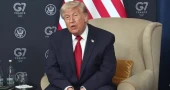
Iran deal
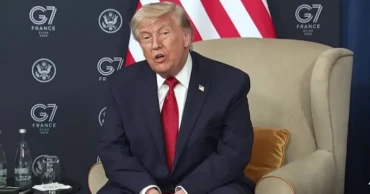
Trump warns of renewed bombing if Iran deal fails
US President Donald Trump said the proposed agreement with Iran remains unfinished and warned that military action could resume if Tehran fails to comply with its commitments.
Speaking during a meeting with Egyptian President Abdel Fattah al-Sisi on the sidelines of the G7 summit on Wednesday, Trump stressed that Washington retained the option of returning to military operations if the agreement proves unsatisfactory.
He also dismissed reports suggesting the United States would invest in Iran or support a reconstruction fund for Tehran as part of a broader settlement.
Earlier in the summit, Trump reiterated that Iran would not be allowed to obtain a nuclear weapon under any future agreement.
On regional security issues, the US president criticised Israeli Prime Minister Benjamin Netanyahu over the ongoing conflict in Lebanon, saying Israel needed to act more responsibly.
During a joint appearance with the Emir of Qatar, Trump said the fighting between Israel and the Iran-backed Hezbollah group had continued for too long and was causing excessive loss of life.
His remarks came as Israel and Hezbollah continued exchanging attacks despite the US-Iran agreement announced on Sunday night.
Turning to the war in Ukraine, Trump said he held a productive meeting with Ukrainian President Volodymyr Zelensky and renewed his call for Russia to reach a peace agreement.
He also indicated that additional sanctions targeting Russian oil exports could be imposed in the near future if efforts to end the conflict fail to progress.
The comments came as G7 leaders wrapped up discussions in France, with global security issues, including Iran, Ukraine and the Middle East, dominating the summit agenda.
Source: BBC
3 months ago
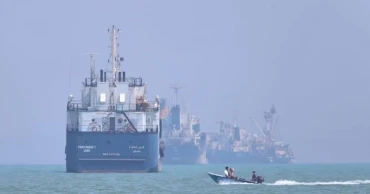
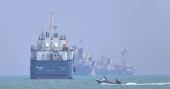
US allies propose naval mission to help secure Strait of Hormuz after Iran deal
Several US allies are pushing for a naval security mission in the Strait of Hormuz to support the recently announced Iran ceasefire framework, aiming to restore confidence among shipping companies and insurers and ensure the safe movement of global oil and gas supplies.
The proposed mission, led by France and the United Kingdom, would focus on clearing sea mines and could include military escorts for commercial vessels passing through the strategic waterway, one of the world's most important energy shipping routes.
The idea was first raised by Emmanuel Macron in March when fighting between the United States and Iran was still ongoing. He suggested that naval forces could escort oil tankers and cargo ships once hostilities eased.
At the Group of Seven summit on Monday, US President Donald Trump said he did not believe extensive international assistance would be necessary because the Strait of Hormuz is expected to reopen under the tentative agreement with Iran. However, he said having a small number of ships from allied countries in the area could still be useful.
In a joint statement, France, the United Kingdom, Germany, Japan, Italy and later Canada welcomed the ceasefire framework and expressed support for reopening the waterway with unrestricted freedom of navigation.
The countries proposed what they described as a strictly defensive mission aimed at reassuring commercial shipping and carrying out mine-clearing operations.
France already has significant military assets in the region, including the aircraft carrier Charles de Gaulle. Macron said French fighter jets could begin surveillance missions over the strait almost immediately, followed by frigates and the carrier group within days if requested.
Mine-clearing vessels would search for and remove underwater explosives that could threaten commercial ships. Trump said some mines had already been found and removed, while efforts were continuing to locate others. He added that the strait had already been partially reopened.
European allies have experience protecting commercial shipping in conflict zones. French, British and American naval forces have previously escorted merchant vessels through the Red Sea during attacks by Yemen's Iran-backed Houthi rebels.
French warships successfully intercepted several missile and drone threats during those operations. One French frigate, the Alsace, shot down three ballistic missiles while escorting a container ship in 2024.
Security experts say a naval presence could help discourage renewed conflict and reassure shipping firms and insurers. However, analysts caution that the mission's role would be more limited if the ceasefire remains in place.
According to Max Bergmann of the Center for Strategic and International Studies, a French-British naval deployment could strengthen regional security and demonstrate support for Gulf nations, though its overall impact should not be overstated.
Planning for the mission has involved a broad coalition of countries, including Australia, South Korea, Japan, Bahrain, Qatar, Canada and more than a dozen European nations.
A meeting organized by France and Britain last month brought together representatives from 38 countries to discuss the proposal and possible contributions to the operation.
3 months ago
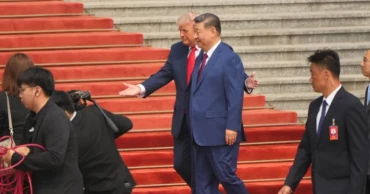
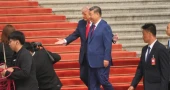
Trump seeks Chinese support for possible Iran deal
US President Donald Trump is seeking China’s support for a possible diplomatic agreement with Iran as disruptions in the Strait of Hormuz continue to affect global trade and industry.
Trump has suggested that Chinese President Xi Jinping has a strong interest in helping to resolve the crisis, as the partial reopening of the Strait of Hormuz has not fully restored shipping and the situation continues to affect Chinese industry.
Although China has been less affected because of its strategic oil reserves, Beijing does not want the disruption to continue.
There have been suggestions that China could act as a guarantor in a possible agreement by taking custody of Iran’s enriched uranium or securing Iranian commitments on nuclear weapons for a specified period.
However, China has traditionally avoided direct involvement in overseas conflicts. Beijing may also see some advantage in allowing Trump to deal with domestic political pressure and the economic impact of the crisis in the United States.
China is considered to have significant leverage with Tehran. Iranian Foreign Minister Abbas Araghchi visited Beijing last week for talks.
Trump also has leverage in his dealings with China. He has paused a $14 billion US arms package for Taiwan and could scale it back further if he believes Beijing is helping to secure an agreement with Iran.
No immediate breakthrough is expected during Trump’s visit.
Trump’s primary goal is to leave Beijing with an economic success, although a diplomatic breakthrough on Iran would also be a significant outcome. China may play an important role in achieving that objective. #From Al Jazeera
4 months ago
.jpg)
Iran plans 20% uranium enrichment 'as soon as possible'
Iran said Saturday it plans to enrich uranium up to 20% at its underground Fordo nuclear facility “as soon as possible,” pushing its program a technical step away from weapons-grade levels as it increases pressure on the West over the tattered atomic deal.
5 years ago