World Business
Canada to cut tariff on Chinese EVs in exchange for lower duties on farm exports
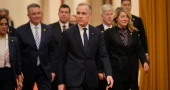
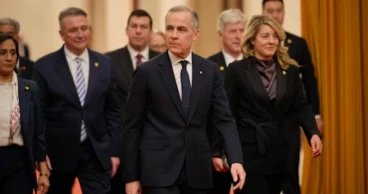
Canada has agreed to reduce its 100% tariff on Chinese electric vehicles in return for sharp cuts to Chinese duties on key Canadian farm products, Prime Minister Mark Carney said Friday.
Speaking after two days of talks with Chinese leaders, Carney said the deal will initially allow up to 49,000 Chinese-made EVs to enter the Canadian market. In exchange, China will lower its tariff on Canadian canola seeds from about 84 percent to around 15 percent.
The announcement came as Canada and China signaled a broader effort to reset relations after years of tension.
Carney said his visit, the first by a Canadian prime minister in eight years, marked “a historic and productive” step toward rebuilding ties and adapting cooperation to new global realities. He called for closer collaboration in agriculture, energy and finance.
Chinese President Xi Jinping said talks since an initial meeting last October had helped open a new chapter in bilateral relations and that Beijing was willing to continue working to improve ties.
Venezuela’s new leader signals oil sector reforms and warmer US ties
Relations between the two countries deteriorated in recent years after Canada followed the United States in imposing steep tariffs on Chinese electric vehicles, steel and aluminum under former prime minister Justin Trudeau. China retaliated with heavy duties on Canadian canola oil, meal and seeds, as well as pork and seafood, effectively shutting Canadian canola out of the Chinese market.
The renewed engagement comes as both countries face economic pressure from US President Donald Trump’s America-first trade policies, which have disrupted global commerce and hit both the Canadian and Chinese economies.
Carney said his government is seeking to build an economy less dependent on the United States and to diversify trade partnerships during a period of global trade disruption.
After leaving China on Saturday, Carney will visit Qatar before heading to Switzerland for the World Economic Forum, where he is expected to meet business leaders and investors to promote trade and investment.
8 months ago
Oil sells off as traders calmly look behind the attacks in the Middle East
If oil prices are any indication, Iran may have backed down. Crude prices plunged Monday afternoon in a historic drop, as traders interpreted Iran’s strike on a U.S. base in Qatar as a sign that Tehran was not planning the one move that could inflict real damage on the U.S.—disrupting global oil supplies by targeting crude shipments.
“When the response comes and it is muted, oil drops,” explained Tom Kloza, chief market strategist at consultancy Turner Mason & Co. He described Iran’s measured retaliation as far less severe than many market participants had anticipated, calling the oil price slide comparable to some of the most significant selloffs in history.
While analysts acknowledge that Iran still has the capability to escalate tensions and push oil prices higher, the immediate fears in the market appear to have eased.
The likelihood of oil prices stabilizing increased further after U.S. President Donald Trump announced that Israel and Iran had agreed to a complete ceasefire, though uncertainty around the situation still lingered.
Scary then calm
The price of West Texas Intermediate (WTI), the primary U.S. oil benchmark, dropped by 7.2% to $68.51 per barrel during regular trading on Monday, following Iran's announcement that it had carried out a missile strike on Al Udeid Air Base in Qatar, a key U.S. military installation. Despite the attack, traders felt reassured after Iran stated that the strike matched the number of bombs the U.S. had dropped on Iran’s nuclear sites over the weekend — suggesting a possible willingness to reduce tensions.
Brent crude dips below $70 amid Iran-Israel tensions
Oil prices declined even further after President Donald Trump announced a “complete and total ceasefire” between Iran and Israel, set to take effect gradually over 24 hours. Early Tuesday, U.S. crude prices had fallen nearly 4% to $65.84 per barrel, now sitting lower than they were before the Iran-Israel conflict escalated over a week ago, when oil prices hovered just above $68 per barrel.
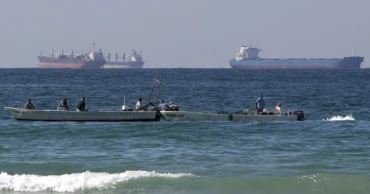
Traders were initially on edge when oil markets opened for the week on Sunday. Brent crude, the international oil benchmark, surged 4% as traders closely monitored the situation around the Strait of Hormuz — a critical waterway along Iran’s southern coast — following demands from lawmakers in Tehran to shut it down as retaliation. A closure of the Strait would have had devastating consequences for the global economy since a significant portion of the world's crude oil and liquefied natural gas passes through the area.
However, by early Tuesday, Brent crude had retreated to $68.06 per barrel, reflecting a 3.5% drop. This decline in oil prices benefits President Trump, who has been urging the Federal Reserve to shift its focus away from inflation concerns and start cutting interest rates. Lower oil prices could also bring relief to drivers ahead of the summer travel season, provided the downward trend holds.
Even before the U.S. strike on Iranian nuclear facilities, drivers were already paying more at the gas pump. According to GasBuddy surveys, the national average for gasoline reached $3.18 per gallon — an increase of about 10 cents over the past two weeks.
‘It would be suicidal’
Despite tensions, many traders were skeptical that Iran would attempt to close the Strait of Hormuz, even before its limited retaliatory strike on Monday. A significant amount of Iran’s own oil — approximately 1.5 million barrels per day — passes through the Strait, and crude exports remain a vital source of revenue for Tehran, which the government would likely avoid jeopardizing.
“It’s a foolish idea to think Iran would deliberately shut down the Strait,” said Tom Kloza, chief market strategist at Turner Mason & Co. “In my 50 years covering the oil sector, we’ve never seen the Strait of Hormuz successfully closed.” Vice President J.D. Vance also dismissed the idea during an interview on NBC’s Meet the Press, bluntly stating, “I think that would be suicidal.”
At the current market rate for oil, Iran earns around $40 billion annually from crude exports passing through the Strait — representing roughly one-tenth of the country's total economic output.
Hyundai’s US exports plunge amid tariff woes
Yes, but…
Houston-based oil analyst Andy Lipow pointed out that although history suggests Iran would avoid actions that block its own oil shipments, nations — much like individuals — don’t always act according to pure economic logic.
“The big question for oil markets is whether this time will be different,” Lipow said, cautioning that political or emotional factors might drive unexpected decisions. He added that Iran has several alternatives to disrupt oil markets without fully shutting down the Strait of Hormuz.
According to Lipow, Tehran could interfere with navigational systems to delay oil shipments, deploy underwater mines to force increased U.S. naval protection, or even target an oil tanker. Any of these moves would likely send shipping insurance costs soaring, driving oil prices higher.
Big gamble
Should market expectations prove wrong and oil prices surge again, the repercussions could be widespread.
Tianjin Port advances as China’s premier smart shipping hub
A sudden spike in oil prices would hit the global economy at a delicate moment. While Trump has been asserting that inflation concerns are largely over, many economists believe prices are still poised to rise, especially as the effects of his tariffs on everyday goods begin to surface.
Trump himself seems aware of the risks. Posting on Truth Social Monday, he ordered: “To The Department of Energy: DRILL, BABY, DRILL!!! And I mean NOW!!!” He added, “EVERYONE, KEEP OIL PRICES DOWN. I’M WATCHING!”
1 year ago
.jpg)
China economy grows in 2020 as rebound from virus gains
China eked out 2.3% economic growth in 2020, likely becoming the only major economy to expand as shops and factories reopened relatively early from a shutdown to fight the coronavirus while the United States, Japan and Europe struggled with disease flare-ups.
5 years ago