Putin
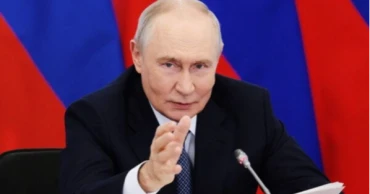
Russia's parliamentary election offers little room for opposition to Putin
Russia's parliamentary election features President Vladimir Putin's main political vehicle, United Russia, along with nine other parties that broadly support his policies. The only registered party that openly opposed the war in Ukraine has been removed from the ballot.
The lack of a significant opposition force is expected to allow the Kremlin to maintain its strong control over Russian politics as the economy faces growing pressure and Ukrainian attacks increasingly target oil refineries and online retailers.
Those drone strikes have brought the effects of the war closer to ordinary Russians more than 4½ years after the conflict began.
The Kremlin wants the election the first parliamentary vote since Russia launched its full-scale invasion of Ukraine in 2022 — to demonstrate public support for the war and give its actions an appearance of legitimacy. Authorities have also moved to prevent even limited signs of political dissent.
Three days of voting
Voting will take place from Friday through Sunday, with Russians electing members of the lower house, the State Duma, as well as officials in local elections.
Voters in 11 regions will choose governors, while 39 regions will elect members of regional legislatures.
The three-day voting period is intended in part to encourage turnout among about 111 million eligible voters. It also includes territories in Ukraine that Russia illegally annexed. Electronic voting is available.
Of the Duma's 450 seats, half will be allocated through party lists and the other half through single-member constituencies.
United Russia is expected to retain its dominant position, while other parties that make up Russia's so-called "systemic opposition" are also expected to remain in parliament. These parties generally support the government on major issues.
The liberal Yabloko Party, the only registered political party to oppose the war, was initially included on the ballot. However, Russia's Supreme Court ordered in August that it be removed, citing several reasons, including the argument that its anti-war position amounted to seeking a violation of Russia's territorial integrity.
Yabloko can now field candidates only in single-member races.
United Russia dominates the Duma
United Russia, whose symbol is a bear beneath the Russian tricolor, won more than two-thirds of the Duma's seats in the 2021 election and is again expected to dominate the chamber.
Despite growing public fatigue, an economic downturn and stagnant living standards, the party's control over the political system and the extensive state propaganda apparatus make another strong showing likely.
Its candidate list is headed by Foreign Minister Sergey Lavrov, 76, who has served as Russia's top diplomat for 22 years, and Moscow Mayor Sergei Sobyanin, 68.
In an apparent effort to bring newer faces into a party often associated with government officials, war correspondent Yevgeny Poddubny is ranked No. 3 on the list. He was seriously wounded in a Ukrainian drone attack.
United Russia members have pledged to support Russia's war effort and Putin's stated goals in Ukraine, which the Kremlin calls a "special military operation."
Sobyanin, however, has rejected calls from Russian hard-liners for a wider mobilization of conscripts and for placing the entire economy on a wartime footing.
"To destroy a normal economy is to destroy the country altogether," he said, reflecting the Kremlin's preference for pursuing the war without a broad and potentially unpopular mobilization.
Communists support Putin's main policies
The Communist Party has remained an important force in parliament since the 1990s. It has been led for more than three decades by 82-year-old Gennady Zyuganov, a former Soviet official.
During Putin's more than 25 years in power, the Communists have criticized some government policies but have largely avoided direct criticism of Putin himself. The party strongly supports the war in Ukraine.
"We strictly adhere to President Putin's directives," Zyuganov said last month while overseeing a shipment of military supplies.
The party has also increased its presence on social media as it seeks to attract younger voters instead of relying mainly on its traditional older supporters.
Liberal Democrats have a new leader
Despite its name, the Liberal Democratic Party is an ultranationalist political force that has held a significant parliamentary presence since the early 1990s.
It was founded by Vladimir Zhirinovsky, a prominent nationalist who frequently called for restoring former Soviet territories and at times threatened Russia's enemies with nuclear weapons.
After Zhirinovsky died in 2022, the party came under the leadership of Leonid Slutsky, a former professor who faced sexual harassment allegations.
Like the Communists, the LDPR strongly supports the war and includes several war veterans among its members.
One of its candidates is Viktor Bout, a former arms dealer known as the "Merchant of Death." Bout was serving a 25-year prison sentence in the US before being exchanged in December 2022 for WNBA player Brittney Griner, who had been arrested in Moscow 10 months earlier for possessing cannabis oil.
Smaller parties complete the ballot
A Just Russia has been part of Russia's political system for about two decades. The social-democratic party competes with the Communists for older and middle-aged voters who have nostalgia for the Soviet era and supports the war in Ukraine.
Its leader, 73-year-old Sergei Mironov, previously drew attention after displaying a sledgehammer given to him by late Wagner mercenary chief Yevgeny Prigozhin shortly before Prigozhin's failed 2023 mutiny. Wagner fighters were reported to have used sledgehammers to kill people they considered traitors.
The New People Party was formed shortly before the 2021 parliamentary election. It initially sought to present itself as a liberal alternative representing younger voters and technocrats.
The party won slightly more than 5% of the vote, allowing it to establish a small parliamentary faction. But after the election, it adopted Putin's policies, disappointing some of its supporters.
Led by cosmetics company executive Alexei Nechayev, the party has been widely viewed as a Kremlin-friendly project aimed at attracting liberal voters while maintaining the appearance of political competition.
Other parties competing for seats include the Communists of Russia, a smaller rival to the main Communist Party; the Party of Pensioners; the Green Party; the Party of Direct Democracy; and the Motherland Party.
Motherland is a hard-line nationalist party that has undergone several changes in its structure and leadership since it was founded in the early 2000s.
It is led by Alexei Zhuravlev, who holds the party's only Duma seat and is known for strongly criticizing the West on Russian state television.
Zhuravlev was also the politician who appealed to the Supreme Court seeking to remove Yabloko from the ballot.
2 days ago
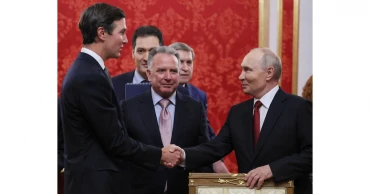
Putin meets US envoys for renewed Ukraine peace talks
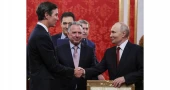
Russian President Vladimir Putin held more than three hours of talks with US envoys Steve Witkoff and Jared Kushner at the Kremlin on Saturday as Washington renewed efforts to broker an end to the war in Ukraine.
The closed-door meeting ended without any immediate announcement of a breakthrough. Putin's foreign policy adviser Yuri Ushakov later described the talks as constructive, frank and useful, but did not disclose specific outcomes.
Witkoff and Kushner, US President Donald Trump's son-in-law, are scheduled to travel to Kyiv on Sunday for talks with Ukrainian officials. It will be their first visit to the Ukrainian capital as part of the current peace process.
The meeting took place amid an escalation in Russian and Ukrainian aerial attacks. Putin and Ukrainian President Volodymyr Zelenskyy agreed to temporarily suspend strikes on each other's capitals while the US delegation conducted its talks.
At the start of the Kremlin meeting, Putin asked the US envoys to convey his greetings and gratitude to Trump, while acknowledging that the situation surrounding Ukraine remained difficult.
Russian presidential spokesman Dmitry Peskov said Putin had ordered a three-day halt to strikes on Kyiv beginning at midnight Saturday. Zelenskyy separately said Ukraine was prepared to refrain from attacking Moscow through Monday and expected Russia to reciprocate.
Ushakov said Moscow provided the US delegation with a detailed assessment of the battlefield situation in Ukraine. He added that the discussions also covered economic issues and possible large-scale projects that could benefit both Russia and the United States.
The latest talks come after the US-led peace process lost momentum amid Washington's focus on the war involving Iran over the past six months. Witkoff and Kushner last visited Moscow in January, when they also met Putin.
Meanwhile, fighting has continued along the roughly 1,250-kilometre front line, with both sides stepping up long-range attacks.
Zelenskyy said Russia carried out overnight strikes on Kyiv and Boryspil international airports, suggesting the attacks were linked to preparations for the US delegation's planned trip to Ukraine.
“Clearly, these Russian strikes on the airports are a reaction to the discussions and preparations for the possibility of the US side using an aircraft to travel to Ukraine,” he said in a social media post.
The latest Russian attacks also caused civilian casualties in several parts of Ukraine.
In the southern Dnipropetrovsk region, Russian strikes killed five workers and wounded others at an industrial facility, according to regional officials. Separate attacks in the region's Nikopol district and around Dnipro also killed one person and injured several others while damaging residential and commercial buildings.
In the eastern Kharkiv region, a Russian drone struck a house in Chuhuiv, killing three people, including an 11-year-old boy, and injuring a woman, regional officials said.
Two people were also killed and another wounded in a Russian drone attack in the Bucha district of the Kyiv region. Officials said dozens of facilities across five districts were damaged, including homes, warehouses, railway infrastructure and vehicles.
In the southern Mykolaiv region, Russian drones repeatedly struck a shopping center, damaging shops and triggering fires. A 72-year-old man and a 17-year-old girl were wounded, according to Ukraine's emergency services.
Ukraine's air force said Russia launched ballistic missiles and 167 attack drones overnight, including Shahed-type drones, many of them jet-powered. Ukrainian air defenses said they shot down or otherwise neutralised 128 drones.
Ukraine also continued attacks inside Russia. Authorities in Russia's Belgorod region, which borders Ukraine, said two people were killed and three wounded in Ukrainian attacks on Saturday.
Russia's Defense Ministry said its forces had intercepted 53 Ukrainian drones overnight.
Despite the renewed diplomatic push, the continued attacks underscore the difficulty of securing a lasting ceasefire, with both sides still seeking military and political leverage on the battlefield.
13 days ago
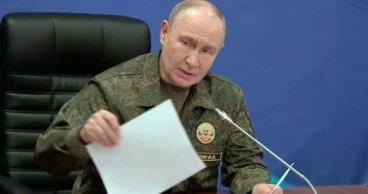
One killed in Crimea attack as Putin, Zelenskyy hold separate calls with Trump
A Ukrainian attack on Russian-occupied Crimea killed one person and injured two others early Sunday, according to Moscow-installed officials, as Russian President Vladimir Putin and Ukrainian President Volodymyr Zelenskyy held separate phone calls with US President Donald Trump on efforts to end the war.
Sergei Aksyonov, the Russia-appointed governor of Crimea, said the attack struck the northern part of the peninsula. One of the injured was reported to be in serious condition. He did not provide further details.
In recent weeks, Ukraine has intensified long-range strikes on military and infrastructure targets in Crimea as part of its efforts to isolate the strategically important peninsula, which Russia seized and illegally annexed in 2014.
Western officials and analysts say Ukraine's growing ability to strike deep inside Russian-controlled territory has increased pressure on the Kremlin, while Russia's battlefield advances have slowed in recent months.
The latest attack came shortly after Zelenskyy and Putin held separate telephone conversations with Trump.
In a post on X, Zelenskyy said he congratulated Trump on the 250th anniversary of US independence and discussed the situation on the battlefield.
"There is a real prospect of ending this war, and America's determination will be crucial," Zelenskyy wrote, adding that the two leaders agreed to continue discussions in person during the upcoming NATO summit in Ankara.
Meanwhile, the Kremlin described Putin's nearly 90-minute phone conversation with Trump on Saturday as "constructive."
Kremlin foreign policy adviser Yuri Ushakov said Putin also congratulated Trump and the American people on the 250th anniversary of US independence. The call was the fourth conversation between the two leaders this year.
According to Ushakov, Trump reaffirmed his willingness to help bring about a quick end to the fighting and support efforts to reach a peaceful settlement. He said Trump's envoys, Steve Witkoff and Jared Kushner, would continue mediation efforts and remain ready to visit Moscow.
Ushakov said Putin again stressed that Russia prefers a diplomatic solution, provided its long-standing demands are taken into account.
At the same time, Putin accused Ukraine and its European allies of trying to prolong and escalate the conflict, claiming they have misjudged the situation on the battlefield.
He also told Trump that Russian forces continue to make gains, capturing one settlement after another.
Putin specifically claimed that Russian troops had captured the Ukrainian stronghold of Kostyantynivka, describing it as an important step toward taking full control of Ukraine's Donetsk region.
Ukraine has rejected Russia's claim that Kostyantynivka has fallen.
2 months ago
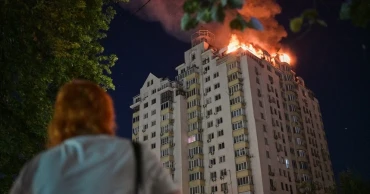
Putin plays down Russia's fuel shortages as attacks on Ukraine continue
Russian President Vladimir Putin has dismissed growing fuel shortages caused by repeated Ukrainian strikes on Russia's oil facilities, saying the problem is "not critical" as he vowed to continue the war until Moscow achieves its objectives.
Despite increasing disruptions to Russia's fuel supply, Putin has rejected ceasefire proposals and insisted that military operations will continue. He has described Ukraine's attacks on Russian energy infrastructure as an attempt to divert attention from Kyiv's battlefield setbacks, although military analysts say Russia's advance has slowed in recent months.
His remarks came as Russia launched one of its deadliest attacks on the Ukrainian capital in recent months. An 11-hour overnight barrage on Kyiv into Thursday morning killed at least 30 people.
Since March, Ukraine has reportedly carried out more than 50 attacks on oil refineries and energy facilities in Russia and Russian-occupied Crimea. Ukrainian officials say the campaign is aimed at increasing pressure on Moscow to end the war.
The attacks have also brought the impact of the conflict closer to ordinary Russians, challenging the Kremlin's long-standing message that daily life inside Russia remains largely unaffected by the war.
According to Chris Weafer, CEO of consultancy Macro-Advisory, about one-third of Russia's oil refining capacity has been disrupted. He said many of the damaged facilities will require costly and lengthy repairs.
One of Moscow's largest oil refineries has been hit twice despite heavy air defense around the capital. The latest strike on June 18 caused a major fire and reportedly damaged key equipment that may not be fully repaired until the end of the year.
Russian government data show gasoline production has fallen by about 17% to around 850,000 barrels per day. Fuel rationing has been introduced in several regions, with motorists waiting in long queues at filling stations.
The worst shortages have been reported in Crimea, which Russia annexed from Ukraine in 2014. At times, authorities have suspended gasoline sales to private consumers altogether.
At a government meeting last weekend, Putin acknowledged Russia was going through a "difficult period" but said the shortages were temporary. He pledged to speed up repairs to damaged energy facilities, said Russia could import gasoline if necessary, and promised to increase production of air defense systems to counter future Ukrainian strikes.
Putin accused Ukraine of trying to create divisions within Russian society and force Moscow into peace talks on terms favorable to Kyiv.
"We will not give them that chance," he said.
Although Putin insisted the attacks on Russian oil facilities have had no impact on the front line, Western military analysts say Ukrainian strikes on Russian military supply routes have complicated logistics and slowed Moscow's offensive, leaving much of the battlefield at a stalemate.
Putin maintained that Russian forces are still making gains along the roughly 1,000-kilometre front line.
The Russian leader has also rejected repeated calls by Ukraine and its Western allies for a ceasefire, arguing it would only allow Ukrainian forces time to regroup.
He has made any truce conditional on Ukraine withdrawing from the remaining parts of the Donetsk region under its control, a demand Kyiv has rejected. Putin also insists that any peace agreement must prevent Ukraine from joining NATO, reduce its military capabilities and guarantee protection for the Russian language and culture.
Putin also claimed Ukraine had privately proposed limiting the fighting to the four regions that Russia annexed but does not fully control: Donetsk, Luhansk, Kherson and Zaporizhzhia. He said he rejected the proposal because it would allow Ukrainian forces to reinforce those areas.
The Kremlin said the proposal was delivered through confidential channels, but Ukrainian officials have not publicly confirmed such an offer.
Putin also dismissed Ukraine's proposal for both sides to stop launching long-range strikes inside each other's territory, arguing that Russia's attacks are far more powerful and destructive.
Russia's latest assault on Kyiv again struck residential areas, despite Moscow saying it was targeting military facilities. In contrast, most Ukrainian strikes inside Russia have focused on oil refineries, weapons factories and other military-related infrastructure.
According to the United Nations, more than 16,000 Ukrainian civilians have been killed since Russia launched its full-scale invasion more than four years ago.
2 months ago
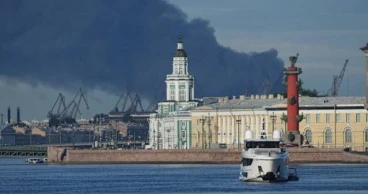
Ukrainian drones hit St. Petersburg oil terminal ahead of Putin’s economic forum
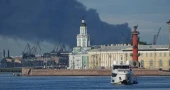
Ukrainian long-range drones struck an oil terminal in Russia’s St. Petersburg, triggering a fire and disrupting airport operations ahead of a major international economic forum expected to feature President Vladimir Putin.
Ukrainian President Volodymyr Zelenskyy said the drones travelled more than 1,000 kilometres to reach the target, describing the strike as part of Ukraine’s campaign against Russia’s energy and military infrastructure.
Videos circulating on social media showed thick black smoke rising above the port area after the attack.
Russian authorities confirmed that Ukrainian drones targeted infrastructure in St. Petersburg but did not provide details about the damaged facility. Flights at the city’s airport were temporarily suspended overnight, while mobile internet services were also disrupted.
The attack came as St. Petersburg hosts its annual international economic forum, a high-profile event promoted by President Vladimir Putin. Although Western leaders and investors have largely stayed away since Russia launched its full-scale invasion of Ukraine in 2022, Saudi Arabia is attending this year as a special guest country with a large business delegation.
The strike is seen as an embarrassment for the Kremlin, coming weeks after security concerns over Ukrainian drone attacks forced authorities to scale back Russia’s Victory Day celebrations in Moscow.
The latest developments follow a large-scale Russian missile and drone assault on Kyiv and other Ukrainian cities a day earlier that killed at least 22 civilians and injured 138 others, according to Ukrainian officials.
As fighting along the front line remains largely unchanged, both Russia and Ukraine have increasingly relied on long-range drone attacks to target infrastructure and military assets deep inside each other's territory.
Zelenskyy said Ukrainian drones also struck the Kronstadt naval base near St. Petersburg and a weapons-related manufacturing facility in Russia’s Tambov region.
Russia’s Defence Ministry said its air defence systems shot down 354 Ukrainian drones overnight.
In Russian-controlled parts of Ukraine’s Donetsk region, local authorities said a Ukrainian strike hit a passenger bus travelling from Moscow to Crimea, killing seven people and injuring 11 others.
Meanwhile, officials in Russia’s Smolensk region reported that two firefighters were killed and three others injured in a separate Ukrainian drone attack.
Ukraine’s Air Force said Russia launched 198 drones overnight, adding that 189 of them were intercepted or neutralised.
Regional authorities in Ukraine reported civilian casualties from continued Russian attacks, including one death and 15 injuries in Sumy region. In the southern Kherson region, an 86-year-old woman was killed and five others were wounded in overnight shelling and drone strikes.
3 months ago
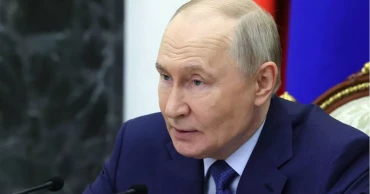
Putin to visit China for talks with Xi after Trump’s Beijing trip
Russian President Vladimir Putin will travel to China next week for a two-day visit to meet Chinese President Xi Jinping, the Kremlin said on Saturday.
The visit, scheduled for May 19-20, comes just a day after US President Donald Trump concluded his state visit to Beijing, where he also held talks with Xi on trade and the ongoing war involving the US, Israel and Iran.
According to the Kremlin, Putin’s trip marks the 25th anniversary of the 2001 Sino-Russian Treaty of Friendship. The two leaders are expected to discuss bilateral ties, economic cooperation and major regional and international issues.
Relations between China and Russia have grown closer in recent years, especially after Russia’s full-scale invasion of Ukraine in 2022. Western sanctions pushed Moscow to rely more heavily on Beijing for trade and economic support.
During Putin’s last visit to China in September 2025, Xi described him as an “old friend,” while Putin referred to Xi as his “dear friend.”
Putin is also expected to return to China in November to attend the Asia-Pacific Economic Cooperation summit in Shenzhen.
Meanwhile, Ukraine said on Saturday that Russia had returned the bodies of 528 soldiers believed to be Ukrainian troops.
Ukraine’s Coordination Headquarters for the Treatment of Prisoners of War said experts would work to identify the remains.
The handover came a day after Russia and Ukraine exchanged 205 prisoners of war each.
Ukrainian President Volodymyr Zelenskyy said the exchange was the first stage of a larger deal involving 1,000 prisoners from each side. He said some of the released Ukrainians had been held since 2022 and had fought in some of the war’s toughest battles.
At the same time, Russia launched overnight drone attacks on Ukraine’s southern Odesa region, local authorities said.
Regional governor Oleh Kiper said the strikes hit a five-storey apartment building and a single-storey home, injuring two people. Odesa’s port facilities were also damaged.
Ukraine’s Air Force said Russia launched 294 drones overnight, of which 269 were shot down.
Russia’s Defence Ministry said its forces intercepted 138 Ukrainian drones over 14 Russian regions, including Moscow. It also said drones were downed over Crimea and the Black Sea and Sea of Azov.
4 months ago
Russia launches smallest nighttime attack on Ukraine in months in run-up to possible peace talks
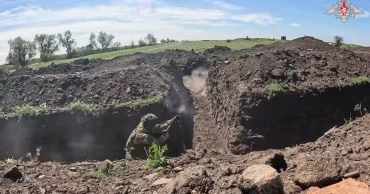
Russia launched 10 Shahed and decoy drones at Ukraine in nighttime attacks, the Ukrainian air force said Tuesday, in its smallest drone bombardment this year as the warring countries prepare for possible peace talks in Turkey.
The Kremlin hasn’t directly responded to Ukrainian President Volodymyr Zelenskyy’s challenge for Russian leader Vladimir Putin to meet him in person at the negotiations in Istanbul on Thursday.
Kremlin spokesman Dmitry Peskov refused for the second straight day Tuesday to tell reporters whether Putin will travel to Istanbul and who else will represent Russia at the potential talks. “As soon as the president considers it necessary, we will make an announcement,” Peskov said.
Russia declares a 72-hour ceasefire in Ukraine marking Victory Day in World War II
Russia has said it will send a delegation to Istanbul without preconditions.
The U.S. has been applying stiff pressure on both sides to come to the table since President Donald Trump came to power in January with a promise to end the war.
Military analysts say both sides are preparing a spring-summer campaign on the battlefield, where a war of attrition has killed tens of thousands of soldiers on both sides along the roughly 1,000-kilometer (620-mile) front line. The Institute for the Study of War, a Washington think tank, said Monday that Russia is “quickly replenishing front-line units with new recruits to maintain the battlefield initiative.”
Russia launches nearly 150 drones against Ukraine
Zelenskyy will not be meeting with any Russian officials in Istanbul other than Putin, Mykhailo Podolyak, an adviser to Zelenskyy, said Tuesday on a YouTube show run by prominent Russian journalists in exile.
Lower-level talks would amount to simply “dragging out” any peace process, Podolyak said. European leaders have recently accused Putin of dragging his feet in peace efforts while he attempts to press his bigger army’s battlefield initiative and capture more Ukrainian land.
Russia effectively rejected an unconditional 30-day ceasefire demanded by Ukraine and Western European leaders from Monday, when it fired more than 100 drones at Ukraine. Putin instead offered direct peace talks with Ukraine in Istanbul on Thursday.
Russia shunned the ceasefire proposal tabled by the U.S. and European leaders but offered direct talks with Ukraine.
Putin has repeatedly questioned the legitimacy of the Ukrainian government, especially Zelenskyy himself, saying his term expired last year. Under Ukraine’s constitution, it is illegal for the country to hold national elections while it’s under martial law, as it now is.
In a further complication, a Ukrainian decree from 2022 rules out negotiations with Putin.
U.S. Secretary of State Marco Rubio spoke Monday with the top diplomats from the United Kingdom, France, Germany and Poland, who were meeting in London, to assess “the way forward for a ceasefire and path to peace in Ukraine,” spokesperson Tammy Bruce said.
Those European countries had pledged further sanctions on Russia if it didn’t comply with a full ceasefire that Ukraine had accepted from Monday, but they made no announcement of additional punitive measures.
Trump says Zelenskyy is prolonging war in Ukraine by resisting calls to cede Crimea to Russia
1 year ago
Zelenskyy says Putin's vow on Ukraine's energy infrastructure unrealistic
Ukrainian President Volodymyr Zelenskyy stated on Wednesday that Russian President Vladimir Putin's promise not to attack Ukraine's energy infrastructure was "very much at odds with reality" following a series of drone strikes across the country overnight.
Just before Zelenskyy spoke with U.S. President Donald Trump, the Ukrainian leader expressed his anticipation to hear more about Trump's recent phone call with Putin regarding a potential limited ceasefire and discuss subsequent steps.
Tens of thousands rally in Rome in support of Europe amid defense spending debate
"Even last night, after Putin's conversation with Trump, when Putin claimed to have ordered a halt to strikes on Ukrainian energy, 150 drones were launched, including on energy facilities," Zelenskyy said during a press conference in Helsinki with Finnish President Alexander Stubb.
Russia responded by claiming it had stopped targeting Ukraine’s energy facilities and accused Kyiv of attacking equipment near one of its pipelines.
“We unfortunately see that there is no reciprocity from the Kyiv regime,” said Kremlin spokesman Dmitry Peskov.
Despite Putin’s refusal to agree to a full 30-day ceasefire in discussions with Trump, he pledged to immediately halt attacks on Ukraine’s power grid.
The White House described the call between Trump and Putin as the first step toward a "movement to peace," with hopes for a maritime ceasefire in the Black Sea and a full end to the conflict.
However, there was no sign that Putin had softened his stance on the conditions for peace, which are strongly opposed by Kyiv.
The Institute for the Study of War, a U.S.-based think tank, stated that Putin's demands during the call amounted to “Ukrainian capitulation.”
“Putin is attempting to hold the temporary ceasefire proposal hostage to extract preemptive concessions before formal peace talks,” the Institute said in an analysis of the call.
Stubb called the talks between Trump and Putin a positive development but emphasized that Russia needed to end its aggression.
"There are only two ways to respond to the U.S. president's proposal: yes or no—no buts, no conditions," Stubb said. “Ukraine accepted a ceasefire without any conditions. If Russia refuses, we must increase our support for Ukraine and intensify pressure on Russia to return to the negotiating table.”
White House national security adviser Mike Waltz stated on social media that he and his Russian counterpart, Yuri Ushakov, agreed on a meeting in Riyadh, Saudi Arabia, to focus on implementing and expanding the partial ceasefire secured by Trump.
It was unclear who would attend the talks in Riyadh or if Ukrainian officials would be involved.
Following the lengthy phone conversation between Trump and Putin on Tuesday, air raid sirens sounded in Kyiv, followed by explosions as residents sought shelter.
Despite efforts to defend against the attack, several strikes hit civilian infrastructure, including two hospitals, a railway, and over 20 houses, according to Zelenskyy. Russian drones were reported over Kyiv, Zhytomyr, Sumy, Chernihiv, Poltava, Kharkiv, Kirovohrad, Dnipropetrovsk, and Cherkasy regions.
Russia’s Defence Ministry claimed its military launched seven drones at power facilities in Ukraine’s Mykolaiv region, but these were shot down after receiving Putin’s order to avoid targeting energy infrastructure.
Moscow accused Ukraine of targeting its energy facility in the Krasnodar region, bordering the Crimean Peninsula, hours after the Putin-Trump talks. The ministry said three drones targeted oil transfer equipment, causing a fire and loss of pressure in one oil tank.
"It is clear that this is another provocation fabricated by Kyiv to sabotage President Trump’s peace initiatives," the ministry stated.
Russia and Ukraine trade overnight aerial attacks after Putin sets out conditions for ceasefire
Russia also claimed its air defences intercepted 57 Ukrainian drones over the Azov Sea and various Russian regions, including Kursk, Bryansk, Oryol, and Tula.
Zelenskyy stated that "words of a ceasefire" were not enough.
"If the Russians don’t hit our facilities, we certainly won’t hit theirs," he said.
Zelenskyy rejected Putin’s key condition that Western nations halt military aid and intelligence support to Ukraine. He argued that such an action would endanger lives by leaving citizens unaware of incoming airstrikes and prolong the war.
“I don’t think anyone should make concessions in helping Ukraine; instead, aid to Ukraine should be increased,” Zelenskyy said. “This would signal that Ukraine is ready for any surprises from Russia.”
Nigel Gould-Davies, a senior fellow at the International Institute for Strategic Studies, called Putin’s rejection of the ceasefire unsurprising, noting that it was unwise for Putin to express it directly to President Trump, who has made ending the war a top priority.
“What we now have is a rivalry between Kyiv and Moscow to persuade Trump that the other side is preventing him from achieving his goal of ending the war,” Gould-Davies said.
Zelenskyy noted that one of the most challenging issues in future negotiations would be territorial concessions.
"For us, the red line is recognizing the temporarily occupied Ukrainian territories as Russian," he said. “We will not agree to that.”
1 year ago

Trump, Putin to seek limited ceasefire on energy, infrastructure in Ukraine war
President Donald Trump and Russian President Vladimir Putin agreed during their call on Tuesday to seek a limited ceasefire against energy and infrastructure targets in the Russia-Ukraine war, according to the White House.
The White House described it as the first step in a “movement to peace” it hopes will eventually include a maritime ceasefire in the Black Sea and a full and lasting end to the fighting.
The White House said negotiations would “begin immediately” on those steps. It was not immediately clear whether Ukraine is on board with the phased ceasefire plan.
Trump to meet Putin for talks on U.S. ceasefire proposal
Putin also called on Trump to end foreign military and intelligence assistance to Ukraine as the U.S. looks to bring an end to Russia’s invasion of Ukraine, according to the Kremlin.
President Donald Trump and Russian President Vladimir Putin held a lengthy phone conversation on Tuesday as the White House pushes for Russia to sign off on its 30-day ceasefire proposal aimed at ending the Russian invasion of Ukraine.
1 year ago

Putin holds talks with Slovakian PM Fico, in a rare visit to Moscow by an EU leader
Russian President Vladimir Putin on Sunday hosted Slovakia’s prime minister, Robert Fico, in a rare visit to the Kremlin by an EU leader since Moscow's all-out invasion of Ukraine in February 2022.
Fico arrived in Russia on a “working visit” and met with Putin one-on-one on Sunday evening, Kremlin spokesman Dmitry Peskov told Russia’s RIA news agency. According to Peskov, the talks were expected to focus on “the international situation” and Russian natural gas deliveries.
Russian natural gas still flows to some European countries, including Slovakia, through Ukraine under a five-year agreement signed before the war that is due to expire at the end of this year. At a summit in Brussels on Thursday, Ukrainian President Volodymyr Zelenskyy told EU leaders that Kyiv has no intention of renewing the deal, something Fico insisted will harm his country's interests.
Fico said on Facebook after meeting with Putin that he informed European Union leaders about his trip on Friday.
He said the talks in Moscow were a reaction to what Zelenskyy told him on Thursday in Brussels, that he is against any gas transit to Slovakia through Ukraine. Fico also said that Zelenskyy is in favor of sanctions against Russia’s nuclear program, which he said was unacceptable and against the interest of his country that relies on nuclear energy.
Fico said Putin confirmed to him that Russia is still ready to deliver gas to the West. He said the two also discussed the military situation in Ukraine, chances for a peaceful solution to the war and the bilateral relations between their two countries which Fico said they will seek to “standardize.”
His trip was condemned by the major Slovak opposition parties.
Slovakia last month signed a short-term pilot contract to buy natural gas from Azerbaijan, as it prepares for a possible halt to Russian supplies through Ukraine. Earlier this year, it struck a deal to import U.S. liquefied natural gas through a pipeline from Poland.
The country can also receive gas through Austrian, Hungarian and Czech networks, enabling imports from Germany among other potential suppliers.
Read: Germany's Merkel recalls Putin's 'power games' and contrasting US presidents in her memoirs
Visits and phone calls from European leaders to Putin have been rare since Moscow sent troops into Ukraine, although Hungary’s Prime Minister Viktor Orbán visited Russia in July, and Austrian Chancellor Karl Nehammer met with the Russian leader just weeks into the full-scale war. Both trips drew condemnation from Kyiv and European leaders.
Orbán, widely seen as having the warmest relations with Putin among EU leaders, has routinely blocked, delayed or watered down EU efforts to assist Kyiv and impose sanctions on Moscow for its actions in Ukraine. He has long argued for a cessation of hostilities in Ukraine but without outlining what that might mean for the country’s territorial integrity or future security.
Fico’s views on Russia’s war on Ukraine differ sharply from most other European leaders. The Slovakian PM returned to power last year after his leftist party Smer (Direction) won parliamentary elections on a pro-Russia and anti-American platform. Since then, he has ended his country’s military aid for Ukraine, lashed out at EU sanctions on Russia, and vowed to block Ukraine from joining NATO.
Read more: Russia to use new missile again in 'combat conditions': Putin
Fico has also been a rare senior EU politician to appear on Russian state TV following Moscow’s invasion of Ukraine. In an interview with the Rossiya-1 channel in October, he contended the West has “prolonged the war” by supporting Ukraine, adding that sanctions against Russia were ineffective. He declared that he was ready to negotiate with Putin.
Fico also vowed to attend a military parade in Moscow next May that will mark the 80th anniversary of Nazi Germany’s defeat in World War II. The Kremlin has used the annual “Victory Day” celebrations to tout its battlefield prowess, and Putin hailed Russian troops fighting in Ukraine as “heroes” at this year’s event.
1 year ago