PM
PM orders nationwide cleanliness drives with public participation to prevent dengue
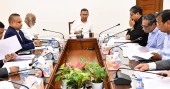
Prime Minister Tarique Rahman on Sunday directed the authorities concerned to intensify cleanliness drives and public awareness campaigns across the country with people's participation to prevent the spread of dengue.
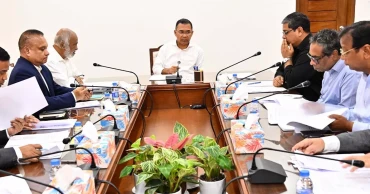
He gave the directives at a meeting on the dengue situation and measures to combat the disease held at the Bangladesh Secretariat, said Prime Minister’s Deputy Press Secretary Hasan Shiplu.
The Prime Minister stressed greater public participation in dengue prevention instead of relying solely on government agencies.
He called for raising awareness about keeping homes and surroundings clean, removing stagnant water and waste, and eliminating mosquito breeding grounds.
Tarique Rahman also directed the authorities to involve disaster management volunteers, Bangladesh National Cadet Corps (BNCC), Rover Scouts and Red Crescent volunteers in cleanliness and awareness activities.
He emphasised conducting cleanliness drives at the local level by engaging people through these volunteers.
The meeting also discussed strengthening treatment facilities and patient-management capacity for dengue patients at upazila-level hospitals.
The supply of mosquito nets for admitted dengue patients was also discussed to reduce the risk of the disease spreading through mosquitoes that bite infected patients.
Stressing the need to ensure implementation of the decisions taken at the meeting, the Prime Minister said, “The decisions must be reflected in the field.”
Emphasising prevention as the key to combating dengue, he directed the authorities concerned to work in a coordinated manner and undertake extensive awareness campaigns to ensure people's participation in cleanliness activities.
Local Government, Rural Development and Co-operatives Minister Dr Abdul Moyeen Khan, State Minister Mir Shahe Alam, State Minister for Health and Family Welfare MA Muhit, Prime Minister’s Special Assistant for Health Dr SM Ziauddin Hyder, Dhaka South City Corporation Administrator Abdus Salam, Prime Minister’s Special Assistant Shakirul Islam Khan and secretaries and senior officials of the ministries and divisions concerned were present.
13 days ago
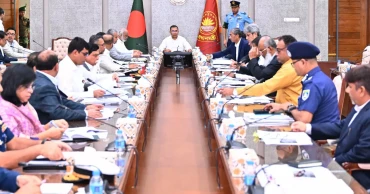
PM urges collective efforts to ensure pollution-free rivers, liveable environment
Prime Minister Tarique Rahman on Sunday urged everyone to play a responsible role from their respective positions to ensure pollution-free rivers and a clean, liveable environment for future generations.
“We must try to ensure pollution-free rivers and a liveable environment not only for ourselves but also for future generations,” he said.
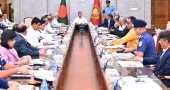
The Prime Minister made the call at a review meeting on pollution control, waste removal, conservation and management of rivers around Dhaka, ensuring navigability and improving the circular waterways, said a release issued by the PM’s Press Wing.
The meeting was held at the Bangladesh Secretariat in the morning.
Tarique Rahman stressed that people should not simply wait for government directives but should also act out of a sense of personal responsibility to protect the environment, rivers and waterways.
The meeting reviewed the overall activities concerning pollution control and waste removal from the Buriganga, Turag, Dhaleshwari, Balu and Shitalakhya rivers and adjacent canals and drains.
Those who attended the meeting also discussed measures to ensure navigability and the natural flow of water in the rivers and improve the existing circular waterways around Dhaka.
The Prime Minister directed the authorities to take effective steps to quickly implement the plans already undertaken.
He also stressed ensuring proper coordination among the ministries, divisions and agencies concerned to expedite the activities.
Local Government, Rural Development and Co-operatives Minister Dr Abdul Moyeen Khan, Environment, Forest and Climate Change Minister Abdul Awal Mintoo, Industries and Commerce Minister Khandakar Abdul Muktadir, Water Resources Minister Shahiduddin Chowdhury Anee, Shipping Minister Shaikh Rabiul Alam, State Minister for LGRD and Co-operatives Mir Shahe Alam, State Minister for Planning Zonayed Abdur Rahim Saki, State Minister for Shipping Md Razib Ahsan, State Minister for Environment, Forest and Climate Change Shaikh Faridul Islam and Prime Minister’s Special Assistant Dr Saimum Parvez, among others, attended the meeting.
Prime Minister’s Principal Secretary ABM Abdus Sattar, Commander Dhaka Naval Area Rear Admiral Abdullah-Al-Maksus, secretaries of the relevant ministries and divisions, administrators of Dhaka, Narayanganj and Gazipur city corporations and other senior officials were also present.
13 days ago
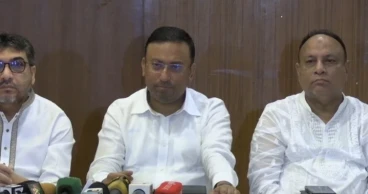
Despite challenges, Dhaka willing to engage with Delhi, keep door for talks open: Humaiun Kobir
State Minister for Foreign Affairs Humaiun Kobir on Saturday said Bangladesh wants engagement and a good working relationship with India despite existing challenges, stressing that the door for dialogue will always remain open.
"There might be thousands of problems and challenges with India, but the door of dialogue and discussion will always remain open. And that should be kept," he told reporters, noting that India is a neighbour of Bangladesh.
The State Minister made the remarks during an exchange of views with leaders of the Electronic Media Journalists Association (EMJA) in Sylhet.
Kobir said foreign, economic and security cooperation and policies are intertwined and interrelated for most countries around the world, not just for Bangladesh.
"It cannot be isolated from each other. Particularly, for the foreign policy that we have undertaken, it has to be integrated and it must be complementary to each other. From that point of view, foreign policy is not about only foreign relations. There needs to be a strong area of engagement for economic cooperation," he said.
Talking about the challenges with India, the State Minister said there are, of course, challenges, as "terrorists" who fled the country after killing people in Bangladesh are staying in India.
"If space is given to them (by India), it will go against the sentiments of the people of Bangladesh. It would be pressure to address that. Our foreign policy engagement is based on national interests and driven by people's interests," Kobir said.
The State Minister, who has met Indian High Commissioner to Bangladesh Dinesh Trivedi twice so far, said India must understand the situation.
"I met him (envoy) twice. He is trying, but he gets stuck somewhere."
Kobir laid emphasis on stopping former Prime Minister Sheikh Hasina, stressing that it is irrelevant whether she is using private or public platforms in India.
"Providing Hasina space creates a bad precedent," he said.
Regarding Prime Minister Tarique Rahman’s possible visit to India, Kobir said the possibility of such a visit before the upcoming UN General Assembly session is very slim.
"When the time is right, the Prime Minister will be visiting India, but the possibility is very slim before the UNGA as the Prime Minister will be attending the UNGA," he said.
The 81st session of the General Assembly will formally open on September 8, with world leaders expected to gather at UN Headquarters in New York later in the month for the annual high-level general debate.
India will soon host the BRICS Summit, and an Indian journalist wanted to know whether Bangladesh had communicated whether Prime Minister Tarique Rahman would participate and, if not, who would represent Bangladesh at the summit.
"On the participation from Bangladesh side, I have no update to share with you," Spokesperson at the Indian Ministry of External Affairs Randhir Jaiswal told reporters during a regular briefing in New Delhi on Friday.
Although the date of the Prime Minister’s proposed India visit has not yet been finalised, bilateral discussions on the matter are underway, State Minister Kobir said.
The meeting was arranged after journalists covering the State Minister’s programme on Friday were allegedly harassed.
Television journalists in Sylhet on Friday decided to boycott news coverage of the State Minister and the local BNP after several media workers were allegedly harassed by political activists at the Hazrat Shahjalal Shrine.
Kobir, visiting Sylhet for the first time since taking office as State Minister, offered prayers at the shrine after Jummah prayers.
Responding to various questions, Kobir said the extent of corruption in the energy sector in the past could be understood by looking at the sector’s overall condition.
He said the current government is giving the energy sector the highest priority.
The State Minister also said discussions are underway on the Mecca Pact and that Bangladesh’s joining the agreement would not be unusual.
“Many countries in the world are part of multiple security alliances. Bangladesh will join wherever necessary based on its national interests,” he said.
On the purchase of Boeing aircraft, Kobir said no one was pressuring Bangladesh to buy Boeing planes.
“Bangladesh is buying Boeing aircraft from the United States because there is a demand for them. More aircraft may be purchased if necessary,” he said.
14 days ago
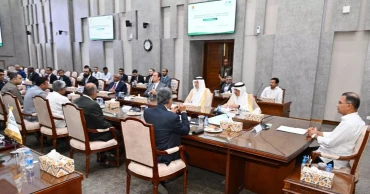
Bangladesh to become manufacturing hub, regional gateway: PM
Prime Minister Tarique Rahman on Thursday said the government’s mission is to transform Bangladesh into a manufacturing hub and a gateway to the region, with electronics, pharmaceuticals, light engineering and green industries driving the country’s next phase of economic growth.
Speaking at the signing ceremony of a US$1 billion financing agreement with the Islamic Development Bank (IsDB) for the modernisation and expansion of Eastern Refinery Limited, he also said this deal is more than a financial transaction, calling it a “statement of confidence” in Bangladesh.
“Garments built our first growth story. Now we want electronics, pharmaceuticals, light engineering, and green industry to build the next one. We want factories that create jobs and dignity,” Tarique said.
He said the Eastern Refinery project is not merely an investment in the energy sector but an investment in Bangladesh’s energy security, economic resilience and long-term capacity to grow.
Tarique said Bangladesh has a new government and a new direction, with a target of building a trillion-dollar economy by 2034.
“This is not a slogan. It is a plan. We intend to double the size of our economy this decade through exports, investment, and financial discipline,” Tarique said.
He said the government has also launched the Family Card and Farmers Card and is processing the Health Card to provide direct support to citizens.
16 days ago
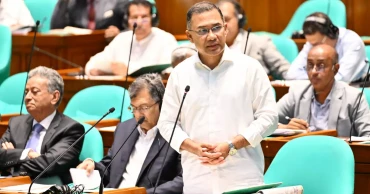
PM outlines 5-point plan to tackle Bangladesh’s energy crisis
Prime Minister Tarique Rahman on Wednesday outlined a five-point comprehensive government plan to tackle the country’s ongoing energy crisis by boosting domestic gas production, intensifying exploration, strengthening BAPEX, expanding LNG infrastructure and reducing dependence on imported gas.
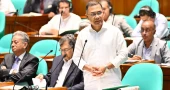
Replying to a question from MP Selina Sultana (Women Seat-35) during the question-answer session in Parliament, Tarique said the energy sector was left “crippled” during the previous fascist rule, resulting in inadequate gas exploration and growing import dependence.
He said the government has adopted an integrated action plan to bring the country out of the existing energy crisis and build a self-reliant and sustainable energy system.
As part of efforts to increase domestic gas production, Tarique said 30 wells have already been drilled under a programme to drill or carry out workovers on 150 wells, adding 140 million cubic feet per day (mmcfd) of gas to the national grid.
“Once the seven wells currently under drilling are completed, another 85 mmcfd of gas will be added to the national grid,” he said, adding that projects are being taken up in phases to drill the remaining wells.
The Prime Minister said the government has also planned 4,500 line-kilometre of 2D seismic surveys and 4,200 square kilometres of 3D seismic surveys to explore domestic gas reserves.
He said the government is also taking steps to strengthen Bangladesh Petroleum Exploration and Production Company Limited (BAPEX) including the procurement of two new rigs.
On offshore and onshore exploration, Tarique said the Offshore Model Production Sharing Contract (PSC) 2026 has been approved and a bidding round invited, while the Onshore Model PSC was under the approval process.
“Gas discoveries through offshore and onshore exploration will play a significant role in ensuring the country’s energy security,” he said.
The Prime Minister said negotiations are underway with interested companies to establish a floating LNG terminal at Kutubjom in the deep sea off Maheshkhali in Cox’s Bazar.
“We hope to be able to supply regasified LNG from the terminal by December 2028. As a result, LNG imports are expected to increase by another 600 mmcfd within the next two years,” he said.
Tarique also said feasibility studies have also been initiated for setting up one or two additional floating LNG terminals on an urgent basis near Payra or Mongla ports or along the coastal areas of the southwestern region.
Tarique said the proposed terminals would help strengthen the country’s overall energy security.
PM rejects report on factory closures
Replying to a supplementary question from MP Norul Hasan (Mymensingh-6) about reports that 92 or even 200-300 factories had closed due to electricity and gas shortages, Tarique rejected the figures.
“Had you taken a little more information, you would have seen that those who used the reference you mentioned about 95 factories being closed apologised the following day and said their information was completely wrong,” he said.
He said the report apparently cited an old news report or data, possibly from 2022, and was later retracted with an apology.
The first 30 minutes of Wednesday’s parliamentary session were allocated for the Prime Minister’s question-answer session.
17 days ago
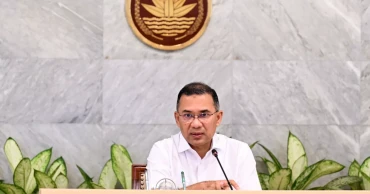
PM sets 4-month deadline for ETC rollout, orders Karwan Bazar kitchen market relocation
Prime Minister Tarique Rahman on Saturday directed the authorities concerned to introduce an Electronic Toll Collection (ETC) system at toll plazas on expressways and flyovers within four months as part of efforts to ease traffic congestion in Dhaka and modernise the city’s transport system.
He gave the directive at a meeting at his Tejgaon office that reviewed the capital’s traffic situation, public transport management, bus terminals, parking facilities and traffic system modernisation.
The meeting decided to develop an app to support the ETC system and complete the work within four months, said PM’s Deputy Press Secretary Shahadat Hossain Shadhin.
The Prime Minister also asked Bangladesh University of Engineering and Technology (BUET) to review its earlier report on congestion around the Jatrabari-Gulistan Flyover and submit recommendations within 15 days.
The initiative will be implemented in coordination with the city corporations and traffic police.
Fulbaria terminal to be shifted to Keraniganj
The meeting decided to relocate the Fulbaria Bus Terminal to Keraniganj to reduce pressure from buses and inter-district vehicles in central Dhaka.
The Local Government Ministry will acquire the required land for the permanent terminal.
As construction of a permanent terminal will take time, the meeting decided to build a temporary bus terminal on 15 acres of land under the Jhilmil project within four months.
The authorities were also instructed to expand the rear section of Gabtoli Bus Terminal to increase its capacity and improve vehicle management.
Karwan Bazar kitchen market to move to Gabtoli
The meeting also decided to relocate the kitchen market at Karwan Bazar to Gabtoli as part of efforts to reduce traffic congestion in the capital.
Relevant authorities were instructed to take necessary steps to implement the decision.
The meeting also discussed improving parking facilities around the Secretariat.
It decided to examine the feasibility of arranging parking at Osmani Memorial Auditorium and identify alternative parking spaces if necessary.
Separate policy for auto-rickshaws
The meeting decided to formulate a separate policy to regulate the movement of auto-rickshaws in Dhaka.
The Prime Minister also ordered action against unauthorised double-decker sleeper buses operating on the roads.
He stressed stronger coordination among the relevant agencies and urged officials to complete the assigned tasks within the stipulated deadlines.
Home Minister Salahuddin Ahmed, Road Transport and Bridges Minister Shaikh Rabiul Alam, State Minister for Local Government, Rural Development and Co-operatives Mir Shahe Alam, Pabna-5 MP Shamsur Rahman Shimul Biswas, Dhaka South City Corporation Administrator Abdus Salam, Cabinet Secretary Nasimul Ghani, Prime Minister’s Principal Secretary ABM Abdus Sattar and senior officials concerned attended the meeting.
21 days ago
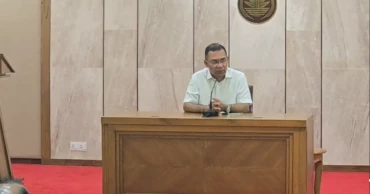
PM pledges to fulfil aspirations of martyrs, victims of democratic movements
Prime Minister Tarique Rahman on Saturday pledged that his government would make its utmost efforts to fulfil the aspirations of those who sacrificed their lives or suffered injuries in the struggles for independence, democracy and people’s rights.
“Despite various practical realities, we will make our utmost efforts to fulfil the aspirations of those who sacrificed their lives in 1971, those who were killed or suffered in different movements to establish democracy since independence, and those who were killed or injured in the July uprising,” he said.
The Prime Minister was speaking at a programme held at the Karabi Hall of the Prime Minister’s Office in Tejgaon to hand over job appointment letters to members of families affected by enforced disappearances and killings and the July uprising.
He said the government would not retreat from its commitment despite the difficulties involved in implementing all expectations within the desired timeframe.
“But we will not retreat from this path, InshaAllah,” Tarique said.
He said some might view the government’s support for the affected families as an act of assistance, but he saw it differently.
“It is because we have the support and cooperation of these people and their families that the government is working with full commitment, enthusiasm and determination to fulfil the aspirations of those who sacrificed their lives,” the Prime Minister said.
“You are our source of inspiration, encouragement and strength,” he told the families.
The Prime Minister said the government would continue to seek their support and fulfil their hopes and expectations as long as the people entrusted it with the responsibility of running the country.
‘We were, are and will remain with you’
Tarique said the government would try to stand beside individuals and families, irrespective of their political affiliation or background, who had contributed to the restoration of democracy.
“Whatever limitations we may have, we will continue trying to stand beside these people and their families,” he said.
Recognising that the losses suffered by the families could never be fully compensated, the Prime Minister said, “We were with you, we are with you and, InshaAllah, we will remain with you.”
He urged the families to support and encourage the government so that it could work to fulfil the aspirations of the martyrs and all those who fought for democracy.
‘20 crore people freed from fascist rule’
Recalling the July uprising, Tarique said the programme was an emotional one as it brought together families of people who should have been present but were no longer among them.
“The 20 crore people of Bangladesh have been freed from a fascist situation through the circumstances that led to their absence,” he said.
Tarique prayed for those who remain missing, saying only Allah knows where they are and in what condition.
The Prime Minister also became emotional while addressing the family members of the victims.
“Naturally, seeing you before me today makes me emotional,” he said.
Tarique said the sacrifices made by the families and their loved ones were for the country and its people, and the government would make its utmost efforts to realise the goals for which they had made those sacrifices.
74 receive appointment letters
A total of 74 people received appointment letters at the programme. They included family members of victims of enforced disappearance and killing, injured fighters and family members of those killed during the July uprising.
The Prime Minister handed over appointment letters to 10 of them and spoke with them individually, enquiring about their well-being.
Among those receiving the letters were Ishfaq Ahmed, brother of enforced disappearance victim Iftekhar Ahmed Dinar; Shammi Sultana, wife of Khaled Hossain Sohel; visually impaired July uprising fighter Alal Ahmed; Momtaz Hossain, father of martyred Anvir; Jartaj Parvin, mother of martyred Ahnaf; and July fighter Kazi Saimum Siraj.
The recipients expressed gratitude to the Prime Minister and demanded justice for those involved in enforced disappearances and killings.
The programme was conducted by Prime Minister’s Additional Press Secretary Atikur Rahman Rumon.
Cabinet Secretary Nasimul Gani, Prime Minister’s Principal Secretary ABM Abdus Sattar, Press Secretary Saleh Shibly, Deputy Press Secretaries Zahidul Islam Rony, Hasan Shiplu, Suzauddaula, Shahadat Shadhin, Assistant Press Secretaries AKM Nazmul Haque, Shahriar Pamir and Moksedul Momin Mithun of Amra BNP Poribar, among others, were present.
21 days ago
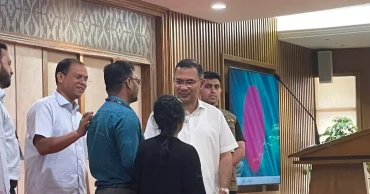
PM hands appointment letters to 74 from families of enforced disappearance, July uprising victims
Prime Minister Tarique Rahman on Saturday handed over appointment letters to 74 people from families of victims of enforced disappearances, murders and the July mass uprising.
At a ceremony held at the Karabi Hall of the Prime Minister’s Office in Tejgaon, the Prime Minister personally handed appointment letters to 10 of the recipients.
Prime Minister’s Additional Press Secretary Atikur Rahman Rumon said the 74 recipients included family members of victims of enforced disappearance and killing, as well as injured fighters and family members of those killed during the July mass uprising.
Among those receiving appointment letters from the Prime Minister were Ishfaq Ahmed, brother of Iftekhar Ahmed Dinar; Moniruzzaman Hira, brother of Nuruzzaman Jony; Anan Hossain Noor, brother of Anwar Hossain Mahbub; Hasnain Reza, brother of Selim Reza Pintu; and Shammi Sultana, wife of Khaled Hossain Sohel.
Recipients from the July uprising included visually impaired injured fighter Alal Ahmed, Md Abul Hossain, father of martyr Alvi; Zartaj Parvin, mother of martyr Ahnaf; injured fighter Kazi Saimum Siraj; and Mahbub Alam, brother of Israfil Islam.
The recipients expressed gratitude to the Prime Minister for the appointments and demanded justice for those responsible for enforced disappearances and killings.
The programme was conducted by Atikur Rahman Rumon, also the convener of Amra BNP Poribar.
Cabinet Secretary Nasimul Gani, Prime Minister’s Principal Secretary ABM Abdus Sattar, Press Secretary Saleh Shibly, Deputy Press Secretaries Zahidul Islam Rony, Hasan Shiplu, Suzauddaula, Shahadat Shadhin, Assistant Press Secretaries AKM Nazmul Haque, Shahriar Pamir and Moksedul Momin Mithun of Amra BNP Poribar, among others, were present.
21 days ago
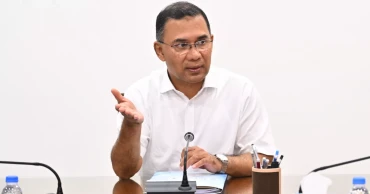
PM for reviving girls’ stipends to curb dropout, child marriage
Prime Minister Tarique Rahman on Monday directed the authorities concerned to examine the feasibility of reintroducing universal stipends for girls from Class VI to the degree level, aiming to encourage them to continue their education and help prevent child marriage.
He gave the directive at a meeting on the Prime Minister’s Education Assistance Trust at the Prime Minister’s Office in the Cabinet Division of the Secretariat.
The meeting was informed in detail about the trust’s ongoing activities, its goals and role in preventing students from dropping out by providing financial assistance during their education, said Prime Minister’s Deputy Press Secretary Shahadat Hossain Shadhin.
The impact and achievements of the universal stipend programme for girls, introduced during the tenure of former Prime Minister Begum Khaleda Zia, were also discussed.
The programme was credited with helping increase girls’ school attendance, encouraging them to continue their studies and discouraging child marriage.
Against this backdrop, the Prime Minister asked the authorities to assess the possibility of reviving universal stipends for girls from Class VI to the graduation level.
He stressed the need for preparing a clear proposal after analysing the possible cost, number of beneficiaries, implementation process and expected social and educational impact of the programme.
The meeting also discussed providing stipends to boys on the basis of merit and eligibility to encourage them to pursue education.
Besides financial support, the meeting put equal emphasis on students’ nutrition and health as important factors for improving the quality of education.
Various aspects of the school-level mid-day meal programme, including its management, nutritional value and ways to ensure safe preparation and supply of food for children, were discussed.
The Prime Minister stressed that food provided to students must be nutritious, safe and of good quality, and said there should be no compromise over food standards.
The meeting also discussed two alternative approaches to implementing the mid-day meal programme, taking into account cost, management efficiency, local participation and quality control.
Tarique Rahman directed the authorities to launch pilot projects in two separate districts, with each district testing one of the proposed approaches, to assess their effectiveness, feasibility and potential outcomes.
Education Minister Dr ANM Ehsanul Hoque Milon, Prime Minister’s Education Affairs Adviser Mahdi Amin, Secondary and Higher Education Division Secretary Abdul Khaleque, PM’s Additional Press Secretary Atikur Rahman Rumon and other relevant officials attended the meeting.
26 days ago
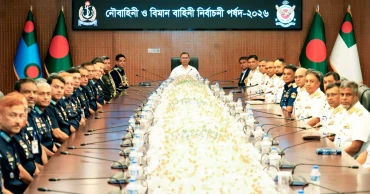
PM calls for fair, merit-based promotions in Navy, Air Force
Prime Minister Tarique Rahman on Sunday directed members of the Navy and Air Force Selection Boards to ensure that officers are considered for promotion based on professional competence and merit, keeping political ideology and personal likes or dislikes aside.
He said professional skills, leadership qualities, discipline, integrity, loyalty and overall suitability for appointment should be given priority in evaluating officers for promotion.
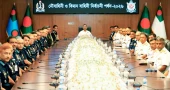
The Prime Minister gave the directive while inaugurating the Navy and Air Force Selection Boards-2026 at the Bangladesh Air Force Headquarters in Dhaka Cantonment.
Eligible officers of the Bangladesh Navy, including Captains, Commanders and Lieutenant Commanders, and Bangladesh Air Force officers holding the ranks of Group Captain, Wing Commander and Squadron Leader, will be considered for promotion by the boards, said Prime Minister’s Deputy Press Secretary Jahidul Islam Rony.
27 days ago