BIMSTEC
Connectivity must remain flagship of regional ambition: Shama Obaed
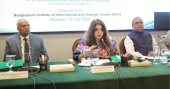
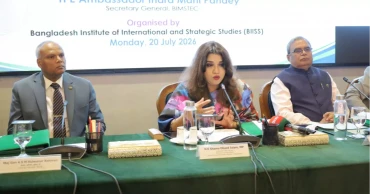
State Minister for Foreign Affairs Shama Obaed Islam on Monday said connectivity must remain the flagship of their regional ambition, stressing that the BIMSTEC Master Plan for Transport Connectivity provides the blueprint, while the challenge is implementation.
"Bangladesh will support progress on transport linkages and the proposed coastal shipping agreement while pursuing deeper energy and digital connectivity," she said while speaking as the chief guest at a seminar.
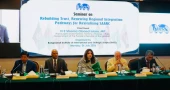
Bangladesh Institute of International and Strategic Studies (BIISS) organised the seminar on "Three Decades of BIMSTEC: Advancing Regional Cooperation for Shared Prosperity" at the BIISS Auditorium.
The seminar was organised in view of Bangladesh's ongoing chairmanship of the Bay of Bengal Initiative for Multi-Sectoral Technical and Economic Cooperation (BIMSTEC) and sought to generate informed policy discourse on strengthening regional cooperation for shared prosperity.
BIMSTEC Secretary General Indra Mani Pandey spoke as the special guest, while BIISS Director General Major General A S M Ridwanur Rahman delivered the welcome address.
The BIMSTEC Secretary General spoke on ongoing projects and actions in areas such as women's development, climate adaptation, grid interconnection, technical capacity-building in energy, security cooperation in drug control, cyber, maritime and human security, counterterrorism, transnational crime, tourism, visa facilitation, and trade and investment undertaken by BIMSTEC.
The State Minister highlighted the importance of institutional coordination, innovative financing, engagement with development partners and the private sector, and sustained political commitment to achieve the connectivity goals.
She said Bangladesh has been dealing with a crucial crisis - the Rohingya refugee crisis - and stressed that regional prosperity can only be sustained in an environment of peace, security and resilience.
As a trusted partner and friend, Shama Obaed said Bangladesh has truly hoped that the BIMSTEC framework and the members of this multilateral body shall be committed to creating the international pressure needed for the safe and dignified repatriation of the Rohingyas.
She said their region faces terrorism, violent extremism, human trafficking, drug trafficking, cyber threats, illegal fishing, climate-induced disasters, and humanitarian crises.
The State Minister said they should deepen practical cooperation in maritime security, law enforcement, disaster risk reduction, humanitarian assistance, and capacity building.
She said climate resilience and disaster preparedness must remain at the heart of their agenda because few countries understand the human and economic cost of a warming planet more intimately than Bangladesh.
The State Minister reaffirmed Bangladesh's strong commitment to BIMSTEC and to promoting a peaceful, resilient, and prosperous Bay of Bengal region.
She emphasised the importance of translating regional commitments into concrete actions through greater implementation, practical cooperation, and strengthened institutional mechanisms.
Shama Obaed also underscored Bangladesh's commitment, as the current Chair of BIMSTEC, to advancing economic integration, connectivity, trade, investment, the blue economy, and people-centric regional cooperation while working closely with all member states to realise the organisation's shared objectives.
She expressed confidence that the recommendations emerging from the seminar would help strengthen Bangladesh's leadership during its BIMSTEC chairmanship and support the organisation's future development.
"We must also invest in our people. Students, researchers, entrepreneurs, professionals, media representatives, and cultural practitioners create the human connections on which durable regional cooperation rests," Shama Obaed said.
As the current chair and host of the BIMSTEC Secretariat, she said Bangladesh recognises that its responsibility goes well beyond convening meetings.
"We will work closely with Bhutan, India, Myanmar, Nepal, Sri Lanka, and Thailand, as well as with the Secretary General, to strengthen the capacity of the Secretariat, fully operationalise the Charter, and translate the commitments of the leaders into practical outcomes," Shama Obaed said.
She said Bangladesh will work with all member states to build consensus and inject fresh momentum into those negotiations.
The State Minister said the blue economy offers another major avenue for shared prosperity.
The fisheries, shipping, renewable energy, and marine resources of the Bay of Bengal are a shared inheritance that must be developed responsibly and managed sustainably, she said.
She said Bangladesh will support practical cooperation, scientific research, and capacity building so that the Bay becomes a source of inclusive growth for present and future generations.
"We have the political commitment. Let us therefore work together with renewed purpose and confidence. Let us transform BIMSTEC from a forum of great promise into a platform of effective regional cooperation," she said.
3 months ago
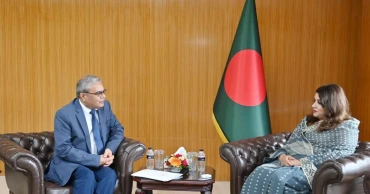
BIMSTEC: Dhaka keen to deliver tangible benefits to peoples; ready to host sectoral meetings
State Minister for Foreign Affairs Shama Obaed Islam on Tuesday reaffirmed Bangladesh’s continued commitment to the BIMSTEC process and reiterated its resolve to further advance regional cooperation during Bangladesh’s Chairmanship of BIMSTEC.
Reiterating to the government’s foreign policy priority of “Bangladesh First,” she underscored the importance of enhancing cooperation in priority areas, including trade and investment, connectivity, energy, climate change, and people-to-people contacts, with a view to delivering tangible benefits to the peoples of the region.
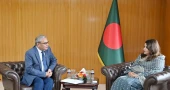
The issues were discussed when Secretary General of the Bay of Bengal Initiative for Multi-Sectoral Technical and Economic Cooperation (BIMSTEC) Indra Mani Pandey called on the State Minister Shama Obaed Islam at the Ministry of Foreign Affairs.
3 months ago
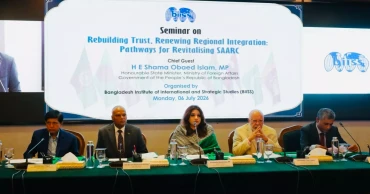
Dhaka doesn’t need to choose between SAARC, BIMSTEC: Shama Obaed
State Minister for Foreign Affairs Shama Obaed Islam on Monday said Bangladesh does not need to choose between SAARC and BIMSTEC, stressing that these platforms should complement each other, not compete with one another.
“BIMSTEC connects South Asia with the Bay of Bengal and Southeast Asia. SAARC represents the broadest South Asian regional identity, including countries that are not part of BIMSTEC,” she said while highlighting the relationship between SAARC and other regional or sub-regional platforms, particularly BIMSTEC.
Speaking as the chief guest at a seminar, the State Minister said sub-regional initiatives should not drain momentum away from SAARC; rather, they should become building blocks for wider regional cooperation.
3 months ago
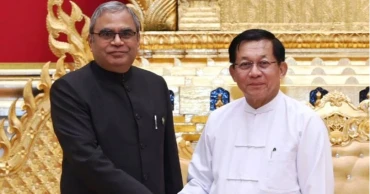
BIMSTEC SG meets Myanmar leaders, discusses regional security cooperation
BIMSTEC Secretary General Indra Mani Pandey visited Myanmar and discussed progress in regional security cooperation under BIMSTEC to address the transnational security challenges facing the member states.
The two sides reviewed progress in regional security cooperation since the 4th BIMSTEC National Security Advisers' Meeting, hosted by Myanmar in Nay Pyi Taw in July 2024, and preparations for the 5th meeting, which will be hosted by India.
The meeting is scheduled to be held in New Delhi on July 16.
They also welcomed the opportunity provided by the forthcoming inaugural BIMSTEC Home Ministers' Meeting to review and expand regional security cooperation under BIMSTEC.
During the visit, the BIMSTEC Secretary General called on Myanmar President Min Aung Hlaing, who reiterated Myanmar's abiding commitment to expanding regional cooperation under BIMSTEC, underscored the organisation's non-political character, and expressed Myanmar's desire to enhance its contribution to BIMSTEC's success.
He met Foreign Minister Tin Maung Swe and their discussions focused on strengthening regional cooperation under BIMSTEC and Myanmar's vital role in advancing cooperation in the agriculture and food security, fisheries, and livestock sectors, which the country leads, as well as other sectors on BIMSTEC's agenda, according to the BIMSTEC Secretariat.
The Myanmar Foreign Minister reiterated the high importance Myanmar attaches to BIMSTEC.
In a separate meeting with Home Minister Lt Gen Nyunt Win Swe, the two sides discussed progress in regional security cooperation.
The Secretary General also called on National Security Adviser and Union Minister in the President's Office Tin Aung San.
They underscored Myanmar's vital role in ensuring regional security in the Bay of Bengal, including combating organised crime and terrorism, as well as strengthening maritime security, food security, climate security, and energy security.
The Secretary General also met Union Minister for Agriculture, Livestock and Irrigation Min Naung.
Their discussions focused on advancing regional cooperation in the agriculture and food security, fisheries, and livestock sectors, including the implementation of decisions taken at the 3rd BIMSTEC Agriculture Ministerial Meeting, held in Kathmandu, Nepal, in April 2025, and ways to further strengthen regional cooperation in agriculture and allied sectors under BIMSTEC.
The Secretary General also attended a dinner hosted in his honour by the Permanent Secretary of Myanmar's Ministry of Foreign Affairs.
The dinner was attended by senior officials from the Ministry of Foreign Affairs and the Ministry of Agriculture, Livestock and Irrigation.
The Secretary General also met Thant Kyaw, Chairman of the Myanmar Institute of Strategic and International Studies (MISIS), and the two sides exchanged views on further strengthening regional cooperation under the BIMSTEC framework.
Myanmar is one of the seven BIMSTEC member states and leads regional cooperation in the agriculture and food security, fisheries, and livestock sectors. It joined BIMSTEC in December 1997.
BIMSTEC comprises seven countries in the Bay of Bengal region: Bangladesh, Bhutan, India, Myanmar, Nepal, Sri Lanka, and Thailand.
3 months ago
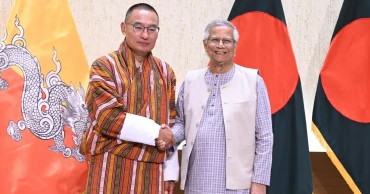
Prof Yunus, Bhutan’s PM pledge stronger collaboration across SAARC, BIMSTEC
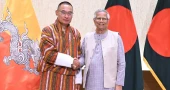
Chief Adviser Prof Muhammad Yunus and visiting Bhutanese Prime Minister Tshering Tobgay have reaffirmed their commitment and cooperation at the international, regional and sub-regional platforms, like SAARC and BIMSTEC based on the principles of shared values, mutual respect, understanding, cooperation and a common aspiration for peace and prosperity.
They also reaffirmed their commitment to enduring bilateral engagements and cooperation.
The two sides expressed satisfaction with the establishment of the Joint Working Group (JWG) to facilitate the development of the Bhutanese Special Economic Zone (SEZ) in Kurigram and welcomed the ongoing collaborative efforts.
The leaders, according to a joint statement issued on Sunday, expressed satisfaction with the status of implementation of the agreement on the movement of ‘traffic-in-transit’, noting that the trial run of goods transport from Chattogram Port to Burimari Land Port is being completed.
Bangladesh proposed supplying pharmaceutical products to Bhutan on a government-to-government basis.
Bhutan key part of Dhaka’s vision for regional trade, says Prof Yunus
Both sides acknowledged that such cooperation would enhance Bhutan’s access to affordable and quality healthcare supplies.
At the invitation of the Chief Adviser, the Prime Minister of Bhutan is on a state visit to Bangladesh from November 22 to 24.
He is scheduled to leave Dhaka for Thimphu on Monday morning, a senior official told UNB, noting that Foreign Affairs Adviser Md Touhid Hossain will see him off at the airport.
The Bhutanese PM was accompanied by Lyonpo D.N. Dhungyel, Minister for Foreign Affairs and External Trade; Lyonpo Namgyal Dorji, Minister for Industry, Commerce, and Employment; and senior officials of the Bhutanese government.
Bangladesh, Bhutan sign 2 MoUs on internet connectivity, health cooperation
The visit of Prime Minister Tobgay to Bangladesh is a reaffirmation of the deep-rooted friendship and goodwill that have long defined the relations between the two countries, according to the joint statement.
The Chief Adviser hosted a banquet in honour of the Prime Minister of Bhutan on Saturday evening.
Both the heads of government held official talks on Saturday in an atmosphere of heartfelt warmth and cordiality reflecting the time-tested friendship between the two countries.
The two leaders recognised with deep satisfaction the excellent state of bilateral relations and discussed the entire gamut of bilateral relations, including trade, connectivity, and people-to-people connections.
Recalling Bhutan as the first country to recognise Bangladesh as an independent country on 6 December 1971, Prof Yunus expressed gratitude for Bhutan's invaluable support during Bangladesh’s fight for independence.
Both sides underscored the importance of enhancing bilateral trade and strengthening private sector cooperation.
Prime Minister Tobgay also met business leaders from Bangladesh to explore new avenues for economic and commercial collaboration.
Bangladesh appreciated the King of Bhutan’s global vision of Gelephu Mindfulness City (GMC) and conveyed her readiness to extend cooperation in the development of GMC in Bhutan.
The two sides expressed satisfaction at the state of ongoing cooperation in various fields such as human resource development, connectivity, tourism and culture.
In the presence of the two leaders, two MoUs - MoU on Trade of International Internet Bandwidth and other Telecommunication Services; and MoU on Appointment of Health Workforce were signed.
The Prime Minister expressed appreciation for the cordial welcome and warm hospitality extended to him and the members of his delegation.
He extended an invitation to the Chief Adviser to visit Bhutan at a mutually convenient time.
Both leaders reaffirmed their commitment to enduring engagements and cooperation between the two countries and their people.
BIDA executive chairman Ashik Chowdhury and National Citizen Party leaders separately called on visiting Bhutanese Prime Minister Tshering Tobgay at a city hotel on Sunday.
10 months ago
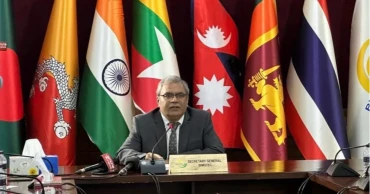
Dhaka reaffirms strong commitment to BIMSTEC process with enhanced cooperation
Foreign Secretary Asad Alam Siam has reaffirmed Bangladesh’s strong commitment to the BIMSTEC process and emphasised the importance of enhancing cooperation in key areas.
He mentioned trade and investment, connectivity, energy, climate change, and people-to-people contacts as areas of cooperation.
The issues were discussed when Secretary General of the Bay of Bengal Initiative for Multi-Sectoral Technical and Economic Cooperation (BIMSTEC) Indra Mani Pandey paid a courtesy call on the foreign secretary at the Ministry of Foreign Affairs recently.
At the meeting, the secretary general briefed the foreign secretary on the latest progress and current efforts within the BIMSTEC framework, according to the Ministry of Foreign Affairs.
Recognising Bangladesh's key contribution to promoting BIMSTEC initiatives, Pandey highlighted the need for enhanced regional collaboration.
BIMSTEC for addressing security challenges that hinder dev aspirations
As current chair, the foreign secretary reiterated Bangladesh's readiness to host BIMSTEC sectoral meetings as per convenience.
They also discussed possible initiatives during Bangladesh's BIMSTEC chairmanship to further advance regional cooperation towards realizing the vision of prosperous, resilient and open BIMSTEC.
The foreign secretary welcomed the secretary general’s assurance of full support during Bangladesh’s chairmanship of BIMSTEC.
1 year ago
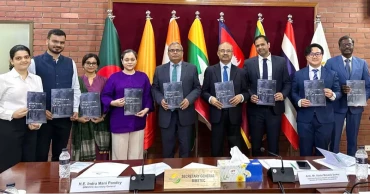
BIMSTEC report underscores urgent need to harmonise regional efforts against natural disasters
The Bay of Bengal Initiative for Multi-Sectoral Technical and Economic Cooperation (BIMSTEC), in partnership with the Institute of Peace and Conflict Studies (IPCS) and the Centre for Humanitarian Dialogue (HD), on Tuesday officially launched a pioneering report titled “Harmonising Humanitarian Assistance (HA)/Disaster Relief (DR) in the Bay of Bengal” that underscored the urgent need to harmonise regional efforts in HA/DR in the face of intensifying natural disasters.
The report launched at the BIMSTEC Secretariat in Dhaka on Tuesday is seen as a “significant step toward” regional cooperation in disaster response and climate resilience.
The report builds on insights from the IPCS-BIMSTEC-HD policy implementation workshop held in October 2024 in Bangkok, which convened experts, policymakers, and practitioners from across the region to address growing climate challenges.
Secretary General of BIMSTEC Indra Mani Pandey and Additional Secretary to the Ministry of Foreign Affairs of Bangladesh Abdul Motaleb Sarker were present.
The Secretary General emphasised that the challenges posed by climate change and natural disasters in the Bay of Bengal region demand a collective response.
“As BIMSTEC continues to grow in relevance, we must focus on building disaster-resilient infrastructure and strengthening regional preparedness. The report makes a timely and important case for harmonising disaster response efforts—and rightly recognises BIMSTEC as the platform to lead that charge.”
The Additional Secretary said that the report comes at a crucial moment. “As climate-induced disasters intensify across the Bay of Bengal, our collective response must be swift, more coordinated, and grounded in shared systems.”
Harmonisation, as emphasised in the report, is the key to unlocking more effective action, he said, adding that Bangladesh, as the current Chair of BIMSTEC, fully supports the call for greater alignment and stands committed to strengthening regional cooperation in disaster preparedness and response.
Bimstec’s evolution into unique platform lauded
The report presents a compelling case for institutional and policy harmonisation in HA/DR and recommends the following areas for action by the BIMSTEC Disaster Management Centre: establish a research database through collaboration with specialist/technical organisations; establish a unified Regional Climate Disaster Mapping and Response Centre for the Bay of Bengal within the BDMC; enhance Bay of Bengal crisis communications through a platform housed in the BDMC; and institute a cost-sharing and prepositioning programme for HA/DR equipment and supplies coordinated by the BDMC.
The launch concluded with interactive and insightful discussions among the participants, reinforcing a shared commitment to building a resilient and responsive regional HA/DR ecosystem.
Disaster Management is one of the sectors of BIMSTEC cooperation. The expert group on Disaster Management is currently engaged in finalising a Plan of Action to improve preparedness and coordination for responding to natural disaster in the member States.
A BIMSTEC Centre for Weather and Climate has been set-up in Noida, India, that makes tailored weather and climate forecasts for the member States. Three rounds of BIMSTEC Disaster Management Exercises have been held.
A BIMSTEC Disaster Management Centre is being proposed in India to anchor cooperation among the member states in disaster management.
BIMSTEC comprises seven countries of the Bay of Bengal region: Bangladesh, Bhutan, India, Myanmar, Nepal, Sri Lanka and Thailand.
1 year ago
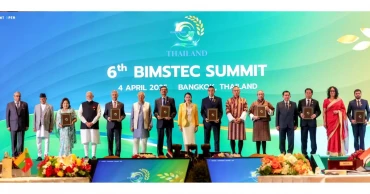
BIMSTEC reaffirms its critical role to deal with shared security, challenges
Against the backdrop of an increasingly complex and uncertain global political and economic landscape, the just-held 6th BIMSTEC Summit has reaffirmed BIMSTEC’s critical role in forging regional cooperation to enable the member states to deal with their shared security and sustainable development challenges, says its Secretariat.
With institutional reforms already underway, BIMSTEC is poised to evolve into a vibrant and dynamic regional organisation, advancing peace, prosperity and resilience in the Bay of Bengal region, said the Secretariat of the regional grouping on Saturday.
Leaders of the Bay of Bengal Initiative for Multi-Sectoral Technical and Economic Cooperation (BIMSTEC), in their statements at the 6th Summit in Bangkok, underlined the need to make progress in enhancing intra-regional trade and investment; connectivity and security.
The Summit, the Secretariat of the regional grouping said, provided a new impetus to the regional organisation to realise the goal of a “prosperous, resilient and open BIMSTEC”.
The leaders also sought enhanced cooperation in the areas of tourism, culture exchanges, climate action, green and renewable energy, sustainable agriculture, food security and disaster management.
The BIMSTEC leaders reiterated their commitment to it, identified the areas of priority for regional cooperation, and presented specific proposals and initiatives, said the BIMSTEC Secretariat on Saturday.
Dr Yunus suggests BIMSTEC youth festival for increased engagement
The 6th Summit of the Heads of State/Government of the Member States of BIMSTEC was held on Friday. It was preceded by 25th BIMSTEC Senior Officials’ Meeting on April 2 and 20th BIMSTEC Ministerial Meeting on April 3.
The 6th Summit was attended by Chief Adviser of Bangladesh Prof Muhammad Yunus, Prime Minister of Kingdom of Bhutan Dasho Tshering Tobgay, Prime Minister of Republic of India Narendra Modi, Chairman of State Administration Council and Prime Minister of Republic of the Union of Myanmar Senior General Min Aung Hlaing, Prime Minister of Nepal KP Sharma Oli, Prime Minister of Democratic Socialist Republic of Sri Lanka Dr Harini Amarasuriya and Prime Minister of the Kingdom of Thailand Paetongtarn Shinawatra.
The 6th Summit, themed “Prosperous, Resilient, and Open BIMSTEC”, focused on fostering collaboration among the member States to address their shared security and developmental challenges.
Bangladesh, Thailand sign MoU to fight corruption jointly
Key Outcomes of 6th BIMSTEC Summit
● Adoption of Declaration of 6th BIMSTEC Summit, which reflects the vision of the Leaders as well as their decisions and directives for future cooperation;
● Adoption of BIMSTEC Bangkok Vision 2030, the first ever Vision Document of BIMSTEC, which provides a comprehensive and practical roadmap for future cooperation amongst the member States to achieve the vision of Prosperous, Resilient and Open BIMSTEC;
● Signing of Agreement on Maritime Transport Cooperation. It’s a significant step towards strengthening regional partnerships to enhance maritime connectivity, enabling more trade and travel amongst the member States;
● Signing of Memorandum of Understanding between BIMSTEC and Indian Ocean Rim Association (IORA), which institutionalises future partnership between IORA and BIMSTEC in key areas of shared interest.
● Signing of Memoranda of Understanding between BIMSTEC and United Nations Office on Drugs and Crime (UNODC), which formalises partnership between UNODC and BIMSTEC in areas of shared priorities.
● Adoption of Rules of Procedure for the BIMSTEC Mechanisms. The Rules of Procedure, together with the BIMSTEC Charter, lay a strong foundation of institutional framework for regional cooperation under BIMSTEC, ensuring greater efficiency and consistency;
● Adoption of the Report of Eminent Persons Group on the Future Direction of BIMSTEC, which contains a number of recommendations to reform and revitalize BIMSTEC; and
● Endorsement of BIMSTEC Leaders’ Joint Statement on the Impact of Earthquake which struck Myanmar and Thailand on March 28, 2025.
The BIMSTEC leaders expressed condolences, solidarity and commitment to supporting the affected countries and reaffirmed their commitment to collaborate in regional disaster management and to strengthen response mechanisms for natural disasters.
Dr Yunus enquires about Hasina’s extradition request status, seeks measures to restrain her
BIMSTEC Secretary General Indra Mani Pandey, in his report to the leaders, outlined progress made since the 5th BIMSTEC Summit, which was held in Colombo in March 2022.
He sought their guidance to further advance the BIMSTEC agenda for the greater benefit of the region and reaffirmed the Secretariat’s commitment to working closely with the member States to strengthen regional cooperation under BIMSTEC.
At the conclusion of the Summit, Bangladesh, a founding member of BIMSTEC, assumed its Chairmanship.
Chief Adviser Prof Yunus reiterated Bangladesh’s commitment to working collaboratively with other member States to take BIMSTEC cooperation forward.
BIMSTEC comprises seven countries of the Bay of Bengal region: Bangladesh, Bhutan, India, Myanmar, Nepal, Sri Lanka and Thailand.
1 year ago
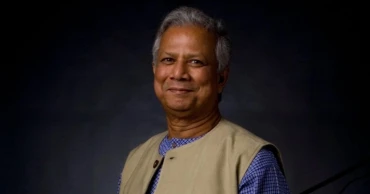
Chief Adviser Dr Yunus returns home from BIMSTEC Summit
Chief Adviser Professor Muhammad Yunus on Friday night returned home from Bangkok, wrapping up his two-day official visit that saw extensive engagement on the sidelines of the 6th BIMSTEC Summit.
A Biman Bangladesh Airlines flight, carrying the Chief Adviser and his delegation members, landed at Hazrat Shahjalal International Airport around 10:05pm (BD time), Chief Adviser’s Deputy Press Secretary Abul Kalam Azad Majumder told UNB.
Earlier, he departed from Bangkok’s Suvarnabhumi Airport at 8:45pm (Bangkok time).
Thai Minister attached to the Prime Minister’s Office, Jiraporn Sindhuprai, saw him off at the airport.
During his visit, the chief adviser attended multiple events, including bilateral meetings with several heads of government, including a meeting with Indian Prime Minister Narendra Modi.
Hugely inflated, bulk of them were fake news: Yunus tells Modi over attacks on minorities
At the summit Bangladesh assumed the chairmanship of the regional grouping - Bay of Bengal Initiative for Multi-Sectoral Technical and Economic Cooperation (BIMSTEC) - for the next two years, reaffirming its commitment to advancing regional cooperation and development.
Upon receiving the chairmanship from Prime Minister of Thailand, Chief Adviser Prof Yunus made a statement of acceptance, underscoring an inclusive and action-oriented BIMSTEC.
The BIMSTEC comprises seven countries of the Bay of Bengal region - Bangladesh, Bhutan, India, Myanmar, Nepal, Sri Lanka and Thailand.
1 year ago
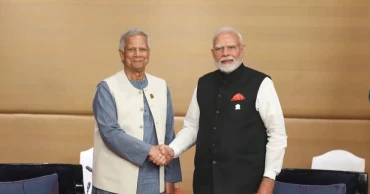
Hugely inflated, bulk of them were fake news: Yunus tells Modi over attacks on minorities
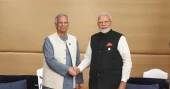
Chief Adviser Prof Muhammad Yunus on Friday conveyed to Indian Prime Minister Narendra Modi that the reports of attacks on the minorities were "hugely inflated" and bulk of them were "fake" news as Modi shared his "serious concerns" for the safety and well-being of Hindus and other minorities.
Responding to Prime Minister Modi's concern over the condition of minorities in Bangladesh, the Chief Adviser also asked the Indian leader to send reporters to Bangladesh to investigate the alleged attacks themselves.
During their meeting on the sidelines of the BIMSTEC Summit, Dr Yunus said he has instituted an effective system for monitoring every incident of religious and gender violence in the country and his government was taking serious actions to stop any occurrence of such incidents, according to Chief Adviser's press wing.
Through his social media handle, Modi said India remains committed to a "constructive and people-centric" relationship with Bangladesh.
"I reiterated India’s support for peace, stability, inclusivity and democracy in Bangladesh," he said, adding that they discussed measures to prevent illegal border crossings and expressed India's "serious concerns" for the safety and well-being of Hindus and other minorities.
Dr Yunus urges Bhutan to make investment in Bangladesh
In a separate media briefing in Bangkok, Indian Foreign Secretary Vikram Misri said Prime Minister Modi raised the issue of the condition of minorities in Bangladesh candidly during his conversation with Prof Yunus.
PM Modi conveyed India’s "deep concerns" on the matter and highlighted the broader societal implications of these developments.
The Prime Minister also made it clear that the responsibility for addressing these issues lies with the government of Bangladesh, Misri said.
Modi expressed his hope that the government would fulfill its responsibilities with seriousness and ensure that these matters are properly investigated and addressed.
Responding to a question, the Indian Foreign Secretary said as far as the issue of election is concerned, it is well understood that in any democracy, regular and "inclusive elections" are a vital component.
Prime Minister Modi shared his views on this matter with Prof Yunus and expressed his hope that, moving forward, they will see a "democratic, inclusive, and stable" Bangladesh, Misri said.
It is universally acknowledged that elections play a crucial role in achieving that vision, said the Indian Foreign Secretary.
Bangladesh urges Thailand to ease visa procedures
Responding to a question on former Prime Minister Sheikh Hasina’s extradition, Misri said as far as Sheikh Hasina is concerned and the reference that was made in that context from the Bangladesh side - yes, this matter was raised during discussions.
"As our spokesperson has already informed you earlier, we have indeed received a communication on this issue. At this point, it would not be appropriate for me to comment further on the subject," said the Indian Foreign Secretary.
Both leaders - Dr Yunus and Modi - concluded their "fruitful and honest dialogue" by wishing each other good health and personal well-being and extended their best wishes for continued peace, progress and prosperity for the people of both countries.
1 year ago