Child Health
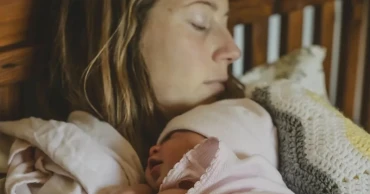
Pregnancy linked eating disorders often go undetected, experts warn
Pregnancy can be a deeply challenging time for women with eating disorders, with experts warning that the physical and emotional changes can sometimes trigger relapse or new symptoms that often go unnoticed.
When Elizabeth Claydon became pregnant at 27, she noticed rapid changes in her body that she found difficult to accept. Like many pregnant women, she experienced hormonal shifts, weight gain and physical transformation. But for her, it also triggered distressing thoughts about body image.
“Some days I was okay with the changes and other days it would be really difficult,” she said. “I would look in the mirror and I wouldn’t see myself.”
Claydon had previously suffered from anorexia nervosa in her teenage years and later experienced a relapse before becoming pregnant. She says her eating disorder thoughts returned strongly as her pregnancy progressed, creating what she described as a “battle” between her mind and her changing body.
Experts say such experiences are not widely recognised but are not rare. Research suggests about one in 20 pregnant women experience an eating disorder, either as a relapse or for the first time during pregnancy.
Professor Gemma Sharp, an eating disorder specialist at the University of Adelaide, said pregnancy can be a “perfect storm” due to rapid physical, hormonal and emotional changes. However, she added it can also become a turning point for recovery if proper support is provided.
Studies show that many pregnant and postpartum women struggle with body dissatisfaction, while eating disorders often go undetected due to stigma and lack of screening. Experts say many women avoid seeking help, fearing judgement or believing they should have outgrown such conditions.
The condition, sometimes referred to as “pregorexia,” can have serious health risks for both mother and baby, including complications during pregnancy, low birth weight, premature birth and developmental issues.
Doctors warn that poor maternal nutrition can also affect long-term child health, influencing risks of obesity, diabetes and heart conditions later in life. However, experts say more research is needed to fully understand the impact due to limited data.
The risks do not end after childbirth. Around 13% of women experience eating disorders in the postpartum period, often triggered by sleep deprivation, hormonal changes and pressure to quickly regain pre-pregnancy body shape.
Courtney Louise, a mother and fitness instructor in Australia, said she experienced severe emotional distress after childbirth linked to her past anorexia. “I felt trapped,” she said, describing intense mood swings and emotional breakdowns during the postpartum period.
Health experts say the problem is often missed in medical settings because pregnancy symptoms such as nausea can mask eating disorder behaviours. In many cases, women also avoid disclosing their condition due to shame or fear of judgement.
Specialists say awareness and non-judgemental care are key. Some researchers have developed new guidelines and support resources, but there are still no specific treatments designed exclusively for pregnant women with eating disorders.
Experts recommend better screening, sensitive communication, and multidisciplinary care involving doctors, dietitians and mental health professionals.
“Everybody has an eating disorder alone, but nobody recovers alone,” said psychologist Linda Shanti.
With inputs from NDTV
3 months ago

Richest countries damaging child health worldwide: Unicef
Over-consumption in the richest countries is creating unhealthy, dangerous, and toxic conditions for children globally, according to a recent report by the UN Children's Fund (Unicef).
"Not only are the majority of rich countries failing to provide healthy environments for children within their borders, but they are also contributing to the destruction of children's environments in other parts of the world," said Gunilla Olsson, director of the Unicef Office of Research – Innocenti.
The latest Innocenti Report Card 17: Places and Spaces, published Tuesday, compares how 39 countries in the Organization for Economic Co-operation and Development (OECD) and European Union (EU) impact children's environments.
Indicators include exposure to harmful pollutants, such as toxic air, pesticides, damp and lead; access to light, green spaces and safe roads; and countries' contributions to the climate crisis, resource consumption, and e-waste dumping.
Read: WHO: COVID-19 cases mostly drop, except for the Americas
The report states that if the entire world consumed resources at the rate of the OECD and the EU countries, the equivalent of 3.3 earths would be needed to keep up with consumption levels.
If it were at the rate at which people in Canada, Luxembourg and the US do, at least five earths would be needed.
While Spain, Ireland and Portugal feature at the overall top of the list, all the OECD and the EU countries are failing to provide healthy environments for all children across all indicators.
Based on CO2 emissions, e-waste and overall resource consumption per capita, Australia, Belgium, Canada and the US are among other wealthy countries that rank low on creating a healthy environment for children within and beyond their borders.
Meanwhile, Finland, Iceland and Norway are among those that provide healthier environments for their country's children but disproportionately contribute to destroying the global environment.
"In some cases, we are seeing countries providing relatively healthy environments for children at home while being among the top contributors to pollutants that are destroying children's environments abroad," said Gunilla.
In contrast, the least wealthy OECD and EU countries in Latin America and Europe have a much lower impact on the wider world.
Read: Davos climate focus: Can ‘going green’ mean oil and gas?
Over 20 million children in this group have elevated levels of lead – one of the most dangerous environmental toxic substances – in their blood.
Many children are breathing toxic air both in and outside of their homes.
More than one in 12 children in Belgium, the Czech Republic, Israel and Poland are exposed to high pesticide pollution, which has been linked with cancer – including childhood leukaemia – and can harm vital body systems.
"Mounting waste, harmful pollutants and exhausted natural resources are taking a toll on our children’s physical and mental health and threatening our planet’s sustainability," said Gunilla.
4 years ago
.jpg)
JS passes bill to ensure better healthcare services for children
The Bangladesh Shishu Hospital and Institute Bill, 2021 was passed in Parliament on Wednesday, aiming to improve the healthcare services for children.
Health and Family Welfare Minister Zahid Maleque moved the Bill which was passed by voice vote.
The bill was designed in line with the Dhaka Children Hospital Ordinance, 2008.
The draft law was prepared merging Dhaka Shishu (Children) Hospital and Bangladesh Institute of Child Health for ensuring better healthcare services for children.
Read:Bangladesh’s per capita foreign debt now stands at Tk 24,890
At present, Bangladesh Institute of Child Health is the academic wing of Dhaka Shishu Hospital.
The Dhaka Shishu Hospital Ordinance, 2008 was promulgated during the caretaker government in 2008.
Some 54 ordinances, out of 122, promulgated during the caretaker government were approved in Parliament following the recommendations of the special committee of the 9th parliament.
But the Dhaka Shishu Hospital Ordinance and 67 others were not endorsed at that time.
Dhaka Shishu Hospital, established in 1977, became an autonomous institute under an ordinance promulgated in 2008 by the then interim government.
The Bangladesh Institute of Child Health was established in 1983 as an academic wing of Dhaka Shishu Hospital.
Read:Medical Degrees (Repeal) Bill goes through Parliament
So, there was no complete law or ordinance over regulation and supervision of the activities of Dhaka Shishu Hospital.
As per the article 21 of the draft law, there will be a 13-member board of directors to run the hospital as an autonomous body.
A director of the hospital would be the executive officer of the hospital while each director would be appointed for three years.
At least 30 seats would be reserved for child patients of poor families.
5 years ago
.jpg)
Bill placed in JS to provide better healthcare services to children
The Bangladesh Shishu Hospital and Institute Bill, 2021 was placed in Parliament on Monday, aiming to improve healthcare services for children.
Health and Family Welfare Minister Zahid Maleque placed the Bill and it was sent to the respective Standing Committee for further examination.
Read: Medical College (Governing Bodies) (Repeal), Bill 2021 placed in parliament
The Committee was asked to submit its report within seven days.
The bill was designed in line with the Dhaka Children Hospital Ordinance, 2008.
The draft law was prepared merging Dhaka Shishu (Children) Hospital and Bangladesh Institute of Child Health for ensuring better healthcare services for children.
At present, Bangladesh Institute of Child Health is the academic wing of Dhaka Shishu Hospital.
The Dhaka Shishu Hospital Ordinance, 2008 was promulgated during the caretaker government in 2008.
Some 54 ordinances, out of 122, promulgated during the caretaker government were approved in Parliament following the recommendations of the special committee of the 9th parliament.
Read:Medical Degrees (Repeal) Bill placed in JS
But the Dhaka Shishu Hospital Ordinance and 67 others were not endorsed at that time.
Dhaka Shishu Hospital, established in 1977, became an autonomous institute under an ordinance promulgated in 2008 by the then interim government.
The Bangladesh Institute of Child Health was established in 1983 as an academic wing of Dhaka Shishu Hospital.
So, there is no complete law or ordinance over regulation and supervision of the activities of Dhaka Shishu Hospital.
As per the 21 article of the draft law, there will be a 12-member board of directors to run the hospital as an autonomous body.
Read: Bill passed to ensure safe child daycare centres
A director of the hospital would be the executive officer of the hospital while each director would be appointed for three years.
At least 30 seats would be reserved for child patients of poor families, he mentioned referring to a provision of the bill.
5 years ago