Trust
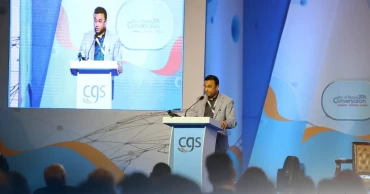
Rebuilding trust among states essential for effective cooperation: Dhaka
State Minister for Foreign Affairs Humaiun Kobir on Monday said rebuilding trust among states is essential for effective international cooperation, stressing that without trust, partnerships weaken.
“We must address the challenge of trust. Without trust, partnerships weaken. Without trust, institutions lose credibility. Without trust, diplomacy becomes more difficult and challenging,” he said, noting that Bangladesh believes in dialogue, international law, and peaceful settlement of disputes.
Speaking at the Bay of Bengal Conversation, the State Minister said Bangladesh believes in a rules-based international order that respects the sovereignty and dignity of every state.
He also called for diplomatic institutions to adapt to emerging technologies and new forms of global competition.
Prime Minister Tarique Rahman inaugurated the three-day international conference on Saturday which ended on Monday.
The State Minister said Bangladesh seeks to pursue an independent and pragmatic foreign policy focused on national interest, strategic autonomy, economic opportunity and peace amid growing geopolitical competition.
“Bangladesh should not simply navigate the changing international order. Bangladesh should help shape it and influence it. We should be a bridge between regions, a partner for peace, a hub for connectivity, a destination for investment and a responsible voice for the global South,” he said.
Kobir said their foreign policy must be confident, pragmatic, and forward looking. “It must protect our national interest without closing the door to cooperation and dialogue. It must expand our partnerships without creating dependency.”
And above all, he said, it must serve the people of Bangladesh. The State Minister shared four principles and said, “National interests must guide us. Strategic autonomy must strengthen us. Partnership must expand our opportunities, and peace must remain our ultimate objective.”
The State Minister said the future will not wait for them. “We must shape it, and we must ensure that Bangladesh is a meaningful voice in that future.”
“Our foreign policy must serve Bangladesh’s national interest,” he said, noting that Bangladesh’s foreign policy must protect its sovereignty and security while creating the external conditions necessary for national development.
“We seek engagement with all, based on mutual respect, mutual benefit and national interest. We want strong partnerships, but we also want strategic autonomy. We want cooperation, but we do not want dependency,” Kobir said.
The State Minister said the global order is undergoing rapid changes, with shifting power dynamics, technological transformation and increasingly strategic economic competition putting pressure on trust among states.
“Foreign policy must do more than respond to change. It must help Bangladesh shape the future,” he said.
Kobir said the Bay of Bengal is at the centre of the changing geopolitical landscape and Bangladesh must turn its geographic position into a strategic opportunity.
“The Bay of Bengal connects South Asia and Southeast Asia. It connects major markets, vital sea routes and growing economies,” he said.
Bangladesh wants the Bay of Bengal to remain a space for peace, stability and cooperation, rather than becoming a theatre of confrontation, he said.
The State Minister also stressed the need for Bangladesh to maintain constructive relations with major powers and regional partners without viewing international relations as a choice between competing camps.
“Our policy is not to choose sides. Our policy is to choose what is best for the national interest of Bangladesh,” he said.
“When interests converge, we will cooperate. Where opportunities exist, we will engage. Where differences arise, we will manage them. That is diplomacy. This is strategic maturity in an age of competition,” Kobir said.
He said foreign policy and economic policy can no longer be treated separately, as markets, supply chains, energy, technology and investment are increasingly linked to national security and development.
“Economic diplomacy must be a core instrument of Bangladesh’s foreign policy,” he said.
“For a country like Bangladesh, foreign policy, economic policy and security policy cannot be too separated from each other. It must take shape and formulation in an integrated way,” Kobir said.
The State Minister said South Asia remains one of the least integrated regions in the world and called for stronger regional connectivity, trade, energy cooperation and people-to-people contacts.
Bangladesh should be more ambitious in pursuing regional economic integration, including exploring the possibility of greater market access and a potential regional single market, he said.
“These are ambitious goals. But we need to put ourselves in that vision,” Kobir said.
He also highlighted non-traditional security challenges, including cyber, food, energy, water and maritime security, saying these challenges cross borders and require greater regional cooperation.
Bangladesh needs a security architecture that strengthens resilience, policy coherence and delivery, he said.
Kobir said climate change and humanitarian displacement remain major challenges for Bangladesh, which contributes very little to global emissions but faces severe climate risks.
He called for greater climate justice, adaptation finance, technology transfer and international cooperation.
“Climate leadership was the priority that we placed,” he said, referring to the government’s engagement at the World Economic Forum.
The Rohingya crisis, meanwhile, remains one of Bangladesh’s top national security and foreign policy priorities, Kobir said.
Bangladesh continues to host more than one million forcibly displaced Rohingyas and has carried the responsibility with “humanity and dignity,” he said.
“But humanitarian assistance cannot be the permanent answer to this crisis. It is a major and serious problem of political and security concern that needs to be addressed,” he said.
Kobir said Bangladesh would seek to raise the profile of the Rohingya issue at the international and multilateral levels during its presidency of the 81st session of the UN General Assembly.
The country would also seek greater financial support and intensify bilateral engagement with development partners in the region and beyond to help resolve the crisis, he said.
“The ultimate objective must be the safe, voluntary, dignified and sustainable return of the Rohingya people,” Kobir said, stressing the need for sustained international political commitment.
“Artificial intelligence will transform diplomacy. Digital technologies will reshape economies. Climate change will shape security. New technologies will reshape warfare,” Kobir said.
Bangladesh needs stronger strategic analysis, greater technological expertise and deeper economic knowledge, while its next generation of diplomats must be able to understand geopolitics, economics, technology, climate and security in an integrated manner, he said.
2 hours ago
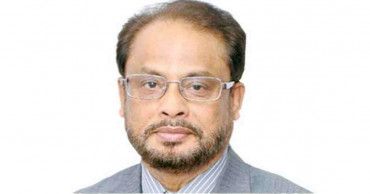
Govt losing trust with ministers’ ‘funny’ remarks: GM Quader
Jatiya Party Chairman GM Quader on Wednesday said people are getting confused and losing their trust in the government due to ‘funny’ remarks by ministers.
In a statement, he also said ministers are making ‘contradictory’ remarks for lack of coordination.
The Jatiya Party chief said Liberation War Affairs Minister AKM Mozammel Haqu’s remarks on taking punitive action against those unvaccinated people aged 18 or above who go outside from August 11 is not only unreasonable, unrealistic and unacceptable, but also completely ridiculous.
GM Quader said the number of people in the country who have so far been vaccinated with two doses of the vaccines is less than one crore.
READ: Mass vaccination only solution to Covid crisis: GM Quader
According to a report of the Covid Taskforce, Bangladesh is one of the countries lagging behind in vaccination drive. “Bangladesh also lags far behind in Southeast Asia in this regard.”
The Jatiya Party chief said when the entire world is making life normal through vaccination, it seems the government is taking imprudent decisions to avoid its failure to ensure vaccine jabs for people.
He said the minimum age limit for the vaccination is still 25 years. “In that case, how can the garment workers between the ages of 18 and 24 go to factories? How’ll transport workers of this age go out to work? Or how’ll the shopkeepers of this age open their shops?”
Quader also said the health ministry issued a statement on Tuesday disagreeing with Liberation War Affairs Minister’s comment on not allowing unvaccinated people on the streets.
“Such incidents are happening repeatedly due to the unplanned and short-sighted decisions and for lack of coordination.” People get confused with such statements of the ministers. At the same time, ordinary people are losing trust in the government,” he said.
On Tuesday, Liberation War Affairs Minister AKM Mozammel Haque said it has been made mandatory to take Covid jabs for public movement from August 11. “Any movement by people aged 18 or above without being vaccinated would be considered a punishable offence.”
However, the minister withdrew his statement by issuing a media release on Wednesday.
READ: Ensure food for poor: GM Quader
“All citizens above the age of 18 will be vaccinated in phases. But Liberation War Affairs Minister AKM Mozammel Haque is withdrawing the part of his statement that anyone above 18 years will not be allowed to go outside after August 11,” the release said.
5 years ago
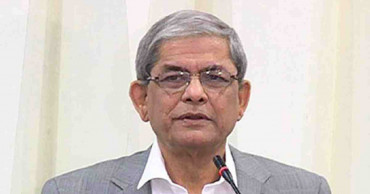
Trust among 20-party partners “excellent”: Fakhrul
Claiming that a faction of Jamiat Ulama-e-Islam left their coalition under ‘pressure’ from the government, BNP secretary general Mirza Fakhrul Islam Alamgir on Sunday said mutual trust among the 20-party alliance partners is “excellent”.
“They (Jamiat faction) have failed to survive in politics as an opposition party. So, they’ve left the alliance. They should have said the truth that they had not able to withstand the extreme pressure and lawsuits instead of blaming any party and individual,” he said.
Speaking at a press conference at BNP chairpersons’ Gulshan office, the BNP leader said their party is doing politics with the 20-party as per their manifesto maintaining mutual respect. “There’s an excellent mutual trust among us.”
READ: Wake up for movement: Fakhrul to youths
On July 14, a faction of Jamiat Ulama-e-Islam Bangladesh announced to quit the BNP-led 20-arty alliance for allegedly being ignored in the coalition’s decision-making process.
In a written statement, party acting secretary general Moulana Bahauddin Jakaria said they took the decision as Jamiat Ulama-e-Islam’s leaders and activists at the grassroots level have got angry at BNP for many reasons, including non-evaluation of alliance partners, unilaterally boycotting three recent by-polls without taking opinions of the alliance partners, BNP secretary general’s statement about not believing in Sharia law, not protesting the jailing of Alem-Ulema and repression on them across the country, not expressing sympathy to the party leaders at the death of its secretary general Nur Hossain Kasemi and not taking part in his namaz-e-janaza by the BNP leaders.
Fakhrul said Jamiat talked about Sharia law, and it is true that there is nothing written about it in BNP’s constitution. “But we don’t oppose any Sharia law and we won’t pass any law against it. We’re in power and we didn’t pass any law against it. So, it can’t be said that we oppose Sharia law and Islamic values.”
He said Jamiat raised the issue only to attack him personally.
READ: It’s not a lockdown, but a ‘joke’: Fakhrul
Fakhrul said BNP did not have any problem with Jamiat. “As per the manifesto of the 20-party, the alliance was formed to wage a movement against the fascist regime and join the election under the platform. But the alliance partners can freely do the politics of their own parties as per their belief and values.”
Fakhrul said the allegations Jamiat brought against BNP are not true.
He said their party issued condolence messages over the death of Jamiat secretary general Nur Hossain Kasemi.
The BNP leader said their party issued a statement against the arrest of Alem-Ulema centring the protest against the Indian Prime Minister’s visit to Bangladesh on March 26.
“We also arranged a press conference over the issue and we repeatedly raised the issue on different occasions. So, how did they say we did nothing in this regard? It’s not true. People hope that the Alem-Ulema will speak the truth.”
Jamiat Ulama-e-Islam’s two factions--one led by late Moulana Mufti Waqqas the other by late Nur Hossain Kasemi--have long been there in the 20-party alliance. The Waqqas-led faction is still there in the 20-party alliance, though another left it.
In 1999, the BNP-led four-party alliance was formed to intensify the movement against the then Awami League-led government. The alliance won the 2001 election with a massive vote margin.
READ: BNP’s efforts on to send Khaleda abroad: Fakhrul
The four-party alliance was expanded to a 20-party one in 2012, but many of its partners, including Islami Oikya Jote, Bangladesh Jatiya Party (BJP), NAP and NDP left the party at different times.
5 years ago