investment in Bangladesh
Japan projects up to $6.34b in private investment in Bangladesh in five years
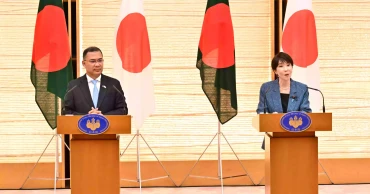
Japan is eying private investment of up to 1 trillion yen (about US$6.34 billion) in Bangladesh over the next five years, with the potential to create 200,000 jobs, as the two countries agreed to deepen economic cooperation, strengthen supply chains and upgrade their flagship development initiative to “BIG-B for Shared Prosperity”.
The projection was announced in a joint statement following a bilateral summit between Bangladesh Prime Minister Tarique Rahman and Japanese Prime Minister Sanae Takaichi in Tokyo on Tuesday.
According to the statement, Sanae Takaichi welcomed the projection of Japanese private investment in Bangladesh, which can generate 200,000 jobs over the next five years, and praised the efforts of Tarique’s administration to promote foreign direct investment.
The two leaders welcomed major investments expected to be announced during the visit and agreed on the importance of developing complementary and resilient supply chains in manufacturing, food and agriculture, information and communication technology (ICT), and pharmaceuticals.
Building upon past bilateral cooperation in the ICT sector, including IT & Information Technology Enabled Services (ITES), human resource development and digital collaboration, they underscored the importance of exploring further possibilities for cooperation to promote digital transformation, develop highly skilled ICT professionals, and secure and reliable digital connectivity.
The two sides also welcomed the signing of the Japan-Bangladesh Economic Partnership Agreement (EPA), reaffirming their commitment to bringing it into force at an early date to boost bilateral trade and investment and support Bangladesh’s smooth and sustainable graduation from the least developed country (LDC) category.
Recalling progress under the Bay of Bengal Industrial Growth Belt (BIG-B), the two leaders agreed to upgrade the initiative to “BIG-B for Shared Prosperity” in response to changing global conditions, supply chain risks, rapid technological innovation and mounting social challenges.They noted that the "BIG-B for Shared Prosperity" aims to integrate the development of power, energy, deep-sea port, industrial and ICT infrastructure, build a major nexus for industrial value chains, develop into a trade and supply gateway and generate growth and prosperity, by enhancing connectivity, enhancing resilience against risks including natural disasters and geopolitical uncertainties, public-private partnership in co-creating opportunities for economic growth and rulemaking, and stepping up cooperation for peace and stability.
The two leaders concurred on working together to develop the Matarbari-Maheshkhali area as a major hub for logistics, energy and industry, centred at the Matarbari Deep Sea Port.
They also agreed to advance preparations for the early operationalisation of the third terminal at Hazrat Shahjalal International Airport in Dhaka and pursue the early construction of Dhaka's mass rapid transit (MRT) lines.
They also agreed to discuss future cooperation on the operation and management of Matarbari Deep Sea Port.
On energy security, the two leaders welcomed Japan’s 50 billion yen emergency support loan to strengthen Bangladesh’s economic resilience and ensure a stable energy supply.
Tarique Rahman appreciated the loan, the first yen-loan project under Japan’s Partnership on Wide Energy and Resources Resilience Asia (POWERR Asia), while Takaichi reaffirmed Japan’s continued support for Bangladesh’s energy infrastructure to help bridge the gap between supply and demand.
As part of combating climate change, the two Prime Ministers underlined the deepening of cooperation between the two countries in the development of a long-term low-emission development strategy, increasing energy efficiency and energy capacity, and promoting renewable energy.They welcomed the signing of a letter of intent on climate change cooperation between their respective environment ministries.
To improve the investment environment, Tarique Rahman highlighted his government’s initiatives and committed to facilitating it, including by enhancing rulemaking, transparency and predictability of the operational procedures related to taxation, customs clearance, remittances, and licensing.
The leaders welcomed a memorandum of cooperation between Japan’s Ministry of Economy, Trade and Industry and Bangladesh’s Economic Relations Division on economic relations and the improvement of the business environment.
They also welcomed two memorandums of cooperation to strengthen and expand mutual cooperation to enhance business and attract investment in the areas of food, agriculture, fisheries, and livestock, as well as a proposed yen-loan project to improve the investment environment.
The two leaders reiterated the importance of upholding a free, fair and rules-based international economic order.
In this context, they welcomed the signing of the Japan-Bangladesh Economic Partnership Agreement (EPA) and reaffirmed their commitment to the early entry into force of the agreement with the aim of bringing its mutual benefits to the peoples of both countries.
They once again expressed their commitment to promoting trade and investment between the two countries, as well as industrial diversification through the EPA, thereby supporting Bangladesh's smooth, sustainable, and resilient transition from LDC status.
Prime Minister Takaichi stated that Japan looks forward to the furtherance of discussions on Bangladesh's request for accession to the Regional Comprehensive Economic Partnership (RCEP) Agreement.
The two leaders expressed concerns over the worsening crisis in Myanmar and its impact on regional security, the displacement of all people, including the Rohingyas, and the increase in transnational crimes.
The two leaders called for an immediate cessation of violence, the release of detainees, humanitarian access and dialogue among all parties and affected groups.
In this context, Prime Minister Rahman underlined that the Rohingya problem originated in Myanmar and its solution lies in Myanmar. The two Prime Ministers shared the view that an ultimate solution to the Rohingya crisis is to realise a voluntary, safe, dignified and sustainable return of the displaced persons, including the Rohingyas, to Myanmar.
The leaders further agreed to strengthen cooperation in education, public health, disaster management, local governance and human resource development.
Prime Minister Takaichi highly appreciated vibrant democracy in Bangladesh and welcomed the successful general election in February 2026, held in a credible and peaceful manner as witnessed by an election observer mission dispatched by the Government of Japan. She congratulated Prime Minister Rahman on assuming office.
Tarique Rahman thanked the Japanese government and people for their warm welcome and gracious hospitality and invited Takaichi to visit Bangladesh at a mutually convenient time.
4 days ago
Chevron team meets PM, discusses investment in Bangladesh’s energy sector
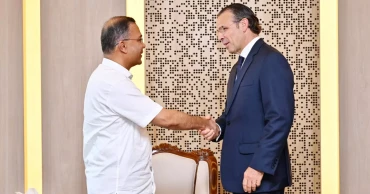
A high-level delegation from Chevron met Prime Minister Tarique Rahman on Sunday and discussed the US energy giant’s potential investment in Bangladesh’s energy sector, particularly gas.
President of Chevron’s Base Assets and Emerging Countries Javier La Rosa led the delegation during the meeting held at the Prime Minister’s Office at Bangladesh Secretariat in the morning, said a release issued by the PM’s Press Wing.
During the meeting, the delegation discussed increasing Chevron’s investment in Bangladesh’s existing and mature gas fields, as well as exploring opportunities for investment in new gas fields.
The discussions came amid the government’s efforts to strengthen domestic gas production and attract investment to the energy sector to meet the country’s growing energy demand.
Prime Minister’s Adviser on Finance and Planning Dr Rashed Al Mahmud Titumir, State Minister for Power, Energy and Mineral Resources Aninda Islam Amit, Chevron Bangladesh President and Managing Director Shu Xiong and senior officials concerned were present.
1 month ago

Japan’s top investors pledge increased investment in Bangladesh
Japan’s top investors have assured an increase in investments in Bangladesh following a bilateral meeting with Bangladesh’s Commerce Adviser Sk Bashir Uddin in Tokyo on Monday.
During the meeting, representatives from Japan’s leading business groups—NEXI (NIPPON), Mitsui, Marubeni, HSBC, Mitsubishi Heavy Industry, and JT—discussed strengthening economic ties between the two countries.
Rizwana seeks ADB’s support for river restoration
Bashir Uddin urged Japanese investors to expand their presence in Bangladesh.
Highlighting the growing economic relationship between Bangladesh and Japan, the commerce adviser said that bilateral trade volume currently stands at approximately USD 4 billion.
He emphasised that Japan is one of Bangladesh’s top five export destinations and noted that more than 350 Japanese companies are currently operating in the country. “Japan is an extremely important strategic partner for Bangladesh. We take great pride in our relationship, as Japan remains one of our closest friends and a major development partner,” said Bashir Uddin.
He encouraged the Japanese delegation to consider importing more products from Bangladesh, along with hiring skilled Bangladeshi workers to enhance economic collaboration.
UAE urged to lift visa restrictions on Bangladeshi citizens, recruit more workers
In response, the representatives from Japan’s top business groups assured their continued business engagement in Bangladesh and committed to increasing investments in the country.
The meeting was attended by Bangladesh’s Ambassador to Japan, Md Daud Ali, JETRO representative Iuji Ando, JICA representative Yasuyuki Murahashi, and Bangladesh’s Commercial Counsellor in Japan, Morarji Desai Barman.
Later, Sheikh Bashir Uddin also held discussions with Miki Watanabe, Chairman of Watami Group, further exploring avenues for economic cooperation.
1 year ago

Investment in Bangladesh will bring huge success: PM Hasina to Japanese businesses
Prime Minister Sheikh Hasina on Thursday invited the Japanese businesses to be the partner of Bangladesh’s development and achievements as it is moving towards a prosperous future.
“Bangladesh is moving forward to a prosperous future. We want you all to be partner of our development and achievements,” she said while inaugurating the Bangladesh Investment Summit at Hotel Westin here.
She invited all to come to Bangladesh and explore the potentials of business and investment opportunities.
“Do invest in Bangladesh. We are confident that your investment will bring you huge success,” she said.
Minister of Economy, Trade and Industry of Japan Nishimura Yasutoshi, Japan External Trade Organization (JETRO) Chairman Ishiguro Norihiko and Chairman of Japan Chamber of Commerce and Industry (JCCI) Ken Kobayashi also spoke at the programme.
Bangladesh Securities and Exchange Commission (BSEC) and Bangladesh Investment Development Authority (BIDA) jointly organised the summit titled "Trade and Investment Opportunities between Bangladesh and Japan.
Hasina expressed her happiness to see collaboration between Bangladeshi and Japanese companies.
“We expect more investments from Japanese investors especially in the Japanese Economic Zone in Araihazar,” she said.
Also read: Will ensure a level playing field for better business in Bangladesh: PM Hasina tells Japanese businesspeople
She said the number of non-resident Bangladeshis (NRBs) and people of Bangladeshi origin living in Japan are gradually increasing and they provide significant support to Bangladesh's economic activities through their remittances.
“I also urge them to develop more entrepreneurship, engage in business initiatives and joint ventures with their Japanese friends,” she said.
PM Hasina said since Bangladesh is going to graduate from LDC status by 2026, it is working with Japan to make possible Economic Partnership Agreement to expand bilateral trade and investment.
She said that in Bangladesh’s ever-expanding economy, opportunities have increased considerably in different sectors such as ICT, electronics, infrastructure, leather, textile, hospitality and tourism, heavy industry, chemical and fertilizer, and in SMEs.
“Our government is doing everything it can to facilitate smooth, easy and efficient ways of doing business. We are building 100 economic zones, Hi-tech and software parks to offer them for foreign investment, "she told the gathering.
She assured the Japanese investors that Bangladesh is ready for them, and that they will have great experience once there.
“All required agencies and framework to facilitate your business has been setup for convenience," she said.
She said that during her successive terms in the government she has been uplifting the socio-economic condition of the people as per the government’s Vision 2021 and Vision 2041.
“Bangladesh, as a country, is now cited as a role model for development and sets example in many fields ranging from poverty reduction, empowerment of women, digitalisation, food production, and in addressing climate change challenges.”
She said the resilient people are now looking ahead with hope and optimism to emerge from LDC category to a developing country by 2026.
“We are determined in our journey towards a modern, developed and knowledge-based “Smart Bangladesh” by 2041,” she said.
She mentioned that Bangladesh is a country of 170 million people which is itself a growing market. Its location in the heart of a bigger market of nearly three billion consumers, provides a huge attraction for business expansion.
“With our pragmatic policies and Vision, Bangladesh is guaranteed to emerge as a regional hub for investment, industrialization and exports to diverse destinations in the region and beyond, " she observed.
Sheikh Hasina said returns on investment in Bangladesh have been consistently high. In addition, business friendly fiscal and non-fiscal policies and incentives, stable democracy, prudent governance and leadership guarantees your investment will return good value.
“We can confidently assure you that Bangladesh ensures a solid future for global investors. We thus welcome all investors from world over, and Japanese investors in particular to see the opportunities for investment in Bangladesh.”
She said that during the Covid-19 pandemic that has caused havoc worldwide, and severely impacted trade and investment, Bangladesh could tackle the crisis through effective measures and interventions.
“Our economy has shown strong resilience, maintained growth and is still sustaining the pressure from the volatile world financial situation and supply side constraints.”
The premier mentioned that Bangladesh has maintained her economic growth and achieved 7.1 per cent GDP growth rate in fiscal year 2021-2022.
“Despite the Ukraine War, we are projecting 6.5 percent growth rate during the current fiscal year," she said.
In the event, 11 memorandums of understanding (MoUs) between private companies from Bangladesh and Japan that include JCCI and FBCCI were exchanged in presence of the Bangladesh prime minister.
3 years ago

With eye on 3 SEZs, Japan wants to boost its investment in Bangladesh
Japan eyes three special economic zones (SEZs), including the one at Araihajar, Narayanjanj, to give a big boost to Japanese investment in Bangladesh but things depend on the success of the first one, says Japanese Ambassador to Bangladesh Naoki Ito.
“This (Araihajar EZ) should provide the best possible environment and the best possible incentives for the investors,” he said, adding that a special economic zone is a very important key to invite an increasing number of Japanese companies to invest in Bangladesh.
Ambassador Ito said he has been advocating that Araihajar should be the best possible economic zone in Asia, beating its rivals in countries like Vietnam, Myanmar and the Philippines.
The envoy said they will look into opportunities at Mirsarai under Bangabandhu Sheikh Mujib Shilpa Nagar, being developed on a contiguous land of 30,000 acres, and a possible economic zone in Maheshkhali-Matarbari area if Araihajar becomes successful.
He shared the plans on the three potential economic zones for the Japanese investors in Bangladesh while responding to questions at a virtual dialogue titled “Bangladesh-Japan Relations: Prognosis for the Future” where he delivered the keynote speech.
Cosmos Foundation, the philanthropic arm of the Cosmos Group, hosted the dialogue as part of its ongoing Ambassador’s Lecture Series.
The opening remarks were delivered by the Cosmos Foundation Chairman Enayetullah Khan. The session was chaired by Dr Iftekhar Ahmed Chowdhury, renowned scholar-diplomat and former Advisor on Foreign Affairs of Bangladesh Caretaker Government.
Md Abul Kalam Azad, Special Envoy, Climate Vulnerable Forum; Hayakawa Yuho, Chief Representative, JICA Bangladesh Office; Dr Salehuddin Ahmed, former Governor, Bangladesh Bank; Prof Masaaki Ohashi, Professor, University of the Sacred Heart, Tokyo; Manzurul Huq, Columnist, writer and academic; Prof Takahara Akio, Dean, Graduate School of Public Policy, the University of Tokyo and Ambassador (Retd) Tariq A Karim, Honorary Advisor Emeritus, Cosmos Foundation comprised the panel of discussants.
Read: Ambassador Ito sees 5 challenges ahead to elevate Dhaka-Tokyo ties
Ambassador Ito said the Economic Zone at Araihajar will be ready for its operation by the end of the next year.
5 years ago