Morocco
Thousands of migrants return to Morocco after mass crossing into Spain's Ceuta enclave
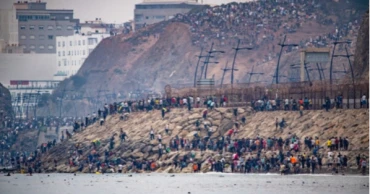
Tens of thousands of migrants who entered Spain's North African enclave of Ceuta from Morocco voluntarily returned home on Friday, a day after the unprecedented influx created chaos, triggered a humanitarian emergency, and reignited debate over immigration across Europe. At least 57 people lost their lives during the mass crossing.
Ceuta President Juan Jesús Vivas estimated that around 60,000 migrants entered the territory, a figure equal to roughly 70% of the enclave's population. Spanish authorities later estimated the total at about 50,000, adding that more than 48,000 had already returned to Morocco by Friday evening, with more leaving throughout the day.
Many migrants swam several kilometers to reach Ceuta, while others attempted to cross through border barriers. Some encountered security forces using water cannons, tear gas, and warning shots to stop them. Officials said many of the fatalities resulted from drowning, while others were killed in a stampede near the Tarajal border crossing.
Spain deployed additional police officers and military personnel to restore order in Ceuta, located on the Strait of Gibraltar. On the Moroccan side, security forces clashed with migrants trying to reach Spanish territory. The incident also prompted Italy and France to announce tighter border controls for arrivals from Spain.
Describing the situation as unsustainable, Vivas said Ceuta was facing an unprecedented crisis. At the same time, groups of migrants also attempted to enter Melilla, Spain's other North African enclave, where confrontations with police were reported.
Spanish prime minister condemns border crossing
Prime Minister Pedro Sánchez visited Ceuta on Friday, calling the mass crossing a violation of Spain's territorial integrity. He blamed human trafficking networks for encouraging migrants to make the dangerous journey, saying smugglers had misled many young people and exposed them to deadly risks.
According to Spain's Interior Ministry, approximately 50,000 migrants crossed into Ceuta from Morocco beginning Thursday. By Friday evening, more than 48,000 had voluntarily returned.
Rachid Sbihi, head of an association representing Civil Guard officers, described the situation as a severe humanitarian crisis. Thousands of migrants, including many unaccompanied minors, spent the night in parks and on sidewalks, while others wandered the streets without shelter or assistance.
Moroccan authorities did not immediately comment on Spain's figures.
European Commission President Ursula von der Leyen described the scenes in Ceuta as unacceptable, stressing that migration into the European Union must follow established legal procedures. She called for an end to dangerous crossings, stronger action against smuggling networks, and faster returns under existing laws.
Dozens killed during dangerous crossing
Officials said several of the 57 victims drowned while attempting to swim into Ceuta, while others died during a crush of people trying to cross the breakwater near Tarajal Beach. The shoreline was left scattered with abandoned belongings, including shoes and flotation devices.
Many migrants said they had hoped to find better economic opportunities in Spain but chose to return after witnessing the disorder.
Twenty-one-year-old Abdulah Buji from Tetouan said poor wages and limited job opportunities in Morocco had prompted him to make the journey. However, after failing to find work in Ceuta and seeing the chaotic conditions, he decided to return home.
Human rights organizations reported that Moroccan security forces used water cannons and fired warning shots into the air to prevent additional migrants from crossing into Ceuta.
Morocco's ambassador to Spain, Karima Benyaich, said her government supports legal, orderly, and safe migration but did not explain what had triggered the sudden surge.
Most migrants reached Ceuta by swimming from the Moroccan town of Fnideq, roughly five kilometers away, while others crossed from nearby Belyounech, where the distance is shorter.
Spanish authorities linked the mass crossing to a recent Supreme Court ruling that prevents the immediate deportation of migrants arriving by sea. Sánchez argued that human smuggling networks had misrepresented the court's decision, encouraging thousands to attempt the dangerous crossing.
Migration policy comes under renewed scrutiny
The crisis has intensified criticism of Sánchez's immigration policies. Earlier this year, his government approved residency and work permits for hundreds of thousands of undocumented migrants already living in Spain, arguing the measure would help address labor shortages and the country's aging population. The policy excluded migrants who entered the country after Jan. 1.
Opposition figures claimed the government's approach encouraged irregular migration. Madrid regional leader Isabel Díaz Ayuso accused Sánchez of allowing Spain to be overwhelmed through Ceuta.
The United States also expressed support for Spain, condemning the border breach and describing it as a violation of sovereignty and human rights. The U.S. State Department blamed the incident on Spain's migration policies, a claim rejected by the Spanish government.
Sánchez defended his administration's approach, insisting that the events in Ceuta were unrelated to the legalization program.
The crisis also prompted Italy to temporarily reinstate border controls for travelers arriving from Spain under the Schengen system, while France announced stricter checks along its border with Spain.
Pressure spreads to Melilla
The unrest extended to Melilla, Spain's second North African enclave, where migrants also attempted to cross from Morocco.
Violence erupted in the Moroccan border town of Bni Nsar, where migrants clashed with police, throwing stones and setting police vehicles on fire. Local media and rights groups reported injuries among security personnel and dozens of arrests.
Like Ceuta, Melilla is a self-governing Spanish territory on the North African coast, although Morocco continues to claim sovereignty over both enclaves.
1 month ago
Morocco not satisfied with Brazil draw
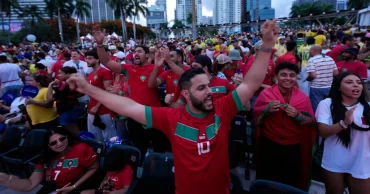
Morocco manager Mohamed Ouahbi said his side had laid down an early World Cup marker after a 1-1 draw with Brazil on Saturday, declaring his team was capable of more.
Morocco led through Ismael Saibari's early goal and created several problems for the five-time world champion before settling for a point in its Group C opener.
"We won't settle for this. I can promise you this is not the end," Ouahbi told a post-match news conference in New Jersey. "The competition is long and you'll have a lot of fun watching us."
Ouahbi said his team was determined to improve on its showing in Qatar four years ago, when it became the first African side to reach the World Cup's last four.
"I want to go beyond the semifinals, but it was a good match. We got a point. We hoped to have more, but one isn't a bad result and we hope to improve."
Morocco controlled the midfield for long stretches of the opening half as Brazil struggled to retain possession in the oppressive heat.
Ouahbi said his players displayed the qualities he has sought to instill since replacing Walid Regragui in March.
"The message to our fans is that I know they are very proud of us," he said. "Today we showed we're ambitious. We drew, but we showed we wanted to win. We showed that we have a strong personality and we'll continue to do this."
Ouahbi also praised 18-year-old Lille midfielder Ayyoub Bouaddi, whose request to represent Morocco was approved by FIFA last month.
Capped at youth level by France, where he was born, Bouaddi was making only his fourth appearance for Morocco but played a key role in neutralizing the influence of Casemiro, Bruno Guimaraes and Lucas Paqueta.
"We already knew what he was capable of," Ouahbi said. "This is why we had many talks with him to choose Morocco. He played well. Everyone is excited about him, but other midfielders were great as well."
"Maybe because it was his first [competitive] match at international level. But in terms of experience, he has much more than others. He has experience in the Champions League."
Morocco next faces Scotland in Boston on June 19 before meeting Haiti in Atlanta on June 24.
3 months ago
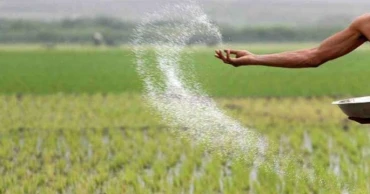
CCGP clears import of 60,000 tonnes of TSP fertiliser from Morocco
The government on Wednesday approved two proposals for the import of 60,000 metric tonnes of Triple Super Phosphate (TSP) fertiliser from Morocco involving Tk 522.94 crore.
The approval at a meeting of the Cabinet Committee on Government Purchase (CCGP) held at cabinet division meeting room with Finance Minister Amir Khosru Mahmud Chowdhury in the chair.
It approved the import of 30,000 metric tonnes (±10 per cent) of TSP fertiliser under the agreement signed between Bangladesh Agricultural Development Corporation (BADC) and OCP NUTRICROPS of Morocco.
The procurement will cost Tk 254.39 crore, with the fertiliser priced at US$688 per metric tonne.
In a separate proposal, the committee approved import of another 30,000 metric tonnes (±10 per cent) of TSP fertiliser.
The second consignment will cost Tk 268.56 crore, with the fertiliser priced at US$726.33 per metric tonne.
In both cases, Morocco-based OCP NUTRICROPS was the recommended supplier.
The two imports are aimed at ensuring an uninterrupted supply of fertiliser for the country’s agricultural sector and meeting domestic demand during the upcoming cultivation seasons.
The committee also approved a proposal to procure 10,000 tonnes of lentils through an open tender process aimed at strengthening the country’s food stocks.
Under the proposal placed by the Ministry of Commerce, 10,000 metric tonnes of lentils, packed in 50-kilogram bags, will be procured at a total cost of Tk 82.54 crore. The purchase price has been fixed at Tk 82.54 per kilogram.
The procurement is part of the government’s ongoing efforts to maintain adequate food reserves and ensure market stability through timely imports and purchases of essential commodities.
3 months ago

Morocco develops Africa's first Mpox tests, reducing reliance on imports
After facing challenges in obtaining medical supplies during the COVID-19 pandemic, African nations have pledged to reduce dependency on imports. In a milestone for the continent, a Moroccan firm has begun producing mpox testing kits amid ongoing outbreaks.
Moldiag, a Moroccan startup, initiated the development of mpox tests after the World Health Organization (WHO) declared the virus a global emergency in August. Africa’s Centers for Disease Control and Prevention (Africa CDC) reported over 59,000 mpox cases and 1,164 deaths across 20 countries this year.
To address the crisis, the WHO has announced plans to provide mpox tests, vaccines, and treatments to vulnerable populations in low-income countries, although it has faced criticism for delays. The organization emphasizes the importance of testing all suspected cases.
However, in remote regions affected by the outbreak, testing remains a challenge. Many provinces in Congo lack laboratory facilities, with some regions relying solely on physical symptoms and temperature checks for diagnosis. This limits the ability to track the virus's spread effectively, health officials say.
“This is a major issue,” said Musole Robert, medical director of the Kavumu Referral Hospital in eastern Congo’s South Kivu province. “Our laboratories are inadequately equipped.”
Mpox spreads primarily through close skin-to-skin contact or contaminated materials, such as clothing or bedding. Testing involves swabbing lesions and sending samples to labs for analysis. Accurate testing is crucial as mpox symptoms can resemble those of chickenpox or measles.
While some Western nations developed rapid mpox tests in 2022, these efforts were discontinued after the virus was contained. Renewed outbreaks in Africa, including a potentially more transmissible strain, have reignited concerns.
Morocco has reported three mpox cases, with most incidents occurring in central Africa. Moldiag’s $5 tests offer a cost-effective solution to the continent’s testing shortages. The company has already received orders from Burundi, Uganda, and Congo and has also supplied kits to Senegal and Nigeria.
“It’s simpler to send tests within Africa than to wait for imports from Europe or Asia,” said Moldiag founder Abdeladim Moumen.
Moldiag, which emerged from Morocco’s Foundation for Advanced Science, Innovation and Research, previously developed genetic tests for COVID-19 and tuberculosis. The company gained Africa CDC approval in November but has yet to seek expedited approval from the WHO.
The Africa CDC has established processes to accelerate test approvals, bypassing delays typical of WHO evaluations, which can take months or years. According to Yenew Tebeje, acting director for laboratory diagnostics at the Africa CDC, ensuring quick access to medical supplies has historically been a challenge for African nations.
Moldiag’s efforts align with the African Union's post-COVID-19 goals of fostering local manufacturing to combat global disparities in medical supply distribution. The startup’s tests are priced in line with WHO standards and health advocate demands.
Moumen highlighted the importance of localized production, saying, “It makes sense to manufacture tests in regions facing outbreaks. African tests for Africa.”
1 year ago
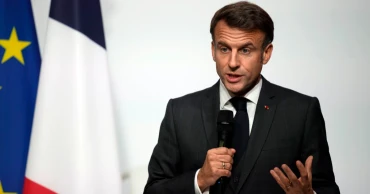
Macron in Morocco after his Western Sahara change brings a 'new honeymoon'
French President Emmanuel Macron arrives Monday in Morocco, where he is expected to meet with the North African kingdom’s leaders and discuss partnerships regarding trade, climate change and immigration.
During the president’s three-day visit to Rabat, he is scheduled to meet with King Mohammed VI and Prime Minister Aziz Akhannouch and address Morocco’s Parliament.
It comes months after Macron changed France’s longstanding public position and backed Morocco’s autonomy plan for the disputed Western Sahara. The move endeared the country to Morocco and alienated it from Algeria, which hosts refugee camps governed by the pro-independence Polisario Front and has long pushed for a U.N.-organized referendum to solve the conflict.
In the days leading up to the visit, Moroccan publications lauded the “warm reunion” and a “new honeymoon” between the two countries while French flags were hung throughout Rabat.
France and Morocco have historically partnered on issues ranging from counterterrorism to Western Sahara. Morocco is the top destination for French investment in Africa and France is Morocco’s top trade partner. Morocco imports French cereals, renewable energy infrastructure like turbines and weapons. Morocco exports goods to France including tomatoes, cars and airplane parts.
Moroccans are among the largest foreign-born communities in France, where North African immigrants are a key political constituency and a focal point of debates about the roles of Islam and immigration in French society. In recent months, France’s new Interior Minister Bruno Retailleau has pushed for the country to take a hard-line approach toward immigration and seek deals with countries like Morocco to better prevent would-be migrants from crossing into Europe.
On Macron’s last visit to Morocco, he and King Mohammed VI inaugurated Al Boraq, Africa’s first high-speed rail line, made possible by French financing and trains manufactured by the French firm Alstrom.
Despite close ties, relations have at times been fragile between France and Morocco, which was a French protectorate from 1912 to 1956. In 2021, Morocco suspended consular relations France momentarily reduced the number of visas offered to Moroccans in protest of its refusal to provide documents needed to deport people who migrated to France without authorization.
Relations between the two countries soured further that year when a 2021 report revealed Morocco’s security services had used Israeli spyware to infiltrate the devices of activists and politicians, including Macron. Morocco denied and sued over the allegations.
1 year ago

Bangladesh Air Force chief departs for Morocco
Chief of Air Staff of Bangladesh Air Force(BAF) Air Chief Marshal Shaikh Abdul Hannan left Dhaka for Morocco on Saturday on an official visit along with his spouse and two entourage at the invitation of Major General Mohammed Gadih, Inspector of Royal Moroccan Air Force.
British parliamentary delegation lauds Bangladesh's development under Hasina’s leadership
During the visit, Chief of Air Staff of the BAF will make courtesy call on with Inspector General, Royal Moroccan Air Force. They will exchange views on bilateral issues of mutual interests.
Book on Nepal-Bangladesh friendship launched at Nepal Embassy in Dhaka
Besides, the BAF chief will also visit Royal Air School and different military installations. This visit of Chief of Air Staff will play a significant role in strengthening the existing relationship between Bangladesh Air Force and Royal Moroccan Air Force, says a press release of Inter Service Public Relations (ISPR) Directorate.
Bangladesh’s security forces remain alert along Myanmar border: Foreign Minister
The Chief of Air Staff will return to Bangladesh on February 2 from Morocco after completing the his official visit.
2 years ago

Morocco's World Cup finish is bittersweet for Arab fans
Morocco’s fans in the Arab world took the North African team’s 2-1 loss to Croatia in Saturday’s World Cup third-place playoff philosophically. The team had already made history, becoming the first Arab and first African team to reach the semifinals in the international soccer tournament.
Its loss to France on Wednesday dashed fans' hopes that Morocco would become an underdog champion, but many had hoped that it would at least take third place in facing off against Croatia.
Read more: Croatia beats Morocco 2-1 to take 3rd place at World Cup
In the Moroccan capital, national team's fans were disappointed by Saturday's loss, but pointed with pride to the team’s historic performance.
“They remain champions in our eyes,” said Soukaina Makkaoui, a fan in Rabat. “They are now among the four top teams in the world.”
Ali Hachimi, another Moroccan fan, was both proud and sad.
“We would have liked to finish third because the players deserved it after giving their all,” he said.
Along the way, the Moroccan team charmed many Arab soccer fans who saw in the team a reflection of themselves, with players waving the Palestinian flag after their wins and celebrating on the field with their mothers and children.
Read more: Morocco look to the future after World Cup dream ends
Seeing Palestinian flags fluttering in the stadium “was an indescribable feeling,” said Ibrahim al-Lilli, who was among thousands of fans in the Gaza Strip who gathered to cheer for Morocco on Saturday.
The games affirmed that the Arab street “supports the Palestinian cause regardless of what their governments do,” he said, referring to the Abraham Accord normalization agreements that four Arab countries — including Morocco — signed with Israel in 2020.
Fans in the besieged Gaza enclave found a bitter solace in the fact that the northern Africa Arab country got as far as it did.
“It’s a defeat, albeit with a taste of victory and joy,” said Ahmed al-Najjar, another fan in Gaza.
In Beirut's Tarik al-Jdideh neighborhood, where fans were also rooting for Morocco, Muhammad Shaalan said the team's fourth-place finish is still a point of pride for the Arab world.
“They arrived to the final games and they defeated three of the best big European teams (Belgium, Spain and Portugal)," he said. “I bow my head in respect to them as an Arab team."
3 years ago

Croatia beats Morocco 2-1 to take 3rd place at World Cup
Luka Modric led Croatia to third place in what was likely the midfield great’s last appearance at the World Cup.
The runners-up from four years ago secured another medal by beating Morocco 2-1 in the third-place match on Saturday.
Mislav Orsic scored the decisive goal shortly before halftime at Khalifa International Stadium to ensure Modric finished on a winning note, if this does turn out to be his last World Cup match.
At the age of 37, that seems likely, even if there are hopes he will lead his country at the 2024 European Championship.
Josko Gvardiol put Croatia ahead in the seventh minute, but Achraf Dari evened the score in the ninth.
It is the second time Croatia has taken third place. The team also achieved that feat in its first World Cup as an independent nation 1998.
After becoming the first African team to reach the World Cup semifinals, Morocco’s tournament ended in two losses. But the team’s achievements in Qatar will be remembered for the outpouring of pride among Arab nations.
The World Cup final between defending champion France and Argentina is scheduled for Sunday at Lusail Stadium.
Read more: Morocco v Croatia: Fight for 3rd place, or losers' playoff?
The third-place match is considered by some to be a meaningless exhibition. Even Morocco coach Walid Regragui described it as a “booby prize” in the buildup. But neither team lacked motivation in a fiercely contested game between two nations that few expected to go so far.
That was underlined by a host of players needing to be substituted because of injury in the second half as Morocco pushed for an equalizer.
The teams had already played out 0-0 draw in the group stage and had made to the semifinals on the back of tough defenses, with a combined six shutouts. Goals weren’t a problem this time.
Perhaps that was because of the relative freedom of playing in a game with supposedly little at stake. Another factor for Morocco, at least, was the absence of three key defenders, Romain Saiss, Nayef Aguerd and Noussair Mazraoui.
The impact of those absences was felt when Croatia took the lead off Gvardiol’s diving header. In a slick move, Ivan Perisic flicked a free kick into the middle of the penalty box and the center back did the rest.
Morocco responded two minutes later when Lovro Majer inadvertently helped on Hakim Ziyech’s free kick and Dari headed in to even the score.
Croatia, however, was back in front three minutes before halftime.
Read more: Qatar World Cup: Croatia vs Morocco match ends in goalless draw
Orsic picked up the ball on the left of the box and curled a shot toward the top corner. Morocco goalkeeper Yassine Bounou got a touch on the ball, but could only push it onto the post on its way into the net.
3 years ago

Morocco v Croatia: Fight for 3rd place, or losers' playoff?
To some, it’s little more than a meaningless exhibition match. To others, it’s a chance to become “immortal.”
The third-place playoff at the World Cup can be a confusing concept.
“You are so disappointed, you’ve just lost a semifinal and then two days later you have to go back out there,” Morocco coach Walid Regragui said Friday.
Regragui’s history-making team — the first African nation to reach the World Cup semifinals — will play Croatia on Saturday at Khalifa International Stadium.
Read more: Morocco look to the future after World Cup dream ends
“It’s like the booby prize,” Regragui said. “I am sorry for speaking like this. I understand that it should be important, I understand that it is better to finish third than fourth, but for, me my takeaway is that we just didn’t get to the final.”
Morocco’s run to the semifinals in Qatar provided the most improbable story of the tournament. The team was also the first Arab nation to go so far in soccer’s biggest event, generating an outpouring of pride among Arab countries.
After such a wild and dizzying ride, it’s understandable that Regragui sounded so flat when looking ahead to the match against Croatia. It’s also a measure of his own ambition that he ends an unforgettable tournament for African soccer with a sense of disappointment after being beaten by defending champion France 2-0.
“Yes, finishing third would be great for our image. We would be on the podium,” the coach said. “But you know what, even if we win the game tomorrow we won’t have got to the final and we won’t have won the World Cup.”
The atmosphere from the Croatian side has been more upbeat.
Read more: Croatia’s ‘golden generation’ nears end after World Cup
The runners-up from the last World Cup in Russia lost to Argentina 3-0 in the other semifinal match, but their players have spoken of the importance of winning another medal.
Forward Andrej Kramarić described it as the chance to “become an immortal hero in your country.”
“Eight of us from (the tournament in) Russia understand that feeling of winning a medal at the World Cup and we have a lot of players who haven’t experienced that and would love to do that because it’s something that will stay with you for the rest of their life,” Kramarić said.
Luka Modric, who is likely playing in his last World Cup, had similar thoughts.
“We need to leave everything to win the bronze medal and let our fans celebrate one more time,” he said.
To finish second and third in back-to-back World Cups would further secure the legacy of a golden generation for Croatia.
“Saturday’s match is not a small one for us, but a big final, a fight for third place, for a medal,” Croatia coach Zlatko Dalić said. “We have to prepare in every sense. It’s a big thing if we take the bronze medal, that would be great.
“The difference is being third or fourth in the world, we will do everything to do that.”
Morocco and Croatia have already played each other at this year’s World Cup, a 0-0 draw in the group stage.
“We know that Croatia got a lot of stick because they weren’t able to beat Morocco,” Regragui said. “Morocco was one of the underdogs and now we both reached the semifinals.”
Injured Morocco center back Romain Saiss, the team’s captain, will miss the game after lasting only 21 minutes against France. Noussair Mazraoui, also substituted in that match, is a doubt.
“We have really, really pushed our players to the limits, but they still want to go out tomorrow and play again,” Regragui said. “But we are not going to be taking risks tomorrow for some of our players.”
3 years ago

Morocco look to the future after World Cup dream ends
Morocco made history, but couldn’t make it past Kylian Mbappé and France.
The first African country to reach the semifinals of the World Cup was eventually beaten by defending champions France, losing 2-0 at Al Bayt Stadium on Wednesday.
There is still the chance to win the third place match against Croatia on Saturday, but the dream of becoming the first team from outside of Europe or South America to go all the way to a final is over.
Read more: Morocco face France in politically charged World Cup semifinal
Morocco coach Walid Regragui and his players became the unlikeliest story of the World Cup and even in defeat, pushed France all the way.
“My players gave everything. They’ve gone as far as they could,” said Regragui. “They wanted to rewrite the history books, but you can’t win a World Cup with miracles, you have to do it with hard work and that’s what we are going to do, keep working.”
EXPECTATION VS. PERFORMANCE
No one could have expected Morocco to break new boundaries for African soccer by making it to the semifinals.
It was also the first Arab nation to go so far at a World Cup.
And it did so on merit - topping a group that contained 2018 finalist Croatia and second-ranked Belgium, before progressing past favorites Spain and Portugal in the knockout stages.
But perhaps Morocco’s best performance came against France when it had to contend with injuries to key players and conceding a goal inside five minutes. In the face of those challenges it still managed to pressure France for long periods until Randal Kolo Muani’s 79th minute strike sealed the win for Les Bleus.
The performance typified Morocco’s spirit at this tournament and the quality of its players.
Read more: Will Messi's last performance in World Cup help Argentina win the trophy in Qatar?
WHO’S OUT?
Regragui has won plenty of admirers for his tactical acumen against some of the giants of international soccer.
It will be interesting to see if any offers come his way from leading club teams in Europe - and whether he would be tempted to take up a new challenge.
He says he is committed to leading Morocco at the 2023 African Cup of Nations, which will come as a relief to the country’s fans.
Key defender and captain Romain Saiss is 32 and may have played in his last World Cup, but Morocco has a lot of young players, who could go again in four years when the tournament is held in the United States, Canada and Mexico.
WHO’S NEXT?
Midfielder Azz-Eddine Ounahi has been one of the brightest emerging talents at the tournament and could be the subject of interest from leading clubs in January or next summer.
At 22 he is yet to reach his peak and currently plays his club soccer for Angers, the bottom club in France’s first division.
Achraf Hakimi is already established at Paris Saint-Germain, but the 24-year-old right back has the potential to develop further and lead a golden generation for Morocco.
WHAT’S NEXT?
First of all Morocco wants to round off an unforgettable World Cup by winning its third place match against Croatia.
Focus will then turn to the African Cup of Nations and Regragui is comfortable with the added expectation after the success in Qatar.
“There’s more pressure. We know that we were often the favorites, but now in the semifinals we couldn’t hide,” he said. “I think we will have a bit of time to find our way in the competition. The next match is in March.
“But like I said before, I’m not hiding. If we don’t get to at least the semifinals, then I will leave. It has to be that way.”
3 years ago