DSA cases

All DSA cases withdrawn, no arrest without proof: Law Adviser
Law Adviser Dr Asif Nazrul has said all cases under the Digital Security Act (DSA) have been withdrawn.
While speaking at a dialogue, he said they have also instructed that no one should be arrested without substantial evidence.
The Centre for Governance Studies (CGS) hosted the dialogue at the CIRDAP Auditorium (Centre on Integrated Rural Development for Asia and the Pacific) to discuss reforms related to the mass media.
"While there may not have been much in the media, there has been a lot of misinformation spread on social media. None of us have filed cases over this misinformation, nor have we protested we’ve left it to the people of the country. If a certain group sees an opportunity for business in filing cases, then there’s nothing we can do about it," said the Law Adviser.
There were 266 cases filed against journalists, but only 15 were arrested, he said.
"Those who were named were charged for insider crimes or related amendments. We have no role in the cases they were filed by ordinary citizens," Asif Nazrul said.
Generate solar power by installing rooftop panels: Prof Yunus
Dr. Badiul Alam Majumdar, Chief, Electoral Reform Commission; Shafiqul Alam, Press Secretary to the Chief Adviser; Dr Shahidul Alam, founder, Drik Picture Library and photojournalist; Mojibur Rahman Monju, Chairman of AB Party; Ruhin Hossain Prince, General Secretary, Communist Party of Bangladesh (CPB); journalist Parveen F Chowdhury; Sohrab Hassan, Joint Editor, Prothm Alo; M A Aziz, Bangladesh Correspondent, Irrawaddy; Zahed Ur Rahman, political analyst; Dr. Shakhawat Hossain Sayantha, General Secretary, G-9, Bobby Hajjaj, Chairman, Nationalist Democratic Movement; Parvez Karim Abbasi, Assistant Professor, East West University, Senior Research Fellow, Centre for Governance Studies; journalists Md Muktadir Rashid; Zyma Islam and Qadaruddin Shishir spoke at the event.
Moderating the session, Zillur Rahman said the media and related institutions have not really discussed the issue of media reform or the commission’s report.
"There hasn’t been much discussion on television, nor have there been writings in newspapers. There’s been no dialogue on what kind of reforms are needed, how constructive the commission’s report is, or what its weaknesses are," he said.
Dr. Badiul Alam Majumdar said most television channels, in order to secure licenses, included favourable statements in their applications to please the government.
Committee formed to investigate last 3 polls during AL regime
He said their letters of commitment contained promises that aligned with the political ideology and strategies of the Awami League.
"In the application forms themselves, they expressed willingness to assist in implementing the political party’s vision. Based on these applications, licenses have been granted over the past fifteen years," he said.
Shafiqul Alam said they are going through an extraordinary time and claimed that the interim government has not created any administrative barriers to journalism.
Alam pointed out three main ways in which the last regime controlled journalism, through administration, repressive laws and social favours.
He said the current government is not doing any of that practices. Over the past fifteen and a half years under Hasina, a trust deficit has developed we are trying to overcome that.
"We are working to ensure that the actions of that era are not repeated during our time, and we’ve been largely successful in that regard. We’re not using any administrative pressure to silence journalists or push them away from their profession," Alam said.
EC seeks power to fix cut-off date for new voters, sends draft law to ministry
"If a news report is false, we simply say it’s false and request its removal. Some comply, some don’t. We’re just letting people know it’s untrue everyone can take their own legal steps. There are demands for a Journalist Protection Ordinance, but what about those who are harmed by unethical journalism? Shouldn’t we also think about protecting them?"
Dr Shahidul Alam said that practices of the journalism has lost credibility because they are not up to standards worldwide. He has expressed concerns that certain law enforcement agencies are exempt from giving information to the media which creates a barrier for journalists to create news.
He has brought up a case against him on the ICT act in 2018. Among the various laws like the DSA, CSA, and CPO, we’ve observed that there’s one area where no change has been made—political sentiments have been given a distinct and special status.
Mojibur Rahman Monju said, media gets stuck in the marketing department. That’s where the money is generated, where the revenue comes from. But in doing so, creativity gets stifled.
Ruhin Hossain Prince the journalism of Bangladesh has become a self-censored more than ever, the media houses are in a state of panic.
Pro Yunus urges early preparations for next year’s Hajj management
Shakhawat Hossain Sayantha has said that the journalists are divided between themselves, they don’t have unity amongst themselves.
Parvez Karim Abbasi has pointed out that there are many laws in place that are from an ancient time but are still in practice.
"Unless there is a shift in the mindset of the media, politicians, and academics, we won’t be able to bring about change in any area.
Zahed Ur Rahman said, What worries me is that our culture has deteriorated. Like many others, I don’t have high hopes that journalism or the media will suddenly be fixed."
Parveen F Chowdhury has said just having money should not be a gateway to open a media house.
Someone with experience and expertise should be able to get a license to start a media, she said, expressing dissatisfaction with the media in reporting as journalistic standards are not there.
1 year ago
Photojournalist Kajol indicted in 3 DSA cases
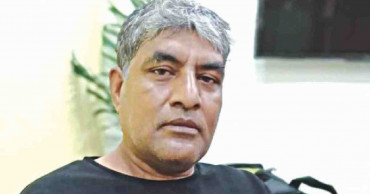
The cyber tribunal in Dhaka on Monday framed charges against photojournalist Shafiqul Islam Kajol in three cases filed under the Digital Security Act (DSA).
Judge Ash Sams Joglul Hossain of the Dhaka Cyber Tribunal fixed January 2 for the formal trial to begin with the deposition of witnesses.
Journalist Kajal, now on bail, pleaded innocence and demanded justice.
Read:Dhaka cyber court accepts charges against Kajol
Earlier, the hearing on charge framing in the cases was scheduled to be held on October 21. As the judge of the tribunal Ash Sams Joglul Hossain was on leave, acting judge Iqbal Hossain fixed November 8 for the hearing.
Kajol went missing on March 10, 2020, a day after Magura-1 MP Saifuzzaman Shikhor filed a case against him and 31 others, including Manab Zamin Editor Matiur Rahman Chowdhury.
They were sued under the DSA for publishing and sharing an article on social media about expelled Jubo Mohila League leader Shamima Noor Papia.
Two other cases were filed against Kajol at Kamrangir Char and Hazaribagh police stations under the same act on March 10 and 11 last year.
After his 53 days of disappearance, Kajol was detained by Border Guards Bangladesh (BGB) near the Benapole border on May 3,2020 and produced in a Jashore court on the same day.
Read:Court takes cognizance of charges against photojournalist Kajol
Although the court granted him bail in the case, he was sent to jail as Kotwali police brought another charge against him under Section 54 of the Code of Criminal Procedure.
On October 19, 2020, the High Court issued a rule asking the government to explain why photojournalist Kajol should not be granted bail in the case filed at Sher-e-Bangla Nagar Police Station.
On November 24, 2020, the photojournalist secured bail in another case filed against him under the DSA.
On December 17, that year, the High Court granted him bail in two cases filed under the DSA, clearing the way for his release.
He was freed from Dhaka Central Jail on December 25 last year.
4 years ago