Solar Irrigation
Bangladesh farmers cut costs with solar irrigation, save 7.5m litres of diesel
Amid global energy market volatility triggered by the Iran-Israel-US tensions and concerns over fuel supply Bangladesh’s agriculture sector is feeling the strain particularly during the irrigation season, when diesel-dependent farmers face rising costs and uncertainty.
Against this backdrop, solar-powered irrigation is emerging as a beacon of hope across the Rangpur division.
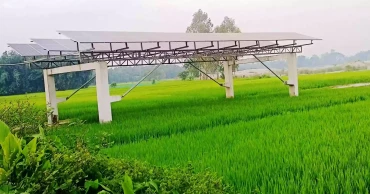
Officials say around 5.9 megawatts of electricity is being generated daily from solar irrigation systems in different parts of the region, helping save around 7.5 million litres of diesel in a single irrigation season.
Farmers say the shift has eased their worries about diesel shortages, price hikes and power outages, allowing them to irrigate fields on time and reduce production costs.
At a deep tube well run by the Bangladesh Agricultural Development Corporation (BADC) in Doani village of Goddimari union under Hatibandha upazila in Lalmonirhat, operator Atiar Rahman said the solar-powered system is irrigating around 15 bighas of land where maize and vegetables are widely cultivated.
“Even if diesel is unavailable or prices rise, farmers no longer have to worry, as the system runs on solar power,” he said.
However, he pointed out a major untapped opportunity: the solar panels remain largely unused for most eight months of the year after the four-month irrigation season.
Introducing net metering to feed surplus electricity into the national grid during this period could benefit farmers, institutions and the government alike, he added.
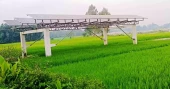
On the ground, solar panels are seen directly powering pumps to irrigate fields—without diesel fumes, fuel shortages or power disruptions.
Sudhan Chandra Sen, a farmer from Madhupur village in Kaunia upazila, said, “We don’t have to worry about fuel anymore. Solar power gives us water, crops are better, and costs are lower.”
“Earlier, electricity supply was unreliable, and irrigation was often delayed. Now, with solar, water is available all the time,” he added.
Shafiqul Islam, president of the Lalmonirhat unit of the Teesta River Protection Movement, said such initiatives are crucial for boosting agricultural production, ensuring food security and modernising the sector.
“To improve the livelihoods of marginal farmers, solar irrigation projects should be expanded through both public and private initiatives,” he said.
Hossain Mohammad Altaf, executive engineer (construction) of BADC in Rangpur, said no new solar irrigation projects have been launched since 2022 though existing installations remain operational.
He said a total of 596 solar-powered irrigation units were active in eight districts of Rangpur division in the last irrigation season.
With an average production of 10 kilowatts per unit, total generation stood about 5.96 megawatts—enough to run 80,000 to 85,000 fans daily—while saving around 7.5 million litres of diesel over four months, he said.
Habibur Rahman Khan, supervising engineer ofRangpur circle of the Barind Multipurpose Development Authority (BMDA), said while no new projects have been added existing ones are functioning, and two net metering systems are already operational.
Northern Electricity Supply PLC (NESCO )Rangpur Chief Engineer (Operation) Mizanur Rahman said a faster transition from diesel-based to solar irrigation could save foreign currency and cut carbon emissions.
“For a climate-vulnerable country like Bangladesh, this can be a sustainable pathway for agriculture,” he said, adding that most solar irrigation systems fall under rural electrification areas, and net metering could be introduced with proper initiative from the authorities.
Farmers have called for launching new solar irrigation projects, rehabilitating old ones and enabling surplus electricity to be fed into the grid.
“If sunlight can grow crops in the fields, it can also help meet the country’s electricity needs,” they said.
5 months ago

Climate Smart Solar Irrigation to meet challenges of climate change: Researchers urged
Environment, Forest and Climate Change secretary Md. Mostafa Kamal has urged researchers to evolve technology to convert the conventional power tillers into solar operated power tillers.
“There are thousands of power tillers across the country, if we can introduce solar-power tillers, it will save huge liquid fuels as well as create big impact on environment through reducing carbon emission”, he said while addressing a virtual workshop tiled: Climate-Smart Solar Irrigation Technology in Bangladesh” on Wednesday.
The virtual function was organised by Curtin University, Australia, where a presentation was made on a research project titled “Innovating Nonmonetary Interventions for Climate-smart Agriculture: An ADOPT Model for Technology Diffusion” was introduced.
Read Solar power: The ultimate cap on costlier crude?
It was also addressed by Professor Dr. Therese Jefferson, Head, School of Accounting, Economics and Finance, Curtin University, Australia, Mohammad Alauddin, Chairman of Sustainable and Renewable Energy Development Authority (Sreda), Professor Dr. Mohammad Jahangir Alam, Department of Agribusiness and Marketing, Bangladesh Agricultural University (BAU), Aslam Perwaiz, Deputy Executive Director; Asian Disaster Preparedness Center (ADPC), Bangkok, and Dr. Habib Rahman, Team Leader and Senior Lecturer, School of Accounting, Economics and Finance, Curtin University, Australia.
Read:BREB to install 2,000 solar irrigation pumps; farmers can sell idle electricity to national grid
Professor Dr. A.S.M. Maksud Kamal, pro-vice chancellor of Dhaka University, presided over the workshop while Suddha Rafiq conducted the function.
Welcoming the idea of Nudge Technology, a nonmonetary intervention theory for popularising the climate-smart solar irrigation pump system, the environment secretary said, the researchers, in addition to solar pumps, should work for adopting this technology for solar power tiller as well.
He said the number of power tillers is much higher than the fuel-run pumps. “If we can use the solar system for the power tillers instead of diesel, it will give much more benefits to the farmers".
Read Govt exploring rooftop, floating solar power for scarcity of lands: Nasrul
He observed that where there is use of one pump, the farmers use 5-6 tillers for agriculture purposes. “We need to integrate the solar pumps with solar tillers”.
Mostafa Kamal also said there is no doubt that solar powered irrigation systems can meet the challenge of climate change.
He said it is less costly in comparison with the diesel-run irrigation pumps. But the farmers have to learn about its benefits. Otherwise they will not accept it instead of the conventional diesel-run pumps.
Read DU Solar Project: Tariff issue remains pending with Power Division for a final decision
He said small solar units, instead of grid-connected solar systems, is very effective in a situation when the rural areas are hit by natural calamities like cyclones.
“It takes a huge time to restore our electricity system when any disaster takes place”, he observed.
He said the government has a commitment to reducing emissions. “But we are far behind the western countries for clean energy.
Read: Govt plans to purchase unconsumed electricity from solar irrigation pumps
He also said the solar irrigation process will mitigate the greenhouse gas emission.
Sreda chairman Mohammad Alauddin said about 2000 irrigation pumps have been installed across the country.
But the biggest challenge is that these pumps are being operated for four months of a year while the rest of the time these pumps have to remain inoperative. The government is taking a policy to utilize the solar of the remaining months for the national grid.
Read Sreda launches training on solar power system
Making his presentation titled: A Climate Innovation Challenge Project on Innovating Nonmonetary Interventions for Climate-smart Agriculture: An ADOPT Model for Technology Diffusion, Habbur Rahman said his project has planned to conduct a survey on the farmers as why they are not accepting the solar irrigation pumps when it is least cost.
Ashok Kumar Biswas, deputy director of the Agriculture Extension Department, making a presentation on the solar irrigation project of his department, said that repair of solar irrigation pumps and accessories, running the pumps in dry season when surface water decreases have been the biggest challenge in the scheme’s implementation.
Read World's first partnership for transnational solar power grid launched in Glasgow
4 years ago